
Domestic Violence Defense | Miami and South Florida
What Florida Statute 741.28 Means If You Are Facing a Charge
Florida's domestic violence law covers more relationships than many people expect. Here is how the definition works and what it can mean for you.
By Patrick David Wilson · Published November 10, 2026
A court paper or arrest notice that says “domestic violence” can leave you guessing what that label actually means. Florida Statute 741.28 defines the term as a listed offense committed by one family or household member against another. Here’s how that definition works, and how it can connect to the charge you’re facing.
What Florida Statute 741.28 Is
Florida Statute 741.28 is the definitions section of Chapter 741, the part of Florida law that deals with domestic violence. It defines key terms for sections 741.28 through 741.31. The definitions for ss. 741.28-741.31, including “domestic violence” and “family or household member,” are set out in Fla. Stat. § 741.28.
The charge is usually an offense such as battery or assault, and the definition adds the family relationship between the people involved. That matters because the definition decides whether a charge carries the domestic violence label at all.
If you’re reading this, you probably want three things: the definition, the relationships it covers, and what it means for your charge.
If a domestic violence charge or protective order has you wondering whether your relationship fits this definition, our team is ready to talk it through with you. Talk it through with our team — the first consultation is free, confidential, and carries no obligation.

The Offenses the Definition Lists
The list includes assault, aggravated assault, battery, and aggravated battery. It also includes sexual assault, sexual battery, stalking, aggravated stalking, kidnapping, and false imprisonment. It covers any criminal offense that results in physical injury or death of one family or household member by another, too, though family or household members who are not parents of a child in common must be currently residing or have in the past resided together in the same single dwelling unit.
Under Florida Statute 784.03, battery happens when a person actually and intentionally touches or strikes another person against that person’s will. It also happens when someone intentionally causes bodily harm. A touch against someone’s will can count, even without a serious injury.
A first battery is a first-degree misdemeanor. A second battery after one prior conviction for battery, aggravated battery, felony battery, or resisting an officer with violence is a third-degree felony. A plea of nolo contendere or a withheld adjudication still counts as a conviction for this purpose, so older pleas can matter.
Assault is different. Under Florida Statute 784.011, an assault is an intentional, unlawful threat by word or act to do violence, with an apparent ability to carry it out, that creates a well-founded fear of imminent violence.
Who Counts as a Family or Household Member
A family or household member includes spouses, former spouses, and persons related by blood or marriage. It also includes people who live or have lived together as if they were a family. Parents of a child in common count too, whether or not they were married.
The dwelling rule is the detail to check closely. Except for people who share a child, the family or household members must be living together now, or must have lived together in the past, in the same single dwelling unit.
Consider two people who share a child but live in separate homes. The child-in-common exception covers them, so the same-dwelling rule does not apply. Now consider two former partners with no child together who once shared an apartment.
How the Definition Affects a Charge in South Florida Courts
Under Fla. Stat. § 741.28, “domestic violence” includes listed offenses such as assault, battery, and stalking, which do not require physical injury, as well as any other criminal offense resulting in physical injury or death of one family or household member by another family or household member. Three questions tend to matter most. What is the exact relationship? Did the people share a dwelling, and when? What was the alleged conduct?
Prior history can also raise the grade of a later charge. Under Florida Statute 741.2801, a domestic violence crime is reclassified if, at the time of the offense, the offender has a prior conviction for a crime of domestic violence. A first-degree misdemeanor becomes a third-degree felony. That enhancement does not apply to felony battery under section 784.03(2).
A protective order is a separate track. Under Florida Statute 741.30, a victim, or someone with reasonable cause to believe they face imminent danger, can ask circuit court for an injunction for protection against domestic violence. Violating that injunction can lead to its own charge under Florida Statute 741.31.
Local court procedures still vary by county. Outcomes depend on the facts of each case.
Quick Answers
What does Florida Statute 741.28 define?
It defines “domestic violence” as a listed offense committed by one family or household member against another.
Do people who share a child have to live together?
No. The same-dwelling rule does not apply to people who have a child in common.
Is battery always a misdemeanor in Florida?
No. A first battery is a first-degree misdemeanor, but a second one after a prior conviction is a third-degree felony.

Talk Through Your Situation With Patrick Wilson Law
Patrick Wilson Law focuses on domestic violence defense for people across South Florida, from Broward County to the Keys. Patrick David Wilson is the responsible lawyer for this page, and the firm’s office is in Miami.
If you’re facing a battery charge, an arrest tied to a family dispute, or a protective order, the relationship and home questions in this statute may be central to your case. Call 786-761-1719 or send a message through our contact page. The initial consultation is free, confidential, and carries no obligation to continue (consulta inicial gratuita, confidencial y sin compromiso).
Our domestic violence defense page covers these charges in more detail.
How Patrick Wilson Law Can Help
Criminal defense focus
Patrick Wilson Law handles criminal defense matters, including domestic violence charges, for clients across South Florida.
Serving South Florida
From Miami and Miami-Dade County to Broward County, Fort Lauderdale and the Florida Keys, we represent people across the region.
Confidential first conversation
Your first consultation is free and confidential, with no obligation to continue.
Attorneys who work with you
Our attorneys and our team take the time to explain the charge, the process and your options in plain language.
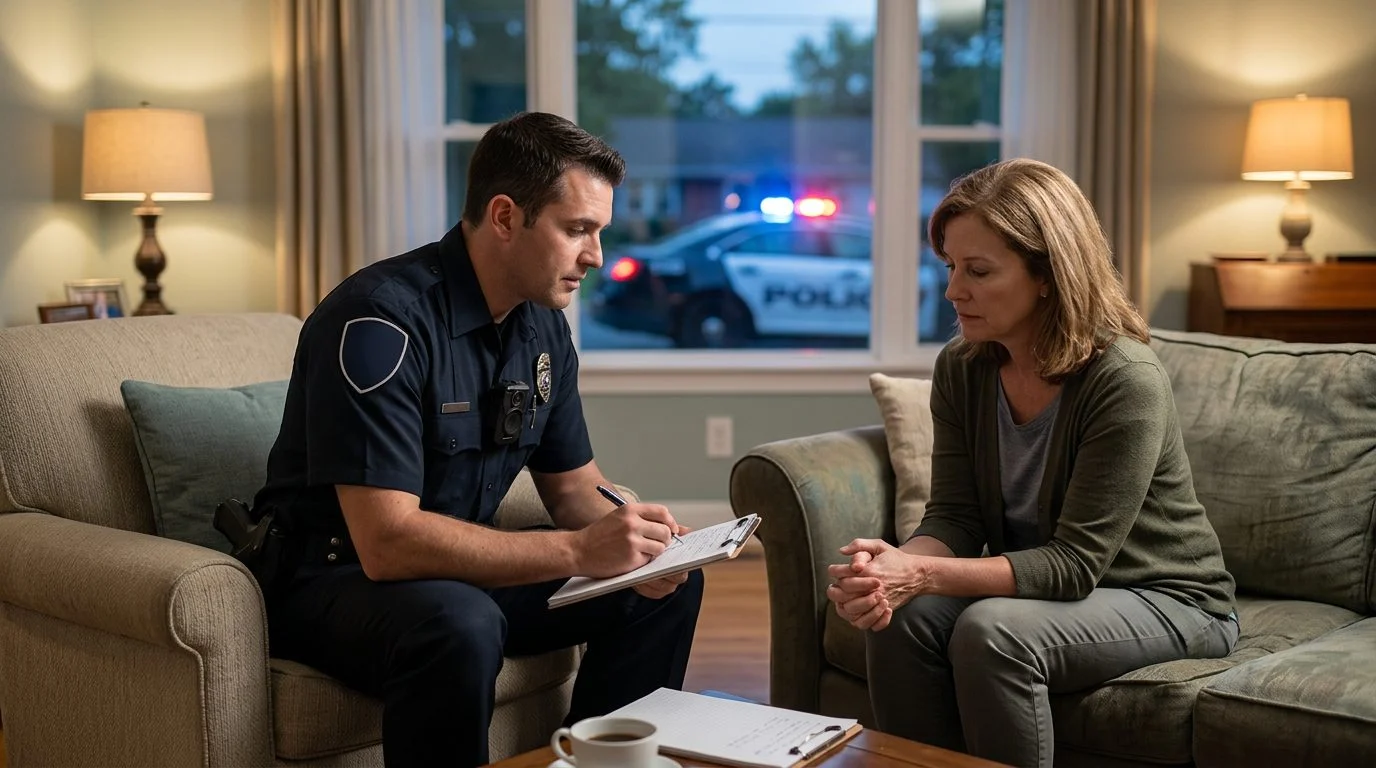
Be Careful What You Say Early
Statements made to police, to the other person involved, or on social media can become part of a case. Talk with a criminal defense lawyer before you answer questions about the incident.
Who counts as a family or household member
The statute defines the relationships that fall under domestic violence, which is broader than many people assume.
Which offenses the law covers
Domestic violence under Florida law is tied to specific listed offenses, and the charge depends on the conduct alleged.
People who share a child
The article explains how the statute treats people who have a child in common, even when they do not share a home.
Why the details matter
The facts of the relationship and the alleged conduct shape how a case is evaluated and defended.
Talk With Patrick Wilson Law Before You Decide Your Next Step
Related practice areas
- Miami Money Seizure Lawyer: What to Know After a Seizure

