
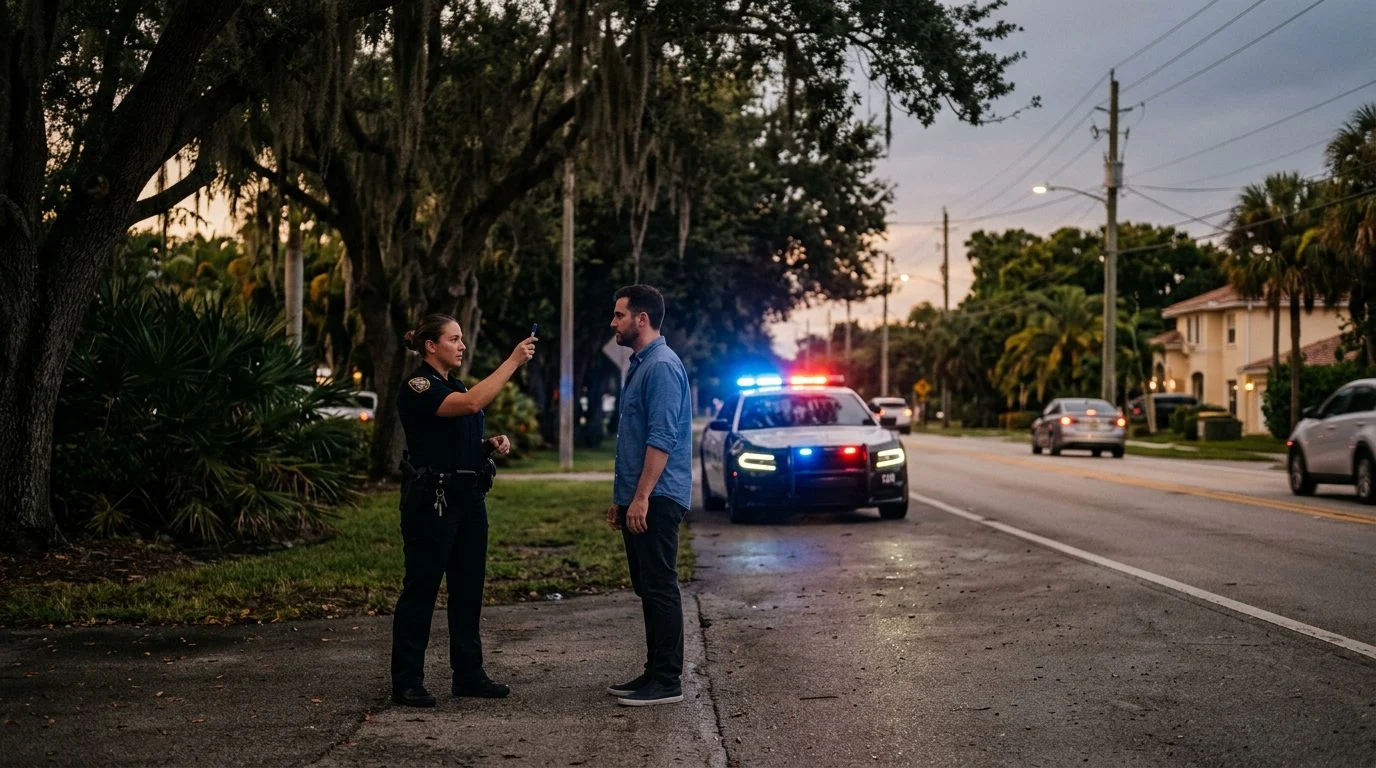
Miami DUI Defense for Nonresidents
Charged in Florida but Living Out of State? Know Where You Stand.
A Florida DUI case can reach your license, your court dates and your travel plans, even when your home is hundreds of miles away.
By Patrick David Wilson · Published November 12, 2026
The criminal case, the license consequences here, and the testing rules all apply, even when your license came from another state. Under Florida’s Driver License Compact, for certain listed convictions, such as failure to stop and render aid in a crash resulting in death or personal injury, a home state’s licensing authority gives the reported conduct the same effect as if it had occurred in the home state. For other convictions, it gives the conduct the effect its own laws provide. Except as the compact expressly requires, the compact does not stop a state from applying its other licensing laws.
Florida’s DUI Law Applies to Out-of-State Drivers Too
Florida’s DUI law covers anyone who drives or is in actual physical control of a vehicle in Florida while impaired. Under Florida’s DUI statute, that includes drivers whose normal faculties are impaired by alcohol, listed chemicals, or controlled substances. The statute does not exempt drivers with licenses from other states.
Your license state does not decide whether Florida can charge you. Florida courts hear the criminal case.
Many visitors assume the case can wait until they get home. Florida’s process runs on its own schedule, so you should treat the Florida case as active from the day of the stop.
If a Florida DUI arrest has put your out-of-state license at risk, we can talk through your facts with you and go over what comes next. Talk it through with our team — the first consultation is free, confidential, and carries no obligation.
Refusing a Test: How Implied Consent Works for Visitors
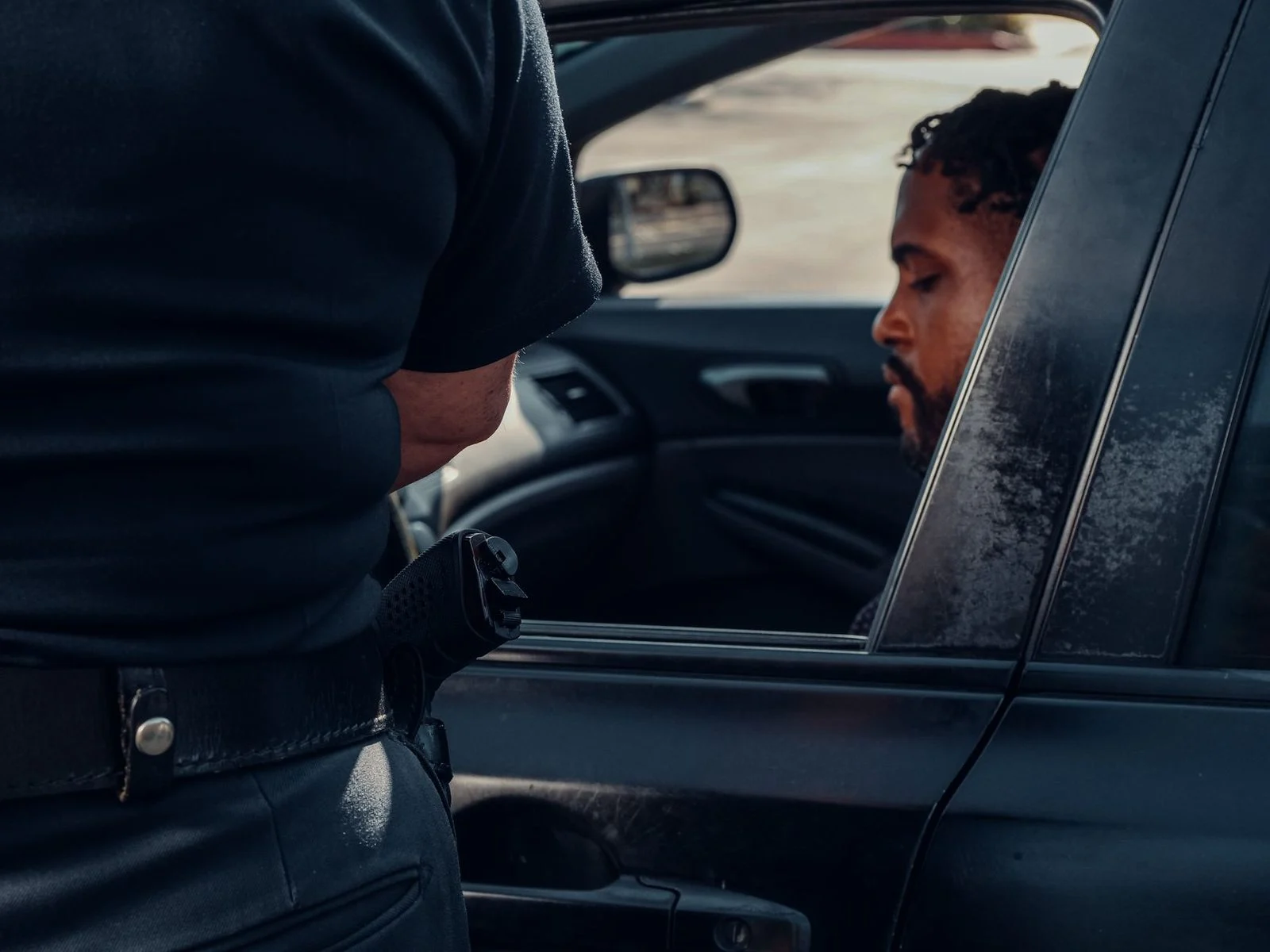
Florida’s implied consent law reaches nonresidents who drive on Florida roads. By driving here, a nonresident is treated as having agreed to the testing rules in § 316.1932.
Under Florida law, refusing a lawful breath test is a misdemeanor of the second degree, or a misdemeanor of the first degree if the driving privilege has been previously suspended or the person has previously been fined under s. 327.35215 for a prior refusal to submit to a lawful test of his or her breath. The first is administrative. A first refusal brings a one-year suspension of the driving privilege. An 18-month suspension applies if the privilege was already suspended or you were previously fined for a refusal.
The second is criminal. Under § 316.1939, a first refusal of a breath or urine test is a second-degree misdemeanor if the officer had probable cause to believe the person was driving or in actual physical control of a motor vehicle in this state while under the influence, the person was lawfully arrested for a violation of s. 316.193 (unless the test was requested under s. 316.1932(1)(c)), was told the suspension and misdemeanor consequences, and then refused a test requested by a law enforcement or correctional officer. The criminal refusal case and the license suspension are separate. The outcome of one does not decide the other.
Whether a refusal or a test result can be used against you depends on the facts of your stop. Talk with a lawyer early about how those facts fit your case.
License Suspension and the Clock on Your Driving Privilege
Florida can suspend your driving privilege after a breath or blood result of 0.08 or higher, or after a refusal. Under § 322.2615, the officer takes your license and issues a 10-day temporary permit if you are otherwise eligible. The officer also issues a notice of suspension.
Can you drive after a DUI in Florida? The 10-day temporary permit is the first step. After it runs out, your status depends on the suspension itself, so check it right away.
Notice timing matters. Under § 322.251, a notice is complete 20 days after it is mailed or e-mailed, except for notices issued under chapter 324 or ss. 627.732–627.734, which are complete 15 days after mailing or e-mailing. Failing to receive the mail does not stop the suspension from taking effect.
You can submit materials and ask for a formal review hearing. At that hearing, the officer’s probable cause and whether you were told the refusal penalty can be disputed. Ask a lawyer how fast you must request that hearing.
Florida’s Driver License Compact and Your Home State
Under § 322.44, the licensing authority must report each conviction of a driver from another party state to that driver’s home state. The report identifies the person and describes the violation.
Your home state then decides what the report means for your license. For a DUI, a felony involving a vehicle, or failing to stop and render aid after a crash causing death or injury, the Compact says the home state gives the reported conduct the same effect it would have had if it happened at home; for other convictions, the home state applies its own laws. That includes suspension or revocation.
Florida can also send a certified copy of a nonresident’s conviction record to the motor vehicle administrator in the driver’s home state. § 322.23 allows this step.
Two more rules matter. You cannot drive under an out-of-state license during a Florida suspension, under § 322.30.
Penalties Beyond the License: Fines, Probation, and Court Orders
Florida’s DUI statute sets the penalties, and they depend on the case itself. Jail and fine ranges vary with the offense level and the record. Under Florida’s DUI statute, for a second conviction within 5 years, the court shall order imprisonment for not less than 10 days.
The offender pays the reasonable costs of the education, evaluation, and any treatment. Missing treatment or the course can lead to cancellation of the driving privilege.
The statute provides that a DUI conviction does not bar any civil suit for damages against the person so convicted. At arraignment, the clerk must give notice that a conviction means a license suspension or revocation.
A DUI can also reach insurance and work. This matters most for licensed professionals whose careers depend on a clean record.
Can You Challenge an Out-of-State Driver’s DUI Charge?
Yes, a DUI charge can be challenged. Breath and blood testing is one common place to look. Under § 316.1934, a test counts as valid only if it was done substantially under approved methods by a person with a valid permit. Small technique differences do not automatically void a test.
The statute also sets presumptions. A result of 0.08 or higher is prima facie evidence of impairment. Fla. Stat. § 316.1934 reads: “If there was at that time a blood-alcohol level or breath-alcohol level of 0.08 or higher, that fact is prima facie evidence that the person was under the influence of alcoholic beverages to the extent that his or her normal faculties were impaired. Moreover, such person who has a blood-alcohol level or breath-alcohol level of 0.08 or higher is guilty of driving, or being in actual physical control of, a motor vehicle, with an unlawful blood-alcohol level or breath-alcohol level.” A result of 0.05 or less creates a presumption of no impairment.
You or your attorney can request full information about the test. That includes the type and status of any permit held by the person who performed the test, under § 316.1932.
Defense review also looks at the stop and the arrest. Probable cause is an issue at a license review hearing, as noted in § 322.2615. Whether any of these points helps your case depends on the facts. Do not assume an outcome from general information.
Not sure what your next step is?
Talk it through with our team — the first consultation is free, confidential, and carries no obligation.
Getting Your Florida Driving Privilege Back After a DUI
A suspended privilege for a DUI or refusal does not come back on its own. Under § 322.291, you must present proof of enrollment in a department-approved course before reinstatement. For a DUI-related suspension, that course is typically a substance abuse education course with a psychosocial evaluation and treatment if referred.
If you do not finish the course or evaluation within 90 days after reinstatement, the DUI program notifies the state. The state must then cancel your driving privilege again once the DUI program notifies it of the failure.
Before you apply, review your full record with a lawyer. A conviction, a dismissal, or a reduction can each affect your home-state license and record differently.
Talk With Our Team About Your Out-of-State DUI Arrest
If you are a visitor, or you are helping a family member who is, a DUI arrest in Florida can feel like two problems at once. One is the court case here. The other is the license at home.
Patrick David Wilson is the responsible lawyer for this page. Sahara Fonseca is also one of the firm’s lawyers. Patrick Wilson Law, PLLC defends people across South Florida, from Broward County to the Florida Keys, against DUI and related charges. A matter may be referred to another lawyer or firm.
Common Questions About Out-of-State DUIs in Florida
Can you refuse a sobriety test in Florida?
Refusing a lawful breath or urine test can bring a license suspension and a criminal charge. Ask a lawyer how a refusal could apply to your case.
Does a Florida DUI get reported to my home state?
Florida can send a certified conviction record to your home state.
Can I be sued after a DUI conviction in Florida?
Under Florida’s DUI statute, a conviction under this section does not bar any civil suit for damages against the person so convicted.
If a Florida DUI arrest has your out-of-state license at risk, call 786-761-1719 or leave a message through our contact page. Your first consultation is free, confidential, and comes with no obligation to continue.
How We Help Nonresident Clients
Confidential Free Consultation
Our first consultation is free, confidential and comes with no obligation to continue.
Serving South Florida
Patrick Wilson Law, PLLC is based in Miami and defends clients from Broward County to the Florida Keys.
Clear Explanations
We explain the charges, the court process and how a Florida case may affect your home state in plain language.
Support for Out-of-Area Clients
Our team works with clients who must manage a case from a distance, including questions about scheduling and communication.
Do Not Ignore a Notice
Missing a court date or overlooking a notice about your driving privilege can make a nonresident DUI case harder to resolve. Speak with a lawyer before you respond to any letter or order.
Common Questions Nonresidents Raise
Your Home State Record
Questions about whether a Florida case is reported to your home state are common. We review how the outcome may follow you.
Court Appearances
Living far from Florida raises practical questions about attending hearings, appearing through counsel and meeting deadlines.
Refusals and Testing
Refusing a lawful breath or urine test can carry its own consequences. Ask a lawyer how it may apply to your case.

