
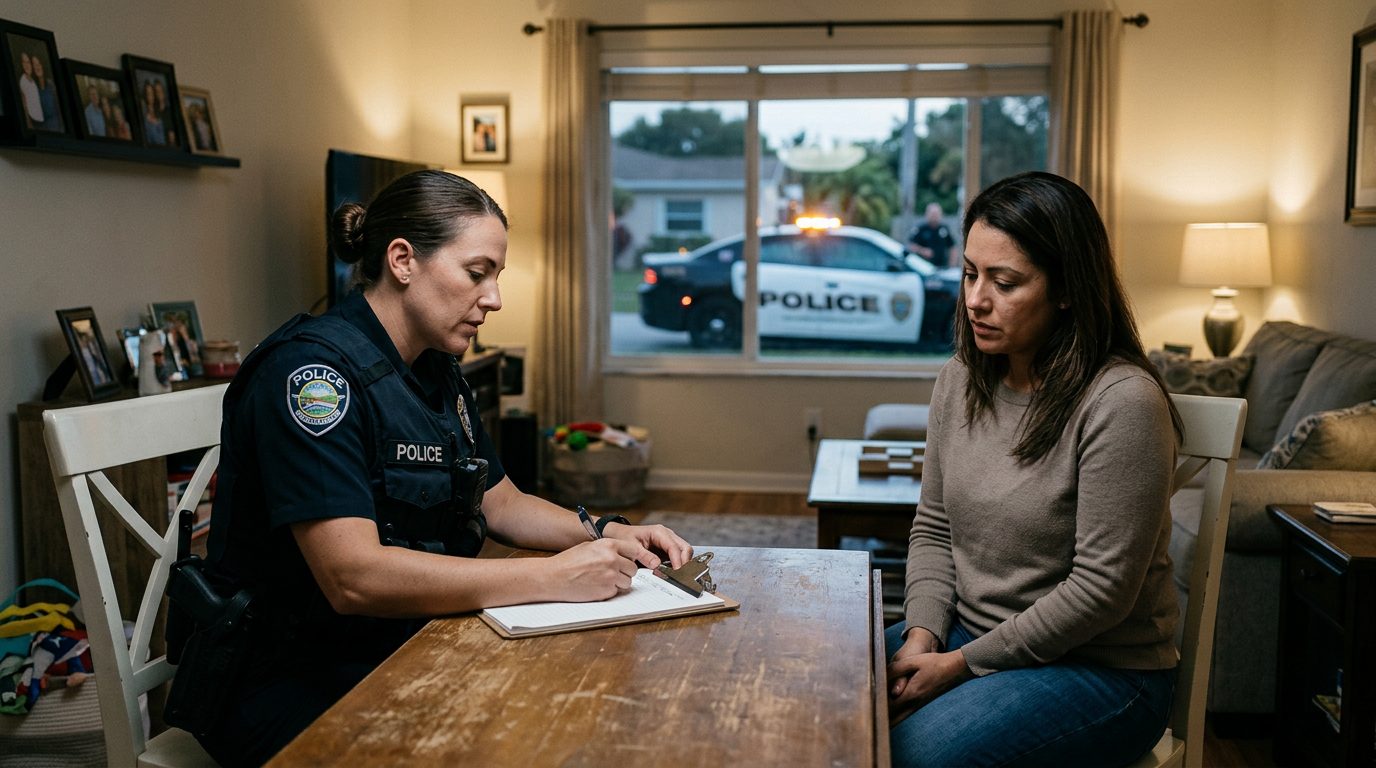
Domestic Violence Defense
Domestic Violence Defense Attorney in Broward County
Aggressive representation for allegations of domestic battery, assault, and protective order violations across South Florida.
By Patrick David Wilson · Published October 05, 2026
Domestic Violence Defense Attorney in Broward County
A domestic violence charge in Broward County carries criminal penalties—jail time, fines, mandatory programs—and serious collateral consequences that threaten your job, professional license, and family relationships. Understanding what you’re facing and taking immediate legal action can make the difference between conviction and dismissal, between a destroyed career and one you can rebuild.
If you've been arrested or charged with domestic violence in Broward County, the first hours matter—reach out to Patrick Wilson Law now to discuss your situation and explore your options. Talk it through with our team — the first consultation is free, confidential, and carries no obligation.

Domestic Violence Charges in Broward County: What You’re Facing
Under Florida Statute § 741.28, domestic violence includes intentional physical harm, assault, battery, sexual assault, stalking, or cyberstalking committed by a family or household member—a spouse, ex-spouse, parent, child, or anyone living with you in a family-like setting.
Broward County prosecutors are aggressive in these cases. Charges range from misdemeanor to felony depending on whether an injury occurred, whether a weapon was involved, and your prior criminal history. What matters most: Florida’s mandatory arrest policy means law enforcement must arrest the primary aggressor when probable cause exists—even if the alleged victim asks them not to. You will likely be arrested.
If you’re a first-time offender or a licensed professional—a doctor, nurse, teacher, lawyer, or contractor—the stakes are even higher. A criminal conviction doesn’t just mean jail time. It means professional licensing board investigations, employment termination, custody loss, and a permanent record that affects your future.
How to Get a Domestic Violence Case Dismissed in Florida
Dismissal isn’t automatic, but it’s possible. It requires identifying legal defects in the prosecution’s case: insufficient evidence, violation of your constitutional rights, credibility problems with the accuser, or lack of probable cause for arrest.
Common grounds for dismissal include police failure to follow proper arrest procedures, witness statements that contradict the charge, injuries inconsistent with the allegation, or the alleged victim recanting their story. Early investigation—before trial—can uncover these defects and support a motion to dismiss.
Many cases hinge on the credibility of the accuser. If their account is inconsistent, if they have motive to lie, or if their history includes false allegations, that weakness becomes your defense. Your attorney must investigate thoroughly and challenge the evidence at every stage.
Protective orders issued in domestic violence cases can also be challenged. If the order lacks factual foundation or was issued without proper notice, it can be modified or dismissed at a hearing.
Penalties for a First-Time Domestic Violence Charge in Florida
Domestic battery is generally charged as a misdemeanor, which can carry jail time and a fine. When an injury is severe or a weapon is involved, the charge can rise to a felony, which carries the possibility of prison time and a higher fine. The exact exposure depends on the specific statute charged and the circumstances of your case.
But criminal penalties are only part of the picture. Florida law imposes mandatory collateral consequences:
- 26-week batterer’s intervention program: Mandatory participation, regardless of whether you accept responsibility. This is not optional.
- No-contact order: Prohibits any direct or indirect contact with the alleged victim.
- Firearm restrictions: You lose the right to possess firearms during probation.
- Professional consequences: Licensing board investigation, potential license suspension or revocation, employment termination, and background check disclosure.
- Custody implications: Domestic violence convictions affect custody and visitation rights in family court.
For licensed professionals, the licensing board investigation often moves independently of the criminal case. Your professional standing can be jeopardized before any criminal conviction occurs.
What Evidence Is Needed to Convict in a Domestic Violence Case
The prosecution must prove beyond a reasonable doubt that you committed an act of violence against a family or household member. Common evidence includes police reports, photographs of injuries, medical records, witness statements, 911 recordings, and text messages or communications.
The credibility of the accuser is central. Inconsistencies in their account, motive to lie, or a history of false allegations can undermine the entire case. Your defense can challenge the reliability of evidence, present alternative explanations, or demonstrate self-defense or defense of others.
Police reports often contain assumptions or one-sided narratives. Witness statements may be incomplete or contradictory. Photographs of injuries don’t always prove who caused them. Your attorney must scrutinize every piece of evidence and identify weaknesses the prosecution hopes you won’t notice.
Florida Domestic Violence Law: What Changed and What Applies Now
Florida’s mandatory arrest policy (Fla. Stat. § 741.2901) requires law enforcement to arrest the primary aggressor when probable cause exists—even if the alleged victim requests no arrest. This policy removes police discretion and makes arrest nearly certain.
Protective orders (restraining orders) are civil remedies issued by the court. They can be issued ex parte—without you present—and carry criminal penalties for violation. Violating a protective order is a separate criminal offense, even if you’re acquitted of the underlying domestic violence charge.
Stalking and cyberstalking are now treated as domestic violence offenses if committed by a family or household member. This includes repeated contact, monitoring, or threatening behavior online or in person.
Broward County courts apply Florida’s sentencing guidelines, which consider your prior criminal history, the nature of the offense, and victim injury. First-time offenders may have options—diversion programs, deferred prosecution, or negotiated resolutions—that require immediate exploration.
Not sure what your next step is?
Talk it through with our team — the first consultation is free, confidential, and carries no obligation.
Protective Orders and Your Defense Rights
A protective order can be issued temporarily without your presence. You have the right to a hearing to contest it, present evidence, and challenge the factual basis. Many protective orders are granted on one-sided allegations; your attorney can expose inconsistencies and argue for dismissal or modification.
Violating a protective order—even unintentionally—is a separate criminal offense. Sending an email, text message, or having indirect contact through a third party can trigger arrest and prosecution. Understanding the exact terms of any order and complying strictly while your case is pending is critical.
Why Your First Step Matters: Immediate Legal Representation
The hours and days after arrest are crucial. Early investigation preserves evidence, identifies witnesses, and protects your rights. Police interrogation without counsel present can result in statements used against you. You have the constitutional right to remain silent and request an attorney.
Broward County’s State Attorney’s office moves quickly. Early engagement with a defense attorney can influence charging decisions, bail conditions, and the trajectory of your case. First-time offenders and licensed professionals have options—but only if you act immediately.
Don’t wait for trial. Don’t assume the case will resolve on its own. Don’t discuss the allegations with anyone except your attorney. Every day that passes is a day the prosecution uses to build their case.
Domestic Violence Defense for Licensed Professionals in Broward County
A domestic violence charge threatens your professional license, career, and reputation—even before conviction. Professional licensing boards investigate criminal charges independently of the criminal case. Your medical license, law license, nursing license, or contractor’s license can be suspended or revoked based on the charge alone, not just a conviction.
Early mitigation, character evidence, and strategic case resolution can minimize licensing board consequences. Your defense strategy must account for both the criminal case and the professional licensing implications. This requires an attorney who understands both criminal law and the licensing process in your profession.
What to Do If You’ve Been Arrested for Domestic Violence in Broward County
Do not discuss the allegations with anyone except your attorney. Anything you say can be used against you. Request bail review and bond reduction immediately; Broward County courts consider your ties to the community, employment, and prior record when setting bail.
Gather documentation: employment records, character references, proof of community ties, and any evidence supporting your account of events. This material can support bail reduction arguments and help your attorney build your defense.
Contact Patrick Wilson Law as soon as possible. The sooner you have legal representation, the sooner we can investigate the arrest, preserve evidence, and develop a strategy tailored to your situation—whether you’re a first-time offender, a professional whose career is on the line, or someone facing false allegations.
Frequently Asked Questions
Can a domestic violence case be dismissed in Florida?
Yes. If the prosecution lacks sufficient evidence, violated your constitutional rights, or if the accuser’s credibility is compromised, a motion to dismiss can succeed—especially with early investigation and legal representation.
What happens if I violate a protective order in Broward County?
Violating a protective order is a separate criminal offense. Even unintentional violations—indirect contact through a third party, or a chance encounter—can result in arrest and prosecution.
Do I have to participate in a batterer’s intervention program?
Yes. Florida law mandates a 26-week batterer’s intervention program for anyone convicted of domestic violence, regardless of whether it’s a first offense or whether you accept responsibility for the allegations.
Will a domestic violence charge affect my professional license?
Almost certainly. Professional licensing boards investigate criminal charges independently. Your license can be suspended or revoked based on the charge alone, not just a conviction.
What should I do immediately after a domestic violence arrest?
Request an attorney, remain silent, don’t discuss the allegations with anyone except your lawyer, and contact Patrick Wilson Law to begin your defense immediately.
If you’ve been arrested or charged with domestic violence in Broward County, the first hours matter—reach out to Patrick Wilson Law now to discuss your situation and explore your options. Call 786-761-1719, contact us online, or leave us a message. Your career, your freedom, and your future depend on the decisions you make today.
How Patrick Wilson Law Defends Domestic Violence Cases
Challenge the Evidence
We investigate the prosecution's case from the start—examining police reports, witness statements, and physical evidence to identify weaknesses and constitutional violations.
Protective Order Defense
Whether you're facing allegations of violating an injunction or contesting the order itself, we work to protect your rights and your freedom of movement.
Early Intervention
The sooner we engage, the sooner we can gather evidence, interview witnesses, and build your defense before the prosecution's narrative hardens.
Direct Communication
You speak directly with your attorney—not a paralegal or junior associate. We handle your case personally from start to finish.
Act Quickly After an Arrest
Domestic violence charges in Broward County can escalate rapidly. Statements you make to police, even if well-intentioned, can be used against you. The first hours after arrest are critical—invoke your right to counsel immediately.
Common Questions About Domestic Violence Defense
Can a domestic violence case be dismissed?
Yes. If the prosecution lacks sufficient evidence, violated your constitutional rights, or if the accuser's credibility is compromised, a motion to dismiss can succeed—especially with early investigation and legal representation.
What happens if I violate a protective order?
Violating a protective order in Broward County can result in criminal charges, jail time, and a permanent record. We defend against these allegations and work to modify or dissolve orders that are overly broad or unjust.
Will a domestic violence conviction affect my job?
A conviction can have serious employment consequences, especially for licensed professionals. We focus on minimizing the impact to your career and reputation through aggressive defense and, when appropriate, exploring record sealing or expungement.
Can I get my record sealed or expunged?
Depending on the outcome of your case and your criminal history, you may be eligible to seal or expunge a domestic violence arrest or conviction. We handle the entire process to clear your record.

