
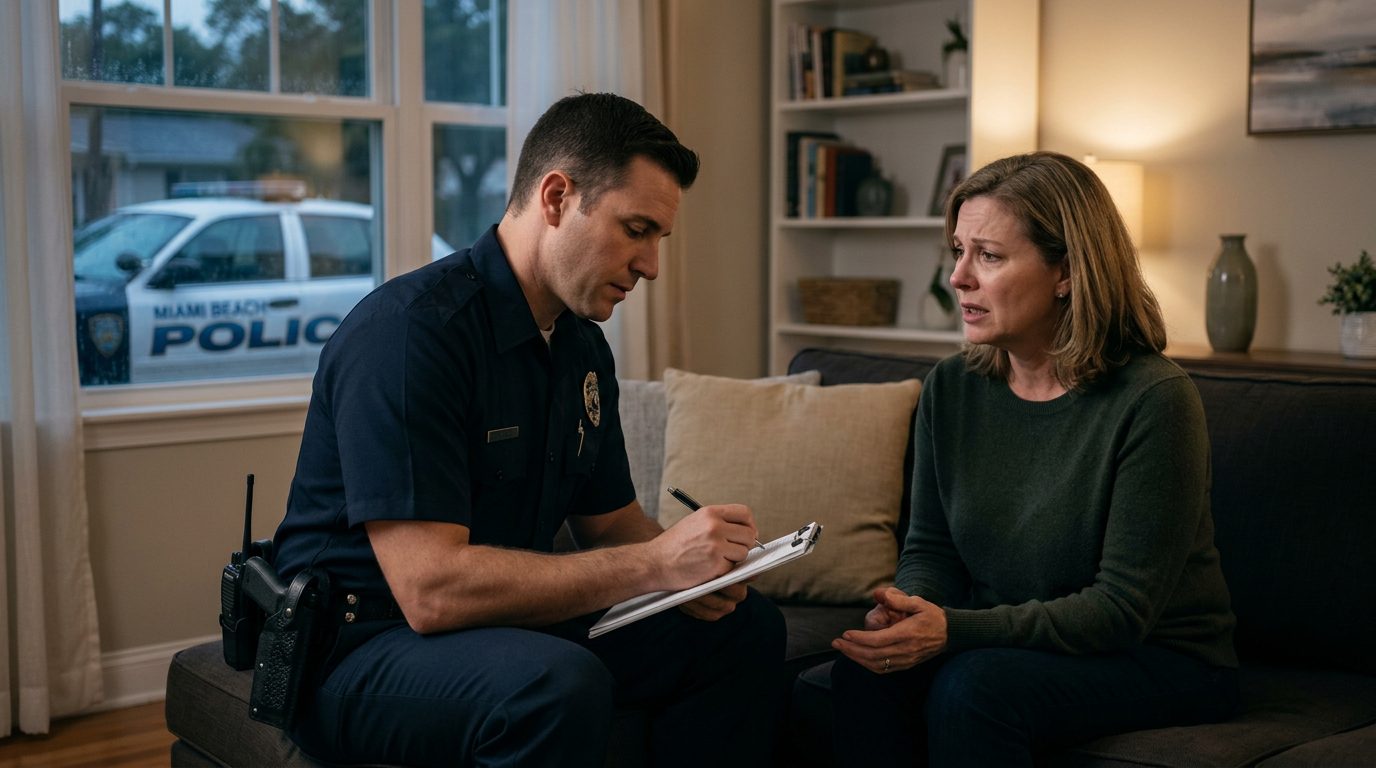
Domestic Violence Defense
Domestic Violence Defense Attorney in Miami Beach
Aggressive criminal defense for domestic violence charges across South Florida. Patrick Wilson Law defends your rights when your freedom and future are at stake.
By Patrick David Wilson · Published October 05, 2026
Domestic Violence Defense Attorney in Miami Beach
A domestic violence charge in Miami Beach can upend your life—threatening your job, your professional license, your custody rights, and your freedom. Under Florida law, domestic violence includes assault, battery, stalking, or other criminal offenses by one family or household member against another. Miami-Dade County prosecutors pursue these cases aggressively under mandatory arrest policies, often without waiting for your side of the story.
The good news: dismissal, reduction, or acquittal is possible when evidence is weak, obtained unlawfully, or contradicted by credible defense. This page explains what you’re facing, the pathways to dismissal, and why your first call should be to an attorney who knows Miami Beach courts.
Not sure what your next step is?
Talk it through with our team — the first consultation is free, confidential, and carries no obligation.

Domestic Violence Charges in Miami Beach: What You’re Facing
A domestic violence charge in Florida typically means you’re accused of battery (intentional physical contact or threat of harm) against a family or household member—a spouse, ex-partner, parent, child, or someone you live with.
Battery is a first-degree misdemeanor punishable by up to one year in jail. A simple battery under section 784.03 is a first-degree misdemeanor punishable by up to one year in jail; however, if you have a prior conviction for battery, aggravated battery, or felony battery, the charge becomes a third-degree felony under section 784.03(2), carrying up to 5 years in prison and a fine of up to $5,000. Aggravated battery—causing serious bodily injury or permanent disfigurement—is a second-degree felony with up to 15 years imprisonment and a $10,000 fine.
Miami-Dade County police and prosecutors don’t wait for your explanation. Mandatory arrest policies mean officers often arrest the accused without investigating both sides. A conviction carries a permanent criminal record, jail time, fines, probation, and collateral consequences that ripple through your career, licensing, and family life.
How to Get a Domestic Violence Case Dismissed in Florida
Dismissal happens when the prosecution cannot prove guilt beyond a reasonable doubt or when evidence is inadmissible. Several pathways exist.
Suppression motions challenge the legality of evidence. If police arrested you without probable cause, obtained a statement without reading you your Miranda rights, or searched your home without a warrant, your attorney can file a motion to suppress that evidence. Removing key evidence often collapses the prosecution’s case.
Credibility challenges undermine the accuser’s testimony. Inconsistencies in their account—changing details, contradictions with police reports, or implausibilities—can convince a judge or jury that their story isn’t reliable. Witness testimony from people who observed the incident or its aftermath can corroborate your version.
Lack of probable cause or failure to follow mandatory arrest procedures may result in dismissal. If police violated departmental policy or lacked reasonable grounds to arrest you, your attorney can move to dismiss the charges.
Early investigation by your defense attorney identifies weaknesses in the prosecution’s evidence before trial. Police reports, body camera footage, 911 recordings, and witness statements are examined for gaps, contradictions, or signs of coercion.
What Is Strong Evidence in a Domestic Violence Case?
The prosecution relies on several types of evidence. Understanding them helps your attorney challenge their reliability.
Physical evidence includes injuries, photographs, and medical records. Your attorney will examine whether injuries are consistent with the alleged victim’s account or could result from other causes. Absence of injury, or minor injury inconsistent with a serious assault claim, weakens the prosecution’s case.
Witness statements from people who saw the incident or its aftermath carry weight. Your attorney will cross-examine these witnesses, identify inconsistencies, and explore their bias or motive to favor one side.
Police reports, body camera footage, and 911 recordings are central. Body camera video often reveals details the alleged victim omitted or contradicted. 911 calls may show the caller’s emotional state, tone, or statements that undermine their credibility.
Text messages, emails, and social media posts related to the incident, threats, or prior disputes are examined for context. A message taken out of context by the prosecution may look innocent when read in full.
Prior incidents documented in police records can be a double-edged sword. While they may support the prosecution’s narrative, they can also show a pattern of false allegations or exaggeration by the accuser.
False Accusations in Domestic Violence Cases
False or exaggerated allegations occur in domestic violence cases, particularly during custody disputes, relationship breakdowns, or situations where one party seeks leverage in a civil matter.
Inconsistencies in the accuser’s story—changing details between the 911 call, police interview, and court testimony—signal fabrication or embellishment. Lack of corroborating witnesses or physical evidence strengthens a false accusation defense. If the alleged victim claims you caused injuries but medical records show no injuries, or if injuries predate the alleged incident, that evidence supports your defense.
Motive analysis is crucial. Your attorney investigates why the accuser might fabricate or exaggerate: pending custody disputes, financial disputes, revenge for a breakup, or a history of similar allegations against others. Demonstrating motive undermines the accuser’s credibility.
Collateral Consequences: Career, Licensing, and Immigration
A domestic violence conviction reaches far beyond criminal penalties.
Licensed professionals—healthcare workers, attorneys, teachers, engineers, and others—face license suspension or revocation. Your professional board may initiate disciplinary proceedings based solely on an arrest or conviction, even if the criminal case is dismissed.
Employment suffers immediately. Employers conduct background checks; a domestic violence arrest or conviction triggers termination or disqualification from hire. Future employment becomes difficult.
Non-citizens face deportation. A domestic violence conviction is a crime of moral turpitude under federal immigration law, making you deportable and ineligible for asylum, cancellation of removal, or other relief.
Firearm rights are restricted or eliminated under federal and state law. A domestic violence conviction prohibits firearm possession.
Custody and visitation rights may be affected in family court. A domestic violence conviction or even an arrest can influence custody determinations, even if the criminal case is dismissed.
Not sure what your next step is?
Talk it through with our team — the first consultation is free, confidential, and carries no obligation.
Defense Strategies in Miami Beach Domestic Violence Cases
Your attorney employs multiple strategies tailored to your case.
Credibility analysis examines inconsistencies in witness testimony, explores bias or motive, and cross-examines the alleged victim to expose weaknesses.
Police procedure review identifies Miranda violations, improper searches, failure to follow mandatory arrest protocols, or other constitutional breaches that render evidence inadmissible.
Physical evidence examination challenges injury claims, explores alternative explanations, and tests whether evidence was properly collected and preserved.
Accuser investigation uncovers motive, prior false allegations, or a history of similar accusations against others.
Prosecution negotiation may result in reduction to a lesser charge, diversion, or dismissal when evidence is weak.
Trial preparation readies your case for court if negotiation doesn’t resolve the matter.
The Mandatory Injunction Process and Protective Orders
Florida law requires the court to issue a protective order (injunction) in certain domestic violence cases. This is a separate legal proceeding from your criminal case.
A temporary injunction can be issued immediately based on the alleged victim’s petition. A final injunction follows a hearing where you have the right to present evidence and cross-examine the alleged victim. Violating an injunction—by contacting the alleged victim, going near their home or workplace, or other prohibited conduct—is a separate criminal offense.
Your attorney can challenge the injunction at the hearing, present evidence of your innocence or the accuser’s fabrication, and argue that an injunction is unwarranted. Understanding your rights in this process is critical to protecting your freedom and reputation.
Why Miami Beach Residents and Professionals Choose Patrick Wilson Law
Patrick Wilson Law serves Miami Beach, Miami-Dade County, Broward County, and South Florida with criminal defense focused on domestic violence, DUI, sexual battery, and other serious charges. The firm prioritizes first-time offenders and licensed professionals whose careers and livelihoods are at stake.
A free consultation allows you to evaluate your case, understand your options, and outline a defense strategy with an attorney who knows Miami Beach and Miami-Dade County courts, prosecutors, and procedures.
What Not to Tell Your Attorney
Attorney-client privilege protects confidential communications with your lawyer. Use this protection fully and honestly—do not withhold facts or details. Your attorney needs the complete truth to build an effective defense and anticipate prosecution arguments.
Do not discuss your case on social media, with friends, or with anyone other than your attorney. Do not contact the alleged victim, witnesses, or anyone connected to the case without your attorney’s guidance. Candor with your counsel allows them to prepare your best defense.

Frequently Asked Questions
Can the victim drop domestic violence charges after an arrest?
In Florida, the victim cannot unilaterally drop charges. The state prosecutor decides whether to proceed. However, if the alleged victim recants or is unavailable, the prosecution’s case weakens significantly.
How long does a domestic violence case take in Miami Beach courts?
Timeline varies. Misdemeanor cases typically resolve within months; felony cases may take a year or longer depending on discovery, motions, and trial scheduling.
What happens if I violate a protective order?
Violating an injunction is a separate criminal offense, typically a first-degree misdemeanor. Penalties include jail time, fines, and additional criminal charges.
Can a domestic violence conviction be sealed or expunged in Florida?
Yes, under certain circumstances. If your case is dismissed or you’re acquitted, you may petition to seal the arrest record immediately. If you’re convicted, you may petition after a waiting period.
If you’re facing a domestic violence charge or accusation in Miami Beach, the decisions you make now—including who represents you—will shape your future. Patrick Wilson Law offers a free consultation to discuss your case, explain Florida law, and outline your defense options. Call 786-761-1719 or leave us a message to get started today.
How Patrick Wilson Law Defends Domestic Violence Cases
Thorough Case Investigation
We examine police reports, witness statements, and evidence to identify inconsistencies, procedural errors, and weaknesses in the prosecution's case.
Protection Order Defense
We challenge temporary and final protective orders, represent you at injunction hearings, and work to have orders modified or dismissed when appropriate.
Negotiation & Resolution
We engage with prosecutors to explore dismissals, reduced charges, diversion programs, and favorable plea agreements that protect your future.
Defense for Licensed Professionals
If you hold a professional license, we understand the collateral consequences and fight to minimize damage to your career and livelihood.
Act Quickly After an Arrest
In Florida, domestic violence charges carry serious penalties—jail time, fines, loss of firearm rights, and lasting criminal records. The decisions you make in the first hours and days after arrest can significantly affect your case. Contact us immediately to protect your rights.
Common Questions About Domestic Violence Defense
Can the victim drop charges?
In Florida, the alleged victim cannot unilaterally drop charges. The state prosecutor decides whether to proceed. However, if the alleged victim recants or is unavailable, the prosecution's case weakens significantly.
How long does a case take?
Timeline varies based on whether charges are misdemeanor or felony, court scheduling, and case complexity. We work to resolve your case as efficiently as possible while protecting your interests.
What are the penalties?
Penalties depend on the charge level and your criminal history. Misdemeanor convictions can result in jail, fines, and a criminal record. Felony convictions carry prison time and additional collateral consequences.
Will this affect my job?
A domestic violence conviction can impact employment, professional licenses, housing, and custody rights. We work to minimize these collateral consequences through aggressive defense and strategic resolution.

