
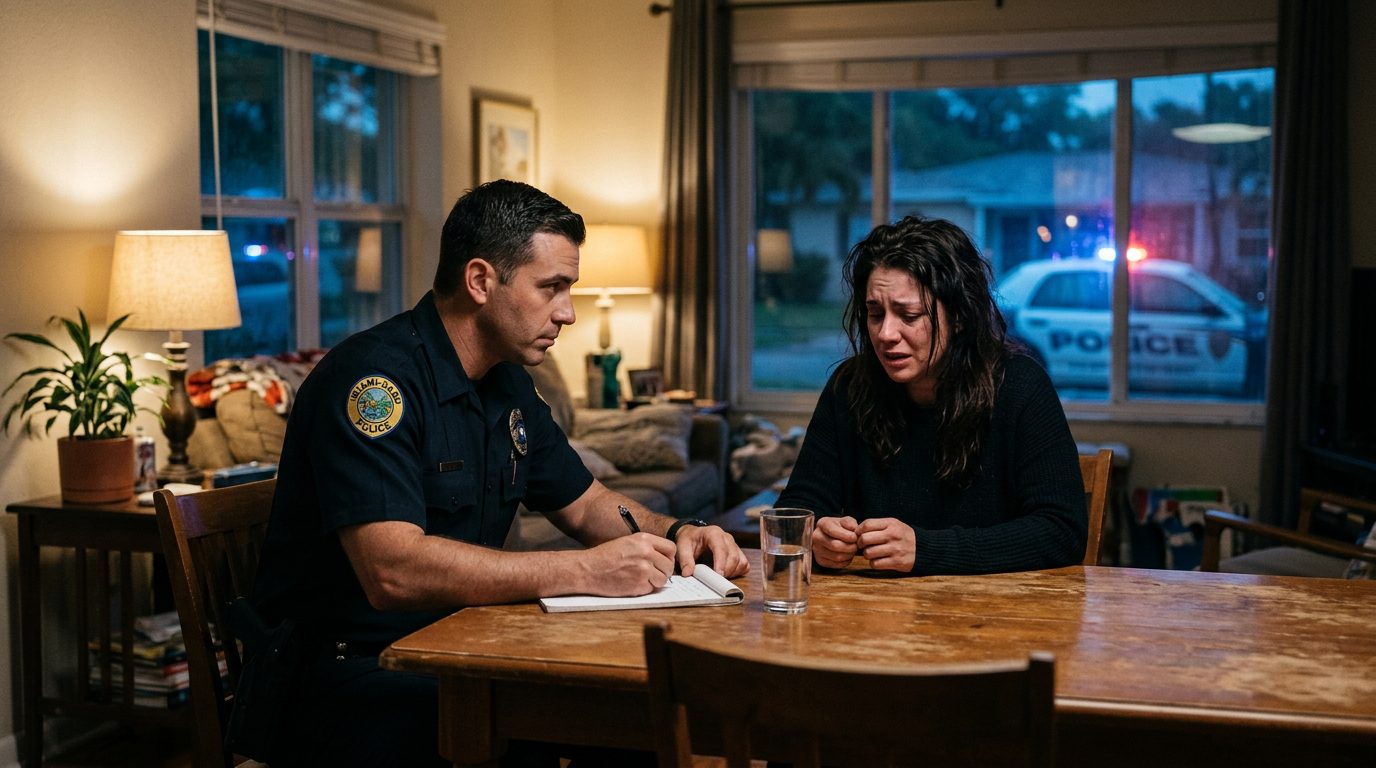
Criminal Defense
Domestic Violence Defense Attorney in Miami-Dade County
Aggressive representation for allegations of battery, assault, and abuse. Protecting your rights and your future.
By Patrick David Wilson · Published October 05, 2026
Domestic Violence Defense Attorney in Miami-Dade County
A domestic violence charge in Miami-Dade County can mean jail time, a criminal record, loss of firearm rights, professional discipline, and restrictions on your family. Police must arrest when they believe domestic violence has occurred—but arrest is not guilt. Early legal representation can challenge the charges, protect your rights, and preserve your career.
Patrick Wilson Law defends people facing domestic violence charges across Miami-Dade County. We handle cases at the Richard E. Gerstein Justice Building and work with the Miami-Dade State Attorney’s Office from arrest through trial. We focus on first-time offenders and licensed professionals whose careers depend on the outcome.
Not sure what your next step is?
Talk it through with our team — the first consultation is free, confidential, and carries no obligation.

What Is Domestic Violence Under Florida Law?
Domestic violence is not a separate crime. It’s a designation applied when battery, assault, or other violent offenses occur between people in a domestic relationship. A domestic relationship includes spouses, former spouses, people living together, parents and children, and dating couples.
The Eleventh Judicial Circuit of Florida operates a specialized Domestic Violence Criminal Court. When police respond to a domestic call and find probable cause that violence occurred, they must make an arrest—regardless of whether the alleged victim wants charges filed.
Common charges include:
- Battery (intentional touching or striking that causes injury or harm)
- Aggravated battery (battery with a weapon or causing serious injury)
- Felony battery (battery with a prior conviction or causing great bodily harm)
- Assault (threat of violence or attempt to commit battery)
- Aggravated assault (assault with a weapon or intent to cause serious injury)
The prosecutor’s case rests on police reports, witness statements, and physical evidence. Early investigation by your defense attorney can uncover inconsistencies, challenge the “primary aggressor” determination, and identify weaknesses in the state’s evidence.
Penalties for Domestic Violence Charges in Florida
Penalties depend on the charge level and your prior record. Battery as a misdemeanor carries jail time and fines. If you have a prior battery or violent offense conviction, battery becomes a felony with prison time.
Aggravated battery is a second-degree felony with serious prison exposure. Felony battery carries substantial prison time.
Beyond jail and fines, a domestic violence conviction triggers collateral consequences:
- Driver’s license suspension
- Firearm restrictions for felony and misdemeanor convictions
- Professional licensing impacts: medical, nursing, legal, real estate, and other licenses face disciplinary investigation and potential suspension or revocation
- Custody and visitation: a conviction can affect family law proceedings and parental rights
- Immigration consequences: non-citizens may face deportation or visa cancellation
- Employment barriers: conviction records appear in background checks
First-time offenders face heightened scrutiny. Early legal intervention—before trial or plea—can mean the difference between a conviction record and a dismissed case or deferred prosecution program.
How to Get a Domestic Violence Case Dismissed
Dismissal requires identifying weaknesses in the state’s case. Common dismissal strategies include:
Challenging the arrest. If police lacked probable cause or violated your rights, evidence they gathered may be suppressed. A pretrial motion to suppress can eliminate key prosecution evidence and lead to dismissal.
Questioning witness credibility. The alleged victim’s statement is often central to the prosecution’s case. If their account is inconsistent with police reports, medical records, or other evidence, cross-examination can undermine their credibility.
Examining physical evidence. Injuries, photographs, medical records, and forensic findings must be consistent with the prosecution’s narrative. A defense attorney can retain medical experts to challenge injury causation or severity.
Exploring self-defense. Florida’s Stand Your Ground law permits use of force to protect yourself from imminent harm. If you reasonably believed you faced danger, self-defense may apply.
Negotiating with prosecutors. Early communication with the Miami-Dade State Attorney’s Office can lead to case reduction, diversion programs for first-time offenders, or outright dismissal if evidence is weak.
Early legal representation improves dismissal prospects because investigators can preserve evidence and witness statements before memories fade.
False Accusations in Domestic Violence Cases
Domestic disputes can generate exaggerated or false allegations. Custody conflicts, financial disputes, or relationship breakdowns sometimes motivate accusations lacking factual foundation. Protective orders and criminal charges can be weaponized in family law battles.
Your defense attorney will investigate the accuser’s motive, timeline, and consistency. Documented communications, witness testimony, medical records, and surveillance footage can contradict or undermine false claims. Write down your account immediately after arrest—this contemporaneous record helps your attorney build your defense.
Orders of Protection in Domestic Violence Cases
An order of protection (also called an injunction for protection against domestic violence) is a civil court order restricting your contact with the alleged victim. It can prohibit you from residing at a shared home, contacting the alleged victim, coming within a specified distance of their home or workplace, and possessing firearms.
Temporary protective orders are issued at your first appearance or arrest; permanent injunctions last up to five years and can be renewed. Violation of an order is a criminal offense that adds charges and jail time to your case.
You can petition to modify or dissolve an order if circumstances change. Your defense attorney can argue that the order is unnecessary or overly restrictive, especially if you pose no threat or if contact is essential for parenting or employment.
Not sure what your next step is?
Talk it through with our team — the first consultation is free, confidential, and carries no obligation.
Tell Your Attorney Everything
Attorney-client privilege protects candid conversations with your lawyer. The prosecutor cannot compel your attorney to testify about what you say.
Many people fear that admitting facts to their lawyer will harm them. In fact, the opposite is true. Your attorney cannot effectively defend you without knowing the full story—your account, the context, your relationship with the alleged victim, and any prior incidents. Armed with complete information, your lawyer can develop realistic strategy and negotiate from a position of strength.
Do not speak to police without your attorney present. Statements you make to police are not privileged and can be used against you. Police interrogation is designed to elicit admissions. Once you invoke your right to an attorney, police must stop questioning. Remain silent and request your lawyer.
Domestic Violence Defense for Licensed Professionals
A domestic violence charge threatens not only your freedom but your career. Physicians, nurses, lawyers, real estate agents, contractors, and other licensed professionals face mandatory reporting to their licensing boards. The board may investigate and impose discipline independent of the criminal outcome.
Early intervention is critical. Your defense attorney can coordinate criminal defense strategy with licensing board strategy to minimize professional consequences. Some cases can be resolved through diversion programs or deferred prosecution, which keep a conviction off your record and avoid automatic board discipline.
Waiting for the criminal case to conclude before addressing the licensing issue can be fatal to your career. Boards act quickly, and delay signals indifference. Immediate legal counsel protects both your freedom and your livelihood.
Defense Strategies in Domestic Violence Cases
Your defense depends on the facts and evidence. Common strategies include:
- Self-defense: You used force because you reasonably believed you faced imminent harm
- Mutual combat: Both parties were aggressive, and the “primary aggressor” designation was wrong
- Proportional response: Your reaction was reasonable given the alleged victim’s conduct
- Credibility challenges: The alleged victim’s account is inconsistent or motivated by revenge
- Medical evidence: Injuries don’t match the prosecution’s narrative or could result from other causes
- Witness testimony: Neutral witnesses contradict the alleged victim’s version
Your attorney will evaluate the police report, photographs, medical records, witness statements, and any video or audio evidence. Pretrial discovery from the prosecution reveals their full case. Pretrial motions can suppress illegally obtained evidence or statements. If the case proceeds to trial, aggressive cross-examination and presentation of defense evidence can result in acquittal.
The Domestic Violence Defense Process in Miami-Dade County
Arrest and booking. You’re taken into custody, photographed, fingerprinted, and held pending first appearance.
First appearance. Within 24 hours, you appear before a Miami-Dade judge. The judge informs you of charges, advises you of your rights, and sets bail. Your attorney can argue for release on your own recognizance or a reduced bail amount. Conditions of release often include a protective order and requirement to attend counseling.
Bond hearing. If bail is set too high, your attorney can request a bond hearing to argue for lower bail based on your ties to the community, employment, family, and lack of flight risk.
Discovery. The prosecution provides police reports, witness statements, photographs, medical records, and other evidence. Your attorney reviews this material and may request additional discovery.
Pretrial motions. Your attorney files motions to suppress illegally obtained evidence, challenge the arrest, or dismiss charges. Evidentiary hearings on these motions can result in case dismissal before trial.
Negotiation. Your attorney discusses the case with the prosecutor, explores weaknesses in their evidence, and negotiates plea offers or case reduction.
Trial. If the case doesn’t resolve, your attorney prepares for trial, cross-examines prosecution witnesses, and presents your defense to a judge or jury.
Sentencing. If convicted, the judge imposes sentence. Your attorney can argue for lenient sentencing based on your background, employment, family ties, and lack of prior record.
Why Early Legal Representation Matters
The first 24 to 48 hours after arrest are critical. Statements you make to police—even seemingly innocent explanations—can be twisted or used against you. Invoking your right to an attorney immediately stops questioning and protects your rights.
Early investigation by your defense attorney preserves evidence and witness recollection. Memories fade; evidence disappears. Your attorney can interview witnesses, photograph the scene, obtain medical records, and gather documentation before the prosecution’s narrative hardens.
Immediate intervention affects bail conditions and protective orders. An aggressive bail argument can mean the difference between release and jail pending trial. Challenging an overly broad protective order can preserve your ability to work, see your children, or remain in your home.
Prosecutors are more willing to negotiate early in the process, before they invest resources in trial preparation. Early case evaluation and negotiation often yield better outcomes than waiting until trial.
First-time offenders benefit from diversion programs, deferred prosecution, or conditional discharge—options available early but not after conviction. Licensed professionals need immediate counsel to protect their careers before licensing boards act.
Not sure what your next step is?
Talk it through with our team — the first consultation is free, confidential, and carries no obligation.
Patrick Wilson Law Serves Miami-Dade County
We defend people facing domestic violence charges across Miami-Dade County, including Miami, Kendall, Hialeah, Homestead, and surrounding areas. We’re familiar with the Richard E. Gerstein Justice Building, the specialized Domestic Violence Criminal Court, local judges, and prosecutors in the Miami-Dade State Attorney’s Office.
We also handle related matters including first-time offender defense, protective order challenges, and battery charges.
We offer a free consultation to evaluate your case, explain your options, and answer your questions. We’re available for immediate representation at first appearances and bail hearings. We focus on first-time offenders and licensed professionals whose careers are at stake.
If you’ve been arrested for domestic violence in Miami-Dade County, the decisions you make now—especially whether to speak with a lawyer before police questioning—will shape your case. Call us at 786-761-1719 or contact us online to schedule your free consultation.
Frequently Asked Questions
Can a domestic violence charge be dismissed in Florida?
Yes. Dismissal requires identifying weaknesses in the prosecution’s case—lack of probable cause, credibility problems, inconsistent evidence, or violation of your rights. Early legal investigation and pretrial motions can lead to dismissal before trial.
What is the difference between battery and aggravated battery?
Battery is unlawful touching or striking that causes injury or harm. Aggravated battery involves a weapon or causes serious bodily injury. Aggravated battery carries much harsher penalties.
Can an order of protection be modified or removed?
Yes. You can petition the court to modify or dissolve an order of protection if circumstances change or if you can show the order is no longer necessary for the alleged victim’s safety.
Will a domestic violence conviction affect my professional license?
Very likely. Licensing boards receive notice of criminal convictions and conduct disciplinary investigations. Conviction can result in license suspension or revocation. Early legal intervention to avoid conviction or resolve the case through diversion can protect your license.
How long does a domestic violence case take in Miami-Dade County?
Timeline varies. Misdemeanor cases may resolve within a few months; felony cases often take six months to a year or longer. Early negotiation can accelerate resolution; trial preparation extends the timeline.
Act quickly.
Domestic violence charges carry serious consequences—jail time, restraining orders, loss of custody, and a permanent criminal record. Early legal intervention can identify weaknesses in the prosecution's case and protect your rights from the start.
What we handle
Battery and Aggravated Battery
Defense against charges involving intentional physical contact or use of a weapon. We examine the evidence, witness credibility, and whether your actions were lawful self-defense.
Assault Charges
Representation when you're accused of threatening or attempting to cause injury. We challenge the prosecution's proof of intent and threat.
Restraining Order Violations
Defense against allegations that you violated a protective order. We contest improper service, ambiguous language, and factual disputes.
First-Time Offender Defense
If this is your first brush with the criminal system, we work to minimize consequences and explore diversion or dismissal opportunities.
Why Patrick Wilson Law
Thorough case investigation
We examine police reports, witness statements, medical records, and evidence for inconsistencies, rights violations, and weaknesses that can lead to dismissal or reduction.
Pretrial motion strategy
We file motions to suppress evidence, challenge probable cause, and exclude inadmissible statements—often resolving cases before trial.
Licensed professionals protected
If you hold a professional license, we understand the collateral damage a conviction poses and work to preserve your career and reputation.
Miami-Dade County focus
We know the local courts, prosecutors, and judges. We practice throughout Miami-Dade, Broward County, and South Florida.
Direct access to your attorney
You work with Patrick Wilson—not a junior associate or paralegal. Your case receives personal attention from start to finish.
Immediate action
We respond quickly to protect your rights, preserve evidence, and build your defense while the case is fresh.
Common questions
Can a domestic violence charge be dismissed?
Yes. Dismissal requires identifying weaknesses in the prosecution's case—lack of probable cause, credibility problems, inconsistent evidence, or violation of your rights. Early legal investigation and pretrial motions can lead to dismissal before trial.
What is the difference between battery and aggravated battery?
Battery is intentional physical contact that causes injury or harm. Aggravated battery involves a weapon or causes serious bodily injury. Aggravated battery carries harsher penalties. We defend both charges by challenging the evidence and the prosecution's characterization of the incident.
Will I lose custody of my children?
A domestic violence conviction can affect custody decisions, but it is not automatic. We work to minimize the impact on your family law case and protect your parental rights.
What happens if I violate a restraining order?
Violations can result in arrest and additional criminal charges. We examine whether you actually violated the order, whether service was proper, and whether the order's language was clear and enforceable.

