
Miami DUI Defense
Aggressive DUI Defense When Your License and Freedom Are at Stake
Patrick Wilson Law provides individualized representation for DUI charges across Miami-Dade and Broward counties. We challenge the evidence, protect your rights, and fight for the best possible outcome.
By Patrick David Wilson · Published September 16, 2026
Miami DUI Defense Attorney: Protect Your Rights After Arrest
A DUI arrest in Miami is a serious criminal charge with immediate and long-term consequences that extend far beyond the courtroom. Your driver’s license is suspended instantly. You face mandatory jail time, substantial fines, probation, and a permanent criminal record. The prosecution has significant resources and experience prosecuting these cases. You need an experienced Miami DUI defense attorney who understands Florida law, local court procedures, and the defense strategies that actually work—and who will fight for your rights at every stage.

Not sure what your next step is?
Talk it through with our team — the first consultation is free, confidential, and carries no obligation.
Why You Need a Miami DUI Defense Attorney
A DUI conviction in Florida carries mandatory minimum penalties that don’t disappear after you serve your sentence. Your license suspension begins immediately upon arrest, separate from any criminal court proceedings. You’ll face jail time, fines, probation, mandatory DUI school, and an ignition interlock device requirement. Beyond the criminal penalties, a DUI record affects your employment prospects, housing applications, professional licensing, insurance rates, and your ability to travel or work in certain fields.
Early intervention by a defense attorney can significantly influence the trajectory of your case. An experienced attorney challenges evidence, identifies procedural errors, and negotiates with prosecutors before trial. The difference between facing trial and reaching a favorable resolution often comes down to how quickly and thoroughly your defense team investigates and prepares.
The state has resources—police reports, breathalyzer results, video footage, and witness statements. Without skilled legal representation, these pieces of evidence go unchallenged. Field sobriety tests are often administered incorrectly. Breathalyzers require proper calibration and maintenance. Traffic stops sometimes lack legal justification. Your attorney’s job is to find these weaknesses and use them to protect your rights.
Understanding DUI Charges in Florida
Under Florida Statutes § 316.193, a DUI occurs when you operate a vehicle with a blood alcohol concentration (BAC) of .08% or higher, or while impaired by alcohol or drugs. The law doesn’t require a high BAC reading—impairment alone is enough. This means the state can prosecute you even if your BAC is below .08% if police believe you were impaired.
DUI charges in Florida range from misdemeanor to felony depending on your prior record and the circumstances. A first or second offense within five years is typically a misdemeanor. A third offense within ten years becomes a felony. Any DUI involving injury or death is charged as a felony, regardless of prior record. Each category carries vastly different penalties and long-term consequences.
Breath, blood, and urine tests are central to most DUI prosecutions, but testing procedures and equipment calibration can be challenged. A breathalyzer must be properly maintained, calibrated, and administered according to strict protocols. Blood tests can be contaminated, mislabeled, or mishandled. Urine tests are the least reliable of the three. Your attorney investigates whether the testing met legal standards.
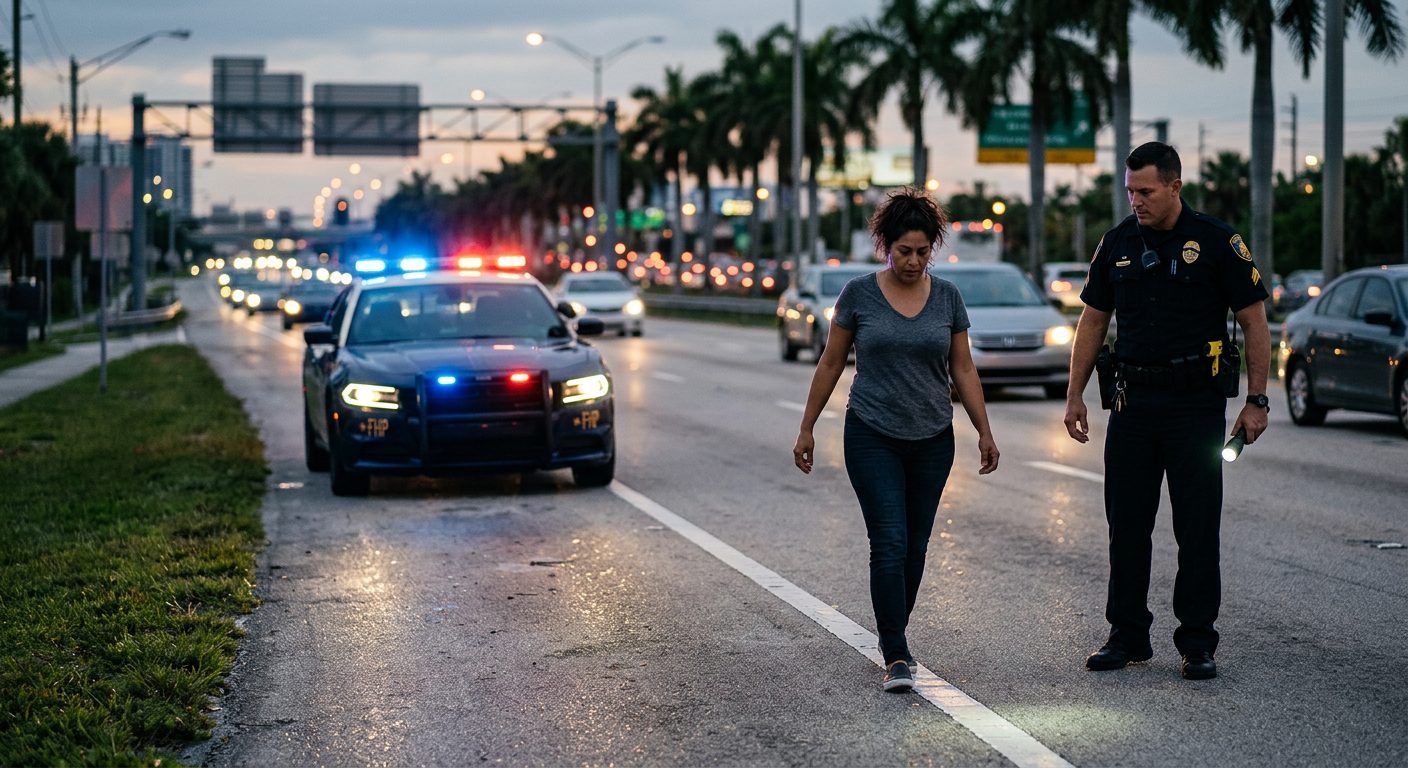
Field sobriety tests (FSTs) are subjective exercises—the horizontal gaze nystagmus test, the walk-and-turn test, and the one-leg stand. Police training and administration of these tests varies widely. Poor performance doesn’t guarantee guilt. Medical conditions, fatigue, nervousness, and uneven pavement can all affect results. These tests are often challenged successfully in court.
Under Florida’s implied consent law, codified in Florida Statutes § 316.1932, drivers are required to submit to breath, blood, or urine testing. Refusal to submit carries separate penalties including automatic license suspension and enhanced criminal penalties. Understanding your rights during a traffic stop is essential—and so is understanding the consequences of refusal.
DUI Penalties and Consequences in Miami-Dade and Broward Counties
The penalties for DUI in Florida are mandatory and severe. A first-offense DUI carries up to 6 months in jail, fines of $500–$1,000, license suspension, probation, and mandatory DUI school attendance. These are minimums—judges can impose harsher penalties depending on your BAC level, prior record, and aggravating circumstances.
A second-offense DUI within five years carries up to 9 months in jail, fines of $1,000–$2,000, a mandatory 5-year license suspension, and an ignition interlock device requirement. The ignition interlock device measures your breath alcohol level before the vehicle will start—it’s expensive, intrusive, and remains in place for years.
A felony DUI—a third offense within ten years or any DUI involving injury or death—carries up to 5 years in prison, substantial fines, and permanent or extended license revocation. Felony convictions carry collateral consequences that misdemeanor convictions don’t: loss of voting rights, firearm restrictions, and permanent barriers to certain employment.
Your driver’s license suspension is separate from criminal court proceedings. Upon arrest, your license is typically suspended immediately. You have only 10 days to request an administrative hearing to challenge the suspension. This hearing happens in front of the Florida Department of Highway Safety and Motor Vehicles (FLHSMV), not a criminal court. Many people don’t know this hearing exists—or they miss the deadline. An attorney ensures you preserve this critical opportunity.
Beyond criminal penalties, a DUI conviction affects your employment, housing, professional licensing, and insurance rates. Many employers conduct background checks and will not hire someone with a DUI on their record. Insurance companies raise rates dramatically or cancel policies entirely. Professional licenses in healthcare, law, education, and other fields can be suspended or revoked. Non-citizens face immigration consequences, including deportation. These collateral consequences often matter more to clients than the jail time itself.
What Happens After a DUI Arrest in Miami
When you’re arrested for DUI, you’re taken to a police station or county jail for booking. You’re photographed, fingerprinted, and your personal information is recorded. You’ll be held pending bail or release on your own recognizance (a promise to appear in court).
Within 24 hours of arrest, you must be brought before a judge for an initial appearance. At this hearing, the state must establish probable cause for your arrest. The judge will set bail conditions or release you. Early legal representation can influence bail conditions and help you avoid unnecessary jail time before trial.
Your driver’s license suspension begins immediately upon arrest—you’re typically given a temporary permit that expires in 10 days. If you don’t request an administrative hearing within 10 days, your license suspension becomes automatic. This is a separate process from your criminal case. You can win your criminal case and still lose your license if you miss this deadline.
The prosecution gathers evidence: police reports, breathalyzer results, video footage from the police car and station, witness statements, and your own statements to police. Your attorney reviews all of this discovery—the evidence the state plans to use against you. We identify weaknesses, inconsistencies, and procedural errors. We request additional evidence and expert reports. We determine whether the traffic stop was lawful, whether field sobriety tests were administered correctly, and whether breath or blood tests were reliable.
Early legal intervention affects the entire trajectory of your case. Prosecutors are more willing to negotiate early. Evidence can be lost or degraded over time. Witnesses’ memories fade. The sooner your attorney gets involved, the better positioned you are to challenge the state’s case or reach a favorable resolution.
Have questions about what happened?
Ask our team directly. The first conversation is free, confidential, and there is no obligation to continue.
Common DUI Defense Strategies
Challenging the traffic stop is often the first line of defense. Police must have reasonable suspicion to stop your vehicle—a specific, articulable reason to believe you’ve committed a traffic violation or crime. If the stop was unlawful, evidence obtained as a result can be suppressed (excluded from trial). Many DUI cases are won or lost at this stage.
Field sobriety tests are frequently challenged. Police must administer these tests according to strict protocols established by the National Highway Traffic Safety Administration (NHTSA). Improper administration, poor lighting, uneven pavement, or the officer’s subjective interpretation can all be challenged. An expert witness can testify about the reliability and limitations of FSTs.
Breath and blood test accuracy is central to many DUI defenses. Breathalyzers require proper calibration, maintenance, and operator training. Blood tests can be contaminated or mishandled during collection, storage, or analysis. Chain of custody (the record of who handled the sample) can be broken. Your attorney requests maintenance records, calibration certificates, and the technician’s qualifications. Expert witnesses can challenge the reliability of test results.
Police procedures matter. Did officers read you your Miranda rights before questioning? Did they follow proper arrest procedures? Did they document their observations accurately? Violations of proper procedure can result in evidence suppression or case dismissal.
Medical and physiological defenses sometimes apply. Certain medical conditions (diabetes, GERD, liver disease), medications, or foods can produce false positive BAC readings. An expert witness can testify about these conditions and their effect on breath or blood alcohol levels.
Negotiating reduced charges is sometimes the best outcome. In some cases, DUI charges can be reduced to reckless driving or other lesser offenses. This requires skilled negotiation with prosecutors and a thorough understanding of the strength of their case. Your attorney evaluates your options and advises you on the best path forward.
DUI Defense for Different Circumstances
A first-offense DUI requires a different strategy than a felony DUI. With a first offense, the focus is often on minimizing penalties, preserving employment and professional standing, and exploring diversion programs or alternative sentencing options. Even with a first offense, however, aggressive defense of the underlying charges is essential.
Felony DUI—a third offense within ten years or DUI with injury or death—requires aggressive defense strategy given the serious prison exposure and permanent consequences. These cases often involve expert testimony, complex investigation, and significant legal resources. The stakes are too high for anything less than a full defense.
DUI with injury or death involves complex investigation and expert testimony about causation, impairment, and accident reconstruction. These cases require specialized knowledge and resources. The penalties are severe, and the prosecution will marshal significant evidence.
Underage DUI is subject to enhanced penalties and license suspension. Drivers under 21 face a zero-tolerance law—any detectable alcohol is grounds for DUI. The case may proceed in juvenile or adult court depending on your age. Underage DUI carries collateral consequences that affect college admission, financial aid, and future employment.
License suspension defense through an administrative hearing offers an opportunity to challenge suspension independent of your criminal case. You can win your administrative hearing and lose your criminal case, or vice versa. Both are important and require separate legal strategy.
If you’re on probation and face new DUI charges, the consequences are compounded. Probation violation can result in revocation of probation and imposition of the original sentence. Immediate legal representation is critical in this scenario.
Serving Miami-Dade, Broward, and Surrounding Counties
Patrick Wilson Law represents clients throughout Miami-Dade County, including Miami Beach, Coral Gables, Hialeah, Doral, and Kendall. We also serve Broward County and surrounding jurisdictions. Our local court experience and relationships with prosecutors and judges inform our defense strategy. We understand the specific procedures, judges, and local practices in each county and jurisdiction. This local knowledge is invaluable—different judges apply sentencing guidelines differently. Different prosecutors are more or less willing to negotiate. Different courtrooms have different procedures and expectations. We navigate these nuances on your behalf.
Why Choose Patrick Wilson Law for Your DUI Defense
We provide individualized representation. You’re not a case number or a file in a stack. We treat each client and each case with focused attention. You work directly with an experienced attorney, not a paralegal or junior associate. We take the time to understand your situation, explain your options, and build a defense strategy tailored to your specific circumstances.
We have deep DUI experience. We understand Florida DUI law, testing procedures, and local court dynamics. We know how to challenge evidence, identify procedural errors, and negotiate with prosecutors. We’ve handled hundreds of DUI cases—we know what works and what doesn’t.
We conduct thorough case investigation. We don’t accept the state’s version of events. We challenge evidence, request expert reports, and build a strong defense. We investigate the traffic stop, the field sobriety tests, the breath or blood test procedures, and the officer’s conduct.
We communicate clearly. We explain the DUI process, your rights, your options, and realistic outcomes. We answer your questions and help you make informed decisions about your case. We’re accessible and responsive.
We advocate aggressively. We protect your rights at every stage, from arrest through trial or negotiation. We challenge the state’s evidence, file motions to suppress unlawfully obtained evidence, and prepare for trial if necessary.
Want to know where you stand?
Tell us what happened and our team will walk you through the options available to you, at no cost.
Next Steps: Getting Help with Your DUI Charge
Time is critical after a DUI arrest. Evidence can be lost or degraded. Memories fade. Witnesses become unavailable. The 10-day deadline to request an administrative license suspension hearing passes quickly. Early legal intervention can preserve evidence, challenge the state’s case, and protect your rights.
A free consultation allows you to discuss your arrest, understand your options, and learn how we can help. We answer your questions, explain the DUI process, and outline a defense strategy tailored to your situation. There’s no obligation—this is your opportunity to understand your rights and options.
Frequently Asked Questions
What are the penalties for a first-offense DUI in Miami?
A first-offense DUI carries up to 6 months jail, fines of $500–$1,000, license suspension, probation, and mandatory DUI school. Actual penalties depend on your BAC level, prior record, and aggravating circumstances.
Can I challenge a breath test result in a DUI case?
Yes. Breathalyzers must be properly calibrated and maintained, and operators must be trained. We request maintenance records, calibration certificates, and operator qualifications to challenge test reliability.
What happens to my driver’s license after a DUI arrest?
Your license is suspended immediately upon arrest. You have 10 days to request an administrative hearing to challenge the suspension. If you miss this deadline, suspension becomes automatic.
How does the implied consent law affect my case?
Under Florida’s implied consent law, you’re required to submit to breath, blood, or urine testing. Refusal carries separate penalties, including automatic license suspension and enhanced criminal penalties.
Can a DUI charge be reduced to a lesser offense?
In some cases, yes. DUI charges can sometimes be reduced to reckless driving or other lesser offenses through negotiation or successful motion practice. Your attorney evaluates the strength of the state’s case and your options.
What is an administrative license suspension hearing?
This is a separate hearing before the Florida Department of Highway Safety and Motor Vehicles to challenge your license suspension. It’s independent of your criminal case and offers an opportunity to preserve your driving privileges.
What should I do immediately after a DUI arrest?
Exercise your right to remain silent and request an attorney. Don’t answer questions without your attorney present. Request an administrative license suspension hearing within 10 days. Contact an experienced DUI defense attorney immediately.
If you’ve been arrested for DUI in Miami-Dade County or Broward County, you’re facing immediate license suspension, mandatory jail time, substantial fines, and a permanent criminal record—and the decisions you make in the next few days will significantly affect your case and your future. People in your situation reach out to us regularly, and we help them understand their rights, challenge the evidence against them, and protect their interests. Contact Patrick Wilson Law today to schedule your free consultation.
Why Choose Patrick Wilson Law for Your DUI Defense
Thorough Case Investigation
We examine breath test calibration, field sobriety test administration, traffic stop legality, and police procedures to identify weaknesses in the prosecution's case.
Evidence-Based Strategy
Every DUI defense is built on a detailed analysis of the evidence against you—from chemical testing protocols to witness statements.
Immediate Action
DUI cases move quickly. We act fast to preserve evidence, request discovery, and protect your driving privileges during the administrative process.
Local Court Experience
We know the courts, prosecutors, and judges across Miami Beach, Coral Gables, Hialeah, Doral, Kendall, and throughout Miami-Dade and Broward counties.
Act Quickly: Your License May Be at Risk
A DUI arrest triggers both criminal charges and an administrative license suspension. You have limited time to request a hearing to challenge the suspension. Delay can result in losing your driving privileges.
Common DUI Defense Questions
What Are the Penalties for a First-Offense DUI in Miami?
A first-offense DUI can result in up to 6 months in jail, fines of $500–$1,000, driver's license suspension, probation, and mandatory DUI school. Penalties vary based on your BAC level, prior criminal history, and any aggravating circumstances such as property damage or injury.
Can I Challenge a Breath Test Result?
Yes. Breathalyzers must be properly calibrated, maintained, and administered according to strict protocols. Improper testing procedures, equipment malfunction, or operator error can all be grounds to challenge the reliability of the results.
What Happens If I Refuse a Breath or Blood Test?
Refusal to submit to chemical testing has serious consequences, including automatic license suspension and potential criminal penalties. However, refusal itself can be challenged, and the circumstances of the request matter in your defense.
Can I Seal or Expunge a DUI Conviction?
Eligibility for sealing or expunging a DUI record depends on the outcome of your case and Florida law. We evaluate your options and can pursue record relief if you qualify, helping you move forward without the stigma of a conviction.

