

Defense Against Vehicular Homicide Charges
Patrick Wilson Law represents clients facing vehicular homicide charges across Miami-Dade and Broward counties.
By Patrick David Wilson · Published September 16, 2026
Vehicular Homicide Defense Attorney: Patrick Wilson Law
A homicide charge in Florida is among the most serious criminal accusations you can face. The distinction between first-degree murder, second-degree murder, and manslaughter—and the legal defenses available to you—often hinges on complex questions of intent, premeditation, and circumstance. The stakes are enormous: convictions can mean life imprisonment or, in capital cases, the death penalty. Your defense must be immediate, thorough, and tailored to the specific facts of your case.

Not sure what your next step is?
Talk it through with Patrick Wilson — the first consultation is free, confidential, and carries no obligation.
Homicide Charges in Miami: What You Need to Know
Homicide is the unlawful killing of another human being, but the law distinguishes between several categories of homicide, each with different legal elements and penalties. The difference between charges—and between conviction and acquittal—often hinges on legal nuances such as intent, premeditation, and provocation. An arrest for homicide does not determine the outcome; the evidence, the investigation, and the defense strategy do. Time is critical: decisions made in the first hours and days after arrest significantly impact your case.
In serious criminal cases, the prosecution can move quickly to build its case, and early legal intervention may help protect your rights, preserve evidence, and lay the foundation for a defense. The burden of proof rests entirely on the prosecution—they must prove their case beyond a reasonable doubt. Your attorney’s job is to challenge that proof at every stage.
Types of Homicide Charges in Florida
Premeditation means the defendant formed the intent to kill before the act; deliberation means the defendant made a conscious decision to kill.
Second-Degree Murder
Fla. Stat. § 782.04(1)(b) covers intentional killings without premeditation, or killings that occur during the commission of a felony (felony murder). Second-degree murder carries a maximum penalty of life imprisonment, with sentencing determined by Florida’s sentencing guidelines.
This charge carries a maximum penalty of 15 years imprisonment.
Involuntary Manslaughter
Fla. Stat. § 782.07 covers unlawful killings caused by recklessness or negligence, without intent to kill. This also carries a maximum of 15 years imprisonment.
Aggravated manslaughter carries a maximum penalty of 30 years imprisonment.
Vehicular Homicide
Fla. Stat. § 782.071 covers deaths caused by reckless or DUI-related driving. Vehicular homicide carries penalties of 2–15 years imprisonment depending on the circumstances.
Felony Murder
Under Fla. Stat. § 782.04(1)(b), a death occurring during the commission of certain dangerous felonies can result in murder charges.
Why Homicide Defense Involves Complex Legal Standards
Homicide prosecutions involve complex legal standards that go far beyond the simple fact that someone died. The prosecution must prove specific mental states—intent to kill, premeditation, deliberation—beyond a reasonable doubt. These are not facts the jury can see; they must be inferred from evidence, and the defense may challenge those inferences.
Investigation in homicide cases is intensive. Police, prosecutors, and defense teams all conduct thorough examinations of evidence, witnesses, and circumstances. Forensic evidence, witness statements, and physical evidence can often be interpreted in multiple ways. A skilled defense attorney identifies weaknesses in the prosecution’s interpretation and presents alternative explanations supported by the evidence.
Procedural issues matter enormously. Improper searches, illegal interrogations, Miranda violations, and chain-of-custody problems can exclude evidence or undermine the prosecution’s entire case. Early legal intervention—before you speak to police—protects your constitutional rights and can prevent statements from being used against you.
The sentencing exposure in homicide cases is staggering. The difference between charges, convictions, and sentences can mean decades of imprisonment. Mitigation and advocacy at sentencing—presenting evidence of your background, character, and circumstances—are essential to minimizing the sentence imposed.
Common Defenses in Homicide Cases
Self-Defense and Stand Your Ground
Fla. Stat. § 776.012 permits the use of force, including deadly force, in self-defense when you reasonably believe such force is necessary to prevent death or great bodily harm. Whether a self-defense claim leads to acquittal or immunity from prosecution depends on the facts and applicable law. Establishing this defense requires careful analysis of the circumstances, the threat you faced, and your reasonable belief at the moment.
Lack of Intent
Challenging the prosecution’s evidence that you acted with intent to kill or with premeditation and deliberation.
Mistaken Identity
Establishing that you were not the person who committed the homicide. Eyewitness testimony can be unreliable; forensic evidence can be challenged; alibi witnesses can place you elsewhere.
Accident or Recklessness Rather Than Intent
Arguing that the death resulted from accident, negligence, or recklessness rather than intentional conduct. Whether this defense reduces a first-degree murder charge to manslaughter depends on the facts and applicable law.
Provocation and Heat of Passion
Whether a claim of heat of passion provoked by the victim’s conduct reduces first-degree murder to voluntary manslaughter depends on the facts and applicable law.
Accomplice Liability Challenges
In felony murder or conspiracy cases, challenging your role, knowledge, or participation in the underlying offense. Whether you can be held liable for a death you did not foresee and did not intend to facilitate depends on the facts and applicable law.
Have questions about what happened?
Ask me directly. The first conversation is free, confidential, and there is no obligation to continue.
What Happens After a Homicide Arrest
Understanding the process after arrest helps you and your family prepare and make informed decisions.
Immediate Detention and Initial Appearance
Whether a homicide suspect is held without bail pending an initial appearance depends on the facts and applicable law. Depending on the facts and applicable law, an initial appearance before a judge may address the charges, bail, or bond. Do not speak to police without an attorney present. Anything you say can be used against you.
Bond Hearing
The defense can argue for release on bond. The judge considers factors including ties to the community, criminal history, employment, and flight risk. Your attorney advocates for your release or the lowest possible bond.
Investigation Phase
Police and prosecutors continue gathering evidence. The defense investigates independently, challenges the state’s evidence, and identifies weaknesses in their case.
Discovery
The prosecution must disclose evidence to the defense, including police reports, witness statements, forensic results, and any exculpatory evidence (evidence that supports your innocence or undermines the prosecution’s case). Your attorney reviews all discovery carefully.
Pretrial Motions
The defense files motions to suppress evidence obtained illegally, challenge procedures, and narrow the scope of trial. These motions can significantly weaken the prosecution’s case.
Plea Negotiations
Depending on the evidence and circumstances, the defense may negotiate with prosecutors for reduced charges or favorable sentencing recommendations. Your attorney advises you of all options.
Trial Preparation
If the case proceeds to trial, both sides prepare witnesses, evidence, and legal arguments. Your attorney ensures you are prepared and that your defense is presented effectively.
Penalties and Sentencing for Homicide in Florida
The penalties for homicide convictions in Florida are severe:
- Vehicular Homicide: 2–15 years imprisonment depending on circumstances
- Attempted Murder: Up to life imprisonment
Sentencing considers prior criminal history, the defendant’s role in the offense, victim impact, the defendant’s background, and mitigating factors. Your attorney presents mitigation evidence and arguments to minimize the sentence.
The Role of Your Homicide Defense Attorney
Your attorney’s role is multifaceted and begins immediately after arrest:
Immediate Protection of Rights
Ensuring that police follow proper procedures, that statements are not coerced, and that searches are lawful. Depending on the facts and applicable law, this early intervention may affect whether evidence can be used against you.
Independent Investigation
Gathering evidence, interviewing witnesses, and identifying weaknesses in the prosecution’s case. The defense does not rely on the police investigation and develops its own.
Evidence Analysis
Reviewing forensic reports, police reports, and witness statements to identify inconsistencies, errors, or alternative explanations.
Legal Strategy
Developing a defense strategy tailored to the specific facts, charges, and circumstances of your case. No two cases are identical.
Negotiation
Engaging with prosecutors to explore plea options, reduced charges, or favorable sentencing recommendations.
Trial Advocacy
Presenting evidence, cross-examining witnesses, and arguing the law and facts to a jury.
Sentencing Advocacy
If convicted, presenting mitigation evidence and arguments to minimize the sentence imposed.
Vehicular Homicide Defense
Homicide charges in Miami-Dade and Broward County are brought by the state.
Patrick Wilson Law is based in Miami.
Want to know where you stand?
Tell me what happened and I will walk you through the options available to you, at no cost.
Frequently Asked Questions
What is the difference between first-degree murder and second-degree murder in Florida?
First-degree murder requires premeditation and deliberation (forming the intent to kill before the act and making a conscious decision to kill). Second-degree murder is an intentional killing without premeditation, or a killing during a felony. First-degree murder carries life or death; second-degree carries up to life.
Can I be charged with murder if I didn’t pull the trigger?
Yes.
What is voluntary manslaughter versus involuntary manslaughter?
Voluntary manslaughter is an unlawful killing without intent to kill, committed in the immediate heat of passion provoked by the victim. Involuntary manslaughter is an unlawful killing caused by recklessness or negligence, without intent to kill. Both carry up to 15 years.
How does Florida’s Stand Your Ground law apply to homicide charges?
Fla. Stat. § 776.012 permits the use of deadly force in self-defense when you reasonably believe it is necessary to prevent death or great bodily harm. Whether a self-defense claim leads to acquittal or immunity from prosecution depends on the facts and applicable law.
What should I do immediately after being arrested for homicide?
Do not speak to police without an attorney present. Contact a homicide defense attorney immediately. Write down details of what happened and names of witnesses. Do not discuss the case on phone, email, or social media.
How long do homicide cases take in Miami courts?
Homicide cases typically take 1–3 years from arrest to trial, depending on the complexity of the case, the volume of discovery, and court scheduling. Your attorney manages the timeline and keeps you informed.
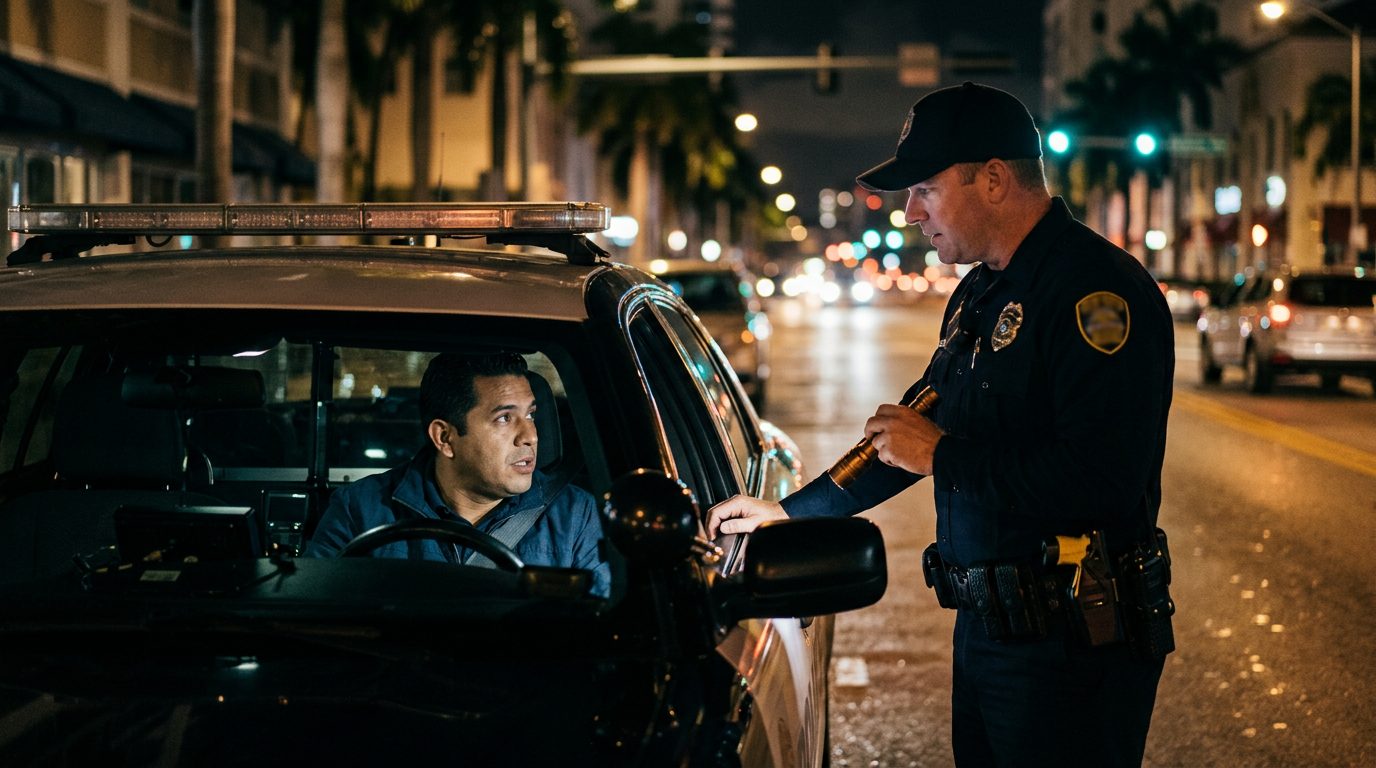
Next Steps: Protect Your Rights Now
If you’ve been arrested for vehicular homicide in Miami-Dade or Broward County, the decisions you make in the first hours are critical. Do not speak to police without an attorney. Contact Patrick Wilson Law immediately. I understand the gravity of these charges and the impact on you and your family. Protecting your rights and investigating your case thoroughly are central to this representation. Contact me today for a free consultation and take the first step toward protecting your future.
Critical First Steps
Homicide charges demand immediate legal attention. The decisions you make in the first hours and days can significantly impact your defense. Do not discuss the case with anyone except your attorney.
Understanding Homicide Charges in Florida
First-Degree Murder
Requires premeditation and deliberation—forming the intent to kill before the act and making a conscious decision to kill. Carries a sentence of life imprisonment or death.
Second-Degree Murder
An intentional killing without premeditation, or a killing that occurs during the commission of a felony. Carries up to life imprisonment.
Manslaughter
The unlawful killing of another human being without malice. May be voluntary (in the heat of passion) or involuntary (through recklessness). Carries up to 15 years imprisonment.
Heat of Passion Defense
A legal doctrine that may reduce first or second-degree murder to manslaughter if the killing occurred during a sudden, intense emotional state provoked by the victim's conduct.
Why Patrick Wilson Law for Your Homicide Defense
Individualized Representation
Every homicide case is unique. Patrick Wilson builds a defense strategy tailored to the specific facts, evidence, and circumstances of each case.
Thorough Evidence Review
Patrick Wilson examines police reports, witness statements, forensic evidence, and investigative procedures to identify weaknesses and protect your rights.
Direct Communication
You work directly with Patrick Wilson on your case. Patrick Wilson keeps you informed every step of the way and answers your questions thoroughly.
Vehicular Homicide Cases in Miami-Dade and Broward Counties
Patrick Wilson Law focuses on vehicular homicide defense in Miami-Dade and Broward counties.
Key Defenses in Homicide Cases
Self-Defense or Defense of Others
Florida law permits the use of force to protect yourself or another person from imminent harm. We evaluate whether your actions fall within lawful self-defense.
Lack of Premeditation
Challenging whether the prosecution can prove premeditation and deliberation is essential in first-degree murder cases. We scrutinize the evidence of intent.
Mistaken Identity or False Accusation
Eyewitness testimony can be unreliable. We investigate whether you were actually present and involved in the alleged crime.
Constitutional Rights Violations
Illegal searches, unlawful detention, or coercive interrogation can render evidence inadmissible. We challenge violations of your rights.

