
DUI Defense | Miami-Dade & Broward
Refusing a Breathalyzer in Florida: License & Legal Consequences
Understanding your rights and the penalties. Get immediate legal guidance.
By Patrick David Wilson · Published September 28, 2026
Refusing a Breathalyzer During a DUI Stop: License Suspension and Legal Consequences
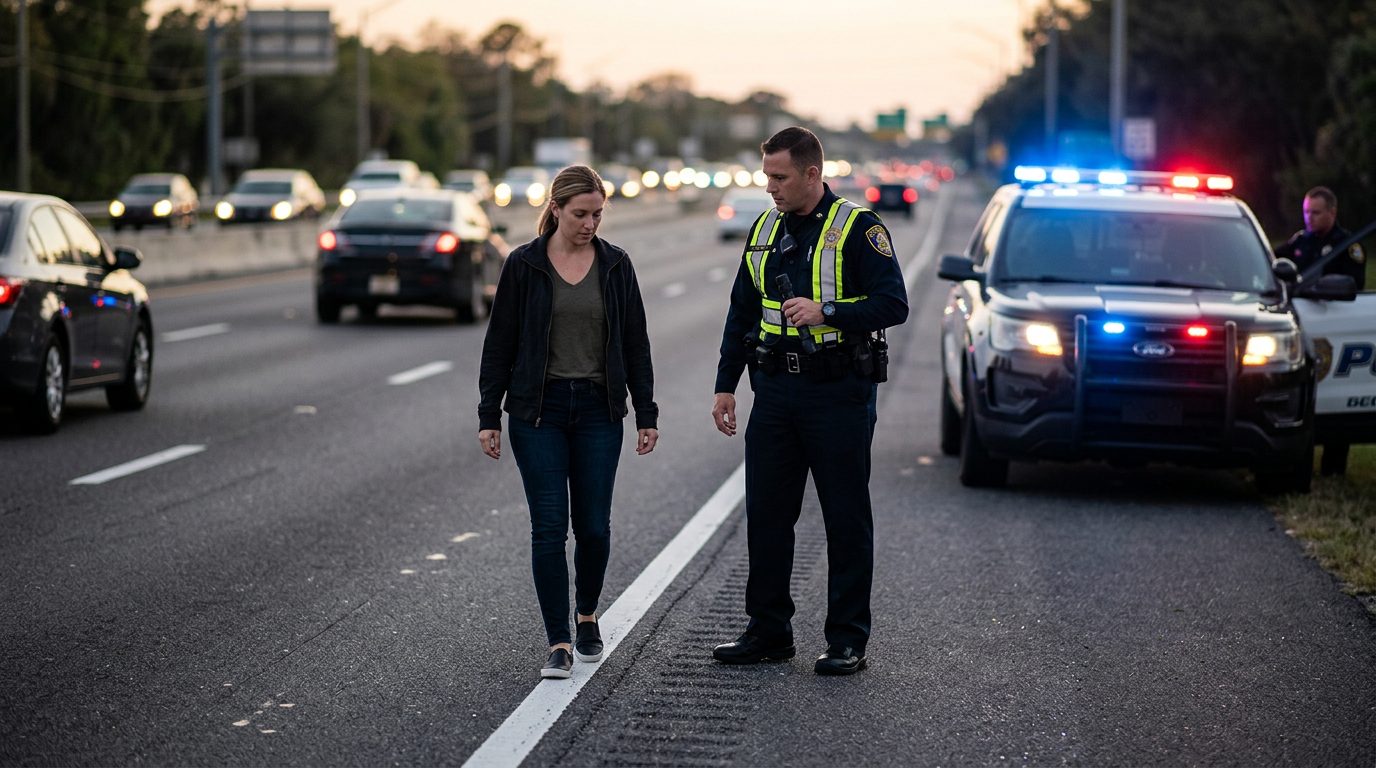
When a police officer asks you to take a breathalyzer test during a DUI stop, you have the legal right to refuse. However, refusing a breathalyzer can lead to license suspension and may result in separate criminal charges, depending on the facts and applicable law. These consequences are ones that many drivers don’t fully understand until it’s too late. This article explains what Florida’s implied consent law means, what happens immediately after refusal, and why early legal guidance matters.
Not sure what your next step is?
Talk it through with me — the first consultation is free, confidential, and carries no obligation.
What Is the Implied Consent Law for Chemical Tests?
Florida Statute 316.1932 makes it unlawful to refuse a chemical test (breath, blood, or urine) when you’re lawfully arrested for DUI. This law is called “implied consent” because driving on Florida’s public roads is considered an implied agreement to submit to chemical testing if arrested for DUI. The statute applies to breath tests (breathalyzers), blood tests, and urine tests—and the consequences differ depending on which test you refuse and whether you’ve refused before.
The key word is “lawfully arrested.” The officer must have had legal grounds to stop your vehicle and probable cause to believe you were driving under the influence. If either of those elements is missing, the implied consent law may not apply, and the refusal itself may be challengeable.
Your Right to Refuse a Breathalyzer Test
You have the legal right to refuse a breathalyzer test. Refusal is not an admission of guilt, and it does not mean you were driving under the influence. However, officers must inform you of your rights before requesting the test.
Many drivers believe that refusing a test protects them legally. In reality, refusal creates a separate set of legal problems. A failed breathalyzer test shows a specific blood alcohol level; a refusal doesn’t prove intoxication, but it can trigger penalties that depend on the facts and applicable law, and it can be interpreted unfavorably by a judge or jury.
The distinction is important: refusing a test is not the same as failing a test. Both carry serious consequences, but they follow different legal paths.
How a Refusal May Affect Your License
After a refusal, the Administrative License Suspension (ALS) process may apply to your driving privilege, and whether it does depends on the facts of your stop and applicable law. This is separate from any criminal DUI case.
Timeline: The suspension notice is typically issued at the scene or within 10 days of your arrest. Your driving privilege is suspended 10 days after you receive notice—or 10 days after the notice is mailed if you don’t receive it in person.
Duration for a first refusal: If you refuse a breathalyzer for the first time within a 5-year period, your license may be suspended for 12 months, depending on the facts and applicable law.
Duration for subsequent refusals: If you refuse a second or later time within 5 years, the suspension may last 18 months or longer, depending on the facts and applicable law.
This suspension is administrative, meaning it happens through the Florida Department of Highway Safety and Motor Vehicles (FLHSMV), not the criminal court. You cannot drive legally during the suspension period unless you obtain a hardship license—and getting a hardship license after a refusal is significantly more difficult than after a failed test.
Criminal Penalties for Breathalyzer Refusal
Refusing a breathalyzer is not just an administrative matter. If you’re convicted of refusing a breathalyzer, you face:
- Fines: Up to $1,000 for a criminal refusal, which is a first-degree misdemeanor under Fla. Stat. 316.1939.
- Probation: Typically 6 to 12 months.
- Mandatory DUI school and community service.
Importantly, refusal can be treated more harshly than a failed breathalyzer test in some cases. Prosecutors and judges may view refusal as an attempt to hide evidence of intoxication, which can lead to enhanced penalties or a less favorable plea offer.
Have questions about what happened?
Ask me directly. The first conversation is free, confidential, and there is no obligation to continue.
Long-Term Consequences of Refusal
Beyond the immediate suspension and criminal penalties, refusing a breathalyzer creates lasting problems:
Criminal record: A refusal conviction becomes part of your criminal history, and whether it can later be sealed or expunged depends on the facts and applicable law. This affects employment, housing, professional licensing, and background checks.
Insurance: Your car insurance rates may increase after a DUI-related refusal, depending on the facts and your insurer. Some insurers cancel your policy entirely.
Employment and licensing: Many employers, especially those in transportation, healthcare, education, and government, conduct background checks. Depending on the facts and applicable law, a refusal conviction may affect your eligibility for certain positions or professional licenses.
Hardship license difficulty: After a refusal, you may be denied a hardship license altogether, or the criteria become much stricter. You’ll need to prove “essential need” (work, medical care, court-ordered treatment) and may face additional requirements.
Cumulative effect: Under the facts and applicable law, each refusal within 5 years may increase penalties and suspension duration. A second refusal within 5 years may result in a suspension of 18 months or longer and harsher criminal penalties, depending on the facts and applicable law.
Can You Challenge a Breathalyzer Refusal Suspension?
Yes. You have the right to request a formal review hearing (ALS hearing) to challenge the administrative license suspension. This is a separate proceeding from the criminal case and happens before the administrative agency, not criminal court.
Timeline: You must request the hearing within 10 days of receiving the suspension notice. Missing this deadline may mean you lose the right to challenge the suspension administratively, depending on the facts and applicable law.
Grounds to challenge: You can contest the suspension if: – The traffic stop was unlawful (the officer lacked reasonable suspicion). – The arrest was not lawful (the officer lacked probable cause for DUI). – You were not properly informed of your right to refuse and the consequences. – The officer failed to follow proper procedures in requesting the test.
Role of legal representation: At the ALS hearing, the burden is on the state to prove the stop and arrest were lawful. An attorney can cross-examine the officer, challenge the evidence, and argue that grounds for suspension don’t exist. Whether a suspension is upheld, modified, or dismissed depends on the facts and applicable law, including whether the grounds listed above apply to your case.
Possible outcomes: The suspension can be upheld, modified, or dismissed. If dismissed, your license is not suspended administratively, though the criminal case continues separately.
What to Do If You Refused a Breathalyzer
Immediate action is critical:
-
Document everything: Write down details of the traffic stop, the officer’s statements, the location, time of day, weather, road conditions, and any witnesses. Do this as soon as possible while your memory is fresh.
-
Preserve evidence: Note the officer’s name and badge number, the police department, and the report number. Request a copy of the police report and dash-cam or body-cam footage if available.
-
Understand your court dates: You’ll receive notice of both an ALS hearing (administrative) and a criminal court date. These are separate proceedings with different deadlines.
-
Know the difference: The ALS hearing is your chance to challenge the license suspension before a hearing officer. The criminal case is where DUI charges are prosecuted in court. Winning one doesn’t automatically affect the other.
-
Act quickly: The 10-day deadline to request an ALS hearing is strict. Missing it forfeits your right to challenge the suspension. Early legal counsel ensures deadlines are met and evidence is preserved.
How a DUI Defense Attorney Can Help
An attorney familiar with DUI defense in Miami-Dade and Broward County can guide you through both the administrative and criminal proceedings:
Reviewing the stop and arrest: We examine whether the traffic stop was lawful and whether the officer had probable cause to arrest you for DUI. If either is flawed, the entire case—including the refusal—may be challengeable.
Challenging the breathalyzer request: We review whether you were properly informed of your rights and whether the officer followed correct procedures before requesting the test.
Representing you at the ALS hearing: We present evidence and cross-examine the officer to challenge the suspension. The outcome of this hearing depends on the specific facts and applicable law.
Building a criminal defense: Separately, we develop a defense strategy for the DUI charge itself.
Negotiating with prosecutors: We work to negotiate charges, penalties, and plea offers that minimize the impact on your license, employment, and record.
Protecting your rights: Throughout both proceedings, we ensure your constitutional rights are protected and that deadlines are met.
Want to know where you stand?
Tell me what happened and I will walk you through the options available to you, at no cost.
Frequently Asked Questions
Can I get a hardship license after refusing a breathalyzer?
Hardship licenses are much harder to obtain after a refusal than after a failed test. You must prove “essential need” and meet stricter criteria. An attorney can help you navigate the application process.
How long does the criminal case take after I refuse a breathalyzer?
Criminal DUI cases typically take several months to over a year, depending on whether you go to trial or reach a plea agreement. The administrative suspension runs independently and doesn’t wait for the criminal case to conclude.
Does refusing a breathalyzer mean I’ll lose my job?
Not automatically, but a conviction will appear on your record. Employers in transportation, healthcare, and government often conduct background checks. Early legal representation may help minimize the conviction’s impact.
What if the officer didn’t tell me I could refuse?
If you weren’t properly informed of your right to refuse and the consequences, that may be grounds to challenge the refusal itself and the suspension. An attorney can review the officer’s statements and the police report to determine if this defense applies.
Can I appeal the ALS hearing decision?
Yes, you can appeal an ALS hearing decision to circuit court. However, the appeal process is complex and has strict procedural requirements. Legal representation is essential.
If you refused a breathalyzer during a DUI stop in Miami-Dade or Broward County, you’re navigating two separate legal proceedings with strict deadlines and significant consequences. The 10-day window to request an ALS hearing is critical, and evidence preservation begins immediately. Your options for protecting your driving privileges and record depend on the facts of your case. Contact Patrick Wilson Law for a free consultation to understand what comes next.
Critical Timing
Florida law imposes strict deadlines for challenging a breathalyzer refusal. The decisions you make in the first hours after arrest can significantly affect your options. Contact an attorney immediately.
Key Questions About Breathalyzer Refusal
Can I Get a Hardship License After Refusal?
Hardship licenses are much harder to obtain after a refusal than after a failed test. You must prove essential need and meet stricter criteria. An attorney can help you understand the application process and the criteria that apply to your situation.
How Long Does the Criminal Case Take?
Criminal DUI cases vary in length depending on the facts, evidence, and court schedule. Your attorney can explain the typical timeline and what to expect at each stage of your case.
What Happens to My License?
Refusal may trigger an administrative license suspension separate from any criminal penalties, depending on the facts and applicable law. Understanding both the civil and criminal consequences is essential to your defense strategy.
Can My Refusal Be Challenged?
Refusals may be challengeable based on how police conducted the stop, whether they properly informed you of your rights, and other procedural factors. An attorney will review all details of your arrest.
Why You Need Legal Representation
Protect Your Driving Privileges
A refusal carries severe license consequences. We focus on strategies to minimize suspension time and explore hardship license eligibility.
Challenge the Stop & Procedure
Police must follow strict protocols. We examine whether your rights were protected and whether the refusal was properly documented.
Understand All Your Options
Refusal cases involve both criminal and administrative proceedings. We explain your choices and the potential outcomes of each path.
Act Quickly
Time limits apply to challenging refusals and requesting hearings. We ensure deadlines are met and your case is handled without delay.
Don't Face a Breathalyzer Refusal Charge Alone
Related practice areas
- Seal vs. Expunge Criminal Record in Florida: Differences

