
Criminal Defense | Miami
Facing a Vehicular Homicide Charge? Start With a Confidential Review of Your Case
Patrick David Wilson focuses his criminal defense practice on vehicular homicide and related traffic charges across South Florida, from Broward County to the Florida Keys. Your first consultation is free, confidential, and carries no obligation to continue.
By Patrick David Wilson · Published October 14, 2026
Vehicular homicide is a Florida charge for a killing caused by a driver operating a motor vehicle in a reckless manner likely to cause death or great bodily harm. The exact elements and penalties depend on the facts and the charge actually filed. The offense is defined in Florida Statutes § 782.071.
If you need a vehicular homicide defense attorney Fort Lauderdale residents can consult, Patrick David Wilson focuses on criminal defense from Miami. Patrick Wilson Law, PLLC serves people across South Florida, from Broward County to the Florida Keys. This page explains how these cases generally work. It is general information, not advice about your case.
What Vehicular Homicide Means Under Florida Law
Vehicular homicide requires a death, a motor vehicle operated by the accused, and reckless driving likely to cause death or great bodily harm. The base offense is a second-degree felony. It becomes a first-degree felony if the driver knew or should have known the crash occurred and failed to give information and render aid. The statute says that driver does not have to know the crash caused injury or death. Felony degrees are sorted under Florida Statutes § 775.081.
A separate crash law also matters. Florida Statutes § 316.027 requires a driver in a fatal crash to stop at the scene and stay until the reporting duties are met. The degree of any charged offense depends on the facts and the applicable law. Under s. 316.027(2)(c), a mandatory minimum term of 4 years applies when a leaving-the-scene crash caused a death, depending on the facts of the case and applicable law. Whether any of this applies depends on the facts.
Your charging papers show the exact statute and degree the state filed. Check them first.
Not sure what your next step is?
Talk it through with our team — the first consultation is free, confidential, and carries no obligation.
Vehicular Manslaughter, Negligent Homicide, and Other Terms You May See
Many people search for “vehicular manslaughter” or “negligent homicide.” These phrases can differ from the formal charge in a case. Florida’s statute is titled vehicular homicide, so match your terms to your own papers, not to a search result.
Fatal-crash cases often center on conduct such as distraction, speed, failure to yield, or running a light. These are allegations, not findings. Whether they fit the statute depends on the evidence and applicable law.
A criminal charge and a civil claim are separate matters. The state brings the criminal case. A civil claim is a separate action for damages. Florida Statutes § 782.071 states that a civil damages right exists for the deaths it covers. Rely on the exact wording of your arrest or charging documents, not on general terms.
How a Fatal Crash Case May Move Forward
A fatal crash case may move through an investigation, an arrest or charging decision, a first appearance, and pretrial steps. The timing depends on the facts and the court handling the case. This page does not describe any particular Broward judge, prosecutor, or local practice.
Under Fla. R. Crim. P. 3.130, an arrested person must be taken before a judge for a prompt first appearance. The rule sets that appearance within 24 hours of arrest, unless the person was released earlier in a lawful manner. At that hearing, the judge must inform the defendant of the charge. The judge must also advise that the defendant is not required to say anything, and that anything said may be used against him or her.
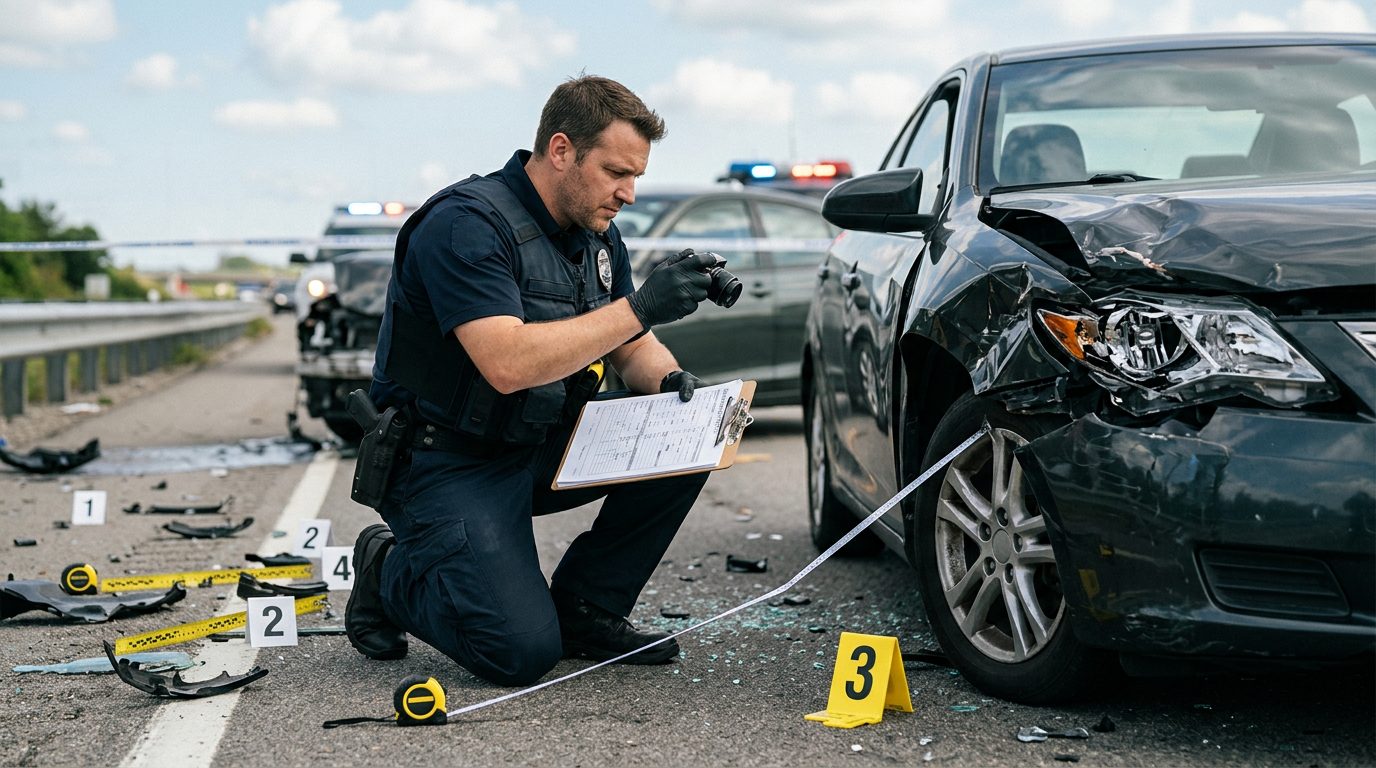
Crash reports, witness statements, and video may enter the early case file. Early choices about statements and evidence can matter. How much they matter depends on the specific circumstances.
Issues That May Shape the Defense
Defense questions in a fatal-crash case often involve causation, impairment testing, and crash data. Each one is a possible line of inquiry. None is a promised result.
Causation asks whether the driver’s conduct is legally tied to the death. Other drivers, road conditions, or a pedestrian’s actions may also matter. These facts depend on the evidence.
Impairment testing is often central. Under Florida Statutes § 316.1933, when an officer has probable cause to believe an impaired driver caused a death or serious bodily injury, the officer shall require a blood test. The officer may use reasonable force if necessary. Whether probable cause existed depends on the facts. The same section says a blood analysis must follow approved methods. It also says insubstantial differences in procedure do not, by themselves, make results invalid.
Crash data, such as speed, braking, and vehicle data, come from measurements. The reliability of those measurements may be examined.
Driving Privileges, Licenses, and Other Collateral Consequences
A fatal crash case can affect a driver’s license, but the effect depends on the charge and the facts. Under Florida Statutes § 322.27, the Department of Highway Safety and Motor Vehicles may suspend a license without a preliminary hearing. That can happen based on records showing an offense that requires mandatory revocation upon conviction. The statute also lets the Department act after a conviction for a traffic violation that caused a crash resulting in death or personal injury. The word “may” matters here. Any action depends on the record and applicable law. A license matter can run separately from the criminal case.
Licensed professionals may face licensing-board questions, employer reporting, or insurance effects. Whether these apply depends on the charge and the rules that govern the license.
Non-citizens may face immigration questions. Those depend on the charge, any outcome, and individual status. Review them with a lawyer before any plea discussion.
Plea talks carry their own rules. Under Fla. R. Crim. P. 3.171, defense counsel must advise the defendant of all plea offers and the likely results of each plea. The decision to plead guilty or no contest is made by the defendant.
What to Gather Before a First Meeting
Gather the paperwork you already have before your first meeting. Bring these items:
- Arrest or charging papers, bond papers, and any listed court dates.
- Any crash report, citation, or notice from the Florida Highway Patrol or a local police department.
- Any notice from the Department of Highway Safety and Motor Vehicles.
- A written timeline of the crash and the hours before it, plus every contact with investigators, written as you remember it.
- A list of licenses you hold and any employer or licensing-board notices.
Avoid posting about the crash or the people involved on social media until you have spoken with a lawyer.
Not sure what your next step is?
Talk it through with our team — the first consultation is free, confidential, and carries no obligation.
Frequently Asked Questions About Vehicular Homicide Charges
How much jail time is possible for vehicular homicide in Florida?
Any sentence depends on the charge, the facts, your record, and applicable law. Confirm the degree and statute on your charging papers.
What counts as negligent homicide?
Negligent homicide is a general phrase, not a substitute for your charge.
Can a vehicular homicide charge be reduced or dismissed?
It may be possible, depending on the evidence, the facts, and applicable law. No result can be promised.
Should I speak to police without a lawyer?
You are not required to say anything, and anything you say may be used against you. Talk with a lawyer about that choice as soon as possible.
Talk Through Your Situation With Patrick David Wilson
If a fatal crash has led to an investigation or a charge against you, you may be deciding what to do next. Patrick David Wilson can review the charge, the evidence, and any license or immigration questions with you. Results depend on the facts and applicable law.
Patrick Wilson Law, PLLC is a Miami criminal defense firm. The first consultation is free, confidential, and carries no obligation to continue. If you want a vehicular homicide defense attorney Fort Lauderdale residents can reach, call 786-761-1719, leave a message, or request a consultation.
Defense Focused on the Facts
Every vehicular homicide case turns on the evidence, the charge as written, and applicable law. Patrick David Wilson reviews those details closely from the first conversation.
Review of Your Charging Papers
Understanding the exact statute and degree listed in your charges is a useful first step. Patrick David Wilson can walk you through what your paperwork says.
South Florida Coverage
The practice handles criminal matters in Miami-Dade County, Broward County, Fort Lauderdale, Miami Beach, Hialeah, Homestead, Kendall, and the Florida Keys.
Important: Do Not Give Up Your Rights Alone
Speaking with investigators or police after a crash involving a death can affect your case. Whether any statement helps or harms your position depends on the facts and applicable law. Contact Patrick David Wilson before answering detailed questions.
How a Consultation Works
1. Reach Out
Call 786-761-1719 or leave a message to request a free, confidential first consultation with no obligation to continue.
2. Share the Details
Bring your arrest or charging documents, crash information, and any notices you have received so the facts of your case can be reviewed.
3. Review Your Options
Patrick David Wilson will explain the charge, the possible outcomes, and the defenses that may apply, depending on the facts and applicable law.
4. Decide Next Steps
You decide whether to continue. Any representation begins only after you choose to move forward.

