
Vehicular Homicide Defense
Facing a Vehicular Homicide Charge? Start With a Clear Picture of the Case
Patrick David Wilson focuses on criminal defense across South Florida, including vehicular homicide charges that arise from a fatal crash. The charge depends on the facts and the applicable law, so a careful review of the details comes first.
By Patrick David Wilson · Published October 15, 2026
Florida’s vehicular homicide law is Fla. Stat. § 782.071. It covers a death caused by someone driving in a reckless manner likely to cause death or great bodily harm. How serious the charge is depends on the facts and the statute the state uses.
Anyone searching for a vehicular homicide defense attorney Hialeah families can rely on should first understand the charge itself. This page answers common questions in plain language. Patrick David Wilson focuses on criminal defense across South Florida, including vehicular homicide. The firm is based in Miami and serves clients in Hialeah and throughout Miami-Dade and Broward Counties.
What Florida Law Says About Vehicular Homicide
Florida defines vehicular homicide as a killing caused by “the operation of a motor vehicle by another in a reckless manner likely to cause the death of, or great bodily harm to, another.” That wording is the starting point. What must be proven can depend on the charges filed and the facts of the case.
Fla. Stat. § 782.071 defines vehicular homicide as the killing of a human being, or the killing of an unborn child by any injury to the mother, caused by the operation of a motor vehicle by another in a reckless manner likely to cause the death of, or great bodily harm to, another. The statute classifies it as a second-degree felony, and as a first-degree felony in listed circumstances, including where the person knew, or should have known, that the accident occurred and failed to give information and render aid as required by s. 316.062. Which classification may apply depends on the facts of the case and applicable law. The base offense is a second-degree felony. It becomes a first-degree felony if the driver knew or should have known the crash occurred and failed to give information and render aid as the law requires. The statute also says that this does not require knowing the crash caused injury or death.
Fines depend on the felony level. The maximum fine for a felony depends on the degree of the offense and on any other law that applies to the charge. Court costs and other terms depend on the case.
A fatal crash may be investigated before any charge is filed. Read your paperwork closely. Check the statute number and the degree of the charge.
Not sure what your next step is?
Talk it through with our team — the first consultation is free, confidential, and carries no obligation.

What Is Worse, Vehicular Manslaughter or Vehicular Homicide?
The label alone doesn’t settle the question. Florida’s main statute uses the term vehicular homicide. Many people also search for “vehicular manslaughter,” a common everyday name for a crash death charge.
Other Florida crash offenses work differently. Impaired-driving deaths can fall under a separate DUI manslaughter statute. Reckless driving under Fla. Stat. § 316.192 is a separate offense. It asks about willful or wanton disregard for safety, which is a different standard.
So compare the elements, not the names. Different charges can involve different questions and different possible penalties. Don’t assume one is more serious without reading the statute. For a fuller side-by-side, see the full homicide and manslaughter comparison.
Can You Go to Jail for Accidentally Killing Someone in a Car Accident in Florida?
Jail or prison may be possible. Whether it applies depends on the charge, the facts, the driver’s record, and applicable sentencing law. Calling a crash accidental doesn’t by itself decide the charge.
The statute focuses on the manner of driving, not on whether the driver meant harm. The state must prove the reckless manner the statute describes and the causation it requires. Both questions depend on evidence.
Vehicular homicide is a felony. Felony penalties come from the sentencing statutes, including Fla. Stat. § 775.082. The vehicular homicide statute also lets the court, in addition to any other punishment, order 120 community service hours at a trauma center or hospital that regularly receives crash victims. Which sanctions apply depends on the facts and applicable law. No result is predicted here.
Other Felony Sentencing Rules That May Apply
Sentencing still depends on other rules, including the Criminal Punishment Code scoresheet.
That scoresheet is a felony tool. It generally applies only to felony cases. Vehicular homicide is a felony at every level under § 782.071, so this material may matter in your file.
When points exceed 44, a separate calculation applies. The state attorney prepares the scoresheet, and defense counsel reviews it for accuracy unless the judge directs otherwise.
Check the charging document and any sentencing papers in your own file. The answer depends on the facts of the case and applicable law.
What Is the Average Sentence for Vehicular Homicide in Florida?
No average reliably predicts the sentence in any one case. Averages combine very different facts, records, and charges into a single number. That number says little about your file.
This page does not offer a typical sentence, because the outcome turns on the facts of each case and the law that applies to it. Sentencing depends on those facts and that law.
Review the charge listed in your paperwork. Write down every date and document you have. A specific question about your file is a good one to bring to a first consultation with Patrick David Wilson.
Defenses and Evidence Reviewed in Vehicular Homicide Cases
Defense options depend on the facts of the case and applicable law. The manner of driving, causation, and the identity of the driver are common issues. No defense is promised by this page.
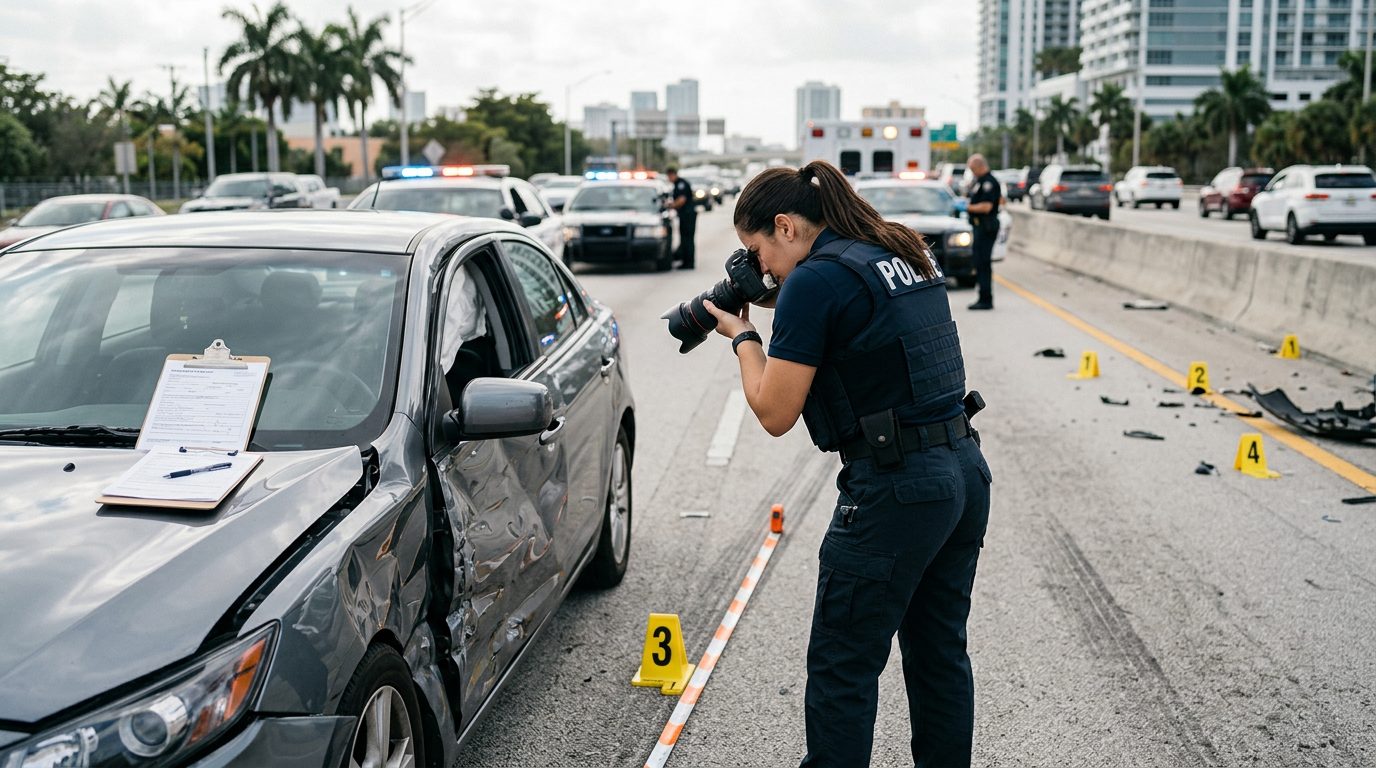
Evidence that may be reviewed includes crash reconstruction, vehicle data, witness statements, roadway and traffic conditions, toxicology reports, and medical records. Which items matter depends on the facts.
Blood testing is one area to check. Whether an officer may require a blood test in a death or serious injury case, and what force, if any, may be used, depends on the facts of the case and applicable law. Whether that applies depends on the facts.
After the charge is filed, the prosecutor must disclose material information that tends to negate guilt, as soon as practicable, under Fla. R. Crim. P. 3.220. Patrick David Wilson reviews the evidence in each matter to identify issues that may affect the case.
Not sure what your next step is?
Talk it through with our team — the first consultation is free, confidential, and carries no obligation.
Vehicular Homicide Cases in Miami-Dade County
Hialeah is in Miami-Dade County. The firm serves clients there and across Miami-Dade and Broward Counties, including areas such as Miami Beach and Homestead.
Which agency investigated, and which court handles the case, depends on where the crash happened. Check the investigating agency, report number, and case number on your paperwork. Patrick David Wilson does not claim familiarity with any particular judge, prosecutor, or local procedure.
Timing can matter. If a person is in custody, Fla. R. Crim. P. 3.134 provides that, if formal charges are not filed within 30 days of arrest, the person may be entitled to release on recognizance, and it allows a further deadline after a showing of good cause; how it applies depends on the facts and applicable law. Timing in a given case depends on its history. At first appearance, Fla. R. Crim. P. 3.130 requires a prompt appearance before a judge, who must advise the person that they need not say anything.

Speak With Patrick David Wilson About a Vehicular Homicide Charge
If a fatal crash has led to a charge, an investigation, or a call from police, you are probably deciding who to call next. Patrick David Wilson can review the charging statute, your paperwork, and the timing questions in your file. Reach out through the Patrick Wilson Law contact page, call 786-761-1719, or leave a message. The first consultation is free, confidential, and carries no obligation to continue.
How Patrick David Wilson Approaches These Cases
Close Review of the Facts
Each vehicular homicide matter turns on the specific facts of the crash, the driving conduct involved, and the evidence the state relies on. Patrick David Wilson reviews those details carefully.
Defense Focused on Your Situation
The possible outcomes of a charge depend on the facts and the applicable law. The defense is built around the circumstances of your case rather than a one-size-fits-all approach.
Criminal Defense Across South Florida
Patrick David Wilson represents people throughout South Florida, from Broward County to the Florida Keys, in criminal matters that include vehicular homicide.
Clear Answers in Plain Language
Charges and procedures can be confusing. Patrick David Wilson explains the options that may be available so you can make informed decisions about your case.
Important Note
The seriousness of a vehicular homicide charge depends on the facts and on the statute the state uses. Nothing on this page predicts how your case will be resolved. Review any charging documents you have received and discuss them with a lawyer.
Questions Often Raised in Vehicular Homicide Cases
What the Charge Covers
Florida's vehicular homicide statute addresses a death caused by a person driving in a reckless manner likely to cause death or great bodily harm. Whether that description fits your case depends on the facts.
Why the Details Matter
Speed, road conditions, visibility, vehicle condition, and the actions of other drivers can all bear on how a case is evaluated. Patrick David Wilson looks at these points closely.
Related Charges May Apply
Depending on the facts, other charges may be considered alongside or instead of vehicular homicide. A review of the complete picture helps clarify the options.
Free First Consultation
Patrick David Wilson offers a free first consultation. It is confidential and carries no obligation to continue.

