

Criminal Defense Fees | Miami and South Florida
Understand What a Criminal Lawyer's Retainer Covers Before You Sign
Patrick Wilson Law, PLLC explains how criminal defense fees are structured in Florida, which costs may fall outside the retainer, and which questions to ask before you pay. Our Miami office serves clients across Miami-Dade, Broward and the Florida Keys.
By Patrick David Wilson · Published November 1, 2026
What is the average retainer fee for a criminal lawyer? There is no single figure that fits every case. A retainer is an upfront payment that secures a criminal lawyer’s work on your matter. Its size depends on the charge, the stage of the case, and how the lawyer bills. This page explains each piece in plain terms, so you know what to ask before you pay anything.
What a Criminal Lawyer’s Retainer Actually Is
A retainer is an upfront payment that holds a lawyer’s time and commits the lawyer to your matter. It is not always the whole fee. Think of it as a starting payment that is applied against the work on the case.
The word gets used in more than one way. Some lawyers use it for a deposit that is drawn down as they bill hours. Others use it as a payment toward a flat fee. The same word can describe two very different arrangements, so always ask which one you’re getting.
If someone was just arrested, the timeline is fast. Under Florida’s criminal procedure rules, a first appearance must happen within 24 hours of arrest. If the person has hired a lawyer, or can afford one and wants one, the judge must allow a reasonable time to send for counsel. That tight timeline is why it helps to understand fees early.
If paying a lawyer would cause real financial strain, our free first consultation is confidential and carries no obligation to continue. Florida’s rules for appointed counsel define an “indigent” person as someone unable to pay without substantial hardship to the person or the family.
Not sure what your next step is?
Talk it through with our team — the first consultation is free, confidential, and carries no obligation.
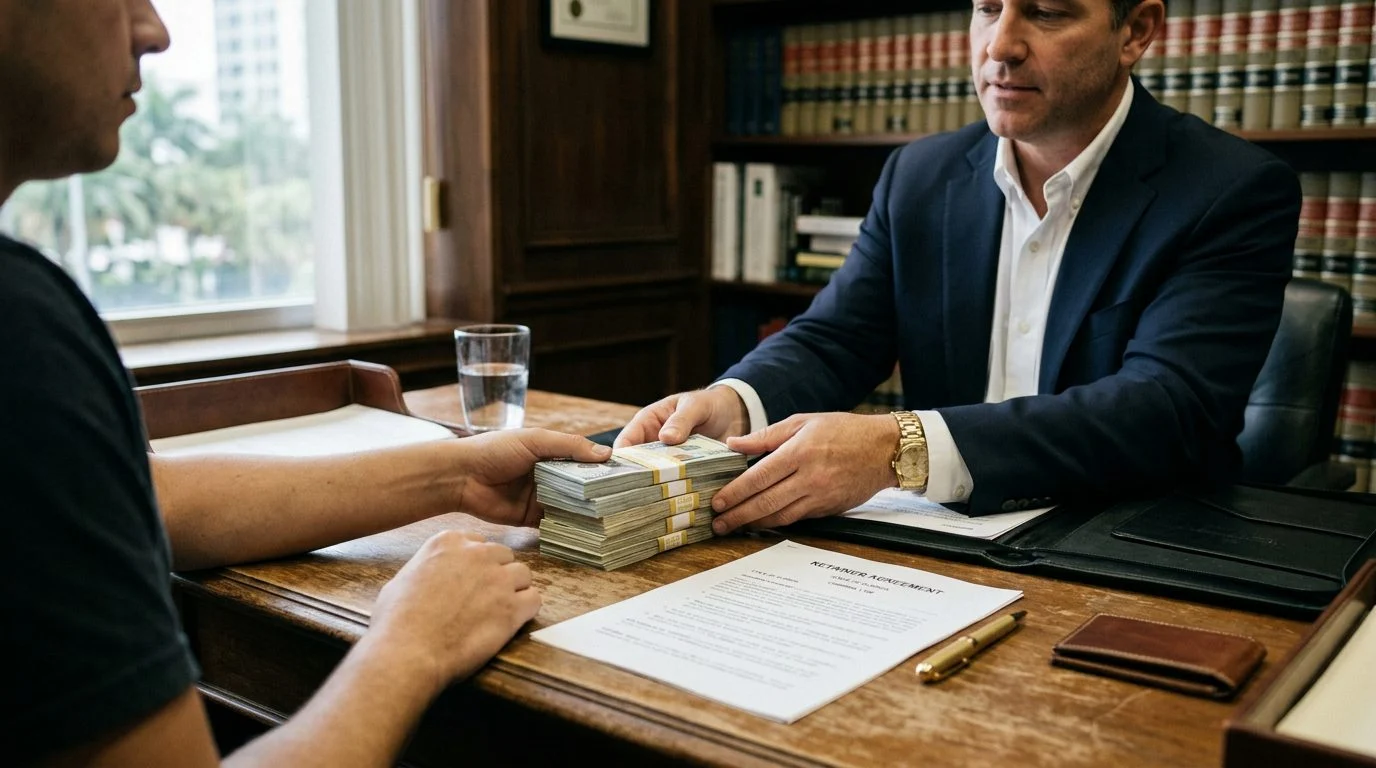
How Criminal Defense Fees Are Usually Structured
Criminal defense fees usually take one of three shapes: a flat fee, hourly billing against a deposit, or a mix of both.
A flat fee covers a defined stage or matter. For example, it might cover handling a first appearance or resolving a single misdemeanor charge. You know the price up front. But a flat fee may not cover every hearing or trial day, so ask what it leaves out.
Hourly billing works differently. The lawyer collects an advance deposit, which is the retainer. Work is billed against that balance. When the balance runs low, the lawyer may ask for a replenishment. Ask how you’ll be told and how much notice you’ll get.
Some cases combine both. A flat fee may cover early work, while hourly billing covers trial preparation or contested hearings. The written agreement should state which structure applies and what each payment covers. If the charge is a first offense, the first-time offender defense overview explains how this firm approaches those matters.
What Moves the Cost of a Criminal Defense Engagement
The type of charge and the stage of the case are the two biggest drivers of cost. Each charge brings its own investigation and court demands.
A DUI case, for example, turns on whether a person was driving or in actual physical control of a vehicle while under the influence to the extent that normal faculties are impaired. Florida’s DUI statute sets out that definition. Domestic violence, sexual battery, vehicular homicide, leaving the scene of an accident, white collar crime, and charges that affect a licensed professional’s career each raise different questions. Those questions take different amounts of time.
Stage matters too. Early intervention, reviewing the evidence the prosecution must share, and trial preparation each take different amounts of work. More hearings, or a courthouse farther away, add time.
First-time offenders may have options that change the work involved. Under Florida’s pretrial intervention statute, a first offender charged with a misdemeanor or a third-degree felony may be eligible for the program. Approval of the program administrator and the consent of the victim, the state attorney, and the judge who presided at the initial appearance hearing are required. The defendant must also agree after consulting an attorney and waive the right to a speedy trial for the diversion period. Those steps take legal work, and they shape the fee. You can read more in what the first-time offender program in Florida involves.
The appropriate fee depends on the facts of each case.
What a Fee Quote Should Spell Out
A fee quote should list every cost you may owe, not just the retainer. Ask about court filing fees, records or transcript costs, and fees for third-party witnesses. A quote that leaves these out gives you an incomplete picture.
Ask whether the retainer is refundable. Ask how unused funds are handled if the case resolves early or changes course. The written agreement should answer both questions in plain words.
Ask how long the quoted price stays valid. Many agreements state a period. If yours doesn’t, ask the lawyer to add one.
Ask what happens if the charge changes. A case can shift to a different charge or a different court, and the work may change with it. Ask whether the agreement covers that.
Get every answer in writing. A verbal promise is hard to check later. A written agreement lets you compare what was said with what you’re billed.
Questions to Ask Before You Agree to Any Fee
Ask what the retainer covers, what is billed separately, who will do the work, and how often you’ll receive an itemized statement. Those four questions cover most of what you need to know at the start. Asking them is a normal part of hiring any lawyer, and a clear written answer is a reasonable thing to expect.
Is a $5,000 retainer too much?
There is no single number that answers this. A fee is judged against the work involved and the facts of the charge.
Do criminal lawyers refund unused retainer money?
Refund terms should be written in the agreement. Ask for them before you pay.
Can I get a free consultation first?
If you are worried about cost, our free first consultation is confidential and carries no obligation to continue. Florida’s rules define an “indigent” person as one unable to pay without substantial hardship.

If You Are Researching a Fee for Someone Else
Gathering cost information for someone else is common, and this section explains where to go next. If you’re looking into fees for a spouse, child, parent, partner, or coworker, you may be doing it under pressure. Many people reading this haven’t yet talked through money with the person facing the charge.
Patrick Wilson Law, PLLC is a Miami criminal defense firm. The lawyer responsible for this page is Patrick David Wilson. The firm defends people across South Florida, from Broward County to the Florida Keys, on DUI, domestic violence, sexual battery, and traffic homicide charges.
If a charge has someone you care about facing a judge, you don’t have to sort out the fee questions alone. Reach out for a free, confidential first consultation with no obligation. Call 786-761-1719 or leave a message through our contact page.
What to ask about any criminal defense fee
Get the fee terms in writing
Ask what the retainer includes, what it excludes, and how any additional charges will be billed before you sign an agreement.
Identify costs outside the fee
Ask whether filing fees, transcripts, investigators, testing or third-party witnesses are billed separately from the attorney's fee.
Understand the payment schedule
Ask whether the fee is paid in one installment or over time, and what happens if your case ends sooner or later than expected.
Confirm the refund terms
Ask how unused retainer funds are handled and where that policy appears in the written agreement.
Ask before you pay
Any fee quote should be confirmed in a signed written agreement. Ask about refund terms, billing for costs and what the retainer covers before you transfer any money.
How criminal defense fees are typically discussed
Flat or fixed fees
Some criminal matters are quoted as a set fee for defined work. The written agreement should describe exactly which services that fee covers.
Retainers
A retainer is an upfront payment that secures representation. Confirm how it is applied to hourly work or case expenses and what remains unused.
Case-related costs
Court filing fees, records requests and investigation expenses may be separate from the attorney's fee. Ask for a complete list before you commit.
Your first step
Patrick David Wilson reviews the charge, the facts and your goals during a free first consultation, then explains the fee structure in plain terms.

