
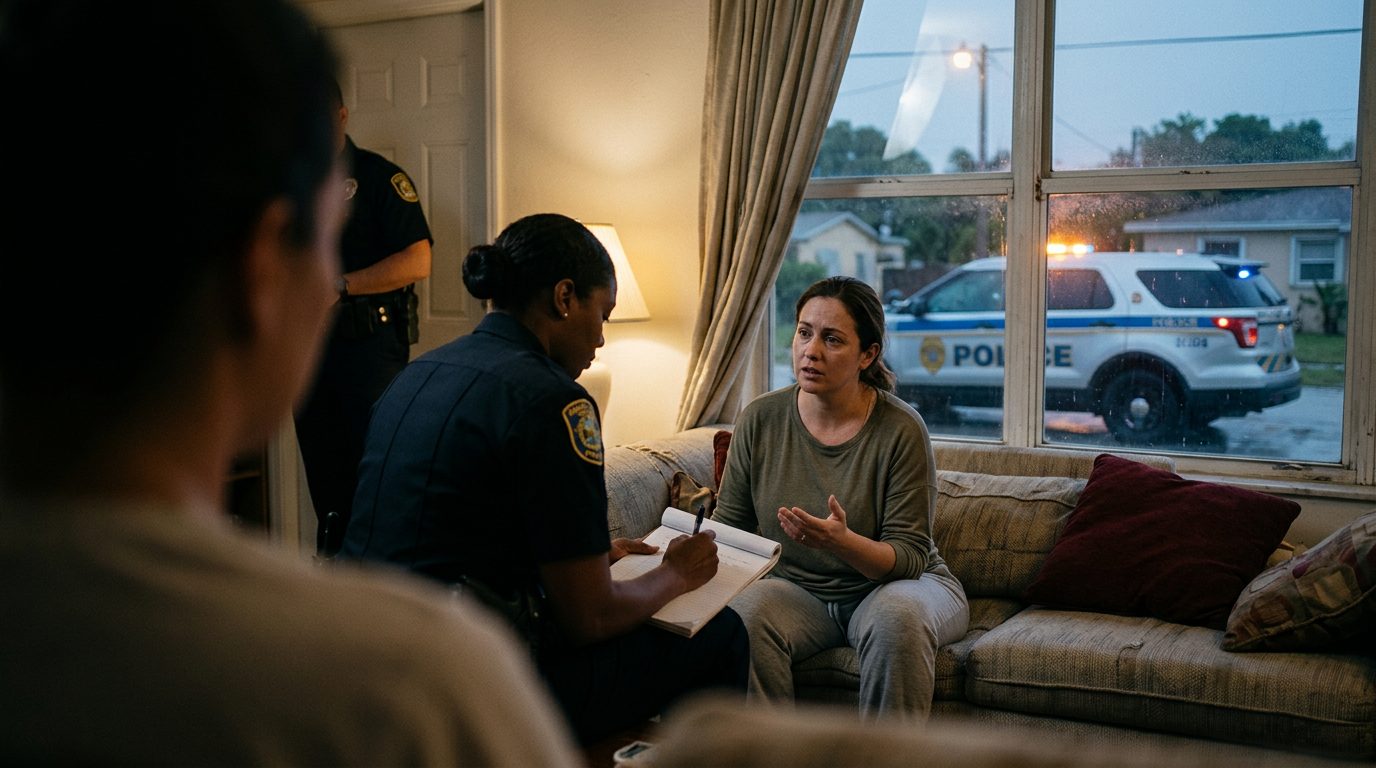
Domestic Battery Arrest in Miami-Dade: What Happens Next
By Patrick David Wilson · Published October 12, 2026
If you were arrested for battery in Miami and the other person is a family or household member, the case may move through several steps. These may include booking, a first appearance hearing, a bond decision, a formal charge, and release conditions. What happens at each step depends on the facts and the applicable law. This page explains those steps in plain language so you can check your own paperwork and court dates. It covers domestic battery matters, which fall under domestic violence defense. It is general information, not legal advice. For a broader overview, see domestic violence defense.
What May Happen at Booking After a Battery Arrest
After an arrest, a person may be taken to a jail for booking. Staff may confirm identity, take fingerprints and photographs, and record personal property. Booking is a record-keeping step, so it does not decide the case.
The charge on booking paperwork can differ from the charge the State later files. Charges can change as the case moves forward. Battery has a specific legal meaning. Under Fla. Stat. § 784.03, battery occurs when a person actually and intentionally touches or strikes another person against that person’s will. It also occurs when a person intentionally causes bodily harm to another. Knowing that definition helps you read the charge.
You can choose to speak with a lawyer before discussing the incident with officers or jail staff. What that choice means for your case depends on the facts.

The First Appearance Hearing and Bond Decisions
The first appearance hearing is the first court proceeding after an arrest.
The amount and terms depend on the facts, the charge, and the applicable law. This page does not describe bond amounts, because each case turns on its own facts.
Check your bond paperwork for the hearing date, the courtroom, and every listed condition. Read the whole document, not just the first page. Missing a court date can lead to separate problems, and those depend on the facts and applicable law.
How the Formal Charge and Arraignment Work
The formal charge is the written document the State files to start the criminal case. It may match the arrest charge, or it may not.
The level of battery matters. Under Fla. Stat. § 784.03, battery is a first-degree misdemeanor, except as subsections (2) or (3) provide. Under Fla. Stat. § 784.03, a person who has one prior conviction for battery, aggravated battery, felony battery, or resisting an officer with violence under s. 843.01 and who commits any second or subsequent battery commits a felony of the third degree, and for that provision a “conviction” means a determination of guilt resulting from a plea or a trial, regardless of whether adjudication is withheld or a plea of nolo contendere is entered. Whether it applies in a given case depends on the facts and applicable law. That statute counts a prior conviction even when adjudication was withheld.
Under Fla. Stat. § 784.045, a person commits aggravated battery if, in committing a battery, the person intentionally or knowingly causes great bodily harm, permanent disability, or permanent disfigurement, or uses a deadly weapon. The statute also covers a battery on a victim who was pregnant at the time, where the offender knew or should have known of the pregnancy. The statute classifies aggravated battery as a second-degree felony, and how it may apply in any case depends on the facts and applicable law.
At arraignment, a later hearing, the charge may be read and a plea may be entered. The timing depends on the case.
Pretrial Conditions and No-Contact Orders
Release conditions may include a no-contact or stay-away term. The terms depend on the case, so read them closely.
A criminal release order is separate from a civil injunction. A civil injunction for protection against domestic violence is filed in circuit court. A temporary injunction entered without a full hearing is generally meant to last only a limited time until a hearing can be held; the duration in a given case depends on the court’s order and applicable law. The full hearing must be set no later than the date that temporary injunction ends.
Violating an injunction can carry its own penalty. Under Fla. Stat. § 741.31, a violation may be a first-degree misdemeanor, subject to the statute’s exceptions.
Domestic rules also turn on the relationship. Florida law defines which relationships count as a family or household member, and whether a particular relationship qualifies depends on the facts and applicable law. Others who live together as family may count, but only if they live or have lived in the same single dwelling unit.
Possible Paths a Battery Case May Take
A battery case may end in several ways. Each possibility depends on the evidence and the applicable law.
The State may decide not to file a charge, may drop one, or may reduce it. Some cases move toward a negotiated resolution, a trial, or another result. None of these paths is promised. Each depends on the evidence available at the time.
A dismissal or a not-guilty verdict can matter later. Under Fla. Stat. § 943.0585, expunction eligibility depends on how the charge ended and on the statute’s other requirements. Review each condition against your own case.
Long-Term Record and Collateral Consequences
An arrest, charge, or conviction may appear on background checks. What appears depends on how the case ends and which records are later sealed or expunged.
Expunction and sealing are separate tools. Under Fla. Stat. § 943.059, a certificate of eligibility for sealing is valid for 12 months. The statute says it confers no right to sealing, and the court may deny a request at its sole discretion.
A domestic battery conviction has a specific limit. Whether a domestic violence record may be sealed or expunged depends on how the case concluded, the specific charge, and applicable law. Check your own record before assuming relief is possible.
Immigration and firearm effects can also follow a domestic case. For non-citizens, a domestic violence charge or conviction may carry immigration consequences, depending on the facts of the case and applicable law. Waiver questions depend on the facts. A domestic violence conviction may also affect a person’s firearm rights under federal law, depending on the facts of the case and applicable law. Whether any of this applies depends on the facts and applicable law.

Steps to Consider Now and Contacting Patrick David Wilson
Start by gathering the facts you can confirm now. Being arrested, or learning that someone you care about was arrested, can feel overwhelming while the next steps are unclear.
Write down the arrest date, the arresting agency, the case number, each court date, and every bond and no-contact term. Keep copies of any injunction papers. Do not assume the booking charge is the final charge.
This page is general information, not legal advice. Patrick David Wilson is the responsible lawyer for this page, and his office is in Miami, Miami-Dade County.
Quick Answers
Is the booking charge always the final charge? No. The formal charge can differ, and charges can change.
Can a battery arrest be sealed or expunged? Possibly. Eligibility depends on how the case ended and on the statute.
Does a no-contact order last forever? Its length depends on the order’s terms. Read the dates and scope on your own paperwork.
If you want to talk through the facts of a domestic battery arrest, call 786-761-1719, leave a message, or request a free consultation at Patrick Wilson Law.

