
Criminal Defense
Battery on Police Officer Defense Attorney Miami
Aggressive representation for charges involving law enforcement. Patrick Wilson Law defends people across South Florida facing serious allegations.
By Patrick David Wilson · Published October 02, 2026
Battery on a Police Officer Defense Attorney in Miami
If you’ve been charged with battery on a law enforcement officer in Florida, you’re facing a felony charge that can result in up to 5 years in prison, a $5,000 fine, and serious collateral damage to your career, professional license, and immigration status. The charge doesn’t require injury—only intentional physical contact with an officer acting in official capacity. The good news: many of these charges can be defended, reduced, or dismissed if you act immediately and have an attorney investigating from day one.
Patrick Wilson Law has spent over 15 years defending clients across Miami-Dade, Broward, and South Florida against battery, assault, and violent crime charges. We focus on first-time offenders and licensed professionals whose careers hang in the balance. This guide explains what the charge means, how the defense process works, and why contacting us now matters.
Not sure what your next step is?
Talk it through with our team — the first consultation is free, confidential, and carries no obligation.
What Battery on a Law Enforcement Officer Means in Florida
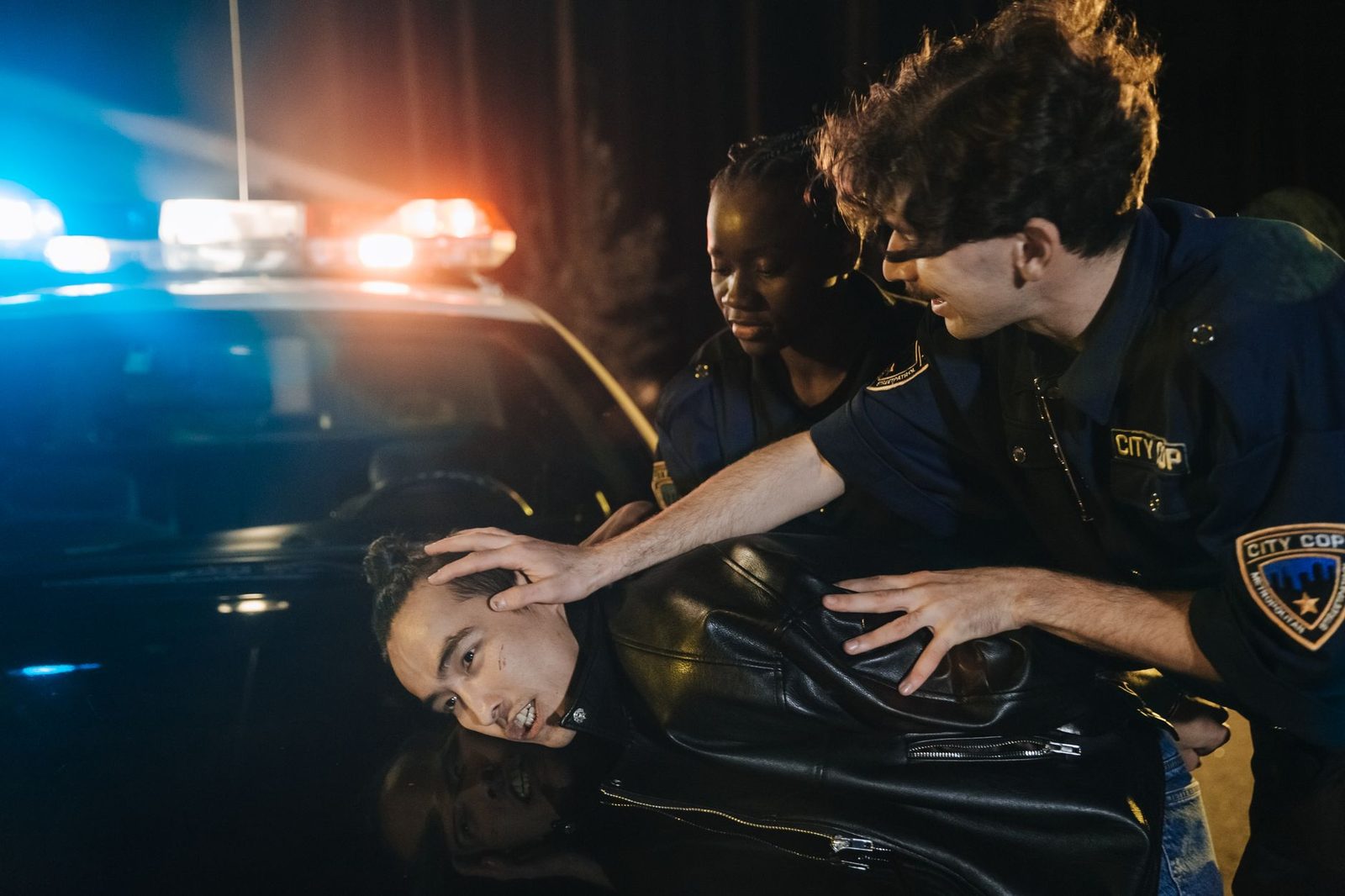
Battery on a law enforcement officer is an intentional physical contact or application of force against a person you know (or should know) is a law enforcement officer performing official duties. The charge does not require injury, visible marks, or pain—a push, a shove, or even unwanted touching counts.
Key elements the prosecution must prove:
- You made intentional physical contact or applied force against another person.
- That person was a law enforcement officer acting in official capacity.
- You knew (or should have known) the person was a law enforcement officer.
- You acted with intent; the contact was not accidental.
The officer must be performing official duties at the time. Off-duty officers have different legal protections, and an officer acting outside the scope of authority may not qualify. This distinction is critical to your defense.
Is Battery on a Police Officer a Felony in Florida?
Yes. Battery on a law enforcement officer is classified as a felony under Fla. Stat. § 784.07.
Penalty structure:
- Third-degree felony (default): up to 5 years in prison and a $5,000 fine.
- Second-degree felony (if officer is injured): up to 15 years in prison and a $10,000 fine.
Mandatory minimum sentences may apply in certain circumstances, particularly if the officer sustains injury. Even a first-time conviction carries collateral consequences that extend far beyond the prison term.
What This Charge Covers—And What It Doesn’t
This charge covers:
- Any intentional physical contact with an officer acting in official capacity.
- Contact that occurs during a lawful traffic stop, arrest, detention, or police action.
- Pushing, striking, grabbing, or any unwanted touching.
- Contact even if you did not know the person was an officer—but the prosecution must prove you did or should have known.
This charge does not cover:
- Accidental contact that was not intentional.
- Contact with a person who was not a law enforcement officer.
- Resisting arrest without physical contact (that’s a separate, less serious charge).
- Self-defense against excessive force (though self-defense is a valid legal claim we explore in detail).
The distinction between simple battery and battery on an officer is the victim’s protected status. Simple battery is a misdemeanor; battery on an officer is a felony. This single distinction can mean the difference between probation and years in prison.
Common Defense Strategies
Lack of knowledge. You did not know the person was a law enforcement officer. If the officer was off-duty, in plain clothes, or failed to identify themselves clearly, this defense has real strength. The prosecution must prove you knew or should have known.
Lack of intent. The contact was accidental, not intentional. If body camera footage or witnesses show you were pushed first or fell into the officer, intent becomes questionable.
Self-defense. You reasonably believed the officer was using excessive force or unlawful force against you or someone else, and you acted to protect yourself or another person. This is a legitimate defense, but it requires evidence that the officer’s force was excessive and your response was proportional.
Officer not acting in official capacity. The officer was off-duty, acting outside the scope of authority, or not performing official duties at the time.
Mistaken identity. You were not the person who made contact. Eyewitness identification can be unreliable, especially in chaotic situations.
Credibility challenges. Officer testimony is inconsistent with body camera footage, dispatch records, or witness statements. Inconsistencies and contradictions weaken the prosecution’s case.
In the cases we handle, body camera footage is often the deciding factor. If the video contradicts the officer’s account or shows your account is accurate, charges are frequently reduced or dismissed.
How the Defense Process Works
Initial consultation (Day 1–3): We review the arrest report, police narrative, any available body camera footage, and your account of what happened. We explain the charge, the evidence, and your realistic options.
Investigation (Week 1–2): We immediately request dispatch records, body camera footage, officer personnel files, and any scene evidence. We identify and interview potential witnesses. We gather medical records if you were injured.
Evidence review (Week 2–4): We analyze the prosecution’s evidence for weaknesses, inconsistencies, or violations of your constitutional rights. We look for unlawful searches, coercive statements, or improper identification procedures.
Negotiation (Month 1–3): We meet with prosecutors to discuss reduction to simple battery, misdemeanor disorderly conduct, or dismissal. We present evidence that supports your defense and weakens their case.
Motion practice (Month 2–4): If warranted, we file motions to suppress unlawful evidence, statements obtained without proper Miranda warnings, or identification procedures that were suggestive or unreliable.
Trial preparation (Month 3–6): If the case does not resolve through negotiation, we prepare witnesses, develop cross-examination strategy, and prepare jury presentation. We approach every case as if it will go to trial—this mindset strengthens our negotiating position.
Timeline: Most cases resolve within 3–6 months. Trial cases may extend longer. Early investigation and aggressive negotiation often accelerate resolution.
Not sure what your next step is?
Talk it through with our team — the first consultation is free, confidential, and carries no obligation.
Why This Matters for Licensed Professionals and First-Time Offenders
A felony conviction for battery on an officer does not end with probation or prison time. The collateral consequences are often more damaging than the sentence itself.
Professional licensing: Teachers, nurses, healthcare workers, contractors, security personnel, and other licensed professionals face disciplinary action or revocation. A single conviction can end your career.
Employment: Felony convictions disqualify you from many jobs. Background checks reveal the conviction indefinitely unless sealed or expunged.
Immigration: Non-citizens may face deportation proceedings. A felony conviction can trigger removal from the United States.
Background checks: The conviction appears on all background checks and is visible to employers, landlords, and the public.
Early intervention is critical. The sooner we begin investigating and negotiating, the sooner we can prevent conviction and preserve your career. Waiting allows evidence to be lost, witnesses’ memories to fade, and prosecutors to build a stronger case.
Can Battery Charges Be Dropped in Florida?
Yes—if the evidence is insufficient, illegally obtained, or contradicted by credible witnesses.
The prosecution must prove every element of the charge beyond a reasonable doubt. If they cannot meet that burden, charges must be dismissed. Charges are frequently dropped when:
- Body camera footage contradicts the officer’s account.
- Witness testimony impeaches the officer’s credibility.
- Evidence was obtained unlawfully (improper search, coercive interrogation).
- The officer cannot establish you knew they were a law enforcement officer.
Plea negotiation can also result in dismissal or reduction in exchange for a guilty plea to a lesser charge. A motion to suppress can eliminate key evidence and weaken the prosecution’s entire case.
Patrick Wilson Law: Your Defense in Miami and South Florida
We’ve spent over 15 years defending clients against battery, assault, and violent crime charges across Miami-Dade County, Broward County, and the Florida Keys. We focus on first-time offenders and licensed professionals whose careers depend on the outcome.
What we do differently:
- Immediate investigation. We request body camera footage, dispatch records, and witness statements within days of your consultation—not weeks.
- Aggressive negotiation. We have relationships with Miami-Dade and Broward prosecutors and police departments. We know their leverage points and how to negotiate effectively.
- Trial-ready preparation. Every case is prepared as if it will go to trial. This approach strengthens our negotiating position and ensures we’re ready if settlement fails.
- Local knowledge. We know the judges, courts, and procedures in Miami-Dade and Broward. We understand how cases are handled in your jurisdiction.
- Your career matters. We understand that a felony conviction threatens your professional license and employment. We work to minimize conviction impact and explore options to protect your license.
What to Expect When You Contact Us
Free consultation. No cost, no obligation. We discuss your arrest, the charges, the evidence, and your options.
Confidential review. Your account and concerns are protected by attorney-client privilege. We listen without judgment.
Honest assessment. We explain the charge, the evidence, realistic outcomes, and next steps. We don’t promise results we can’t deliver.
Immediate action. We request police reports, body camera footage, and arrest records right away. We begin investigating before you leave our office.
Clear communication. You receive regular updates and can reach us by phone or message. You’re never left wondering what’s happening.
Frequently Asked Questions
Q: Will I go to jail?
A: It depends on bail, your criminal history, and the charge severity. We work to secure your release on your own recognizance or reasonable bail.
Q: Can I seal or expunge this charge?
A: If you’re acquitted or charges are dismissed, yes. If convicted, expungement is possible after a waiting period under Florida law.
Q: What if I was defending myself?
A: Self-defense is a valid legal claim if you reasonably believed force was necessary. We investigate and present this evidence to prosecutors and, if needed, a jury.
Q: Will this affect my professional license?
A: Possibly. We work to minimize conviction impact and explore options to protect your license, including negotiation for reduced charges.
Q: How much does this cost?
A: We discuss fees during your free consultation. Costs vary based on case complexity and whether trial is necessary.
Q: What if the officer was off-duty?
A: Off-duty officers have different legal protections. We analyze whether the officer was acting in official capacity—a critical distinction.
Not sure what your next step is?
Talk it through with our team — the first consultation is free, confidential, and carries no obligation.

Take Action Now
Do not discuss the arrest with anyone except your attorney. Gather any evidence you have: video, photos, witness contact information, medical records if you were injured. Do not contact the officer or witnesses.
If you’ve been charged with battery on a law enforcement officer in Miami, Broward, or South Florida, your next move is critical. The sooner we begin investigating and negotiating, the sooner we can protect your rights and your future. People in your situation contact us immediately—call 786-761-1719, text us, or schedule a free consultation.
Act quickly.
Charges involving police officers carry significant consequences, including potential jail time, fines, and a permanent criminal record. Early legal representation protects your rights and can affect the outcome of your case.
What you need to know
Bail and release
We work to secure your release on your own recognizance or reasonable bail while your case moves forward.
Record relief
If charges are dismissed or you are acquitted, the charge may be eligible for sealing or expungement under Florida law.
Defense strategy
We examine the circumstances of the arrest, the evidence against you, and your rights during the encounter with law enforcement.
Licensed professionals
If your career is at risk, we understand the stakes and work to protect your professional standing.
Why Patrick Wilson Law
Criminal defense focus
We handle DUI, domestic violence, sexual battery, vehicular homicide, and other serious charges across South Florida.
Serving South Florida
We defend clients in Miami-Dade County, Broward County, the Florida Keys, and surrounding areas.
Direct access
Call 786-761-1719 to speak with a criminal defense attorney about your case.
Record sealing and expungement
We help clients clear their records when charges are dismissed or acquittals are obtained.
Ready to discuss your defense?
Related practice areas
- Miami Assault and Battery Defense Attorney | Patrick Wilson Law
- Simple Battery Defense Attorney in Miami | Patrick Wilson

