
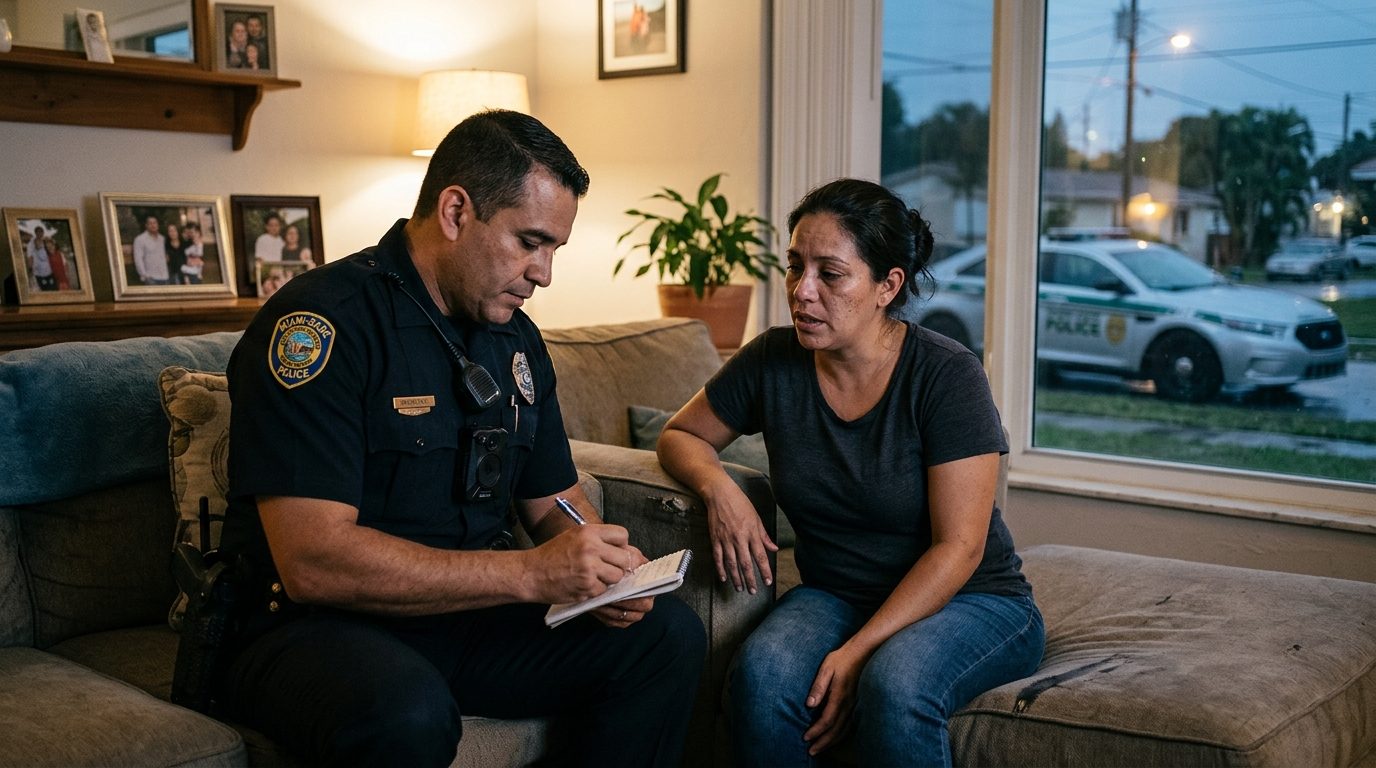
Domestic Violence Defense | Miami-Dade County
Facing a Domestic Violence Charge? Learn How These Cases Typically End
Patrick Wilson Law, PLLC focuses on domestic violence defense for clients in Miami, Broward County, Fort Lauderdale and the Florida Keys.
By Patrick David Wilson · Published October 09, 2026
The short answer: how these cases usually resolve
Most domestic violence cases in Florida end before a trial. They usually end through a state attorney decision not to file, a dismissal, a nolle prosequi (the state’s formal choice to drop a charge), pretrial diversion, or a negotiated plea. Some cases do go to trial.
No single percentage fits every case. Published figures vary by county, year, and type of charge, so this guide does not rely on one. The path depends on the facts, the injuries alleged, the evidence available, and the person’s prior record.
Florida defines domestic violence broadly. Florida Statutes § 741.28 covers listed offenses, such as assault, battery, and stalking, when they involve a family or household member. That group includes spouses, former spouses, relatives, people who lived together as a family, and parents of a child in common.
This page is part of our Miami domestic violence defense guide, which walks through the full process.
Not sure what your next step is?
Talk it through with Patrick Wilson — the first consultation is free, confidential, and carries no obligation.

Why the state attorney, not the complainant, decides
After an arrest, decisions about how a case moves forward rest with the prosecution rather than the person who called the police. It decides whether to file formal charges and whether the case keeps moving. A complaining person’s wish to drop the matter does not automatically end it.
A protective injunction is a separate civil matter. Under Florida Statutes § 741.30, a victim or a person who reasonably fears imminent harm can petition the circuit court for an injunction. That petition does not require a lawyer. The injunction and the criminal case run on different tracks, so one can change while the other continues.
Violating an injunction is its own problem. The state attorney may prosecute a violation as a criminal offense, which means a new case.
Bond and no-contact conditions matter too. Court conditions may include limits on contact between the people involved while a case is pending. Those terms still apply even when the other person wants contact. Contact that seems harmless to you can lead to new charges.
Dismissals, no-file decisions, and nolle prosequi
A no-file decision means the prosecutor never files a formal charge. A dismissal ends a charge that was already filed. A nolle prosequi also ends the charge, but it is a different formal step. Each one ends the case differently, and each still leaves an arrest record that needs attention.
Prosecutors may decline or drop cases for practical reasons. Common examples include thin evidence, statements that don’t match, and no outside corroboration. These reasons describe how cases get evaluated. They don’t tell you how your case will turn out.
A common mistake is assuming a dismissal wipes out the arrest. That outcome is not automatic. Under Florida Statutes § 943.0585, a person may petition a court for expunction in certain situations. Those include cases where no charging document was filed, or where the charge was dismissed or ended in a nolle prosequi. The order usually covers one arrest or one incident only.
Sealing is a separate route. Under Florida Statutes § 943.059, a person must first apply to the Florida Department of Law Enforcement for a certificate of eligibility. Only then can they ask a court to seal the record.
Avoid contacting the complaining person to change their account. That contact can create serious new problems.
Pretrial diversion and plea agreements
Pretrial diversion lets an eligible person finish set conditions, after which the charge may be dismissed. A plea agreement resolves the case when the defendant pleads to a charge in exchange for stated terms. Each path has its own gates and risks.
Diversion has strict requirements. Under Florida Statutes § 948.08, a first offender charged with a misdemeanor or third-degree felony needs approval from the program administrator. The victim, the state attorney, and the judge who handled the first appearance must also consent. The defendant must agree after talking with a lawyer, and must waive the right to a speedy trial for the diversion period. If the person does not finish, the charges can return to normal prosecution. If the person finishes, the court must dismiss them.
Adjudication matters too. Adjudication of guilt means the court formally finds the person guilty. A withhold of adjudication means it does not. For felonies, Florida Statutes § 775.08435 limits withholding. A third-degree felony domestic violence charge can have adjudication withheld only if the state attorney requests it in writing or the judge makes written findings.
Consequences can follow even a resolved case. Under Florida Statutes § 790.233, having a firearm or ammunition while a final domestic violence injunction is in force is a first-degree misdemeanor. Federal law adds its own rules. A conviction that has been expunged or sealed may affect your firearm rights differently than one that remains on your record, and the specifics depend on how federal and state law apply to your situation. Non-citizens face separate risks. A conviction for a crime of domestic violence can have serious immigration consequences for a non-citizen, including potential removal from the United States.
Read every term before you agree. Ask what counts as completion and what happens if you miss a condition.

When a case goes to trial and
Why Talk With Patrick Wilson Law
Criminal defense focus
My practice focuses on criminal defense, including domestic violence charges.
Clear, direct answers
The charge, the process and the options are explained in plain language so you can make informed decisions.
Areas Served
I represent clients in Miami-Dade and Broward Counties.
Confidential first conversation
Schedule a free consultation or call 786-761-1719 to discuss your situation privately.
Do Not Assume the Case Will Resolve on Its Own
Early decisions, including what you say to police, how you communicate with the other person, and whether you respond to court notices, can affect how a case moves forward. Speak with a defense attorney before you make those decisions.
Common Ways Domestic Violence Cases Are Resolved
Decision not to file
The state attorney may decide not to bring formal charges after reviewing the report and evidence.
Dismissal or nolle prosequi
The state may drop the charge, which ends the prosecution without a conviction.
Pretrial diversion
Some defendants may be offered a program that resolves the case without a conviction if its conditions are completed.
Negotiated plea
The parties may agree to a resolution, which carries its own consequences that should be reviewed carefully before any decision.

