
Criminal Defense Representation
Criminal Defense Questions Explained
By Patrick David Wilson · Published October 01, 2026
Common Terms Used in Criminal Cases
Probation and parole are two different forms of supervision that can follow a criminal case, and they arise at different points in the process. Both involve strict conditions and supervision, but they start at different points in the criminal justice system and carry different consequences if violated.
If you’re facing sentencing, a probation or parole violation charge, or simply trying to understand what these terms mean for someone you care about, this guide explains how the law treats each one and what you need to know.
Talk it through with Patrick David Wilson – the first consultation is free, confidential, and carries no obligation.
What Is Probation?
Probation is a sentence imposed by a judge at the time of conviction that allows you to serve your sentence in the community rather than in prison.
The judge decides the length of probation, the conditions you must follow, and whether your probation will be supervised or unsupervised. Probation can last anywhere from a few months to many years, depending on the offense and your individual circumstances. You’re not in prison, but you’re not entirely free either—you must follow every condition the court imposes, and violation can result in arrest and incarceration.
What Is Parole?
Parole is an early release from prison that may be granted by the Commission on Offender Review (FCOR), a state agency that reviews whether incarcerated people may be released before their sentence ends. Parole is largely unavailable for most offenses committed after October 1, 1983, so whether it applies depends on the facts and applicable law. Parole is not automatic; the commission reviews your case and decides whether to grant it.
If parole is approved, you’re released from prison but must complete the remainder of your original sentence under supervision in the community. You’ve already served time in prison; parole lets you finish your sentence outside prison walls, but with strict conditions and regular check-ins with a parole officer.
What Is the Main Difference Between Probation and Parole?
The core difference is timing and who makes the decision:
- Probation is imposed by a judge as your sentence at the time of conviction. When supervision begins depends on the facts of the case and applicable law.
- Parole is granted by the parole commission as early release from prison. It begins only after you’ve already served part of a prison sentence. You’ve been incarcerated and are being released early.
Think of probation as an alternative to prison. Think of parole as a way to leave prison early and finish your sentence in the community.
Both involve supervision, conditions, and the risk of violation. But they arise from different points in the criminal justice process, and the consequences of violating each can be serious.
Supervised vs. Unsupervised Probation
Not all probation is the same. There are two main types:
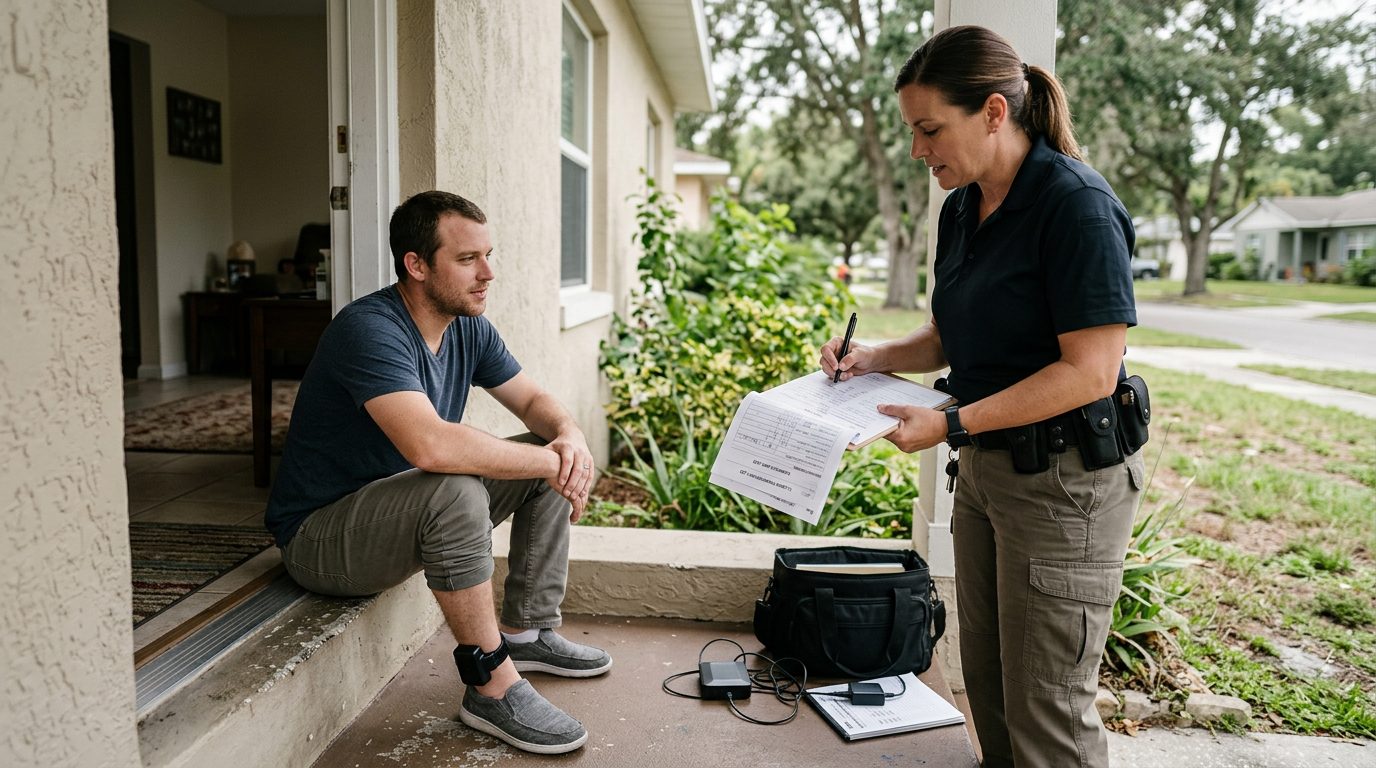
Supervised probation requires regular in-person or phone check-ins with a probation officer. You may be required to submit to drug testing, verify employment, report any arrests or changes in address, and comply with other monitoring.
Unsupervised probation typically does not involve regular reporting to a probation officer. The conditions that apply depend on the facts of the case and the court’s order.
Violating either type—missing an appointment, failing a drug test, or committing a new offense—can trigger arrest and a violation hearing.

What Is Harder, Probation or Parole?
Both probation and parole carry strict conditions and the real risk of violation and re-incarceration. Neither is easy.
Parole conditions can be restrictive, and the conditions imposed in a given case depend on the facts and applicable law. If you violate parole, you may be returned to prison to serve the remainder of your original sentence, depending on the facts and applicable law. If you violate probation, the court may revoke your probation and impose a sentence, which could be a sentence you were originally trying to avoid, depending on the facts and applicable law.
The actual difficulty depends on the specific conditions imposed, your personal circumstances, and your ability to comply. Both require careful attention to your obligations and regular communication with your supervising officer.
Not sure what your next step is?
Talk it through with Patrick David Wilson – the first consultation is free, confidential, and carries no obligation.
What Happens If You Violate Probation or Parole?
Violations can carry serious consequences, depending on the facts and applicable law.
Probation violation: If you’re accused of violating probation, you can be arrested. If a violation is alleged, a violation hearing may be held before a judge, depending on the facts and applicable law. If the violation is found to be true, the judge may:
- Impose additional conditions on your probation
- Extend the length of your probation
- Revoke your probation entirely and impose a sentence
Parole violation: If you’re accused of violating parole, you can be arrested. If a parole violation is alleged, a violation hearing may be held before the parole commission, depending on the facts and applicable law. If the violation is found, the commission may:
- Impose additional conditions on your parole
- Return you to prison to serve the remainder of your original sentence
Common violations include missing appointments with your officer, failing a drug test, being arrested for a new crime, leaving the jurisdiction without permission, or failing to maintain employment or treatment. Both technical violations (missing an appointment) and substantive violations (a new criminal charge) can trigger enforcement action.
Probation and Parole Conditions in Florida
Courts and the parole commission impose conditions tailored to your offense and risk level. Common conditions include:
- Regular reporting to a probation or parole officer (in person, by phone, or online)
- Drug testing and substance abuse treatment
- Mental health counseling or evaluation
- Employment requirements
- Restitution (payment to a victim)
- Travel restrictions or curfews
- Avoiding contact with certain people or places
Violating any condition can result in arrest and a violation hearing. Understanding your conditions and complying with them is essential.
When to Seek Legal Guidance
If you’re facing probation or parole in Florida, clarity and early legal guidance matter.
You should consider reaching out if:
- You don’t understand your probation or parole conditions
- You’ve been accused of a violation
- You’re concerned about compliance or have questions about your obligations
- You’re facing a violation hearing
Early consultation may help you understand your conditions and your rights in a hearing. Any result depends on the facts and applicable law.
FAQ
What is the main difference between probation and parole?
Probation is a court-ordered sentence imposed instead of prison; parole is early release from prison granted by the parole commission. Probation begins at sentencing; parole begins after you’ve served time in prison.
Can you go to jail for a probation violation?
It may be possible. If your probation is revoked, the judge may impose a sentence, which could include prison time, depending on the facts and applicable law.
Can you go back to prison for a parole violation?
It may be possible. If you violate parole, the parole commission may return you to prison to serve the remainder of your original sentence, depending on the facts and applicable law.
What is supervised probation vs. unsupervised probation?
Supervised probation requires regular check-ins with a probation officer, drug testing, and monitoring. Unsupervised probation requires minimal contact, often just an annual report or as ordered by the court.
What happens if you miss a probation appointment?
Missing an appointment may be treated as a technical violation, which could lead to arrest and a violation hearing, depending on the facts and applicable law. The judge may extend your probation, add conditions, or revoke it.
If you’re facing probation or parole conditions you’re unsure about, or you’ve been accused of a violation, reach out to discuss your situation. You can contact Patrick David Wilson to understand your rights and options. Call 786-761-1719 or contact Patrick David Wilson to speak with someone who can help.
Probation Violations Have Serious Consequences
If you violate the terms of your probation, the court may revoke it, and the result depends on the facts of your case and applicable law. Understanding your obligations and your rights is critical.
Key Differences at a Glance
Probation
A court-ordered sentence imposed instead of incarceration. You remain in the community under supervision, subject to conditions set by the judge. Probation begins at sentencing.
Parole
Early release from prison granted by the state parole authority. You complete the remainder of your sentence outside prison under supervision. Parole begins after you've served time.
Supervision Terms
Both probation and parole require you to follow strict conditions: regular check-ins with your officer, drug testing, employment requirements, travel restrictions, and other rules set by the court or parole board.
Revocation Risk
Violating probation or parole conditions can result in revocation. For probation, you may face the original sentence. For parole, you may be returned to prison to serve the remainder of your term.
Why You Need a Criminal Defense Attorney
Protect Your Rights at Sentencing
An attorney can argue for probation instead of incarceration and negotiate favorable terms and conditions.
Understand Your Obligations
Patrick David Wilson explains what your sentence requires and what may happen if you don't comply.
Defense Against Violations
If you're accused of violating probation or parole, Patrick David Wilson can review the evidence and the options that may apply to your situation, depending on the facts and applicable law.
Explore Your Options
From early termination to modification of conditions, Patrick David Wilson can identify options that may be available to you, depending on the facts and applicable law.

