

Criminal Defense | South Florida
Arrested? Know What Comes Next and Who to Call
Patrick David Wilson, criminal defense attorney in Miami, explains the common steps after an arrest. Outcomes depend on the facts of your case and applicable law.
By Patrick David Wilson · Published October 14, 2026
Steps After an Arrest in Miami-Dade
The theft arrest process in Miami-Dade generally moves through booking, a first appearance before a judge, formal charging, and arraignment. Each step depends on the facts of the case and the law that applies. This guide walks through those steps in order, so you can see what each one may involve and what to ask.
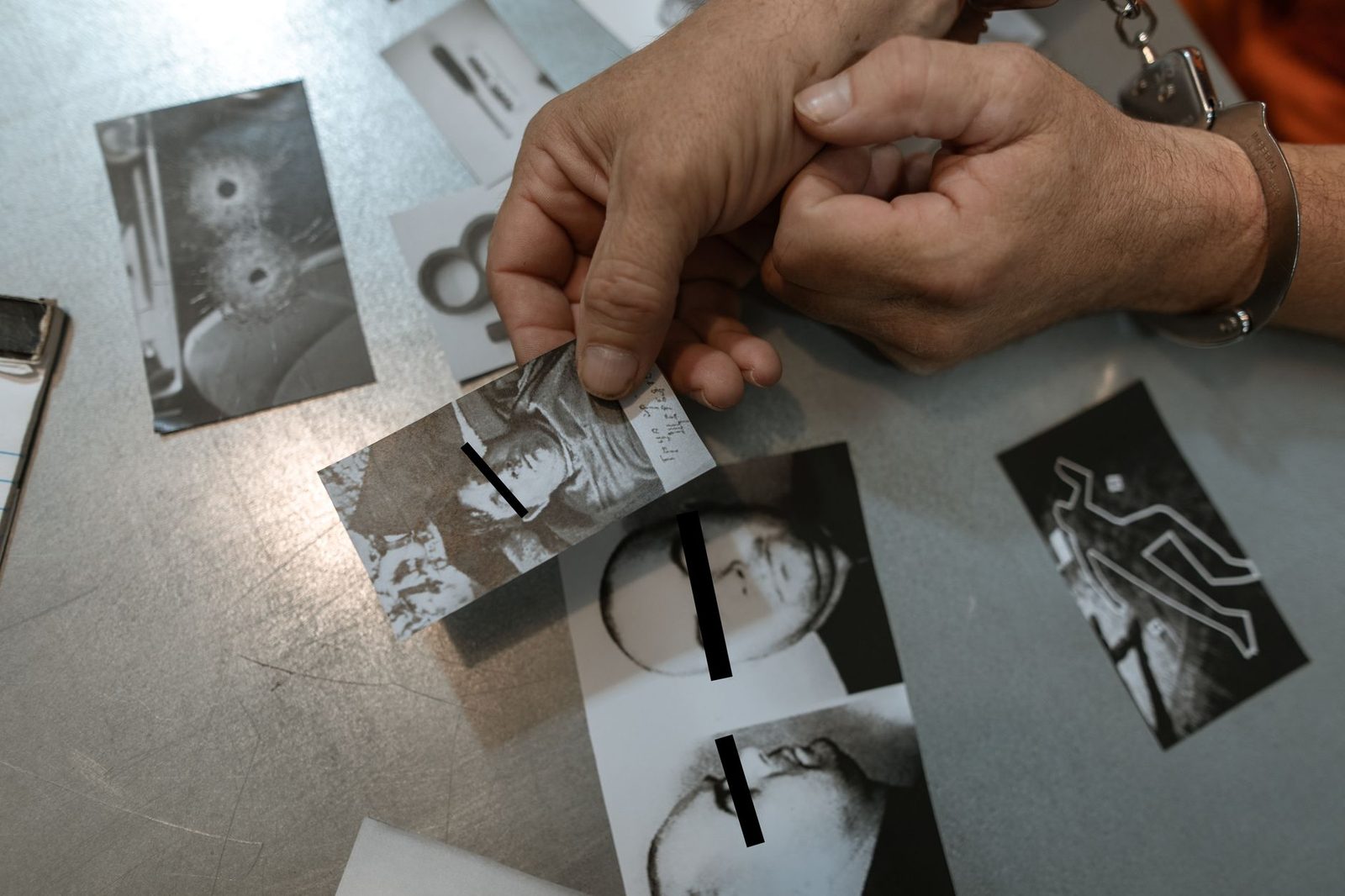
Where You Are Right Now After a Theft Arrest
A theft arrest can come with little warning, and the next few days can feel confusing. You may be the person who was arrested. You may also be a parent, spouse, or friend trying to understand what happens next.
An arrest is not a conviction. An arrest means police took a person into custody based on a suspected offense. Whether a charge is filed, reduced, or resolved another way depends on the facts and applicable law.
This page is written by Patrick David Wilson, the responsible lawyer at Patrick Wilson Law, PLLC, which has a Miami office. It covers the steps in the order they may occur. Keep every paper you receive, because the exact wording on those papers matters later.
How Florida Law Categorizes Theft
Florida defines theft in Fla. Stat. § 812.014. A person commits theft by knowingly obtaining or using another person’s property with intent to deprive that person of a right to the property or a benefit from it, temporarily or permanently.
The charge grade depends in part on the value of the property. Petit theft generally refers to lower-value theft, and grand theft generally refers to higher-value theft. The exact value lines are in the statute. Check them against your arrest paperwork instead of assuming.
They do not describe a misdemeanor petit theft charge. A prior theft conviction can also change the grade. Under the same statute, petit theft after a prior theft conviction is a first-degree misdemeanor, depending on the facts.
Arrest, Booking, and First Appearance in Miami-Dade
Booking records the arrest, and first appearance is the first court hearing. An officer may arrest without a warrant when a misdemeanor or felony happens in the officer’s presence. For a misdemeanor, the arrest must be made immediately or in fresh pursuit, under Fla. Stat. § 901.15.
Booking generally involves fingerprints, photographs, an inventory of personal property, and entry of the arrest into records. Under Fla. R. Crim. P. 3.130, an arrested person must be taken for a prompt first appearance within 24 hours of arrest, unless released earlier in a lawful manner.
At first appearance, the judge must tell the person the charge and the person’s rights. Those rights include the right to remain silent, and the warning that anything said may be used against the person. The judge must also address the right to counsel. If the person is entitled to appointed counsel and wants it, the rule requires appointment no later than that hearing.
Whether a person can make a phone call after arrest depends on facility procedures and the circumstances. Don’t rely on a general rule you heard from someone else. Release is addressed under Fla. R. Crim. P. 3.131, which provides for release on reasonable conditions, subject to the rule’s exceptions. Bail decisions also weigh factors such as family ties, residence, and past conduct. The amount and conditions depend on the case.
Charging Decisions, Filing, and Arraignment
Formal charges must be filed on a set schedule, and arraignment follows once a charge is in place. Under Fla. R. Crim. P. 3.134, the state must file formal charges on a defendant in custody within 30 days of arrest. If defendants in custody remain uncharged, the rule provides that the court, on the 30th day and with notice to the state, must order their automatic release on their own recognizance on the 33rd day unless the state files formal charges by that date, or, if the state shows good cause, on the 40th day unless formal charges are filed by that date (Fla. R. Crim. P. 3.134).
These deadlines depend on custody status and the facts of the arrest. Before charges are filed, the prosecutor decides whether to file, what to file, or whether to decline. This page does not describe how any particular Miami-Dade prosecutor or judge handles theft cases.
At arraignment, the charge is stated and the defendant is asked to plead. Under Fla. R. Crim. P. 3.160, a lawyer may file a written not-guilty plea at or before arraignment. After a not-guilty plea, the defendant is entitled to reasonable time to prepare for trial.
Keep every document from the arrest and court, including the charging papers and any release conditions. The exact terms control what you must do. If the matter involves an employer, a trust, or a financial account, embezzlement is a related but distinct charge. The white collar crime defense work covers that kind of matter.
Can a Theft Charge Be Dropped?
A theft charge may be dropped, reduced, or resolved another way. Whether that happens depends on the facts, the evidence, and applicable law.
Pretrial intervention is one possible path. Under Fla. Stat. § 948.08, a first offender charged with a misdemeanor or a third-degree felony may be eligible. So may a person with not more than one prior nonviolent misdemeanor conviction. Eligibility requires approval from the program administrator. It also requires consent from the victim, the state attorney, and the judge who presided at the initial appearance.
The defendant must agree after consulting a lawyer. The defendant must also waive the right to a speedy trial for the diversion period. The statute bars the defendant or immediate family from personally contacting the victim to get consent. If participation is satisfactory, the statute continues the charges without final disposition for 90 days, with an extra 90 days possible on request and consent.
Dismissal or diversion may still carry record consequences. Those depend on the facts and applicable law. A later section covers record clearing.
Not sure what your next step is?
Talk it through with our team — the first consultation is free, confidential, and carries no obligation.
What Evidence Matters in a Theft Case
A theft case can rest on video, store statements, receipts, property valuations, witness accounts, and any statements the arrested person made. Each type of evidence can point in different directions.
Under § 812.014(1), the central question is whether a person knowingly obtained or used another person’s property with intent to deprive. Intent and value can be central questions. Evidence can be examined for gaps, inconsistencies, or doubts about intent.
A receipt, a claim of permission, or a disputed valuation may matter. Whether any of these helps depends on the facts of the case. Evidence that looks strong at the start can look different as the case moves forward.
Protect what you have. Keep receipts, messages, and anything that shows what happened, and don’t alter or delete them. Think carefully before discussing the incident with store staff, police, or anyone else. Consider speaking with a lawyer before answering questions about it.
Special Concerns for Non-Citizens, Licensed Professionals, and First-Time Arrestees
Non-citizens, licensed professionals, and first-time arrestees can face consequences beyond the case itself. Those consequences depend on the facts and applicable law.
For non-citizens, federal law lists classes of deportable aliens. These include noncitizens convicted of two or more crimes involving moral turpitude that do not arise from a single scheme of misconduct. They also include noncitizens convicted of an aggravated felony after admission. The federal deportability statute lists, among its classes of deportable aliens, any alien who is present in the United States in violation of that chapter or any other law of the United States, or whose nonimmigrant visa (or other documentation authorizing admission into the United States as a nonimmigrant) has been revoked under section 1201(i); whether this provision applies to any person depends on the facts and applicable law. Whether any theft-related offense falls within those classes depends on the specific offense, its elements, and the facts. Review immigration consequences before any plea.
For licensed professionals, a criminal charge can raise questions with a licensing board or an employer. The effect depends on the profession, the charge, and the rules that apply to the license. Check those requirements for your own license.
For first-time arrestees, prior record affects options. Under Fla. Stat. § 943.0585, eligibility to petition for court-ordered expunction depends on several statutory conditions. One condition concerns whether a charging document was filed in the case. A court order generally covers one arrest or incident. It covers related arrests only if the order says so. Read the full statute before assuming eligibility.
Common Questions About the Theft Arrest Process
Short answers to these questions depend on the facts of your case and applicable law.
How long do you go to jail for theft in Florida?
Any jail time depends on the charge, the property value, the prior record, and applicable law. This guide does not predict a sentence.
What evidence is needed to prove theft?
Under § 812.014(1), theft involves knowingly obtaining or using another person’s property with intent to deprive. Whether the evidence supports each part depends on the facts.
Can a felony theft charge be dropped?
It may be, but that depends on the facts, the evidence, and applicable law.
Can petty theft charges be dropped in Florida?
They may be, depending on the facts, the evidence, and applicable law. Pretrial intervention may be an option only for eligible defendants, and eligibility depends on the statute’s criteria and approvals.
Is an arrest the same as a conviction?
No. An arrest is not a conviction. The outcome of any case depends on the facts and applicable law.

Talking Through Your Theft Arrest With Patrick David Wilson
If you are facing this process now, talking through your options with Patrick David Wilson can help you see what questions to ask. Waiting for a first appearance, reviewing paperwork, and wondering whether a charge can be resolved another way is hard.
You don’t have to sort that out alone. Patrick David Wilson offers a free, confidential initial consultation, with no obligation to continue. Call 786-761-1719 or use the contact page.
How Patrick David Wilson Can Help After an Arrest
Free first consultation
Your initial consultation is free, confidential, and carries no obligation to continue.
A focused criminal defense practice
Patrick David Wilson limits practice to criminal defense matters, including DUI, domestic violence, sexual battery, and vehicular homicide charges.
Review of your case facts
Early review of the arrest report, charges, and your record helps identify the questions that matter for your case. Results depend on the facts and applicable law.
Direct contact
Call 786-761-1719 or leave a message to start a confidential conversation.
Be Careful About Talking Without Counsel
Statements you make after an arrest can affect your case. Before answering questions about the incident, consider speaking with a lawyer who can review the circumstances with you.
Charges Patrick David Wilson Defends
DUI
Defense of driving under the influence charges. How the case proceeds depends on the facts, the test results, and applicable law.
Domestic Violence
Defense of domestic violence allegations. Possible consequences and options depend on the facts of the case and applicable law.
Sexual Battery
Defense of sexual battery charges, with attention to the evidence and the circumstances alleged.
Vehicular Homicide and Leaving the Scene
Defense of vehicular homicide and leaving the scene of an accident charges, where the outcome depends on the facts and applicable law.
First-Time Offenders
Defense for people facing a first criminal charge, where the facts of the case and any prior record shape the options available.
Sealing and Expunging Records
Help evaluating whether a record may be sealed or expunged. Eligibility depends on the specific facts and applicable law.

