

First-Time Offender Defense | Miami and South Florida
Facing a Third-Degree Felony? Explore Your Options With Patrick Wilson Law
Criminal defense for first-time offenders and licensed professionals in Miami-Dade, Broward County and the Florida Keys, where a single charge can change a career.
By Patrick David Wilson · Published November 21, 2026
If a son, spouse, or friend was just charged with a third-degree felony, you’re probably searching for a way forward. Felony charges in Florida can be resolved in different ways, and the available options depend on the facts of each case. The charge can be lowered, the sentence can be changed, or the record can be limited. Each route follows its own legal rules.
Yes, but “Reduced” Can Mean Different Things
The first is a lower charge. A prosecutor may resolve the case on a lesser or related offense, which can be a misdemeanor. The second is a lower sentence after the case ends. The third is a changed record. Sealing or expunging limits public access, though some agencies can still see the case.
Start with the label itself. Florida’s felony classification statute says any crime declared a felony without a stated degree is a third-degree felony. Fla. Stat. § 775.081 reads: “Any crime declared by statute to be a felony without specification of degree is of the third degree, except that this provision shall not affect felonies punishable by life imprisonment for the first offense.” Your exact category matters, because each reduction route is tied to it. Decide which result you need first: a lower charge, a lower sentence, or a cleaner record.
If a third-degree felony charge has you worried about someone you love, you don't have to sort out these routes alone, and our team can talk through the facts with you. Talk it through with our team — the first consultation is free, confidential, and carries no obligation.
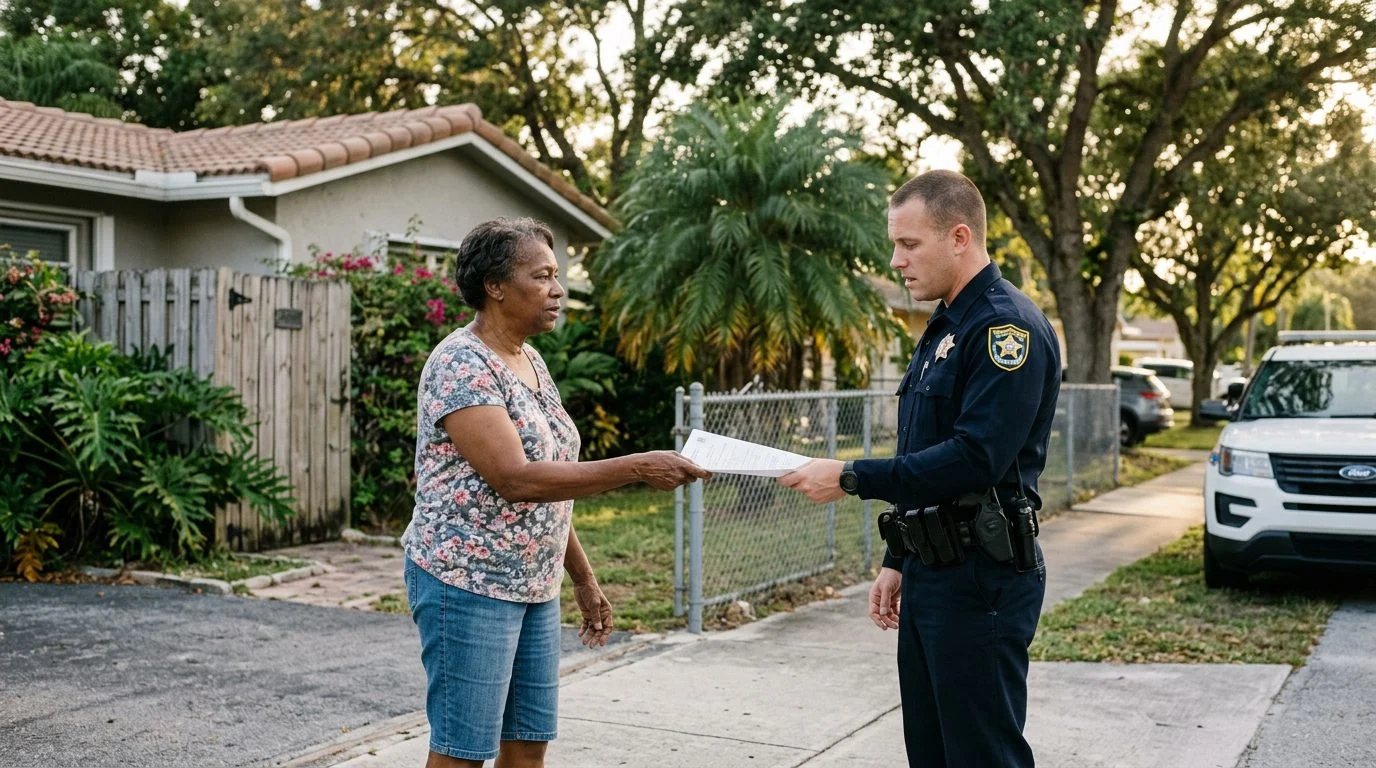
What a Third-Degree Felony Carries Under Florida Law
A third-degree felony carries a fine of up to $5,000 under Florida law. Fla. Stat. § 775.083 sets that ceiling. The fine is a cap set by the Legislature, not a sentence the judge must impose. The same section allows a higher amount equal to double the offender’s gain from the offense or double the victim’s loss.
A felony conviction also carries court costs of $50 under the same section. A judge can defer payment of a fine if the defendant cannot pay right away.
Prison time follows a different set of rules. Fla. Stat. § 775.082 sets the penalties. The Criminal Punishment Code manual explains how a sentencing scoresheet scores the offense and the person’s record.
A felony label can follow a person into background checks, professional licensing, and immigration review. For licensed professionals and non-citizens, those effects can matter as much as the sentence itself.
Reducing the Charge Through a Plea Agreement
A third-degree felony charge can be reduced through a plea agreement, if the prosecutor agrees. Under Fla. R. Crim. P. 3.171, a prosecutor may, if the defendant enters a guilty or nolo contendere plea to a charged offense or to a lesser or related offense, agree to drop other charges, recommend a sentence or not oppose the defendant’s request for one (not binding on the trial judge), or agree to a specific sentence. The judge makes the final sentencing decision.
Your lawyer must tell you about every plea offer and the likely results of each one. Your lawyer also cannot finish a plea deal without your full and complete consent. That rule protects your right to decide.
Whether a plea reduction is possible depends on the facts of the case, the evidence, and the State Attorney’s position. Early review of the file gives you more time to weigh each offer before the court date.
Motion to Reduce or Modify a Sentence After Sentencing
The court may modify the sentence to include provisions of chapter 948 of the Florida Statutes. The rule does not apply when the death sentence is imposed, or when the judge imposed a minimum mandatory sentence or had no sentencing discretion. That exclusion can end the question before it starts.
The same rule also covers a separate motion to correct a sentencing error, including an illegal sentence or incorrect jail credit. Keep your judgment and sentencing papers. They show exactly what the court imposed, which is what the motion must address.
Withholds, Sealing and Expunging: What Changes the Record
Florida limits withholds for some third-degree felonies. Under Fla. Stat. § 775.08435, a third-degree felony that is a crime of domestic violence needs a written request from the state attorney or written court findings before adjudication can be withheld.
Sealing and expunging are separate tools. Fla. Stat. § 943.0585 covers expunction. Fla. Stat. § 943.059 covers sealing.
Some records cannot be sealed or expunged at all. Fla. Stat. § 943.0584 lists them.
Eligibility is only the first step. You need a valid certificate of eligibility from the Florida Department of Law Enforcement. The petition must be written, sworn, and filed with the clerk. Under Fla. R. Crim. P. 3.692, the court can deny the request at its sole discretion.

Time Limits to Keep in Mind and Talking With Patrick Wilson Law
Florida generally gives the state three years to file most felony charges. Under Florida law, a prosecution for a felony of the first degree must be commenced within four years after the crime, and a prosecution for any other felony must be commenced within three years after the crime, except where the law provides otherwise. Prosecutions for capital felonies, life felonies, and felonies that resulted in a death may be commenced at any time. Post-sentencing deadlines are much shorter, so check them early.
Can a third-degree felony be reduced to a misdemeanor in Florida?
It can, if the prosecutor agrees to a plea to a lesser or related offense and the judge accepts it. The judge has the final say.
Can you expunge a felony in Florida?
Some felonies can be expunged, but eligibility turns on the case history and the statute’s requirements.
How long does the state have to file a felony charge in Florida?
For most felonies, generally three years after the crime, under the statute cited above.
If a third-degree felony charge has someone you love facing a court date or a sentence, you don’t have to sort out these routes alone. Patrick Wilson Law, PLLC in Miami, with Patrick David Wilson as the responsible lawyer, can review the facts with you. Call 786-761-1719, leave a message, or request a free consultation. The initial consultation is free, confidential, and carries no obligation to continue.
Why Clients Contact Patrick Wilson Law
Free, Confidential First Consultation
The initial consultation is free, confidential and carries no obligation to continue.
Attention for First-Time Offenders
Our team works with first-time offenders and licensed professionals whose careers are on the line.
Serving South Florida
We represent clients in Miami, Miami-Dade County, Broward County, Fort Lauderdale, Kendall, Hialeah, Miami Beach, Homestead and the Florida Keys.
Do Not Face the Charge Alone
Statements made early in a case can affect later options. Talk with a lawyer before you answer detailed questions from police or prosecutors.
How We Approach a Felony Charge
Review the Charge
We start by reviewing the charging documents, the evidence and the exact statute the State has cited.
Examine Your Record
Your criminal history, age and circumstances matter, so we look closely at the full picture before discussing options.
Discuss Negotiation Options
We talk with you about the possibilities for resolving the case, including discussions with the prosecutor about a lesser or related charge.
Plan Your Next Steps
Together we map out the court dates, decisions and records questions ahead, so you know what to expect.
Talk With Patrick Wilson Law About Your Case
Related practice areas
- Seal And Expunge Criminal Records
- Sealing or Expunging a Florida Record: Miami-Dade, Broward

