
Seal & Expunge Criminal Records | Miami, Florida
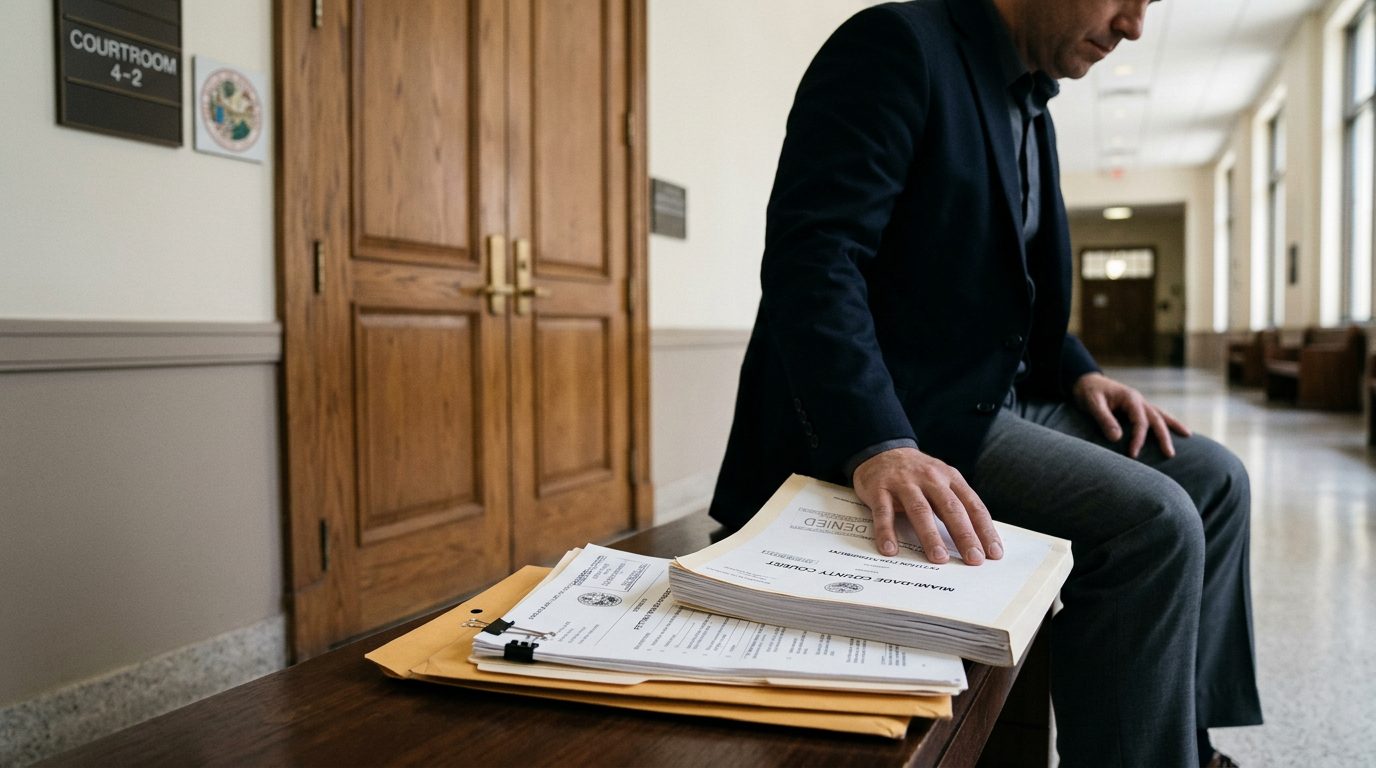
Know the Risks Before an Expunge Petition Is Denied
An incomplete, ineligible, or improperly documented petition can be returned, delayed, or refused. Patrick Wilson Law, PLLC helps Miami-area clients understand those risks and prepare their filings with care.
By Patrick David Wilson · Published October 21, 2026
Filing a petition to expunge or seal a Florida criminal record is a court process with firm rules. When a petition is incomplete, ineligible, or missing a document, the expunge petition denied risks are real. The filing can be returned, delayed, or refused. This page explains those risks in plain terms. Patrick Wilson Law, PLLC is a Miami criminal defense firm, and Patrick David Wilson is the lawyer responsible for this page.
What Risks Come With Filing a Petition That Is Incomplete, Ineligible, or Missing a Required Document, Such as Losing Filing Fees or Having the Petition Denied?
An incomplete, ineligible, or under-documented petition can be returned, delayed, or denied. The time and money you put into it can be lost. The main risks fall into five groups:
- Return: the filing is sent back because it is not complete.
- Denial: the court refuses the request.
- Cost: you pay for certified copies of records, unless you qualify as indigent.
- Time: each return or denial adds delay, and a new filing starts the paperwork again.
- Record unchanged: until a court order is entered, the record stays as it is.
A complete filing still leaves the decision with the court. Under Fla. R. Crim. P. 3.692, any request to expunge or seal “may be denied at the sole discretion of the court.” How a petition turns out depends on the facts of the record and the court involved. Patrick Wilson Law, PLLC handles seal and expunge matters across South Florida, from Broward County to the Keys.
If a petition you filed was returned or denied, you don't have to work out the next step alone, and our team offers a free, confidential first consultation with no obligation to continue. Talk it through with our team — the first consultation is free, confidential, and carries no obligation.
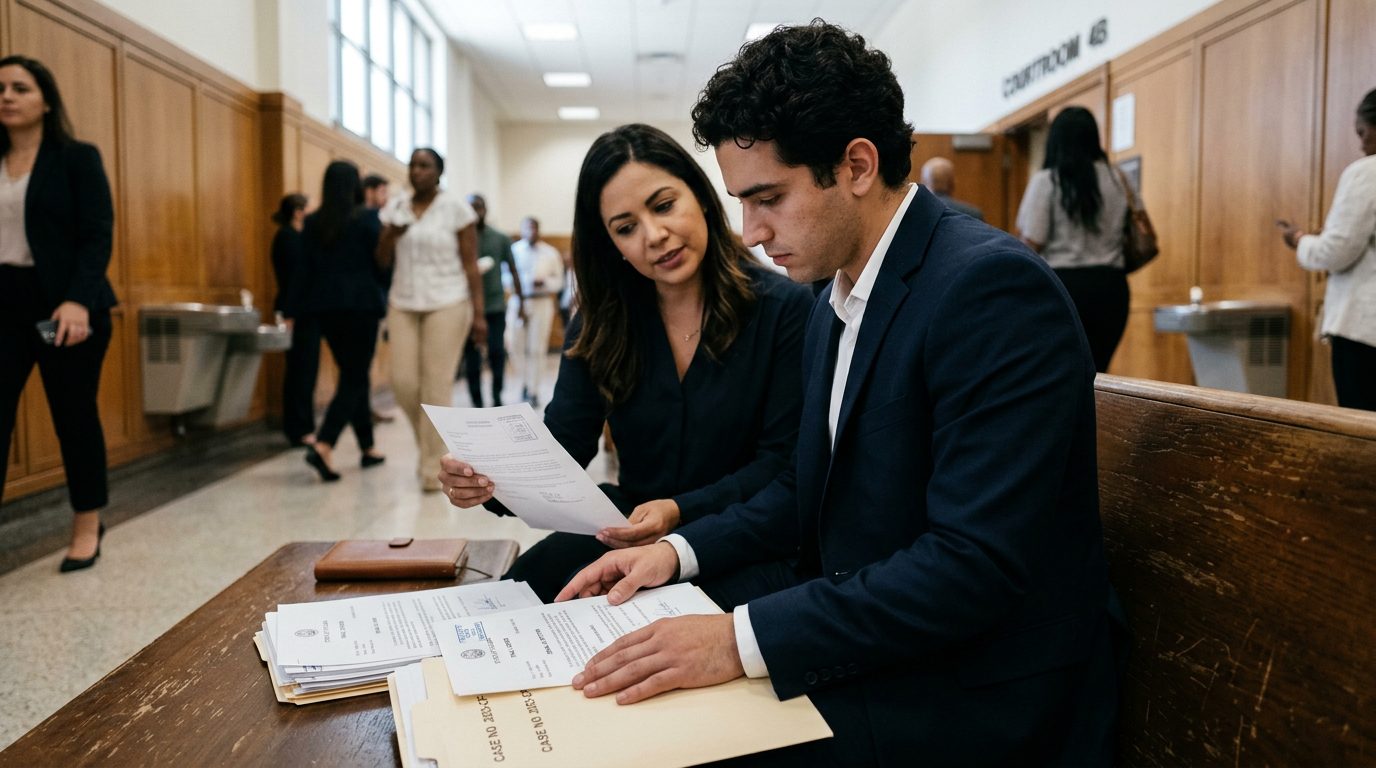
How Missing Documents and Incomplete Forms Lead to Returned or Denied Petitions
A petition must arrive with specific documents, or it can be sent back or stalled. Florida’s rules require a written petition filed with the clerk. That petition must come with a valid certificate of eligibility and a sworn statement. The sworn statement says you meet the eligibility requirements, that you are eligible to the best of your knowledge, and that no other petition to seal or expunge is pending before any court (Fla. R. Crim. P. 3.692).
The completed petition, sworn statement, and certificate must also be served on the prosecuting attorney and the arresting authority. Filings must also follow the general court rules on form and filing (Fla. R. Crim. P. 3.030).
Common gaps include a missing certificate, an unsigned or unsworn statement, and no proof of service on the state attorney and arresting agency. Case numbers or dates that don’t match the court file are another easy error. Each gap gives a reason to send the filing back. A return costs time even when the record itself is eligible.
How Ineligibility Stops a Petition Before It Starts
A record that Florida law marks as ineligible cannot be cleared by petition, no matter how complete the paperwork is. Eligibility depends on the record, not just the forms. Under Fla. Stat. § 943.0584, “conviction” includes a determination of guilt even if adjudication is withheld. Many readers don’t expect that.
Section 943.0584 lists manslaughter or homicide, as defined in s. 782.07, s. 782.071, or s. 782.072, among its enumerated offenses (Fla. Stat. § 943.0584). Section 782.07 defines manslaughter as the killing of a human being by the act, procurement, or culpable negligence of another, without lawful justification, and it is a felony of the second degree. Section 782.07 defines manslaughter as the killing of a human being by the act, procurement, or culpable negligence of another, without lawful justification, and makes it a felony of the second degree; the list in s. 943.0584 also includes any offense defined in chapter 794 and assault or battery against a family or household member.
Other limits apply too. A court may order expunction for one arrest or one incident only, unless additional arrests directly relate to the original one.
Certificate eligibility comes first. A court may not order a criminal justice agency to expunge your record until you have applied for and received a certificate of eligibility. For sealing, you apply to the Florida Department of Law Enforcement first (Fla. Stat. § 943.059). For the full list of eligibility categories, see our seal and expunge overview.
What Fees and Time Are at Stake When a Petition Fails
When a petition fails, the money and time you spent may not clear your record. Under Florida’s rules, the petitioner bears all costs of certified copies unless the petitioner is indigent (Fla. R. Crim. P. 3.692).
A defective filing can also waste an order. The agency does not have to act on an order that does not follow the statute. No cause of action, including contempt of court, arises against a criminal justice agency for failing to comply with a sealing order when the petitioner did not obtain the certificate of eligibility or the order does not otherwise comply with the requirements of the statute.
Courts can extend deadlines, but only within limits. A court may enlarge a time period for good cause. After the period ends, it may act for excusable neglect (Fla. R. Crim. P. 3.050). The court may not extend the time for taking an appeal, except as a statute or rule allows. Because of that, act quickly after a denial.
What Stays on the Record After a Denied Petition
A denied petition leaves the record as it is under that request. The Florida Department of Law Enforcement states that a court, not the department, has discretion to grant a sealing or expungement petition (FDLE sealing and expunging FAQ).
Some records clear without a petition. Under Fla. Stat. § 943.0595, the department must automatically seal certain records in qualifying cases. Those cases include ones where no charging document was filed, or charges were dismissed or nolle prosequi as to all counts, or a not guilty verdict or judgment of acquittal was entered on all counts, but the record must not result from a charging document for a forcible felony as defined in s. 776.08 or for an offense enumerated in s. 943.0435(1)(h)1.a.(I), and a person is not eligible for automatic sealing if the defendant was found not guilty by reason of insanity. The statute sets the conditions, so compare your case against them.
How to Reduce the Risk Before You File
The most useful step is to check eligibility and the full package before anything goes to the clerk. Work through these points in order:
- Confirm the charge and the disposition against the eligibility rules above.
- Get the FDLE certificate of eligibility first. The Polk County Clerk notes that FDLE oversees the application process.
- Check that the sworn statement is complete and signed.
- Confirm that the petition is served on the state attorney and the arresting agency.
- Check every case number and date against the court file.
Patrick Wilson Law, PLLC focuses on seal and expunge matters and first-time offender cases in Miami-Dade, Broward, Monroe, and the Florida Keys.
Not sure what your next step is?
Talk it through with our team — the first consultation is free, confidential, and carries no obligation.

Talk Through Your Petition Before It Is Filed
If you’re reading this after a petition was returned or denied, or while you prepare one for a family member, the pressure is real. A filing may have been sent back. A record may be missing. You may not be sure the record is eligible yet. Patrick David Wilson and our team can talk through those facts with you. The firm offers a free, confidential first consultation with no obligation to continue. Call 786-761-1719 or send a message through our contact page.
How We Approach Your Petition
Careful Document Review
We review every page of the petition and its supporting records so that nothing required is left out.
Focus on Your Record
Patrick Wilson Law, PLLC concentrates on criminal defense matters, including sealing and expunging Florida criminal records.
Clear Communication
We explain each step of the process in plain language so you know what is happening with your case.
Attorneys Who Work Together
Our attorneys, Patrick David Wilson and Sahara Fonseca, and our team of support staff work together on each matter.
Important Warning
A petition that is incomplete, missing a required document, or filed without reviewing the full criminal record can be returned, delayed, or denied. Review your petition carefully before you file it.
Common Reasons Petitions Run Into Trouble
Eligibility Questions
Courts review whether a record meets the requirements for sealing or expunction. A petition that does not address those questions clearly can be refused.
Incomplete Case History
Charges, dismissals, and related case numbers that are left out or described inaccurately can delay the process or lead to a denial.

