

Criminal Defense in Miami and South Florida
A Cleared Record Can Still Show Up in Florida
Sealing and expungement can remove a case from public view, but some records stay visible to certain agencies and employers. Here is how to plan around that gap before you apply.
By Patrick David Wilson · Published November 14, 2026
A background check can pull up an old arrest long after a court has ordered it expunged. If you’re asking whether an expunged criminal history still shows up in Florida, here’s the short answer: the order removes the record from most public view, but some agencies and listed employers and licensing entities can still learn it exists. Which check runs, and who runs it, decides what shows.
What an expunged record means under Florida law
An expunction is a court order that tells the agencies holding a criminal history record to expunge it. Fla. Stat. § 943.0585 sets the conditions for petitioning a court to expunge a criminal history record, and a court may not order expunction until the person has applied for and received a certificate of eligibility. Any request for expunction may still be denied at the court’s sole discretion.
Eligibility is not automatic. Eligibility turns on the facts of your own case.
You start with a written petition filed with the clerk. Under Florida Rule of Criminal Procedure 3.692, the petition needs a valid certificate of eligibility from the Florida Department of Law Enforcement and a sworn statement. The court can deny the request at its sole discretion.
The certificate is a state step. The FDLE seal and expunge process explains how it works.
Sealing is a related remedy under § 943.059, with its own eligibility rules.
An expunged record is not the same as a case that never happened. The arrest still took place. The order changes what agencies keep and who can learn of it.
If an expunged record is standing in the way of a job offer or a CDL renewal, we can talk through your order and your checks in a free, confidential consultation. Talk it through with our team — the first consultation is free, confidential, and carries no obligation.
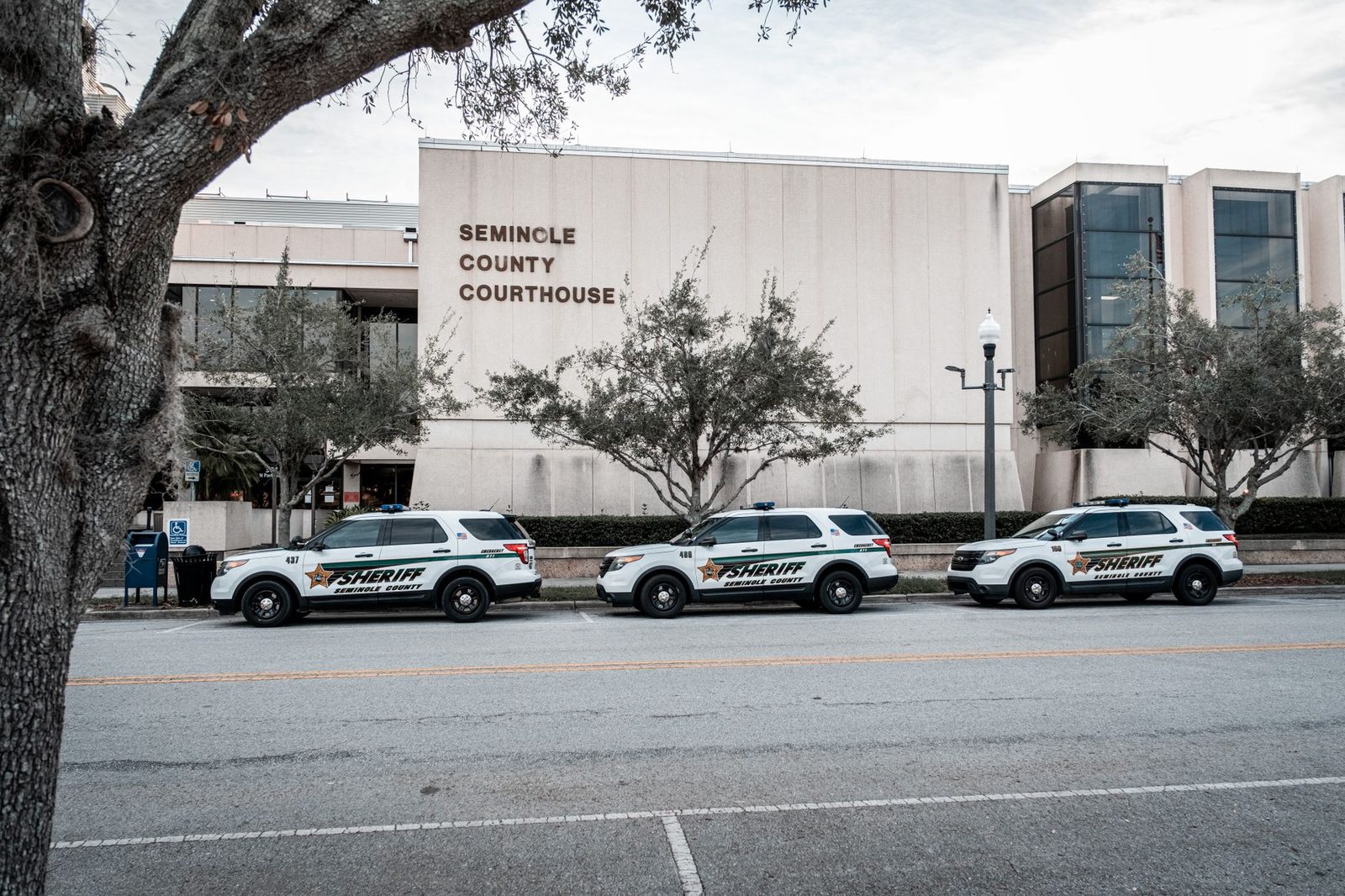
Why an expunged record can still appear on a background check
An expunged record can still appear because certain entities keep lawful access to it. The statute spells out who keeps that access and why.
After a court grants relief, the clerk sends certified copies to the state attorney and the arresting agency. The department or any other criminal justice agency is not required to act on an order that does not comply with the requirements of the statute. Under § 943.0585, agencies holding the record must destroy or obliterate it, except that the department must retain its copy in all cases.
The same statute lets the department disclose that the record exists to certain licensing and employment entities. Fla. Stat. § 943.0585 reads: “I of the State Constitution, except that the department shall disclose the existence of a criminal history record ordered expunged to the entities set forth in subparagraphs (b)1. and 4.-9. for their respective licensing, access authorization, and employment purposes and to criminal justice agencies for their respective criminal justice purposes.” Fla. Stat. § 943.0585 reads: “It is unlawful for any employee of an entity set forth in subparagraph (b)1., subparagraph (b)4., subparagraph (b)5., subparagraph (b)6., subparagraph (b)7., subparagraph (b)8., or subparagraph (b)9. to disclose information relating to the existence of an expunged criminal history record of a person seeking employment, access authorization, or licensure with such entity or contractor, except to the person to whom the criminal history record relates or to persons having direct responsibility for employment, access authorization, or licensure decisions.” It also allows disclosure to criminal justice agencies for criminal justice purposes.
Timing matters too. A background report pulled before an order reaches an agency may still show the older entry.
Automatic sealing works differently. Under § 943.0595, other criminal justice agencies need not seal an automatically sealed record or return it to the court. The record stays with the department and other agencies.
How employer background checks treat expunged and sealed records
An employer sees only what its screening process reaches. Florida also limits what certain listed entities may say about a sealed or expunged record.
Most employers use one or more of these checks: a state criminal history search, a county court search, a national database, or a third-party background report. Each one draws on different sources, so results can differ.
Florida law restricts certain employees. Under § 943.0585 and § 943.059, an employee of a listed entity may not disclose that an expunged or sealed record exists for someone seeking employment or licensure. Fla. Stat. § 943.059 reads: “An employee of an entity set forth in subparagraph (b)1., subparagraph (b)4., subparagraph (b)5., subparagraph (b)6., subparagraph (b)8., subparagraph (b)9., subparagraph (b)10., or subparagraph (b)11. may not disclose information relating to the existence of a sealed criminal history record of a person seeking employment, access authorization, or licensure with such entity or contractor, except to the person to whom the criminal history record relates or to persons having direct responsibility for employment, access authorization, or licensure decisions.” The exception covers that person and those with direct responsibility for the decision. Breaking this rule is a first-degree misdemeanor.
When you apply, these questions help you see the picture:
- Which company runs the background check?
- Which sources does that company search?
- How will the employer treat an entry that was expunged or sealed?
CDL and commercial driver background considerations
For a CDL holder, the type of offense matters as much as any court order.
Florida sets disqualification periods in § 322.61. Two violations specified in subsection (3) of § 322.61, committed while operating a commercial motor vehicle and arising in separate incidents, lead to permanent disqualification. Under § 322.61, a holder of a commercial driver license who is convicted of driving under the influence while operating a noncommercial motor vehicle is disqualified from operating a commercial motor vehicle for 1 year, except as provided in subsection (4).
The federal clearinghouse check adds a second layer. Under § 322.591, beginning November 18, 2024, when someone applies for or seeks to renew, transfer, or make any other change to a CDL, the department must obtain the driving record from the Commercial Driver’s License Drug and Alcohol Clearinghouse. The department may not issue or renew a license for a person the federal rule bars from operating a commercial motor vehicle.
If you receive a downgrade notice, you may request an informal hearing, so read the notice carefully for any instructions on how and when to make that request.
Whether a record affects your CDL depends on the facts: the offense, the court’s order, and the agency reviewing the file.
Licensed professionals and licensing board reviews
Under § 455.227, a licensee must report a conviction, finding of guilt, or plea in writing to the board within 30 days. That duty applies regardless of adjudication. Failing to report is a ground for discipline.
Answers on applications matter too. For health care licenses, § 456.072 lists misleading representations in or related to the practice of the licensee’s profession, and attempting to obtain a license by fraudulent misrepresentation, as grounds for discipline.
For a closer look at this situation, read expunging a record for a licensed professional facing a board review.
Before you answer a licensing question, read the board’s application and your court order side by side.
Common questions about clearing a criminal record
Time alone does not clear a Florida record. Some routes require a prior sealing for a minimum of 10 years, where adjudication was withheld or not all charges were dismissed before trial, with exceptions, under § 943.0585. Fla. Stat. § 943.0585 reads: “The requirement for the record to have previously been sealed for a minimum of 10 years does not apply if a plea was not entered or all charges related to the arrest or alleged criminal activity to which the petition to expunge pertains were dismissed before trial or a judgment of acquittal was rendered by a judge or a verdict of not guilty was rendered by a judge or jury.”
Sealing and expunging are different remedies. Which one fits turns on your case history and what you need the record to do.
Does a record clear after seven years?
Time matters only in certain routes, such as the 10-year prior sealing rule.
Which crimes cannot be expunged in Florida?
A conviction for an offense listed in § 943.0584 cannot be sealed or expunged under that section.
Does a withheld adjudication count as a conviction?
Under the same statute, a conviction includes a plea or finding of guilt even when adjudication is withheld.
Not sure what your next step is?
Talk it through with our team — the first consultation is free, confidential, and carries no obligation.
Steps to take before you apply for work or renew a license
Gather your paperwork before you fill out any application. Keep these items together:
- The case number and the court that handled it
- Arrest and disposition dates
- Any sealing or expunction order, and any certificate of eligibility
- The licensing or employment form, with its exact questions
If you need an order, the petition must include a valid certificate of eligibility and a sworn statement, under Rule 3.692. The court may not order a criminal justice agency to expunge or seal a record until the petitioner has applied for and received that certificate.
Answer every question accurately, and keep copies of what you submit. Ask the employer or board how it will handle an expunged or sealed entry. If a CDL downgrade notice arrives, read the deadline it states for requesting a hearing and mark that deadline the day it arrives.

Talk through your situation with Patrick Wilson Law
If a job offer, a CDL renewal, or a board question brought you here, you don’t have to untangle the checks alone. You may be searching this for a spouse or a family member, and that’s fine.
Call 786-761-1719 or leave a message through our contact page. We’ll set up a time to talk about your order, your offense, and which checks matter in your case.
The first consultation is free, confidential, and carries no obligation to continue. La consulta inicial es gratuita, confidencial y sin compromiso de continuar.
Patrick David Wilson is the responsible lawyer for this page. He is one of the lawyers at Patrick Wilson Law, PLLC in Miami. The firm’s lawyers focus on sealing and expunging criminal records, DUI defense, and criminal defense for licensed professionals, serving Miami-Dade, Broward County, and the Florida Keys.
Where Records Can Still Appear
Court Files
Court dockets and clerk records may keep a separate history of the case, even after an order is entered.
Law Enforcement Databases
Arrest and booking information held by agencies can differ from what appears in a public court search.
Licensing Boards
Professional licensing and regulatory agencies may ask about past charges regardless of a sealed or expunged status.
Don't Assume a Record Is Gone
Before you answer a job, license, housing or immigration question about your past, confirm exactly what has been sealed or expunged and what still exists. Answering wrongly can create a new problem.
How Patrick Wilson Law Helps
Focused South Florida Practice
Patrick Wilson Law focuses on criminal defense for clients in Miami-Dade, Broward County, Fort Lauderdale, the Florida Keys and nearby communities.
Record Sealing and Expungement
The firm works on sealing and expunging criminal records and reviews what each order will and will not clear.
Licensed Professionals
Attorneys who handle criminal defense for licensed professionals understand how a charge can affect a career and a license.
First-Time Offenders
The firm also focuses on first-time offender cases, where a clear plan can make a lasting difference.
Responsible Attorney
Patrick David Wilson is the responsible attorney for this page. Our team supports every client from the first call through the case.
Free, Confidential Consultation
La consulta inicial es gratuita, confidencial y sin compromiso de continuar. Your first consultation is free, confidential and comes with no obligation to continue.

