
Sealing & Expunction | Miami-Dade County
Clear the Path: Your FDLE Certificate of Eligibility in Miami-Dade
A plain-language guide from Patrick Wilson Law, PLLC, a Miami criminal defense firm, on what the FDLE certificate is and how it fits into sealing or expunging a record.
By Patrick David Wilson · Published October 20, 2026
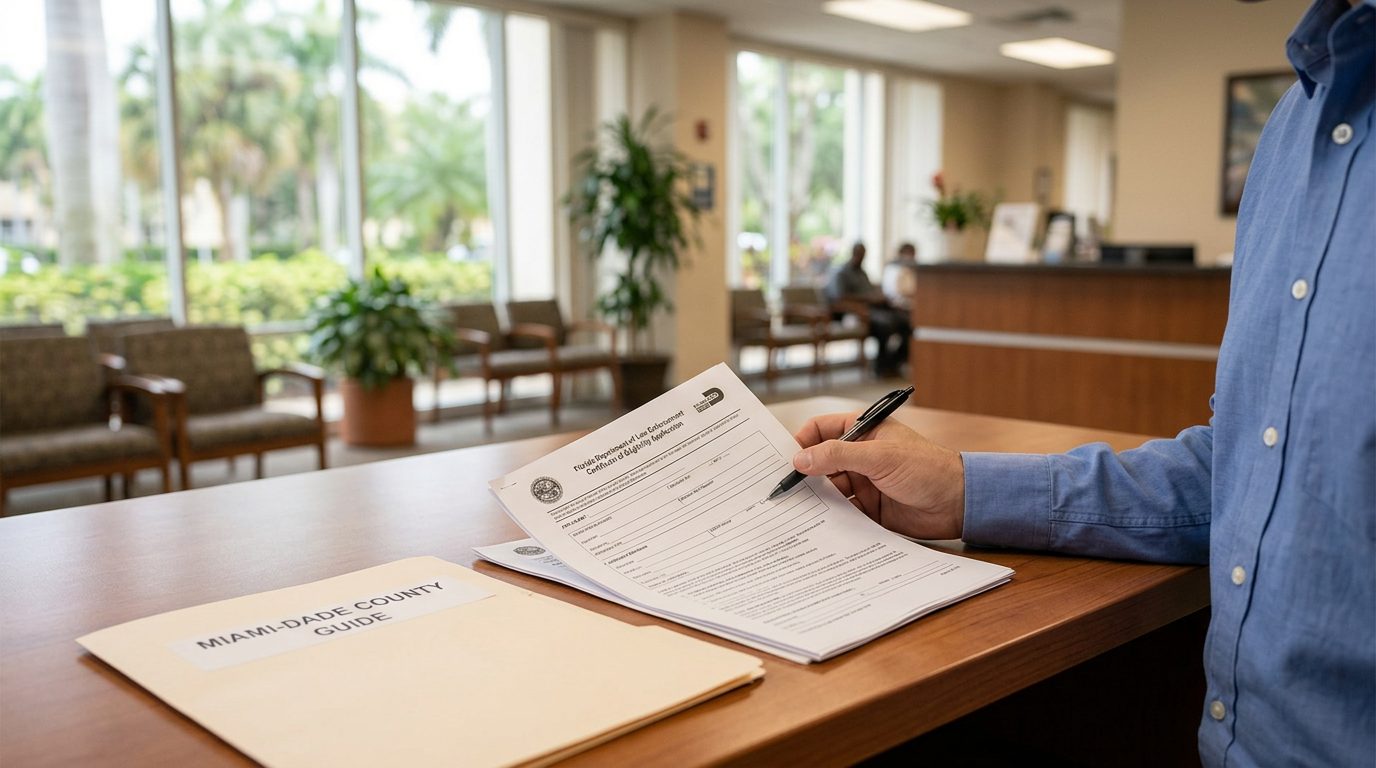
If you want an arrest or case removed from your Florida record, the FDLE Certificate of Eligibility is usually the first document you need. This guide explains what it is, why Florida law puts it first, and what happens next in Miami-Dade County. It’s written for people with a record and for family members helping them.
What is the FDLE Certificate of Eligibility, and must it be obtained before a sealing or expunction petition can be filed in Miami-Dade?
Yes, you must have it first. The FDLE Certificate of Eligibility is the document the Florida Department of Law Enforcement issues to confirm you may seek sealing or expunction. A petition to seal or expunge needs it attached.
Florida’s expunction law says you must apply to FDLE for the certificate before asking a court to expunge a record (§ 943.0585(2)). The sealing law works the same way (§ 943.059(2)). The court rules add that the petition goes to the clerk with the certificate attached (Fla. R. Crim. P. 3.692).
Eligibility turns on your record. Some convictions block both the certificate and a court order. Those include certain felony battery and chapter 794 offenses (§ 943.0584).
For the full process, read our seal and expunge criminal records overview.
If someone you care about is dealing with a record that affects their job or license, we offer a free, confidential first consultation with no obligation to continue. Talk it through with our team — the first consultation is free, confidential, and carries no obligation.

What is an FDLE certificate, and how does it differ from a sealing or expunction order?
An FDLE certificate shows that FDLE found your record meets the state’s eligibility rules. A sealing or expunction order is a judge’s written order that actually seals or expunges the record.
The certificate is not a court ruling. FDLE says a court, not FDLE, decides whether to grant the petition (FDLE frequently asked questions). A judge may deny any request at the court’s sole discretion, even when you hold a certificate (Fla. R. Crim. P. 3.692).
Picture a Miami-Dade resident who receives a certificate. That person still has to file the petition. The facts of each case shape what can be done with a criminal record.
The order has limits, too. A court may expunge one arrest or one incident. It can cover more arrests only if they directly relate to the original arrest, and the order must say so (§ 943.0585(3)(c)). Check every arrest before you file.
How can I get a Certificate of Eligibility for expungement in Florida?
You apply through FDLE, which calls submitting an application the first step in sealing or expunging a criminal history record. Use the current application from FDLE’s website and follow its instructions exactly.
They include showing that probation has terminated (FDLE certificate instructions). Old forms and blank sections can slow the process. Read every line before you submit, and keep copies of what you send.
Some records clear without a petition. Florida must seal certain records automatically. Automatic sealing does not apply to records that result from an indictment, information, or other charging document for a forcible felony as defined in s. 776.08 or for an offense enumerated in s. 943.0435(1)(h)1.a.(I) (§ 943.0595(2)(a)).
What should you do once you have received a certificate of eligibility?
File a written petition with the clerk of court. Attach the certificate and a sworn statement, then serve the prosecutor and the arresting agency.
The sworn statement says you meet the eligibility rule. It also says you have no other petition to seal or expunge pending before any court (Fla. R. Crim. P. 3.692). The prosecutor and arresting agency may respond. The court may hear evidence on any fact it needs to decide.
Keep your certificate in a safe place. A sealing petition is complete only when a valid certificate is attached (§ 943.059(3)(a)). Fla. Stat. § 943.059 reads: “(3) PETITION.—Each petition to a court to seal a criminal history record is complete only when accompanied by: (a) A valid certificate of eligibility issued by the department pursuant to this section.”
If the court grants the petition, it signs a written order. The order names the records and agencies it covers. You pay for certified copies unless you are indigent (Fla. R. Crim. P. 3.692).

Where should you start if you are helping a family member or friend with a record?
Start by gathering the case details for the person with the record. Then check whether the record is eligible before anyone files an application.
Helping someone through this can feel heavy. You may be juggling court papers, FDLE forms, and worry about work, school, or a professional license. Collect arrest dates, case numbers, and final case outcomes first.
Do I need a certificate before filing in Miami-Dade?
Yes. Florida law requires a valid certificate to be attached to a sealing or expunction petition.
Does a certificate mean the record is already cleared?
Sealing or expunging a record depends on the facts of each case.
Can a judge deny a petition even with a certificate?
Yes. The court may deny any request at its sole discretion.
If someone you love is facing this, you don’t have to sort out the certificate, the petition, and the court’s rules alone. Call 786-761-1719 or use the contact form to ask about a free, confidential first consultation with no obligation to continue. Patrick Wilson Law, PLLC is based in Miami.
How Our Miami Firm Approaches Your Record
Review Your Record
We look at the charges, dispositions and paperwork in your file before deciding what steps may apply to your situation.
Focused Criminal Defense
Patrick Wilson Law, PLLC focuses on criminal defense across South Florida, including sealing and expunging criminal records.
Support From Our Team
Our team helps you gather documents and keep track of each step of the process.
Clear Communication
We explain the process in plain language so you know what to expect at every stage.
Important: A Certificate Is One Step, Not the Finish Line
Obtaining an FDLE Certificate of Eligibility does not by itself seal or expunge a record. Each petition depends on the facts of your case and the court's review.
Working Through the Process With Us
1. Gather Your Records
Collect your arrest and court documents so we can review your case history together.
2. Confirm Your Eligibility
We review the certificate requirements and the details of your charges with you.
3. Prepare the Petition
Our team helps prepare the paperwork for filing in Miami-Dade County.
4. Follow Through
We keep you informed as your petition moves through the court process.

