
Miami Criminal Defense | Seal and Expunge Criminal Records
Clearing a Florida Record? Know the Costs and Steps First
Government charges, certified copies and paperwork can add up quickly. Here is what to plan for before you file.
By Patrick David Wilson · Published November 11, 2026
Expunge a Florida Record for Free: Costs and Steps
Finding an old arrest on a background check can stop a job, a license, or an apartment application cold. If that’s where you are, you want a clear answer about cost first.
The short answer: the process has no fully free path. Government charges apply, and you need a Certificate of Eligibility from the Florida Department of Law Enforcement (FDLE) before a court can act on your petition.
If an old arrest is holding up a job, a license, or a housing decision for you or someone you love, we can talk through your record with you. Call 786-761-1719 or send us a message. Talk it through with our team — the first consultation is free, confidential, and carries no obligation.

Why the Question of Cost Comes Up First
People usually ask about cost while a deadline or a decision is already on the table. A background check may show an old arrest at the worst moment. A job offer, a professional license, or a housing application may be waiting. Sometimes the person asking is a parent, a spouse, or an adult child looking into a record for someone they love.
The word “free” can mislead. Florida’s process carries costs even for people who handle every step themselves. Those costs are tied to steps the rules require, and the petitioner bears the cost of certified copies.
This guide covers eligibility, the steps in order, the costs you may owe, and the mistakes that slow cases down. Many people don’t realize that how a case ended matters more than what the charge was called. Getting those facts straight early prevents avoidable delays.
What Expungement Means in Florida
Expungement is a court-ordered process. Once a judge signs the order, the clerk removes the entries from the court’s records or seals them in a nonpublic index. The Florida rules on sealing and expunging spell out these clerk duties.
Expungement does not hide a record from every agency. Under Fla. Stat. § 943.0585, information that a record was expunged stays confidential. Still, FDLE discloses that existence to listed licensing, employment, and access-authorization entities. Fla. Stat. § 943.0585 reads: “It is unlawful for any employee of an entity set forth in subparagraph (b)1., subparagraph (b)4., subparagraph (b)5., subparagraph (b)6., subparagraph (b)7., subparagraph (b)8., or subparagraph (b)9. to disclose information relating to the existence of an expunged criminal history record of a person seeking employment, access authorization, or licensure with such entity or contractor, except to the person to whom the criminal history record relates or to persons having direct responsibility for employment, access authorization, or licensure decisions.” Criminal justice agencies can see it for their own purposes.
Sealing is a related but separate remedy under § 943.059. Lawful self-defense cases follow their own path, which FDLE publishes separately. The court also has the final word. A request can be denied at the court’s sole discretion, as FDLE’s FAQ explains.
Am I Eligible to Expunge My Record in Florida?
You can petition only if your case meets the conditions in Florida statute and you hold a Certificate of Eligibility. The statute’s eligibility list covers several conditions. Three matter most.
First, no indictment, information, or other charging document can have been filed in the case, unless it was dismissed or nolle prosequi by the state attorney or statewide prosecutor, or was dismissed by a court or ended in a judgment of acquittal or a not guilty verdict. Second, you cannot have been adjudicated guilty in Florida of a criminal offense, subject to the statute’s exceptions. Third, you cannot have been adjudicated guilty of acts stemming from the arrest.
Withheld adjudication still counts as a conviction under § 943.0584, which defines a conviction to include a guilty or no contest plea or finding of guilt even when adjudication is withheld; under § 943.0585 you must never have been adjudicated guilty in this state of a criminal offense. Under § 943.0584, a “conviction” includes a guilty or no contest plea and a finding of guilt, even when adjudication is withheld. The same section lists offenses that make a record ineligible. These include vehicular homicide, as defined in § 782.071: the killing of a human being, or of an unborn child by any injury to the mother, caused by the operation of a motor vehicle by another in a reckless manner likely to cause death or great bodily harm, any offense in chapter 794, felony battery, and assault or battery between family or household members.
Outcome matters. Dismissals, dropped charges, and not guilty findings each raise different questions, so each case needs its own review.
Step-by-Step: How the Expungement Process Works
The process runs in a fixed order. You gather records, get the certificate, file the petition, and then follow the order through.
- Collect the paperwork. Gather arrest and case records from the arresting agency and the clerk of court in the county where the case was handled.
- Apply to FDLE. A court may not order an agency to expunge a record until you have applied for and received a certificate, under Fla. R. Crim. P. 3.692.
- File the petition with the clerk. The petition is complete only when accompanied by a valid certificate of eligibility and a sworn statement that you meet the eligibility rules.
- Serve the prosecutor and the arresting agency. The completed petition, sworn statement, and certificate must be served on the prosecuting attorney and the arresting authority.
- Follow the order. If the court grants the petition, the clerk certifies copies of the order to the prosecutor and the arresting agency.
For the state’s overview of each stage, see FDLE’s seal and expunge process page.
What Does Expungement Actually Cost?
Expungement costs come in two parts: government charges and, if you hire a lawyer, attorney fees on top. Government charges come from the state and clerk, and our firm does not set them.
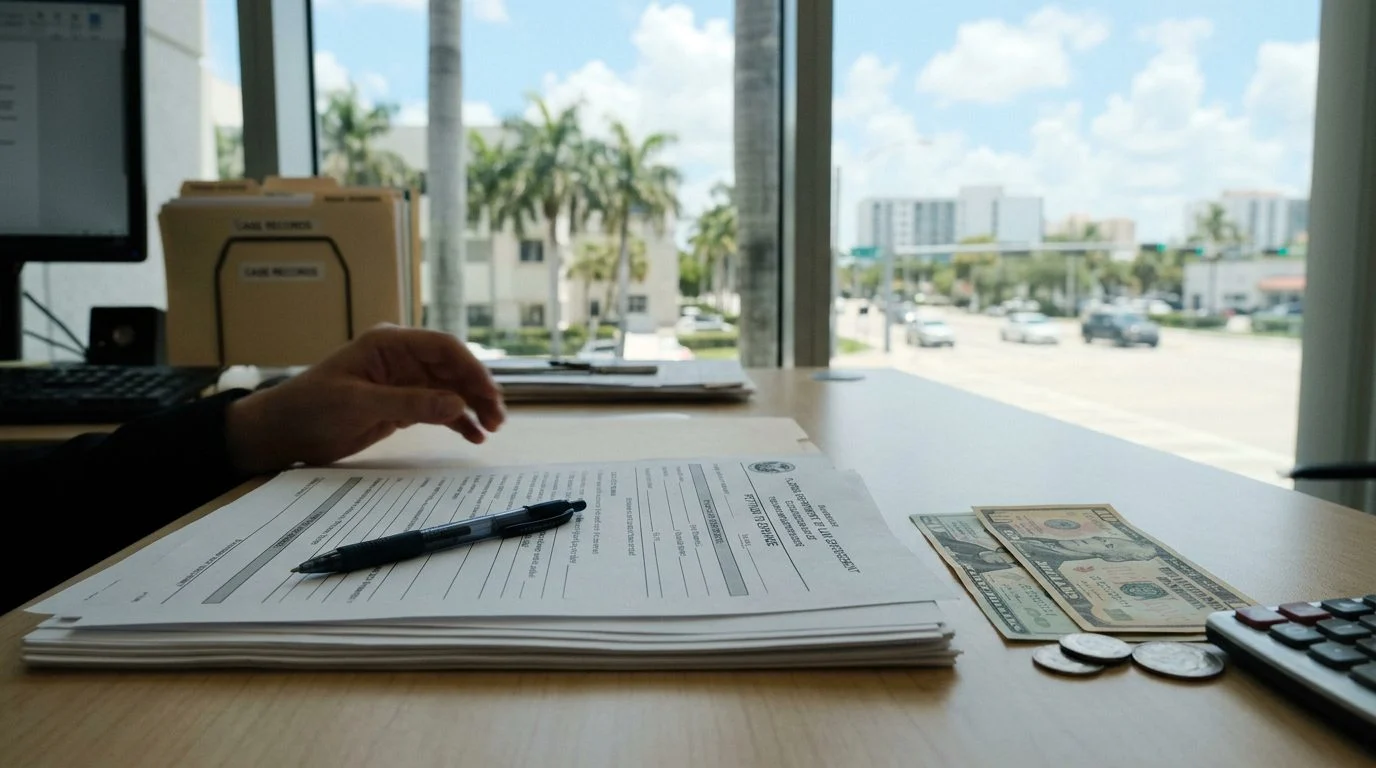
Under Rule 3.692(e), the petitioner pays all costs of certified copies unless the petitioner is indigent. Those copy costs and the government charges for the certificate and filing are the costs a self-filer pays. Attorney fees are the extra cost that a self-filer avoids.
Our first consultation is free, confidential, and comes with no obligation to continue. It is the simplest way to learn what you would owe in total for your own record.
Not sure what your next step is?
Talk it through with our team — the first consultation is free, confidential, and carries no obligation.
Common Questions About Expunging Florida Records
Most of these questions come down to eligibility and who can still see the record.
How can I get my record expunged for free in Florida?
You can avoid attorney fees by handling the steps yourself. Government charges and certified-copy costs still apply.
Can a felony be expunged in Florida?
A felony may qualify, but only if the case meets the eligibility conditions. The offense also cannot appear on the ineligible list in § 943.0584, which bars a record only when it is a conviction for a listed offense.
Will an expunged record still show up on a background check?
Some licensing and employment entities can still learn the record existed. Under § 943.0585, FDLE discloses that existence to those listed entities. Fla. Stat. § 943.0585 reads: “I of the State Constitution, except that the department shall disclose the existence of a criminal history record ordered expunged to the entities set forth in subparagraphs (b)1. and 4.-9. for their respective licensing, access authorization, and employment purposes and to criminal justice agencies for their respective criminal justice purposes.”
Do I need a lawyer to expunge my record in Florida?
The rules describe the petition and certificate steps. Whether to hire a lawyer depends on the facts of your case.
Mistakes That Can Slow Down an Expungement
The most common delay is filing with the court before the FDLE certificate is in hand. The petition must include a valid certificate, so a missing one stops the case.
Missing a sworn statement or skipping service is another common problem. The petition must be served on the prosecutor and the arresting agency.
Many people assume a withheld adjudication or a plea clears the record. Under § 943.0584, a withhold still counts as a conviction, so check the offense against the ineligible list.
A prior sealing can also change the picture. Under § 943.0585, a ten-year sealing requirement applies in some cases.
Finally, a dismissal does not clear the record on its own. Expungement is court-ordered, so a petition must be filed and granted.

Talk Through Your Record With Patrick Wilson Law
If an old arrest is affecting a job, a license, or a housing decision, our team is available to talk through your questions with you. Patrick Wilson Law, PLLC is a Miami criminal defense firm. We handle seal and expunge matters for clients across South Florida, from Broward County to the Florida Keys. Patrick David Wilson is the lawyer responsible for this page.
Call 786-761-1719, leave us a message, or use our contact page to talk through your record.
Why Clients Contact Patrick Wilson Law
Criminal defense focus
Patrick Wilson Law focuses on criminal defense matters across South Florida, from Miami and Miami-Dade County to Broward County, Fort Lauderdale and the Florida Keys.
Free first consultation
Your initial consultation is free, confidential and comes with no obligation to continue.
Practical, step-by-step guidance
We walk you through the records, fees and filings involved so you know what to expect before deciding how to proceed.
Attorneys and staff working together
Our lawyers and support staff handle each matter with careful attention to detail and clear communication.
Read the Costs Before You File
Even if you handle the process yourself, government filing charges and certified-copy costs still apply. Missing a document or a fee can delay your petition, so review every requirement carefully before you submit.
The Basic Steps in an Expungement Matter
1. Review your record
Obtain a copy of your Florida criminal history and confirm which charges and case details appear on it.
2. Estimate the costs
List the government fees, certified copies and any professional fees before you commit to a timeline.
3. Prepare the petition
Gather court documents, complete the required forms and make sure every statement is accurate and complete.
4. Submit and follow up
File the petition, track its progress and respond promptly to any requests from the court or agencies involved.

