
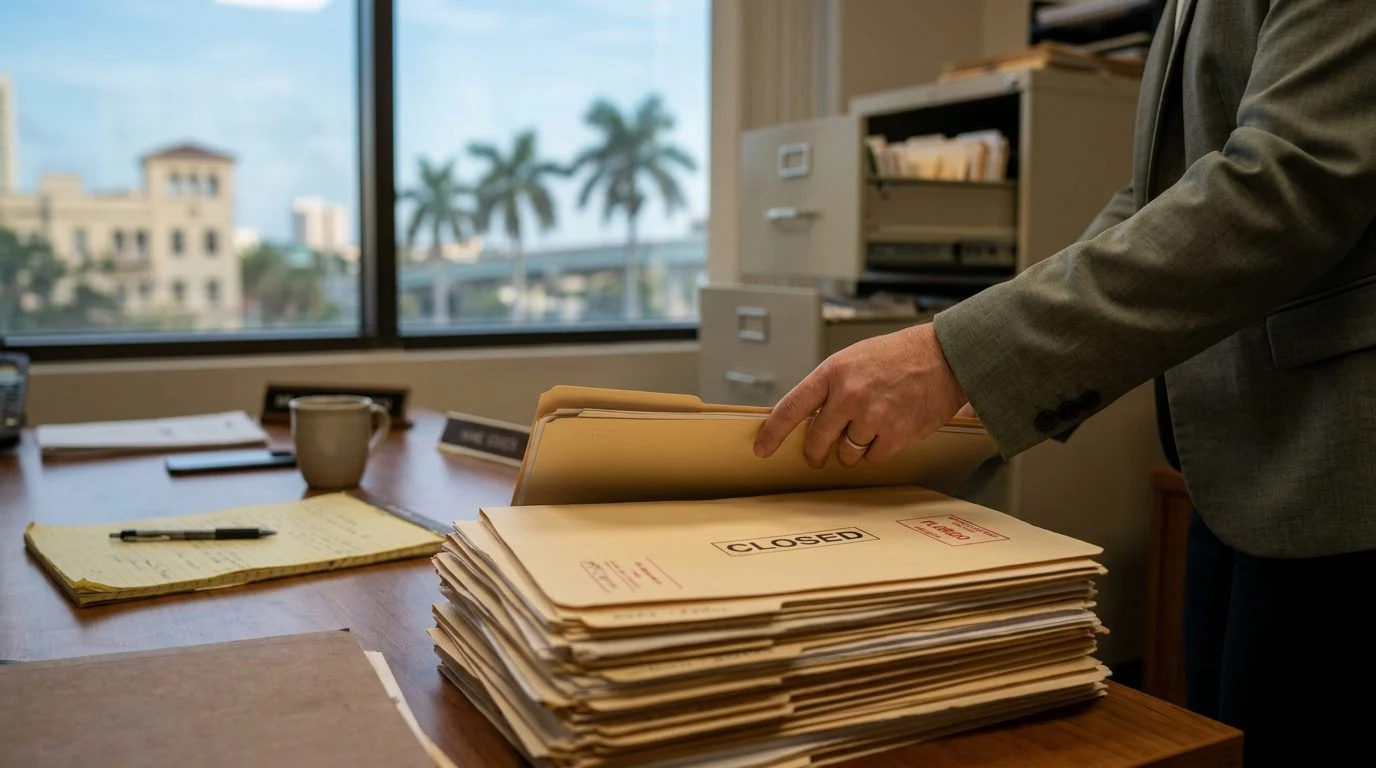
Seal & Expunge Records | Miami-Dade, Broward & the Florida Keys
Worried About a Juvenile Record Following Your Child?
Families across South Florida come to Patrick Wilson Law with questions about what a sealing petition could mean for a young person's school, job and future.
By Patrick David Wilson · Published November 11, 2026
A juvenile file can follow a young person for years. Can a juvenile record be sealed in Florida? Sometimes. Florida lets some juvenile records be sealed or expunged, but the offense, how the case ended and the statute’s bars decide the answer. Sexual battery and DUI matters are handled very differently, so each needs its own review.
Short Answer: Can a Juvenile Sexual Battery or DUI Record Be Sealed in Florida?
A juvenile sexual battery record generally cannot be sealed when the youth was found to have committed the offense. A juvenile DUI record may be eligible, because the statute’s list of barred offenses does not name DUI.
During a free, confidential consultation, our attorneys can review your record with you and talk through the options that may be available in your situation. For a minor, the statute counts a finding that the minor committed a delinquent act, or a plea of guilty or nolo contendere to such an act, as a conviction, even when the court withholds adjudication, but only for the offenses specified in that section. Fla. Stat. § 943.0584 sets out that list.
A felony-level juvenile case raises a separate bar. The expunction statute blocks a record that is a conviction for certain listed offenses, not every felony. Felony levels are defined in Fla. Stat. § 775.081. Eligibility is never automatic, so each record needs its own review before anyone files a petition or pays a fee.
If an old juvenile sexual battery or DUI case still follows you or your child, our team can talk through what it means, and you can reach us at 786-761-1719. Talk it through with our team — the first consultation is free, confidential, and carries no obligation.
How Juvenile Records Differ From Adult Criminal Records in Florida
Juvenile records fall under the same sealing and expunction statutes as adult records. The difference is in how the law defines a conviction. Under Fla. Stat. § 943.0584, a minor’s finding that he or she committed a delinquent act counts as a conviction, even when adjudication of delinquency is withheld.
That is a key point for parents. A file that looks closed can still carry a finding that the statute counts against sealing. Check the actual disposition, not just the word “dismissed” on a summary.
Under § 943.059(1)(a), a record can be sealed only if it is not ineligible for court-ordered sealing under § 943.0584, and that section lists grounds that can block a petition, including assault or battery between family or household members. See Fla. Stat. § 943.059.
A court may also order expunction for only one arrest or one incident. It may include more arrests only if they directly relate to the original arrest, and the order must say so. See Fla. Stat. § 943.0585.
Juvenile Sexual Battery Records: What Decides Whether Sealing Is Possible
Sealing a juvenile sexual battery record is blocked by the chapter 794 list, which is the first hurdle. Fla. Stat. § 943.0584 bars sealing and expunction for a conviction for any offense defined in chapter 794. Florida’s sexual battery offenses are set out in Chapter 794 of the Florida Statutes.
A finding that a minor committed sexual battery, or a plea of guilty or nolo contendere to it, falls within that bar. That holds even if the court withholds adjudication.
Not every juvenile sexual battery file ends in a finding. A case dismissed by the state, dropped by nolle prosequi, or ended by a not guilty verdict or judgment of acquittal may fall under the expunction rules in Fla. Stat. § 943.0585. Every condition in that statute must still be met.
Registration is a separate question from sealing. Keep the registration question apart from any sealing question.
Juvenile DUI Records: Sealing Considerations for Young Drivers
The sealing bar list does not name DUI. So a juvenile DUI file is judged on its disposition and the other conditions in the statutes. Many families assume a DUI file can never be cleared.
The criminal offense is in Fla. Stat. § 316.193. A person commits DUI while driving or in actual physical control of a vehicle, when affected to the extent that normal faculties are impaired.
Drivers under 21 face a separate rule. Fla. Stat. § 322.2616 makes it unlawful for a person under 21 with a blood-alcohol or breath-alcohol level of 0.02 or higher to drive or be in actual physical control of a motor vehicle. That violation is neither a traffic infraction nor a criminal offense. It does not bar prosecution under section 316.193.
Keep the two tracks apart. Under Fla. Stat. § 322.2616, a violation of that section is handled through the department’s administrative processes, and any administrative action taken under it must be entered in the motor vehicle records the department maintains.
Sealing vs. Expunction: What Each Means for a Juvenile Record
Sealing keeps a record confidential. Expunction destroys it, except for a copy the state keeps.
A sealed record is confidential and available only to listed persons. Those include the subject of the record and the subject’s attorney. See Fla. Stat. § 943.059. Under § 943.059(2)(b), the Florida Department of Law Enforcement must forward the sealing order to the Federal Bureau of Investigation, and under § 943.059(6)(a), a sealed criminal history record is confidential and available only to the persons that subsection lists. See Fla. Stat. § 943.0585.
Sealing does not erase a record from state files. Automatic sealing, for example, does not require other agencies to seal the record. See Fla. Stat. § 943.0595.
Is sealing worth it? It depends on the facts. Sealing matters most when the goal is keeping a record out of public view. The people who can still see it are the ones the statute lists.
Steps, Timing, and Costs for Sealing a Juvenile Record
The process starts with a certificate of eligibility from the Florida Department of Law Enforcement. The court may not order an agency to seal a record until the petitioner has that certificate. FDLE’s sealing and expunging FAQ explains this step. The rule itself is in Fla. R. Crim. P. 3.692.
Next comes a written petition filed with the clerk. It must include the certificate and a sworn statement that the petitioner meets the eligibility requirement and has no other petition pending. See Fla. R. Crim. P. 3.692.
The petition and sworn statement go to the prosecutor and the arresting agency. The state may respond, and the court may take evidence. The court can deny the request at its sole discretion.
The petitioner pays for certified copies unless the petitioner is indigent. Timing depends on the certificate of eligibility: the court may not order a criminal justice agency to expunge or seal a record until the petitioner has applied for and received a certificate of eligibility. Whether the case came from Miami-Dade, Broward or the Keys, the petition goes to the clerk under the same Florida rules.
Not sure what your next step is?
Talk it through with our team — the first consultation is free, confidential, and carries no obligation.

Next Steps If a Juvenile Sexual Battery or DUI Matter Is on Your Record
Start with three things: the charge, the final disposition, and the full juvenile file. Those facts decide which statute controls.
If a teen’s sexual battery or DUI case still appears on a record, the first question is whether it falls within a bar. A parent who has found an old juvenile file may not know what it means. Patrick David Wilson, the responsible lawyer for this page, can walk through those questions with you at Patrick Wilson Law, PLLC in Miami.
Call 786-761-1719 or leave a message through our contact form. The first consultation is free, confidential, and comes with no obligation to continue.
Frequently asked questions
Can a juvenile sexual battery record be sealed in Florida?
Generally not, when the youth was found to have committed sexual battery.
Other conditions still apply.
Is sealing a juvenile record worth it?
Sealing keeps the record confidential, though listed persons can still see it. The value turns on who needs to see it.
What does the petition cost?
The petitioner pays for certified copies unless indigent.
How We Can Help Your Family
Confidential First Consultation
Our first consultation is free, confidential and comes with no obligation to continue.
Criminal Defense Focus
Our lawyers focus on criminal defense matters, including juvenile records, sealing and expungement.
Serving South Florida
We represent clients from Miami and Hialeah to Fort Lauderdale, Homestead and the Florida Keys.
Talk With Our Team
Call 786-761-1719 or leave us a message, and our team will help you take the next step.
Do Not Assume the Answer
A juvenile charge does not always stay on a record, and it does not always disappear on its own. Whether sealing is available depends on the details of the case, so speak with a lawyer before you answer questions about the record or file anything.
Questions Families Often Ask
What Sealing Does
Sealing keeps a record confidential from the public, though some listed parties may still be able to see it.
Is It Worth Pursuing?
The value of sealing depends on who needs to see the record, such as schools, employers or licensing boards.
What the Process Involves
A petition has its own requirements and costs, and each case is different. Our team can explain what applies to yours.
Next Steps
Bring any paperwork, court dates and questions to a free, confidential consultation so you know your options.

