
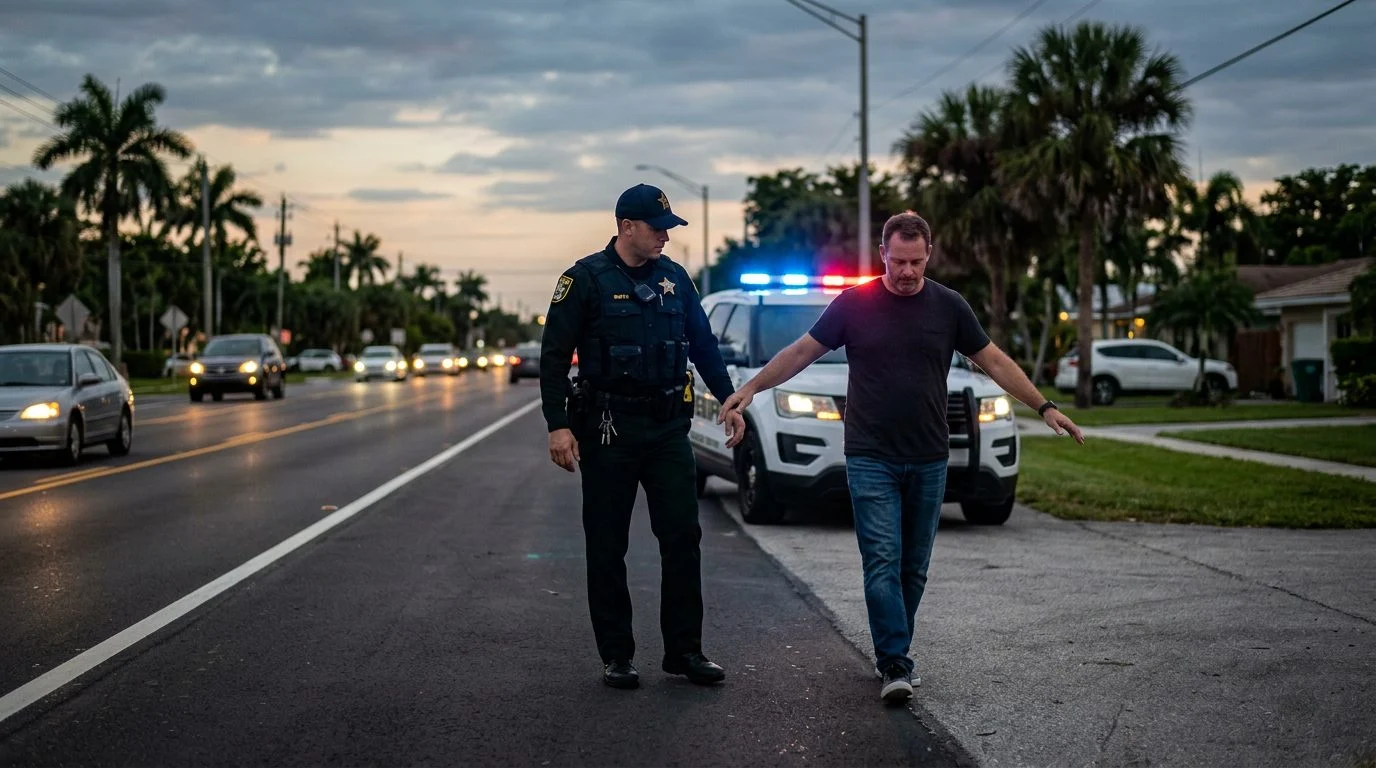
DUI record sealing in Broward County
Petition to Seal a DUI Record in Broward County
Patrick Wilson Law, a Miami criminal defense firm, works with Broward residents to understand the petition process and what sealing can and cannot do for their record.
By Patrick David Wilson · Published November 20, 2026
Many people find that a DUI still appears when someone runs a background check on them. In Florida, the route for a DUI record in Broward County is a petition filed with a court, which asks that court to act on that record.
Whether a particular DUI qualifies turns on how the case ended. This guide walks through eligibility, the paperwork, the court stage and a realistic timeline, so you know the path before you file.
What a Petition to Seal a DUI Record Is, and Who It Is For
A petition to seal is a written request asking the court to limit public access to a criminal record. The petition must be in writing and filed with the clerk of the court, under Fla. R. Crim. P. 3.692. Sealing and expunction are not the same. A sealed record stays in a nonpublic index under further court order. An expunged record comes out of the court’s official records.
This page is for three kinds of readers:
- First-time offenders who want to know whether their DUI can be cleaned up.
- Licensed professionals worried that a record could affect a license or a job.
- Parents, spouses and adult children gathering information for someone they love.
Patrick Wilson Law is a Miami criminal defense firm. This page is written for Broward County readers, and the firm serves Broward County clients from its Miami office.
Talk it through with our team — the first consultation is free, confidential, and carries no obligation.
Can a DUI Be Removed From Your Record in Florida?
Sealing can hide a DUI from public view, but it does not erase the event from every file. Under Fla. Stat. § 943.059, sealed record information is confidential. The Florida Department of Law Enforcement must still disclose a sealed record to listed licensing, access-authorization and employment entities for their purposes. Fla. Stat. § 943.059 reads: “An employee of an entity set forth in subparagraph (b)1., subparagraph (b)4., subparagraph (b)5., subparagraph (b)6., subparagraph (b)8., subparagraph (b)9., subparagraph (b)10., or subparagraph (b)11. may not disclose information relating to the existence of a sealed criminal history record of a person seeking employment, access authorization, or licensure with such entity or contractor, except to the person to whom the criminal history record relates or to persons having direct responsibility for employment, access authorization, or licensure decisions.”
That means the licensing, access-authorization and employment entities listed in the statute may still see the record for their respective licensing, access-authorization and employment purposes, and criminal justice agencies, the subject’s attorney and judges may also see it for their own purposes. Because of those exceptions, a sealed DUI can come up in some reviews. Plan around that before you assume the record is gone.
Expunction removes entries from the court’s official records, but its rules differ.
Eligibility Checks to Settle Before You File
A court can seal a record only after you get a certificate of eligibility from the Florida Department of Law Enforcement (FDLE). Under Fla. Stat. § 943.059, the court may not order sealing until you have applied for and received that certificate.
Check these facts first:
- Prior guilty findings. You must not have been adjudicated guilty of any act stemming from the arrest or alleged criminal activity that the petition concerns.
- Prior sealings or expunctions. Your sworn statement must say no other petition is pending.
- Other arrests on the record. A court may seal one arrest or incident, and more only when the other arrests directly relate.
Florida defines “conviction” broadly. Under Fla. Stat. § 943.0584, it includes a guilty or no contest plea even when adjudication is withheld. Section 316.193 defines the offense of driving under the influence and sets the punishment for a conviction under it. That alone does not make a DUI eligible, because the adjudication rule still applies.
Some cases seal automatically. Under Fla. Stat. § 943.0595, the department must automatically seal a criminal history record, without a petition, when no indictment, information or other charging document was filed or issued in the case, or when one was dismissed or nolle prosequi, or ended in a not guilty verdict or judgment of acquittal, as to all counts, subject to exclusions.
Documents You Will Need for a Broward County DUI Petition
A written petition filed with the clerk must be accompanied by a valid certificate of eligibility issued by the Florida Department of Law Enforcement and a sworn statement by the petitioner, as set out in Fla. R. Crim. P. 3.692. The rule also requires you to serve the other side.
- Written petition filed with the clerk of court.
- FDLE certificate of eligibility, valid and issued for your record.
- Sworn statement that you meet the eligibility requirement, are eligible to the best of your knowledge, and have no other sealing or expunction petition pending.
- Proof of service on the prosecuting attorney and the arresting authority.
Costs matter too. Under Fla. R. Crim. P. 3.692, the petitioner pays for certified copies unless the petitioner is indigent. Ask about that cost at the start, so it isn’t a surprise later.
Filing, Notice, and the Court’s Decision
The clerk receives the petition, and the state gets a chance to respond before the court rules. The path runs in this order:
- Confirm eligibility and get the FDLE certificate.
- Draft the petition and sworn statement.
- File the packet with the clerk of the court in Broward County.
- Serve the prosecuting attorney and the arresting authority.
- The state and arresting agency may respond, and the court may take evidence on any factual issue.
- The judge rules. Even an eligible petition can be denied at the court’s sole discretion.
FDLE issues the certificate, but the court decides the petition. The FDLE sealing FAQ makes that split clear. If the court grants relief, the clerk sends certified copies to the state attorney and the arresting agency, and the department forwards the order to the FBI, as Fla. Stat. § 943.059 provides.
Timing: What the Process Usually Involves
The timeline moves in stages, and each stage can add time. Gathering records and certified copies comes first. The FDLE certificate follows, then filing and service. After that, the state gets its chance to respond, and the court rules.
Delays come from a few places. Missing documents send you back to the start. Older Broward cases can have incomplete histories. A state response can require the court to take evidence before it rules. Court calendars also set their own pace.
The most useful step is a complete file at the start. Plan for a process that takes paperwork and patience.
Not sure what your next step is?
Talk it through with our team — the first consultation is free, confidential, and carries no obligation.
Sealing and Expungement Help in Broward County
Automatic sealing works differently. Under Fla. Stat. § 943.0595, the clerk sends the disposition to the department, which seals the record once it receives the certified copy. Since a DUI case still rests on its own facts, contact our office to review your own case history before you decide on any next step.
Why Patrick Wilson Law for a Broward County DUI Sealing Petition
Patrick Wilson Law is a Miami criminal defense firm. It handles DUI defense, first-time offender defense, and seal and expunge criminal records for clients in Broward County.
Patrick David Wilson is the responsible lawyer for this page. Sahara Fonseca is also one of the firm’s lawyers. Our team includes support staff who keep files and paperwork moving.
On a sealing matter, the firm can review your case history for eligibility, build the document checklist, prepare the petition and sworn statement, and track the FDLE and court steps. That work starts with the facts of your own file.
Frequently Asked Questions About Sealing a DUI in Broward County
Does sealing make a DUI disappear?
No. Sealing limits public access, and some licensing and employment entities can still receive the record.
Is sealed better than expunged?
They work differently. Sealing moves entries to a nonpublic index, while expunction removes them from official court records.
Do I need a lawyer to file?
You may file on your own. Mistakes in the eligibility check and the sworn statement can stall a file, and our team can review yours.
How long does it take?
It moves in stages: the FDLE certificate, filing, the state’s response and the court’s ruling. Each stage can add time.
Will I have to go to court?
The court may take evidence before it rules, so plan for that possibility.
Can a sealed DUI show up on a background check?
Yes, in some cases. Licensing and employment entities can still receive sealed record information under the statute.
Talk Through Your Broward County DUI File With Our Team
If an old DUI is still in the way of a job, a license or a background check, you don’t have to sort it out alone. A short conversation about your case history and papers is a good first step before anything is filed.
Our team can review your case history, FDLE status and documents with you. Contact Patrick Wilson Law to get started, call 786-761-1719, or leave us a message.
The initial consultation is free, confidential, and without obligation to continue. La consulta inicial es gratuita, confidencial y sin compromiso de continuar.
For the county-specific page, see Broward County sealing and expungement.
How We Work With You
A confidential first step
The initial consultation is free, confidential and carries no obligation to continue. You can ask questions about your record before deciding anything.
Clear explanations of your record
We review the charge, the case outcome and the entries on your record so you know what you are working with before any filing.
Criminal defense focus
Patrick David Wilson focuses on criminal defense, including DUI matters, and our team handles the details of each petition with care.
Serving Broward and South Florida
From our Miami office we represent clients across Broward County, Fort Lauderdale and the rest of South Florida.
Sealing Is Not the Same as Erasing
Ask us how this applies to your situation before you file.
Questions to Bring to Your Consultation
Where does my record stand?
Bring any court paperwork you have. We can help you identify the case, the charge and how the entries appear.
Sealing or expunction?
We explain both so you can compare them.
What does filing involve?
We walk through the petition, the supporting documents and the steps that follow, so you know what to expect.

