
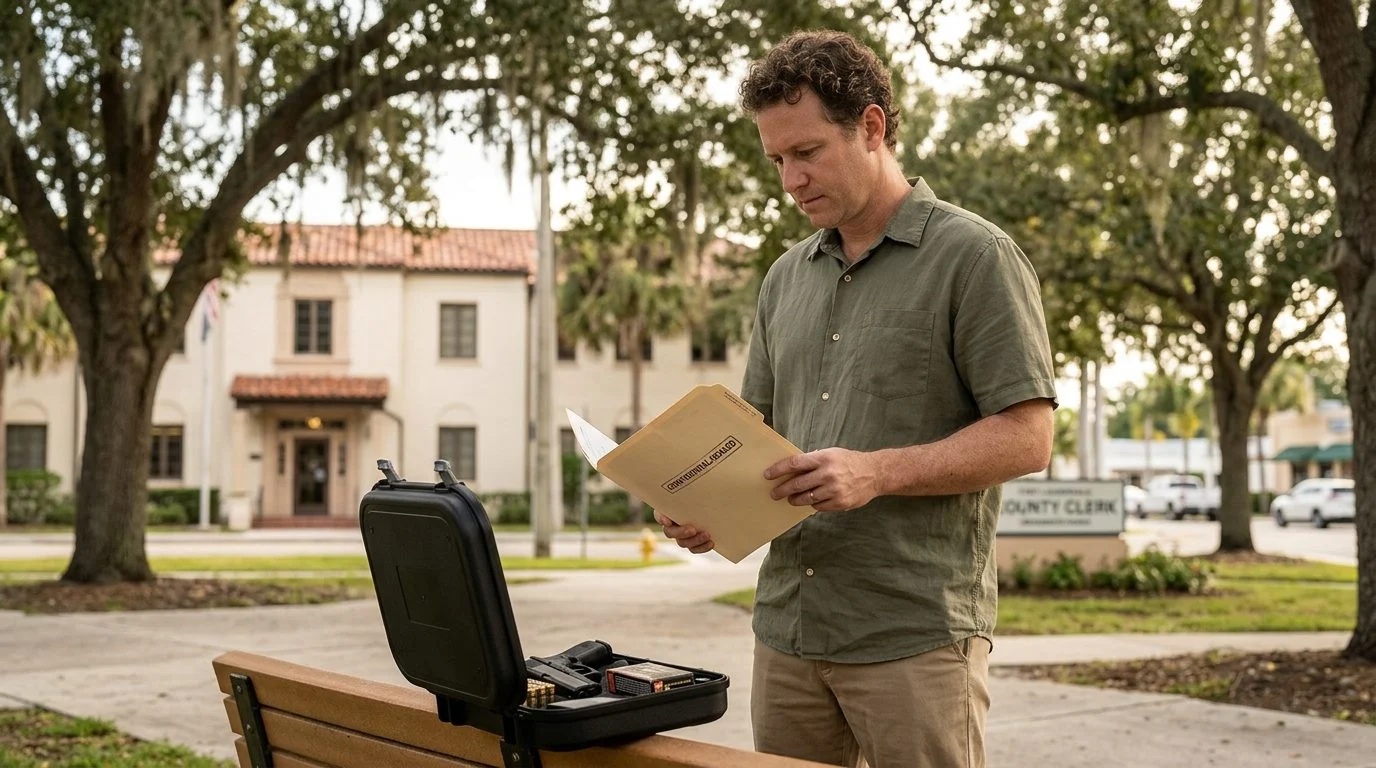
Firearm Rights · Miami, Florida
Sealed Doesn't Always Mean Your Gun Rights Are Back
Find out which parts of your record matter, which rules may still apply, and what to review before you buy, own or possess a firearm.
How We Start
Free
First consultation
Confidential
Your conversation stays private
No obligation
To continue after our first meeting
By Patrick David Wilson · Published November 13, 2026
If you have a sealed Florida record, you may be asking whether you can still buy or keep a gun. Sealing alone doesn’t answer that question. Your offense, how your case ended, and whether any rights were restored decide it.
Short Answer: Sealing Alone Does Not Settle Firearm Eligibility
Sealing a Florida record and getting back the right to own a firearm are two different questions. A court seals a record under Fla. Stat. § 943.059. Section 943.059 states that it does not confer any right to the sealing of a criminal history record, and that any request for sealing may be denied at the sole discretion of the court. A court seals a record under Fla. Stat. § 943.059 only after a petition to seal a criminal history record, and the statute sets eligibility requirements and requires a valid certificate of eligibility issued by the department before a petition is complete. The rest of this page explains each piece, so you can see where your own situation fits.
If a sealed record has you wondering whether you can buy or keep a gun, you don't have to work it out alone, and our team can talk it through with you. Talk it through with our team — the first consultation is free, confidential, and carries no obligation.
Sealing vs. Expunction vs. Restoration of Civil Rights
Sealing closes a record to the general public, but certain agencies still keep it. Under § 943.059, sealed information stays confidential, though the state can disclose it to listed licensing and employment entities. Fla. Stat. § 943.059 reads: “An employee of an entity set forth in subparagraph (b)1., subparagraph (b)4., subparagraph (b)5., subparagraph (b)6., subparagraph (b)8., subparagraph (b)9., subparagraph (b)10., or subparagraph (b)11. may not disclose information relating to the existence of a sealed criminal history record of a person seeking employment, access authorization, or licensure with such entity or contractor, except to the person to whom the criminal history record relates or to persons having direct responsibility for employment, access authorization, or licensure decisions.” Records sealed automatically also remain with the state and other criminal justice agencies.
Expunction is a different remedy. It has its own eligibility rules under § 943.0585. Don’t treat sealing and expunction as the same thing, because they can lead to different results.
Restoration of civil rights is a separate process again. Federal law in 18 U.S.C. § 921 says a conviction that has been expunged, set aside, pardoned, or had rights restored is not counted for gun purposes. That rule does not apply if the order expressly bars firearms. Our sealing guide covers the sealing process itself.
Can I Own a Gun After Sealing My Record?
Not automatically. Federal law names expungement, set-aside, pardon, and restored rights as events that can remove a conviction from gun rules. Sealing is not on that list. That is why a sealing order alone should not be read as permission to own a firearm.
Florida’s definition of conviction adds another layer. So a withheld adjudication still needs review before you decide anything.
Before you buy, keep, or receive a firearm, check the record first. Look at the case result, the offense, and any restoration paperwork. Each one can change the answer.
Can You Buy a Gun With a Sealed Record?
Whether you can buy depends on your record and the answers you give on the form. The dealer may proceed only if it knows, or has reason to believe, the purchase would not break state law.
For a handgun, the buyer must be twenty-one or older. The buyer must not be barred by federal law from receiving a firearm. And the receipt must not violate any state statute or local ordinance.
A sealed record is not invisible to every check. Sealed records still exist, and state law lets certain entities see them. So don’t answer any eligibility question until your record and rights status have been reviewed.
Can a Felon Own a Gun in Florida After 10 Years?
Years alone don’t decide this question. The offense, the case result, and any restoration paperwork decide it. A restored right can still bar firearm possession if the restoration says so.
That is why certified copies of your court papers matter. The exact wording of an order can change the result. Don’t assume that a restoration covers firearms unless the paperwork shows it.
If your main worry is new contact with police, our guide on arrests after a sealed record covers that concern. It is a separate question from owning a gun, and it deserves its own review.
Misdemeanors, Domestic Violence Charges, and Firearm Rights
The offense name matters a great deal. A misdemeanor and a felony can lead to different firearm results, so read the statute number on your papers. Some offenses also decide whether sealing is possible at all.
Florida lists assault or battery of one family or household member by another as an offense that makes a record ineligible for sealing if the record is a conviction for it. That list also covers felony battery, domestic battery by strangulation, and aggravated battery, under § 943.0584. The family-member definition comes from § 741.28.
A final domestic violence injunction brings its own firearm bar. Under § 790.233, having a firearm or ammunition while that injunction is in force is a first-degree misdemeanor. The § 741.30 injunction statute requires the final judgment to say so on its face. Our page on domestic violence injunctions after sealing covers this in more detail.
Not sure what your next step is?
Talk it through with our team — the first consultation is free, confidential, and carries no obligation.
What to Check Before Buying, Owning, or Receiving a Firearm
Gather your record papers before you sign any firearm form. Start with this list:
- The offense name and statute number.
- Whether adjudication was withheld.
- The date of your sealing order.
- Any paperwork showing restored rights.
A certificate of eligibility from FDLE is valid for 12 months from the date stamped on it. After that, you must reapply, under § 943.059. A sealing petition also needs that certificate and a sworn statement, as set out in Fla. R. Crim. P. 3.692.
Keep certified copies of your sealing order and disposition papers in one safe place. Bring them to any review. The sealing process itself is covered on our sealing guide.
Talk Through Your Record With Patrick Wilson Law
Our team can review your record and your firearm question before you sign anything. You may be the person with the record, or you may be helping a family member who has one. Either way, these decisions are hard to face alone. Patrick David Wilson is the responsible lawyer for this page. Our firm is based in Miami and serves clients across South Florida, from Broward County to the Florida Keys.
Does sealing a record restore gun rights in Florida?
No. Sealing alone does not settle it, because federal and Florida rules still apply.
Can I buy a gun with a misdemeanor in Florida?
The offense name and how the case ended decide it. Domestic violence misdemeanors can carry separate limits.
How long is a Florida certificate of eligibility valid?
It is valid for 12 months from the date stamped on it. After that, you must reapply.
If your sealed record has you unsure about buying or keeping a gun, call 786-761-1719 or leave us a message to schedule a free, confidential first consultation, with no obligation to continue.
How Patrick Wilson Law Can Help
Review Your Record
We look at the offense, how the case ended and whether the record was sealed or expunged, so you know where you stand.
Check Every Layer of the Rules
Federal law and Florida law can both apply, even after a record is sealed. We help you see how each one fits your situation.
Serving South Florida
Our criminal defense practice serves clients from Miami-Dade and Broward County to Fort Lauderdale, Kendall, Hialeah, Miami Beach, Homestead and the Florida Keys.
Plan Before You Buy
Getting answers first can help you avoid a costly mistake with a firearm purchase, transfer or possession.
Warning: A Sealed Record Is Not a Clean Record
Do not buy, receive, transfer or possess a firearm until you have reviewed your specific record. Sealing does not automatically settle firearm questions, and the offense name can change the answer.
Questions to Bring to Your Consultation
Which charge is on your record?
The offense name and the way the case ended often matter as much as the sealing itself.
Was it a domestic violence case?
Domestic violence misdemeanors can carry separate limits, so tell us about any such charge.
Do you have paperwork?
Court orders, sealing certificates and case numbers help us review your file more accurately.
Are you a non-citizen or licensed professional?
Your immigration status or professional license can add questions that should be reviewed together with your record.

