
Criminal Record Relief | Broward County
Seal a Dismissed Domestic Violence Arrest in Broward County
A dismissal ends the case, but the arrest can still follow you into job applications, housing checks and licensing. Patrick Wilson Law helps South Florida residents decide what relief fits their record.
By Patrick David Wilson · Published November 17, 2026
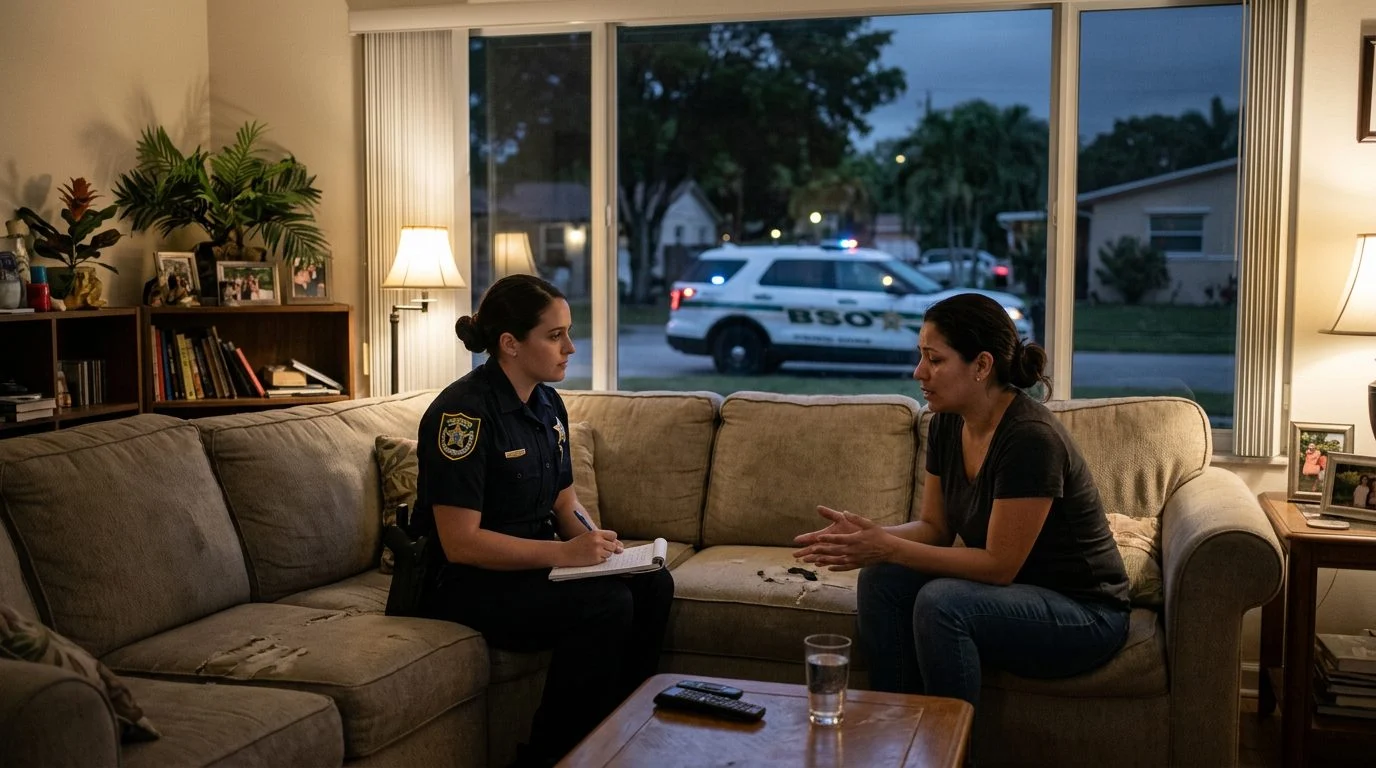
A domestic violence arrest in Broward County can keep surfacing long after the charge is dropped. A petition to seal is the Florida court filing that asks a judge to keep that arrest out of routine view. Here’s how it works, who may qualify, and what to expect.
Sealing a Dismissed Domestic Violence Arrest in Broward County: What It Is and Who It Is For
A petition to seal is a written request to a Florida court to seal the record of one arrest or one incident. It is aimed at people whose case ended without a conviction.
This guide is written for Broward County residents whose domestic violence arrest was dismissed, closed by a nolle prosequi, or closed with no information filed. Family members often ask on a loved one’s behalf, and that works too.
Common reasons people look into sealing include:
- A background check for a new job shows the old arrest.
- A professional license application asks about prior arrests.
- A rental screening turns up the case.
- A spouse, parent or adult child wants a clean record before a career move.
Whether a case has ended and whether its record can be sealed are separate questions that depend on the specific case. Florida requires a written petition filed with the clerk, along with a certificate of eligibility from the Florida Department of Law Enforcement and a sworn statement. Florida Rule 3.692 sets out those requirements.
If a dismissed arrest is still causing problems for you or someone you love, our team can talk through your options with you, with no obligation to continue. Talk it through with our team — the first consultation is free, confidential, and carries no obligation.
Sealing vs. Expunging in Florida: Which Applies to a Dismissed Arrest
Sealing and expunction are different court remedies, and the difference matters for a dismissed arrest. The closing paperwork and any prior record shape which one fits.
Sealing keeps the record but limits who can see it. Under § 943.059, a court may order sealing for one arrest or one incident. A court may cover more than one arrest only when the extra arrests directly relate to the original, and the order must say so.
Expunction is a stronger remedy. Under § 943.0585, an expunged record must be physically destroyed or obliterated by the agencies that hold it. Fla. Stat. § 943.0585 reads: “(6) EFFECT OF EXPUNCTION ORDER.— (a) Any criminal history record of a minor or an adult which is ordered expunged by a court of competent jurisdiction pursuant to this section must be physically destroyed or obliterated by any criminal justice agency having custody of such record, except that any criminal history record in the custody of the department must be retained in all cases.” Eligibility can include a case where no charging document was filed, or a case dismissed or nolle prossed by the state attorney.
Our team reviews the arrest and dismissal paperwork first, so the petition matches the remedy the file supports. For a broader comparison, see our sealing and expunging overview.
How Florida Defines Domestic Violence and Why It Matters for Sealing
Florida defines domestic violence as listed crimes committed by one family or household member against another. § 741.28 lists offenses such as assault, battery, stalking, and false imprisonment, plus any criminal offense resulting in physical injury or death.
Family or household members include spouses, former spouses, relatives by blood or marriage, and people who live or lived together as a family. Parents of a child in common also count. Apart from parents of a child in common, those people must live or have lived in the same single dwelling unit.
Going over the paperwork from an arrest with a lawyer can help clarify what an accusation involves. The petition is built around the charge as it was filed and dismissed. The Miami-Dade State Attorney’s Office notes that a domestic violence crime does not require proof of physical injury.
An injunction is a separate case. Under § 741.30, a victim, or someone with reasonable cause to fear imminent harm, may file a verified petition in circuit court. Courts can also order no contact as a pretrial-release condition, according to the Florida Courts domestic violence legal outline.
Who Qualifies: Eligibility Checkpoints for a Petition to Seal
A person may petition to seal when the record is not on Florida’s ineligibility list, the person has not been adjudicated guilty of or delinquent for the acts stemming from the arrest, the person is no longer under court supervision for that arrest, and the other eligibility conditions are met, including holding a valid certificate of eligibility before filing. Several checkpoints decide this.
- The conviction bar. Under § 943.0584, a record is ineligible if it is a conviction for any of the following offenses, including assault or battery of one family or household member by another, felony battery, domestic battery by strangulation, or aggravated battery, as well as others such as manslaughter, stalking, and child abuse.
- What counts as a conviction. The same section counts a plea of guilty or nolo contendere (no contest) as a conviction, even when adjudication is withheld. This matters most for anyone with an earlier plea.
- One incident. Sealing covers one arrest or one incident, as described above.
- No other petition pending. The sworn statement must say no other petition to seal or expunge is pending before the court.
Before anything is filed, our team reviews the arrest report, charging papers, dismissal order, any injunction, and the state record. That review shows which checkpoints apply.
How the Petition Works: Step-by-Step Process and What to Expect
The process has five steps: a consultation, the state certificate, a filed petition, notice to the state, and a court decision.
- Consultation. Start by sharing the arrest, charging and dismissal papers, plus any injunction, with our team.
- Certificate of eligibility. The court may not order an agency to seal a record until the petitioner has applied for and received the certificate. Rule 3.692 sets this requirement.
- File the petition. The written petition goes to the clerk, with the certificate and the sworn statement attached.
- Notice and response. The prosecuting attorney and the arresting agency must be served. They may respond, and the court may receive evidence on any fact it needs to decide the petition.
- Court decision. The court may deny a sealing request at its sole discretion. If it grants relief, it enters a written order naming the agencies it reaches.
The petitioner pays for certified copies unless the petitioner is indigent. Timing shifts with court calendars and agency workload, so we map out your own timeline from the start.
What Sealing Means for Jobs, Licenses, Housing and Disclosure
Sealing limits who can see the arrest, but it does not erase it from every agency. Knowing the limits helps you answer applications correctly.
Under § 943.059, information about a sealed record is confidential. Employees of those listed entities may not disclose that a sealed record exists, except to the person to whom the record relates or to persons having direct responsibility for employment, access authorization, or licensure decisions. Breaking this rule is a first-degree misdemeanor.
Certain entities still have access. The Department of Law Enforcement can share the sealed record with listed licensing, employment and access-authorization entities. Fla. Stat. § 943.059 reads: “An employee of an entity set forth in subparagraph (b)1., subparagraph (b)4., subparagraph (b)5., subparagraph (b)6., subparagraph (b)8., subparagraph (b)9., subparagraph (b)10., or subparagraph (b)11. may not disclose information relating to the existence of a sealed criminal history record of a person seeking employment, access authorization, or licensure with such entity or contractor, except to the person to whom the criminal history record relates or to persons having direct responsibility for employment, access authorization, or licensure decisions.” Criminal justice agencies can use it for criminal justice purposes. Under Fla. Stat. § 943.059, the subject’s attorney is also among the parties permitted to view the sealed record.
Some applications still ask about prior arrests. Read each question carefully before you answer, and ask our team how a question applies to your record.
Not sure what your next step is?
Talk it through with our team — the first consultation is free, confidential, and carries no obligation.
Why Patrick Wilson Law for a Broward County Sealing Petition
Patrick Wilson Law is a Miami criminal defense firm that serves Broward County clients from its Miami office. The firm focuses on criminal defense, including domestic violence, DUI, sexual battery, and sealing and expunging criminal records.
Patrick David Wilson is the responsible lawyer for this page. The firm’s lawyers include Patrick David Wilson and Sahara Fonseca.
For a sealing matter, the work includes reviewing the arrest and dismissal file, preparing the eligibility application and sworn statement, filing the petition with the clerk, and handling service and any hearing. Our team handles filings, scheduling and records requests.
No lawyer can promise a sealing order. The court may deny any request in its discretion, so an honest review of your file comes first.
Frequently Asked Questions About Sealing a Domestic Violence Arrest in Florida
What does Florida law define as domestic violence?
Florida defines it through § 741.28 as listed crimes, such as battery or stalking, committed by one family or household member against another.
What’s better, sealed or expunged?
Neither works better for everyone. The closing paperwork and any prior record decide which remedy fits.
Does a domestic violence injunction affect the petition?
An injunction is a separate case under § 741.30. We review it alongside the arrest because it can affect the filing.
What does the free consultation include?
The first consultation is free, confidential, and carries no obligation to continue. La consulta inicial es gratuita, confidencial y sin compromiso de continuar.
Waiting for an old arrest to clear can weigh on a whole family. If you’re weighing a petition to seal a dismissed arrest in Broward County, call 786-761-1719 or leave us a message and our team will review your file with you.
How Patrick Wilson Law Approaches Your Record
Record review
We look closely at the arrest, the dismissal paperwork and any prior history before recommending a path.
Defense-focused
Patrick Wilson Law focuses on criminal defense, including domestic violence charges and record relief for South Florida clients.
South Florida reach
We serve clients in Broward County, Fort Lauderdale, Miami-Dade County, Miami Beach, Hialeah and the Florida Keys.
Clear options
We explain sealing and expunction in plain language so you can compare what each would mean for your daily life.
Do Not Assume the Arrest Is Gone
A dismissed case does not always mean the arrest has disappeared from your record. Review your records and speak with a lawyer before you answer questions on a job, license or housing application.
What to Bring to Your Consultation
Court paperwork
Bring any dismissal order, the arrest report and any notices you received from the court or prosecutor.
Case dates
Write down when the arrest happened and when the case was dismissed, even if you are unsure of the exact day.
Questions
List the jobs, licenses or housing applications that concern you so we can focus on what matters most to you.

