

Sealing & Expungement | Miami and South Florida
Sealed or Expunged Records: When You Must Still Disclose
Patrick Wilson Law, PLLC helps clients in Miami, Broward County and the Florida Keys understand how a sealed or expunged record may affect job applications, licensing, government forms and immigration questions.
By Patrick David Wilson · Published October 20, 2026
Sealed or expunged record disclosure in Florida depends on the exact question on the form. Most applications let you deny an arrest that a court has covered. A few situations still require you to disclose it. This guide explains the difference for jobs, housing, licensing, and immigration filings.
After a Court Orders a Record Sealed or Expunged, What Can a Person Legally Say on Job, Housing, and Licensing Applications, and What Must Still Be Disclosed?
Under Florida law, a person with a sealed or expunged record may generally deny or fail to acknowledge the arrests the order covers. The statutes name exceptions. The exceptions to the right to deny a covered arrest, under Fla. Stat. § 943.0585, include candidates for employment with a criminal justice agency and candidates for admission to The Florida Bar. Florida sets out who may seek expunction in Fla. Stat. § 943.0585, whose eligibility subsection lists the conditions under which a person is eligible to petition a court to expunge a criminal history record. It sets out who may seek sealing in Fla. Stat. § 943.059, whose eligibility subsection lists the conditions under which a person is eligible to petition a court to seal a criminal history record.
Sealing and expunction are different. The Florida Department of Law Enforcement must still keep its copy. A sealed record goes into a nonpublic index and stays subject to further court order, under Florida Rule of Criminal Procedure 3.692.
Both paths start with a certificate of eligibility from the state. A court cannot order either one until you have applied for and received that certificate. The order’s wording matters as much as the rule. A court can order expunction for one arrest or one incident only, unless additional arrests directly relate to the original arrest, and the order must say it covers them. Extra arrests must be named in the order. Read the order before you answer any application.
If a sealed or expunged case is on an application in front of you, talk with us before you answer. We'll review the order and the exact question with you. Talk it through with our team — the first consultation is free, confidential, and carries no obligation.
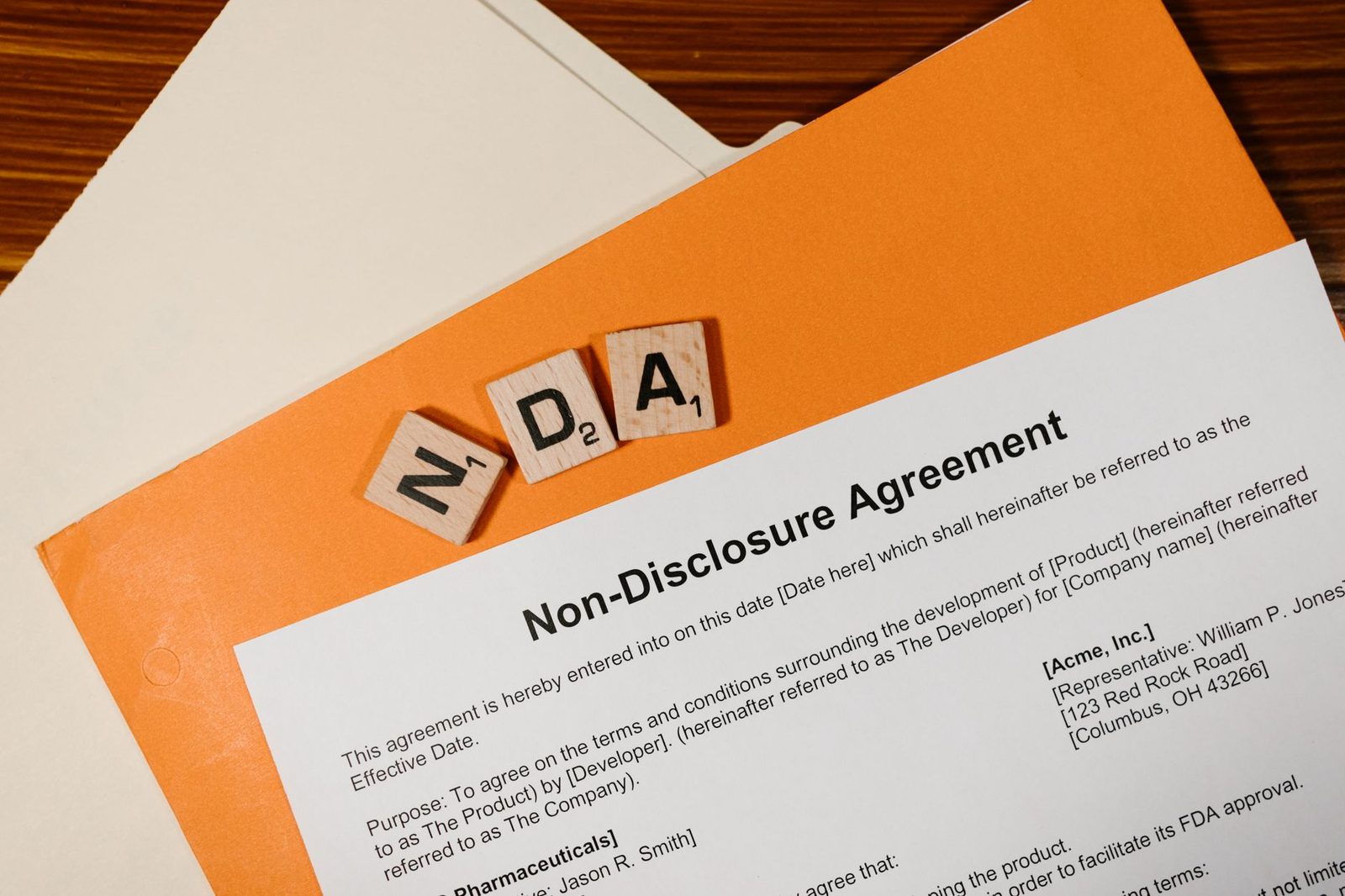
What Can You Say on Job Applications After a Sealed or Expunged Record?
On most private job applications, you can deny an arrest that the order covers. The statute says a person “may lawfully deny or fail to acknowledge” those arrests, as set out in § 943.0585. Fla. Stat. § 943.0585 reads: “(b) The person who is the subject of a criminal history record that is expunged under this section or under other provisions of law, including former ss. 893.14, 901.33, and 943.058, may lawfully deny or fail to acknowledge the arrests covered by the expunged record, except when the subject of the record: 1.” That protection covers the covered arrest, not your whole history.
The main exception is a job with a criminal justice agency. Under § 943.0585, a person may deny or fail to acknowledge arrests covered by an expunged record, except in listed situations, such as a candidate for employment with a criminal justice agency or a person screened through the Care Provider Background Screening Clearinghouse. Before you apply, check whether the employer is a criminal justice agency.
Think of the question as a simple checklist. Does the order cover this arrest? Is the employer a criminal justice agency? If both answers line up, you know what to write. Keep a copy of the signed order and your certificate of eligibility with you during interviews.
How Do Housing Applications and Landlord Screenings Treat a Sealed or Expunged Record?
The statute’s words describe the arrests themselves, not only jobs. A landlord’s screening report may list a covered case. Seeing it on a report does not change the answer. The question on the form does.
Read each housing form word for word against the order. Answer from the form’s wording, not from memory of what the report shows. Bring the order to any screening so you can show what it covers.
Do Licensing Applications Require Disclosure of a Sealed or Expunged Record?
Some do. Applications for admission to The Florida Bar must disclose a sealed or expunged record. It matters most for licensed professionals whose careers are on the line. Both § 943.0585 and § 943.059 name this exception.
Other licensing boards and state agencies ask their own questions. Florida law lets the state share the existence of an expunged record with listed entities for licensing and employment purposes. Fla. Stat. § 943.0585 reads: “It is unlawful for any employee of an entity set forth in subparagraph (b)1., subparagraph (b)4., subparagraph (b)5., subparagraph (b)6., subparagraph (b)7., subparagraph (b)8., or subparagraph (b)9. to disclose information relating to the existence of an expunged criminal history record of a person seeking employment, access authorization, or licensure with such entity or contractor, except to the person to whom the criminal history record relates or to persons having direct responsibility for employment, access authorization, or licensure decisions.” Fla. Stat. § 943.0585(6)(d) provides that information about an expunged criminal history record is confidential and exempt from public records disclosure, except that the department shall disclose the existence of the record to the listed licensing, access authorization, and employment entities and to criminal justice agencies for their respective purposes. The department discloses the existence of an expunged criminal history record to the entities in subparagraphs (b)1. and 4.-9. for their respective licensing, access authorization, and employment purposes, and to criminal justice agencies for their respective criminal justice purposes. Match each question to the order before you submit anything.
Do Federal Applications and Immigration Filings Require Disclosure of a Sealed or Expunged Record?
Florida’s sealing and expunction rules govern what Florida agencies must do with a covered record. Every federal or immigration form needs its own check.
Under 8 U.S.C. § 1182, certain classes of people are inadmissible. That makes them ineligible for visas and admission to the United States. Section 1182 addresses inadmissibility, not deportability: it lists criminal and related grounds that can make a noncitizen ineligible to receive a visa or to be admitted to the United States.
For non-citizens with a domestic violence case, extra care matters. Read the form’s question first. Then review the order and your immigration history against each filing before you submit it.
How Do Background Checks Show Sealed or Expunged Records, and What Happens If an Application Answer Is Wrong?
If a background report shows a covered case, the question on the form still decides your answer. Start by gathering the signed order and your certificate of eligibility. Then compare the exact question with what the order covers.
Florida law limits who may pass on that information. Employees of listed entities may not disclose the existence of an expunged record of a person seeking employment, access authorization, or licensure with that entity or contractor. The exception is the person involved or people who make hiring or licensing decisions. A violation is a first-degree misdemeanor under § 943.0585.
The bigger risk is a false denial on a form that requires disclosure. That can lead to a rejected application. For a licensed professional, it can lead to discipline. Those problems stand apart from the original charge. Write any explanation in plain words, with the facts and dates. Keep a copy for your records. For the full steps to get a court order, read our guide on sealing and expunging criminal records.
Not sure what your next step is?
Talk it through with our team — the first consultation is free, confidential, and carries no obligation.
Talk With Patrick Wilson Law Before You Answer the Next Application
You may be filling out an application right now, with a question you’re not sure how to answer. That’s a hard spot to be in alone. Here are a few quick answers first.
Can I deny a sealed record on a job application in Florida?
For most jobs, yes. The exceptions include a candidate for employment with a criminal justice agency, who must disclose, and several others named in the statute, such as candidates seeking to be employed or licensed by or to contract with the Department of Children and Families.
Do I have to disclose an expunged record to The Florida Bar?
Yes.
Who decides whether a record is sealed or expunged?
The court decides. A judge may deny any request at its sole discretion, under Rule 3.692.
Call 786-761-1719 or leave us a message, and we’ll review the order and the exact question with you. Your first consultation is free, confidential, and carries no obligation to continue. You can also request a free consultation online.
How We Can Help
Criminal defense focus
Our practice focuses on criminal defense across South Florida, including the sealing and expungement of criminal records.
Serving South Florida
We represent clients in Miami, Miami-Dade County, Broward County, Fort Lauderdale, Hialeah, Homestead and the Florida Keys.
Confidential first consultation
Your first consultation is free, confidential and comes with no obligation to continue.
Plain-language guidance
Our team of lawyers and staff reviews your record and your disclosure questions in clear, practical terms.
Do Not Guess on a Disclosure Form
Answering a disclosure question incorrectly can create serious problems on its own. Before you answer 'no' on an application, license question or government form, speak with a lawyer about your specific record.
Common Disclosure Questions
Job applications
Questions about a sealed or expunged record on an application depend on the type of employer and the exact wording of the question.
Licensing and professional boards
Licensed professionals often face separate disclosure questions from their licensing board. Reviewing these questions early can help you respond accurately.
Court and government forms
Official forms may ask about records that were sealed or expunged. Review each form carefully and answer with an attorney's guidance.

