
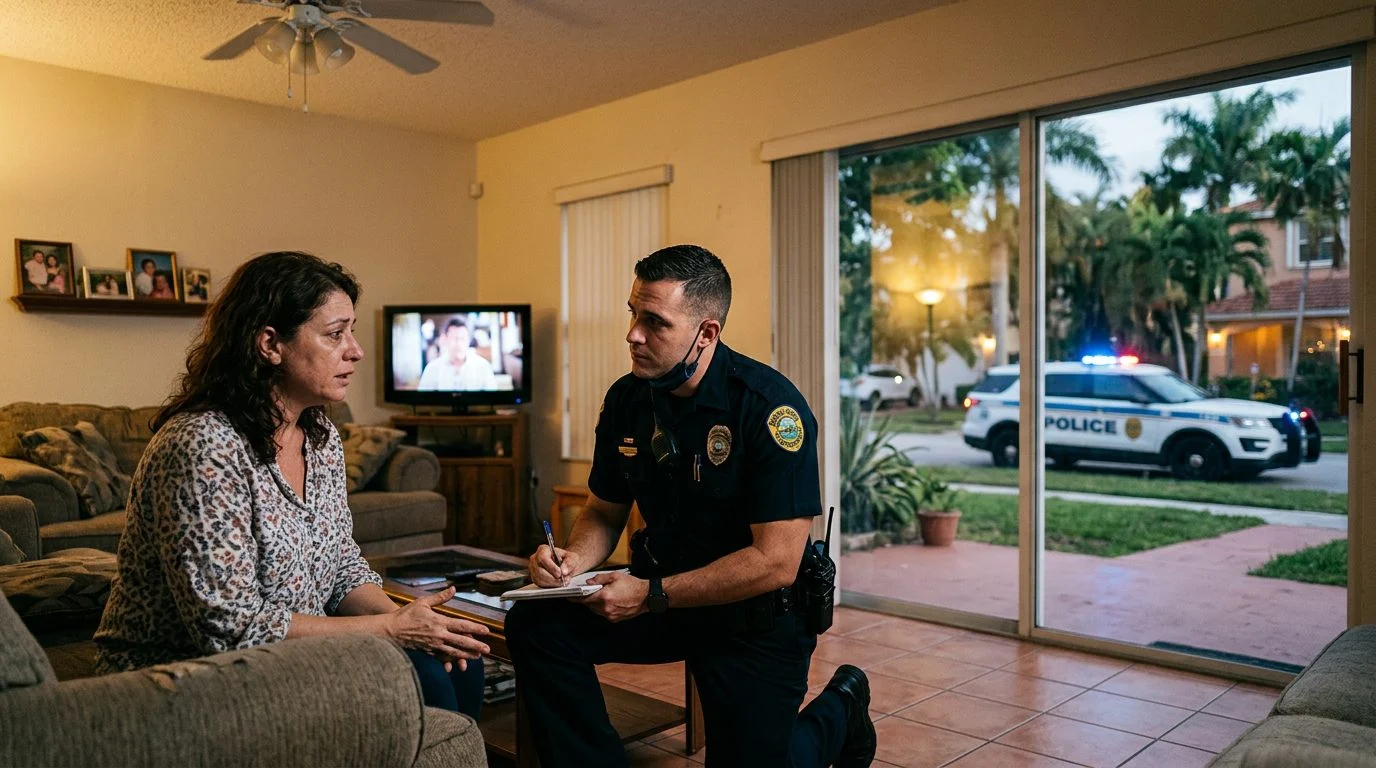
Sealing & Expungement | Miami-Dade, Broward & the Keys
Sealing Domestic Violence Arrests for Licensed Professionals
Patrick Wilson Law focuses on criminal record sealing for professionals across South Florida, with a clear plan from your first call.
By Patrick David Wilson · Published November 20, 2026
A domestic violence arrest can follow you long after the case ends, especially when a license or job is on the line. Here is the short answer: an arrest that ended without a conviction may be eligible for sealing in Florida, but a conviction for assault or battery on a family or household member generally is not.
Sealing is a separate question from how the criminal case ended. This page explains the rules, the steps in order, and what sealing does and does not hide, so you can judge your own situation before you decide what to do next.
Why a Domestic Violence Arrest Matters for a Licensed Professional
An arrest can appear on a background check even when no conviction followed. Licensing boards and employers may still ask about it on applications, renewals, or screening forms.
Common situations include:
- A nurse facing a licensing review after a domestic violence arrest.
- A teacher whose district runs a background screening after an old arrest surfaces.
- A real estate agent or financial worker whose renewal form asks about arrests.
- A job applicant who must answer an arrest question honestly, even when the case was dropped.
Florida law treats convictions and pleas differently from arrests. Under Fla. Stat. § 456.072, reporting duties for many licensees are tied to a conviction or plea, not an arrest alone.
If you are researching this for a spouse, parent, or other relative, this page is written to help you understand the options. The steps are the same whether the record belongs to you or someone you love.
If an old arrest is now surfacing on a license renewal or job application, you don't have to sort out the sealing steps alone; our team can review your record with you in a free, confidential first consultation. Talk it through with our team — the first consultation is free, confidential, and carries no obligation.

Who May Be Eligible to Seal a Florida Arrest Record
Eligibility depends on the case outcome and on the person’s prior record. Florida law sets out separate eligibility requirements for sealing a criminal history record and for expunging one.
- The charge you want sealed did not end in an adjudication of guilt.
- The charge was dismissed or nolle prosequi by the state attorney.
- A court dismissed the case, or a judge entered a judgment of acquittal.
- A judge or jury returned a not guilty verdict.
Prior history matters too. Under § 943.059, a person generally cannot seal a record if they have ever been adjudicated guilty in Florida of a criminal offense.
Withheld adjudication is a trap for licensees. Under Fla. Stat. § 943.0584, a “conviction” includes a guilty or nolo plea or verdict even when adjudication is withheld. That same section lists assault or battery of one family or household member by another as ineligible for sealing when the record is a conviction for it.
Review your own facts with a lawyer before you assume either way.
Sealing vs. Expunging: What the Difference Means for Your Record
Sealing restricts public access to a record, while expunging removes the record from official files. Florida treats them as separate requests with separate filings.
Under Fla. R. Crim. P. 3.692, sealed court entries are kept together with the court file in a nonpublic index. Expunged entries are removed from the official court records or expunged by other appropriate means.
The right choice depends on the case outcome, and we discuss it during the consultation.
Step-by-Step: How the Sealing Process Works in Florida
The process runs in order. The FDLE certificate comes first, and the court petition follows.
- Review the case outcome. Gather the arrest details, the final disposition, and certified court records.
- Apply for a Certificate of Eligibility. The Florida Department of Law Enforcement issues this certificate, which the sealing process requires.
- Track the certificate’s validity. Under § 943.059, a certificate of eligibility for sealing is valid for 12 months after the date stamped on the certificate when issued by the department, and after that time the petitioner must reapply to the department for a new certificate.
- File the petition with the clerk. Under Rule 3.692, the petition must include the valid FDLE certificate and a sworn statement that you meet the eligibility requirements, are eligible for sealing to the best of your knowledge, and have no other petition to seal or expunge pending before the court.
- Serve the prosecutor and arresting agency. The completed petition and certificate must be served on the prosecuting attorney and the arresting authority.
- Wait for the court’s ruling. The court may receive evidence on any issue of fact necessary to rule on the petition. It may deny the request at its sole discretion. It may deny the request at its sole discretion.
Each step matters. A mistake in the sworn statement or a missing certificate can delay or stop the petition.
What Sealing Covers and What It Does Not Hide
Sealing limits who can see an arrest, but it does not erase the arrest from every system. The record still exists.
Under § 943.059, a person may generally deny or fail to acknowledge a sealed arrest. Fla. Stat. § 943.059 reads: “(6) EFFECT OF ORDER.— … (b) The subject of the criminal history record sealed under this section or under other provisions of law, including former ss. 893.14, 901.33, and 943.058, may lawfully deny or fail to acknowledge the arrests covered by the sealed record, except when the subject of the record: 1.”
- The exceptions include being a candidate for employment with a criminal justice agency, among several others the statute lists.
- Being screened through the Care Provider Background Screening Clearinghouse by a qualified entity pursuant to s. 435.12.
The Florida Department of Law Enforcement shall disclose a sealed record to listed entities for licensing, access authorization, and employment purposes. Employees of those listed entities may not disclose the existence of a sealed record of a person seeking employment, access authorization, or licensure with that entity, except to that person or to persons having direct responsibility for employment, access authorization, or licensure decisions. A violation is a first-degree misdemeanor.
Licensees should still read each application question carefully, because some forms ask about arrests whether or not they were sealed.
What Life Looks Like After a Record Is Sealed
After sealing, you may lawfully deny the sealed arrest in most everyday situations. The exceptions above still apply, so check each form before you answer.
Keep a copy of the court’s sealing order. You may need it when a licensing board, employer, or school asks about the arrest.
Sealing is a court process. Whether relief is granted depends on the facts of your case and the court’s discretion, so talk through your history with counsel before you rely on it.
Not sure what your next step is?
Talk it through with our team — the first consultation is free, confidential, and carries no obligation.
Why Patrick Wilson Law for Sealing a Domestic Violence Arrest
Patrick Wilson Law is a Miami criminal defense firm. It serves Miami-Dade County, Broward County, Fort Lauderdale, Miami Beach, Hialeah, Kendall, Homestead, and the Florida Keys.
The firm focuses on domestic violence defense, criminal defense for licensed professionals, and sealing and expunging criminal records. Patrick David Wilson is the responsible lawyer for this page. Sahara Fonseca is also a lawyer at the firm.
Our approach is process-based. We review the case file, explain how the record may affect a license, and walk you through each filing step. Support staff help with records requests and scheduling.
Common Questions About Sealing a Domestic Violence Arrest
Sealing eligibility depends on the charge and the case outcome, and the answers below are general.
Can you seal a felony record in Florida?
Sometimes. Eligibility depends on the charge and outcome, and a record of a conviction for an offense on the list in § 943.0584 cannot be sealed.
Can a sealed criminal history record show up on a background check?
Agencies still keep the underlying record, and the listed exceptions still apply.
Does a free consultation create an obligation?
The first consultation is free, confidential, and carries no obligation to continue.
Talk Through Your Record With Patrick Wilson Law
If an arrest is now showing up in a licensing review, renewal, or job screening, you may feel you’re facing it alone. You don’t have to work out the sealing rules by yourself.
Call 786-761-1719 or leave us a message to start a free, confidential first consultation. We can look at the case outcome, your license, and the steps ahead with you.
How Patrick Wilson Law Approaches Your Case
Record review
We review the arrest report, the charging documents and the final disposition so we understand exactly what appears on your record.
Confidential from the start
Your conversation with our lawyers is confidential. We handle your matter with discretion, especially when your professional license is at stake.
Across South Florida
We represent clients in Miami, Miami-Dade County, Broward County, Fort Lauderdale, Kendall, Hialeah, Miami Beach, Homestead and the Florida Keys.
Sealing is not the same as erasing
A sealed record is not erased. Agencies can still keep the underlying file, and some exceptions still apply. Speak with a lawyer about your situation before you list or disclose anything.
What Happens When You Contact Us
1. Tell us what happened
Share the arrest date, the county and the outcome you know about. Our team will explain what we need to review next.
2. Review your record
We look at how the arrest appears on your criminal history and whether a sealing petition is an option for your case.
3. Plan the next steps
We explain the filing process, the paperwork involved and the costs you may face, so you can decide how to proceed with full information.

