
Sealing & Expunction | Miami-Dade County
Filing a Petition to Seal or Expunge in Dade County
Courthouse locations, paperwork and the steps that come before filing can be confusing. Our Miami team helps you understand what happens next.
How Patrick Wilson Law Can Help
Paperwork Review
We review your records and the documents a Dade County petition requires before anything is submitted.
Local Court Experience
Our criminal defense practice is based in Miami and focuses on cases across South Florida.
Confidential Discussion
Your matter is discussed privately. The first consultation is free, confidential and carries no obligation to continue.
Clear Next Steps
We explain each stage of the process in plain language so you know what to expect.
By Patrick David Wilson · Published November 19, 2026
If you’re asking where to file a petition to seal a record in Miami-Dade, the short answer is the clerk of court. You file a written petition with the clerk, but only after you get a Certificate of Eligibility from the Florida Department of Law Enforcement (FDLE).
The process has three stages: the FDLE certificate, the clerk filing, and a judge’s written order. Each stage has its own rules, and missing one can stop the whole request.
Which Office Receives the Petition in Dade County
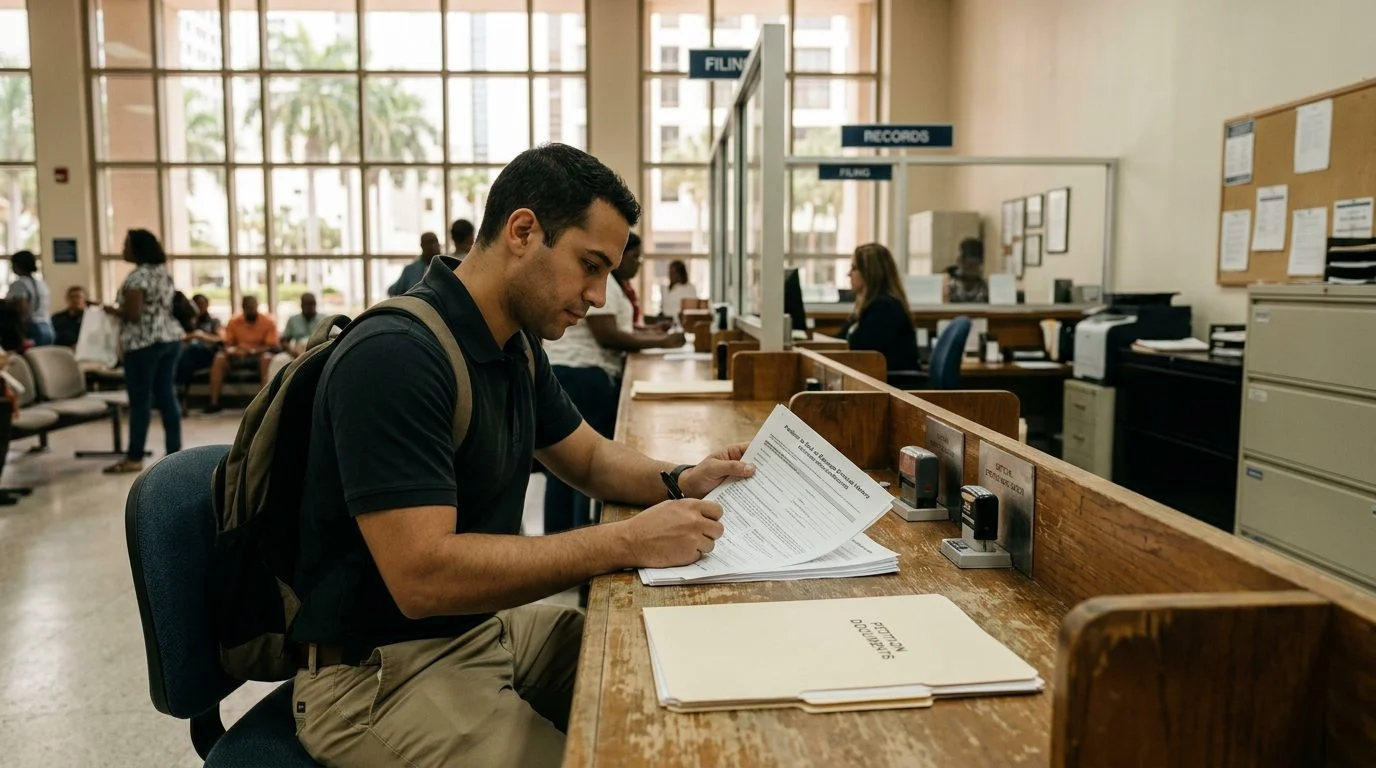
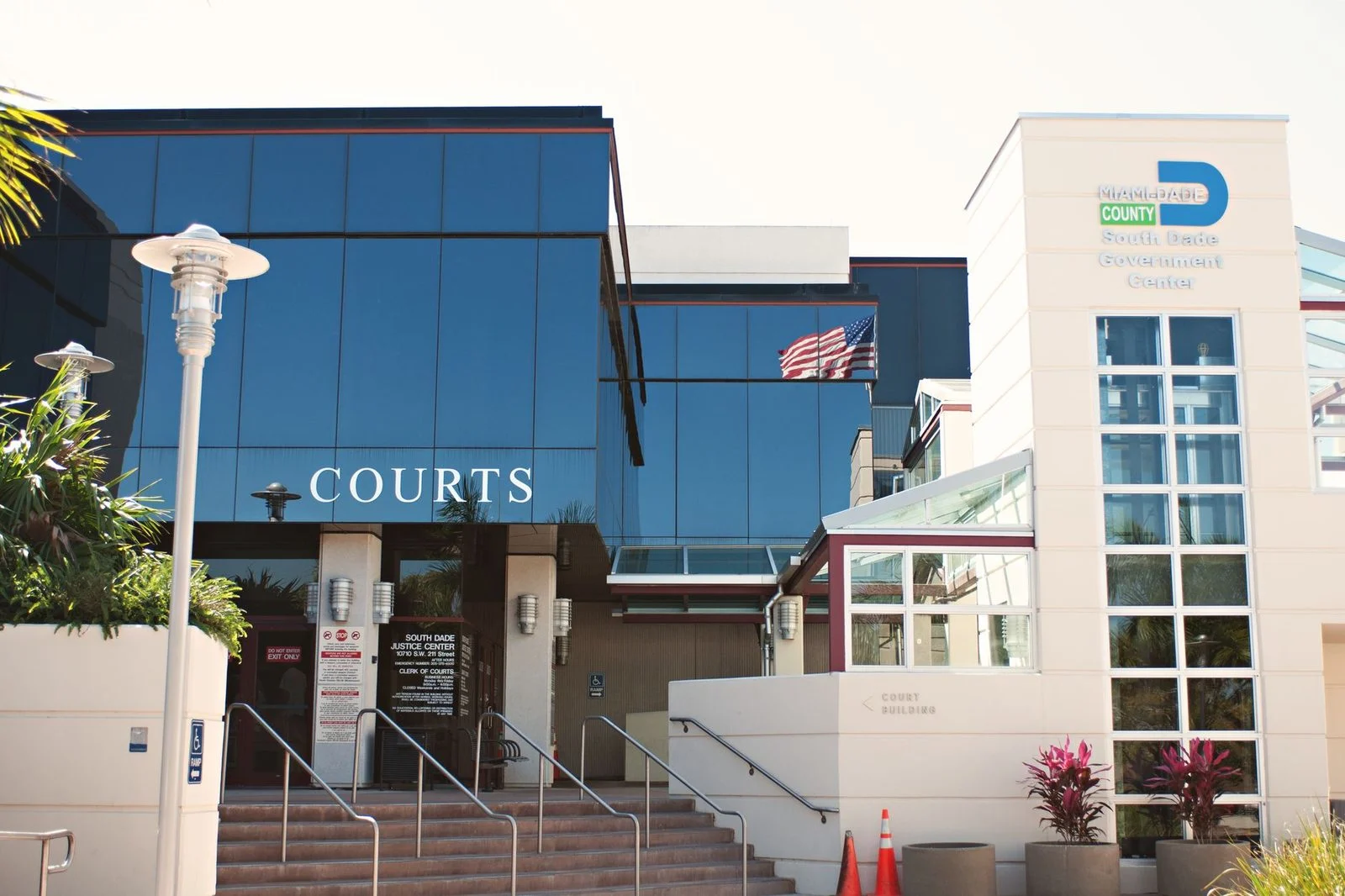
The petition goes to the clerk of court, not to FDLE. Florida’s criminal procedure rule says a petition to seal or expunge must be in writing and filed with the clerk. Rule 3.692 on petitions sets out that requirement and what must come with it. For a Dade County case, the filing goes to the clerk of court in Dade County.
Under Fla. Stat. § 943.0585, a person is eligible to petition a court to expunge a criminal history record only if the statute’s conditions are met. Confirm current office hours and filing details with the Dade County clerk before you go, since office rules can change.
If a closed Dade County arrest has you unsure where the FDLE and clerk steps begin, you don't have to sort them out alone; call 786-761-1719 or leave us a message. Talk it through with our team — the first consultation is free, confidential, and carries no obligation.
Step One: Get the FDLE Certificate of Eligibility
You must apply to FDLE for a Certificate of Eligibility before you petition a court. Fla. Stat. 943.0585 sets this rule for expunction. Fla. Stat. 943.059 sets it for sealing.
FDLE issues a sealing certificate only to a person who meets the eligibility criteria. You must also submit a certified copy of the disposition of the charge. The disposition is the court’s record of how the case ended, such as a dismissal or a verdict.
A sealing certificate is valid for 12 months after the date stamped on it. After that, you must reapply, and the law in effect at renewal decides your eligibility. FDLE’s sealing and expunging FAQ explains the application process in more detail.
Step Two: Assemble the Petition and Its Papers
Under Fla. R. Crim. P. 3.692, the petition must be written and filed with the clerk, and it must be accompanied by a valid certificate of eligibility issued by the Florida Department of Law Enforcement and a sworn statement by the petitioner. Rule 3.692 says the sworn statement must attest that you satisfy the eligibility rule, that you are eligible for the relief you seek (expunction or sealing) to the best of your knowledge, and that you have no other petition to seal or expunge pending before a court. Read that statement closely before you sign it, because you swear to it.
Gather the case numbers, the arrest date and the certified disposition. These papers tie the petition to the right record. Fla. Stat. 943.059 limits a sealing order to one arrest or one incident. Records of other arrests can be included only if they directly relate to the original arrest, and the order must say so. Mixing unrelated cases into one petition is a common mistake.
The petitioner bears the cost of certified copies unless the petitioner is indigent, under Rule 3.692. Budget for those copies before you start.
Step Three: File with the Clerk and Serve the State
You file the completed petition with the clerk. Then you serve it, with the sworn statement and the certificate, on the prosecuting attorney and the arresting authority. The state can respond, and the court may receive evidence on any fact it needs to decide.
Filing fees are paid when you file. The St. Lucie Clerk of Court’s criminal FAQ describes the same sequence in another Florida county: get the certificate, submit the disposition, then file the petition and documents with the clerk and pay the filing fee. Ask the Dade County clerk which fee applies to your filing.
Serving the state matters. The prosecutor and the arresting agency receive the papers before the judge rules, so both have notice of the request.
What the Court Reviews Before It Signs an Order
The judge decides whether to grant the petition, and the judge has broad discretion. Under Rule 3.692, any request to seal or expunge may be denied at the sole discretion of the court. The FDLE FAQ confirms that the court, not FDLE, holds that discretion. A certificate gets your petition heard; it doesn’t force a yes.
Eligibility is the first hurdle. Fla. Stat. 943.0584 defines a conviction to include a plea of guilty or nolo contendere (no contest), regardless of whether adjudication is withheld. Many first-time offenders assume a withhold means no record. For this purpose, the statute counts it as a conviction.
Some convictions block relief entirely. The list includes felony battery, domestic battery by strangulation, offenses defined in chapter 794, and manslaughter or homicide under listed sections. Assault or battery of one family or household member by another is also on the list. A domestic violence case in Dade County can be blocked for that reason, so the disposition should be compared against that list before anything is filed.
After the Order: Who Gets Notice and Why Timing Varies
After a judge grants sealing, the clerk certifies copies of the order to the state attorney and the arresting agency. FDLE then forwards the order to the Federal Bureau of Investigation, under Fla. Stat. 943.059.
Expunction works differently. Under Fla. Stat. 943.0585, a record ordered expunged must be physically destroyed or obliterated by any criminal justice agency holding it. Fla. Stat. § 943.0585 reads: “(6) EFFECT OF EXPUNCTION ORDER.— (a) Any criminal history record of a minor or an adult which is ordered expunged by a court of competent jurisdiction pursuant to this section must be physically destroyed or obliterated by any criminal justice agency having custody of such record, except that any criminal history record in the custody of the department must be retained in all cases.” FDLE is the exception: it keeps the record, and that record stays confidential.
How long each step takes depends on the court’s calendar, how complete the filing is, and how quickly agencies process the order. Keep a copy of the signed order and your filing receipt. Those two papers show what was filed and what was granted.
Not sure what your next step is?
Talk it through with our team — the first consultation is free, confidential, and carries no obligation.

Sealing, Expunging and Getting Help With the Filing
Sealing and expunging are different remedies with different rules. Sealed entries are kept in a nonpublic index under Rule 3.692. Expunction removes the record, except FDLE’s confidential copy. The Lake County Clerk explains the general meaning of each remedy.
Some records clear without a petition. Fla. Stat. 943.0595 requires FDLE to seal qualifying records automatically, such as when no charging document was filed, or when all charges were dismissed or resulted in a not guilty verdict or judgment of acquittal. The statute excludes some offenses, so its eligibility terms decide whether it applies.
A closed Dade County DUI, domestic violence or leaving-the-scene arrest raises a real choice. Some people file on their own. Others have a lawyer prepare the FDLE request and the court papers. Patrick David Wilson, the responsible lawyer for this page, focuses on criminal defense and on sealing and expunging criminal records. The firm is based in Miami and serves Dade County.
Frequently Asked Questions
Do I need a certificate before filing?
Yes. The petition must be accompanied by a valid FDLE Certificate of Eligibility and a sworn statement by the petitioner attesting that the petitioner satisfies the eligibility requirement and is eligible for an expunction to the best of the petitioner’s knowledge, and has no other petition to seal or expunge pending.
How long does a sealing certificate last?
It is valid for 12 months after the date stamped on it.
Does a withheld adjudication count as a conviction?
For this purpose, yes.
Can I file without a lawyer?
Some people file on their own. Others have a lawyer prepare the petition and the FDLE request.
If your closed arrest has you unsure where the FDLE and clerk steps begin, the first consultation is free, confidential and carries no obligation to continue. Call 786-761-1719 or leave a message through our contact page.
Check Your Paperwork Before You File
A petition filed without the required certificate, sworn statement or supporting documents can be returned or delayed. Review every requirement before you submit anything to the court.
Common Questions About Filing in Dade County
Which Court Handles the Petition?
Petitions for records arising from Dade County cases are typically filed with the court that handled the matter. We help you confirm the correct court and filing location.
What Documents Are Needed?
Expect to gather your certificate of eligibility, a sworn statement and the case information the clerk will request. Our team checks each item before filing.
Who Receives Notice?
We explain who is notified and how service is handled.
What If Something Is Missing?
Incomplete filings can slow the process. We identify gaps early so your petition moves forward with fewer delays.

