
Miami Criminal Defense | Serving South Florida
Facing Charges After a Distracted Driving Crash That Killed Someone?
Phone use behind the wheel can lead to several separate charges in Florida. Patrick Wilson Law, PLLC defends drivers charged in fatal crashes from Miami to the Florida Keys.
By Patrick David Wilson · Published October 25, 2026
When a Phone Is Involved in a Fatal Crash in Florida
A driver who used a phone before a deadly crash can face more than one charge in Florida. Texting while driving is its own offense. A crash that kills someone can also support vehicular homicide, reckless driving or leaving-the-scene charges.
This page explains how Florida law treats distracted driving in a fatal crash. It covers the texting statute, vehicular homicide, other possible charges, how phone evidence is used, penalties, and how Florida’s fault rule can affect injury claims.
Maybe you’re reading this because of a crash that already happened. You may be worried about a family member, a friend, or yourself. Each case turns on its own facts, so this page explains the law in general terms. It is not advice about any one case.
If a phone was part of a crash that killed someone, you don't have to figure out the charges alone. Our team can talk through your situation with you. Talk it through with our team — the first consultation is free, confidential, and carries no obligation.
Florida’s Texting-While-Driving Law
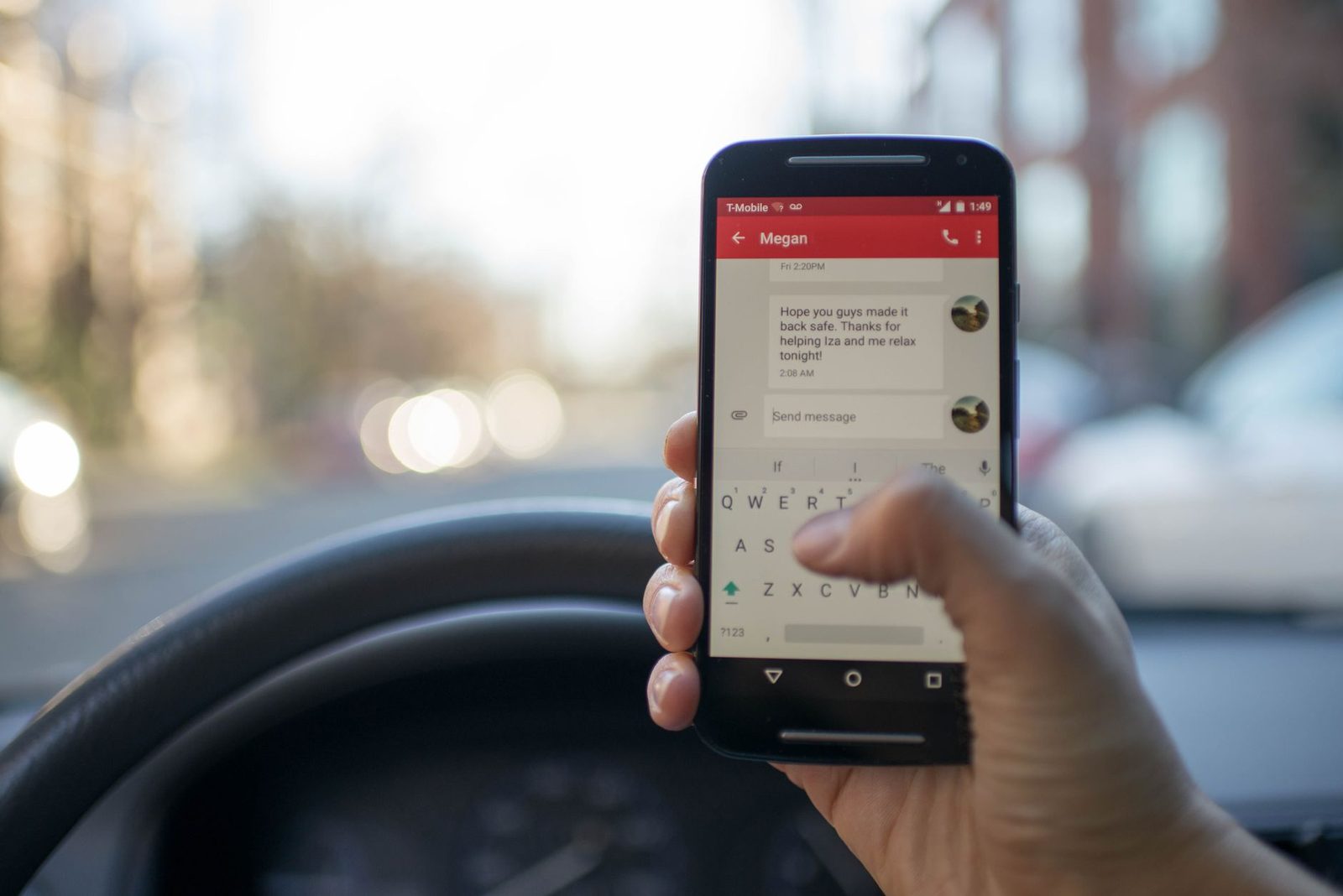
Florida bans manually typing multiple letters, numbers or symbols into a wireless device, or sending or reading data on one, for nonvoice interpersonal communication such as texting, e-mailing or instant messaging, while you operate a motor vehicle. The rule is in Fla. Stat. § 316.305. A person may not operate a motor vehicle while manually typing multiple characters into a wireless device. The same goes for sending or reading data for texting, e-mailing or instant messaging.
Some uses are allowed. A vehicle that is stationary is not being operated under the statute. Voice communication that does not require manual entry is also exempt, except to activate or start a feature. Certain emergency and official duty operators are exempt too.
The statute also lets officers stop a driver and issue a citation for texting. An officer who stops a driver for this violation must tell the driver of the right to decline a search of the phone. The officer may not access the phone without a warrant, and may not take it while waiting for one.
The texting violation has its own statute, separate from any crash charge. Fla. Stat. § 322.27 assigns six points for unlawful use of a wireless device that results in a crash.
Vehicular Homicide and How Phone Use Fits In
Vehicular homicide in Florida means killing a human being, or an unborn child by injury to the mother, caused by the operation of a motor vehicle by another in a reckless manner likely to cause death or great bodily harm to another. The definition is in Fla. Stat. § 782.071.
It names a reckless manner of driving. Prosecutors would need to show that the driving met that standard. Phone use is one fact they may offer to show it.
Several practical questions often decide these cases. How long was the phone in use? Was the driver looking at the screen when the crash began? What does crash reconstruction show about speed, lane position and braking?
Penalties depend on which version of the offense applies. Vehicular homicide is a second-degree felony. It becomes a first-degree felony if the driver knew or should have known the accident occurred and did not give information and render aid. It is also first-degree if the driver has a qualifying prior conviction. A fine for a first- or second-degree felony is generally capped at $10,000 under Fla. Stat. § 775.083, but a higher amount equal to double the pecuniary gain derived from the offense by the offender or double the pecuniary loss suffered by the victim, or any higher amount specifically authorized by statute, may apply.
Other Charges That Can Be Filed Alongside Vehicular Homicide
Several other charges can come from the same crash. Reckless driving, impaired-driving charges and leaving-the-scene charges are the main ones to understand.
Under Fla. Stat. § 316.192, any person who drives in willful or wanton disregard for safety is guilty of reckless driving. Fleeing a law enforcement officer in a vehicle is reckless driving per se. Reckless driving that causes serious bodily injury is a third-degree felony.
Under Fla. Stat. § 316.193, it is a crime to drive when alcohol, chemicals or controlled substances impair your normal faculties. If an officer has probable cause that an impaired driver caused a death or serious bodily injury, Fla. Stat. § 316.1933 requires a blood test. The officer may use reasonable force if needed.
Leaving the scene is a separate problem. Under Fla. Stat. § 316.027, a driver in a crash that causes death must stop and stay at the scene.
How Phone Records and Device Evidence Are Used
Phone records can be part of a Florida crash case, but the statute limits how they come in. Under Fla. Stat. § 316.305, billing records for a device may be admissible only in a crash that results in death or personal injury. They can be used to decide whether a texting violation occurred.
Device access has limits. An officer who stops a vehicle for a texting violation may not access the phone without a warrant. Consent to search must be voluntary and unequivocal.
Investigators often compare timestamps from phone records with crash timing. A short gap between a phone event and the impact can become a central dispute. Timestamps can be read more than one way, so the gap needs careful review.
Florida’s discovery rule also matters. Under Fla. R. Crim. P. 3.220, the term “statement” includes police and investigative reports prepared in connection with the case, but not the notes from which those reports are compiled. Early on, preserve your own phone account records and any messages from that day.
Penalties for Distracted Driving Charges in Florida
Penalties range from fines and short jail terms for misdemeanors to felony prison and fines. The exposure depends on which charges are filed.
For reckless driving, a first conviction carries up to 90 days in jail, a fine of $25 to $500, or both. A second or later conviction carries up to 6 months, a fine of $50 to $1,000, or both.
For felonies, the stakes are higher. Vehicular homicide is punished under the sentencing statutes and carries a fine of up to $10,000 for a second-degree felony. A willful leaving-the-scene violation that causes death carries a 4-year mandatory minimum.
License consequences can also follow. Florida law allows the state to suspend a license without a preliminary hearing when records show a traffic-law conviction that caused a crash with death or personal injury.
Sentencing turns on the charges, the record of the person charged, and the facts of the crash. No statute can predict how one case will end.
Not sure what your next step is?
Talk it through with our team — the first consultation is free, confidential, and carries no obligation.
The 51% Rule and Injury Claims After a Distracted Driving Crash
In general terms, a person found largely at fault may be barred from recovering damages. The rule is set out in Fla. Stat. § 768.81, which covers comparative fault. The statute controls the exact threshold and exceptions.
This rule matters in distracted driving cases. If a driver was texting, other parties may argue that the driver’s own fault reduces or bars a claim. Those arguments turn on the evidence in each case.
Florida law also gives families a civil path in some deaths. Under Fla. Stat. § 782.071, a civil right of action for damages exists for all deaths described in the vehicular homicide section.
Criminal cases and civil claims are separate.
How Florida Tracks Crashes Involving Phones
The state keeps a running record of traffic crashes. Florida tabulates all crash reports and may analyze them. It publishes statistical information based on them each year or at more frequent intervals.
A crash report is one record of what happened. Investigators, insurers and courts often use it as a starting point. Phone records, witness accounts and vehicle data may tell a different part of the story, so one report rarely settles the question.
The duty to stay at a crash scene is also part of the record. The Florida Department of Highway Safety and Motor Vehicles explains that duty and its penalties on its hit-and-run safety guidance page.
Talk With Patrick Wilson Law About Your Situation
If a phone was involved in a crash that killed someone, you may be the driver, or a parent, spouse or friend trying to make sense of charges nobody expected. That is a hard place to be, and questions often come faster than answers.
Patrick Wilson Law, PLLC is based in Miami. The firm defends clients in Miami-Dade County, Broward County and the Florida Keys, including vehicular homicide and related charges. Patrick David Wilson is the responsible lawyer for this page, and Sahara Fonseca is also one of the firm’s lawyers.
To talk about your situation, call 786-761-1719 or leave a message at the firm’s contact page. The first consultation is free, confidential and carries no obligation to continue.
Charges That Can Arise From a Distracted Driving Fatal Crash
Texting While Driving
Florida's texting statute makes it an offense to use a wireless device to write, send or read messages while driving. Prosecutors may file this charge alongside more serious counts arising from the same crash.
Reckless Driving
Reckless driving charges may be filed when the State alleges a driver showed a willful or wanton disregard for the safety of others, including by using a phone at the time of a crash.
Leaving the Scene
A driver who leaves the scene of a crash involving a death or serious injury can face separate charges, regardless of how the crash itself is ultimately resolved.
Important: Do Not Assume a Ticket Is the Whole Case
A texting citation is often only the starting point. Fatal crash investigations can lead to additional charges, and statements you make early on can affect the case. Speak with a criminal defense attorney before you give a formal statement or respond to a charging document.
How Our Firm Approaches These Cases
Review of the Phone Evidence
Phone records, message logs and timestamps are often central to these cases. We review how that evidence was collected and what it actually shows about the moments before the crash.
Defense Against Each Charge
Each count carries its own elements and penalties. We evaluate every charge separately rather than treating a fatal crash as a single issue.
Attention for First-Time Offenders
Many of our clients have never been charged with a crime before. We explain the process in plain language so you understand each step.
Coordinated Defense Strategy
Our lawyers work together on case strategy, from investigation to negotiation and trial preparation, keeping the same goals in view throughout the case.
Confidential Free Consultation
Our first consultation is free, confidential and comes with no obligation to continue. It is a chance to ask questions and understand where your case stands.

