
Vehicular Homicide Defense
Facing a Vehicular Homicide Charge? Get Clear Answers About Possible Sentences
Criminal defense attorney Patrick David Wilson focuses on DUI, traffic homicide and related felony charges across South Florida. The free first consultation is confidential and carries no obligation to continue.
How Patrick David Wilson Approaches a Vehicular Homicide Case
Review of the Charging Documents
Patrick David Wilson reviews the charge, the grade of the offense and any sentencing provisions the State may rely on, so you understand what the case involves.
Focus on the Facts
Possible sentences depend on the facts of the crash, the driver's history and the applicable law. Each case is evaluated on its own record.
Options Explained Clearly
Patrick David Wilson explains the possible defenses and sentencing issues in plain language, so you can make informed decisions about your case.
Confidential Consultation
Your free first consultation is confidential and carries no obligation to continue. You can ask questions before deciding anything.
By Patrick David Wilson · Published October 17, 2026
Short Answer: What Is the Minimum Sentence for Vehicular Homicide?
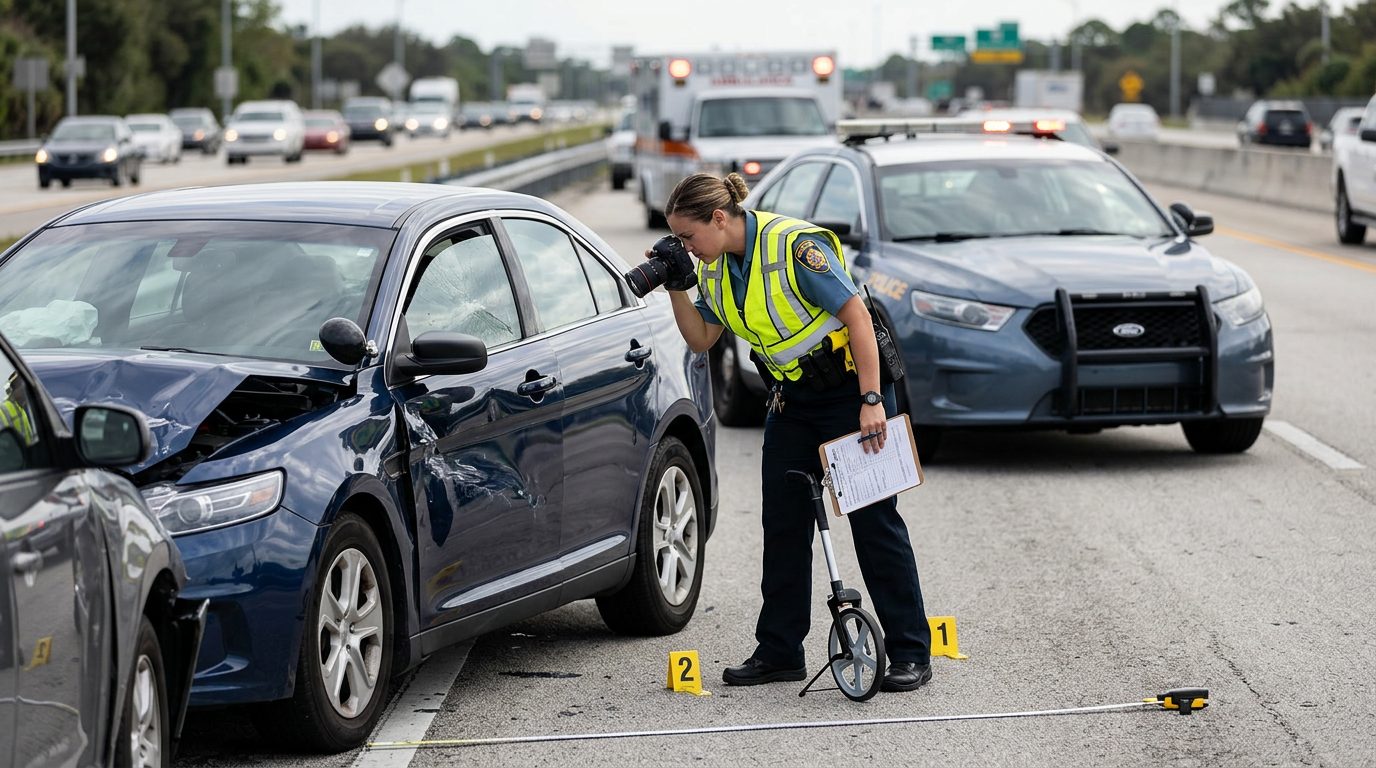
Florida treats vehicular homicide as a felony. The minimum sentence in any case depends on the facts and applicable law. Fla. Stat. § 782.071 sets the grade of vehicular homicide and, in certain circumstances, can also set a mandatory minimum prison term, while general felony sentencing laws set the range of punishment.
If a fatal crash has put you or someone you care about in this position, you likely want clear answers fast. This page explains how Florida classifies the charge, what the sentencing framework includes, and what can shape a sentence.
A single number from a website cannot answer this question on its own. Two cases with similar crashes can involve different charges, prior records and court procedures.
It also helps to separate related offenses early. DUI manslaughter, for example, has its own statute and penalty rules. Reading the exact statute named in your charging papers is a useful first step.
Not sure what your next step is?
Talk it through with our team — the first consultation is free, confidential, and carries no obligation.
How Florida Defines and Classifies Vehicular Homicide
In its basic form, vehicular homicide is a second-degree felony under Florida law. Fla. Stat. § 782.071 describes the offense as the killing of a human being caused by the operation of a motor vehicle by another in a reckless manner likely to cause death or great bodily harm to another. Under the statute’s general grading, vehicular homicide is a felony of the second degree, punishable as provided in s. 775.082, s. 775.083, or s. 775.084, as set out in Fla. Stat. § 782.071.
The statute also describes circumstances in which vehicular homicide is a felony of the first degree, and whether any of them applies depends on the facts of the case and applicable law, as set out in Fla. Stat. § 782.071. The first applies when, at the time of the accident, the person knew or should have known the accident occurred and failed to give information and render aid as required by section 316.062. The statute adds that this does not require knowing the accident caused injury or death.
The second applies when the person has a prior conviction under a listed statute. The list includes an earlier vehicular homicide conviction and DUI manslaughter under section 316.193(3)(c)3. That DUI reference is a prior-conviction trigger. DUI manslaughter is a separate offense with its own rules, and those rules are not part of the vehicular homicide penalty.
The Sentencing Range for a Second-Degree Felony in Florida
The statute provides that a felony of the second degree is punishable as provided in s. 775.082, s. 775.083, or s. 775.084, and the sentence that applies depends on the facts of the case and applicable law, as set out in Fla. Stat. § 782.071. Florida sorts felonies into categories by degree under Fla. Stat. § 775.081. The vehicular homicide statute points to sections 775.082, 775.083 and 775.084 for punishment.
Fla. Stat. § 775.082 covers penalties. It also preserves a judge’s discretion to impose an indeterminate term within minimum and maximum limits set by other laws. Fine amounts depend on the specific offense and applicable law.
The grade alone does not fix the minimum prison term. Fla. Stat. § 782.071(1)(b) may require a four-year mandatory minimum prison term where the person knew or should have known the accident occurred and also failed to give information and render aid as required by s. 316.062, and whether that applies depends on the facts and applicable law. Whether a minimum applies turns on the charge, the prior record and which sentencing statutes apply.
Prior record matters under Fla. Stat. § 775.084. That section sets enhanced penalties for certain repeat offenders, based on specified prior adult convictions. A prior conviction must not have been set aside in postconviction proceedings to count.
What Can Shape a Sentence in a Vehicular Homicide Case
In a felony case, sentencing can involve a scoresheet, a minimum called the lowest permissible sentence, and a hearing. Each piece turns on the case.
The Criminal Punishment Code scoresheet generally applies to felony cases. Fla. Stat. § 921.0022 uses the offense severity chart with the worksheet to compute a sentence score for each felony offender. How a scoresheet is prepared and reviewed depends on the facts of the case and applicable law.
The lowest permissible sentence is the minimum the trial court may impose absent a valid reason for departure. When total sentence points are 44 or fewer, that minimum can be a nonstate prison sanction, unless the court decides a prison sentence is appropriate.
Mitigating circumstances can justify a departure below that minimum. Fla. Stat. § 921.0026 applies to felony offenses other than capital felonies. Intoxication at the time of the offense is not a mitigating factor under its subsection (2), except for one narrow drug court provision.
The court may also order 120 hours of community service at a trauma center or hospital, in addition to other punishment. Whether that option applies depends on the facts of the case and applicable law.
Plea talks and the sentencing hearing matter too. Under Fla. R. Crim. P. 3.171, defense counsel must advise the client of all plea offers and their likely results. Under Fla. R. Crim. P. 3.720, the court hears relevant submissions and decides whether restitution applies.
Where to Go Next and How to Get Help With Your Situation
Patrick David Wilson focuses on criminal defense, including vehicular homicide defense, for clients across South Florida. That includes Miami-Dade and Broward counties and the Florida Keys. Patrick Wilson Law, PLLC is a Miami criminal defense firm.
What is the minimum sentence for vehicular homicide in Florida?
A four-year mandatory minimum prison term may apply under Fla. Stat. § 782.071(1)(b) when, at the time of the accident, the driver knew or should have known that the accident occurred and failed to give information and render aid as required by Fla. Stat. § 316.062, and applicability depends on the facts and applicable law.
Is vehicular homicide a felony in Florida?
Fla. Stat. § 782.071 grades vehicular homicide as a felony, and depending on the facts and applicable law, the offense may be charged as a second-degree felony. It may be charged as a first-degree felony where the driver knew or should have known the accident occurred and failed to give information and render aid as required by s. 316.062, or where the statute’s prior-conviction trigger applies.
Does a scoresheet apply to every case?
No. Criminal Punishment Code scoresheets generally apply to felony cases.
If a crash has left you or someone you love facing this charge, Patrick David Wilson can talk through your questions in a free, confidential first consultation, with no obligation to continue. Call 786-761-1719 or leave a message.
Factors That May Affect a Vehicular Homicide Sentence
How the Offense Is Classified
The grade of the offense and any statutory provisions that apply can shape the range of punishment. Whether any mandatory minimum applies depends on the specific facts and applicable law.
Circumstances of the Crash
Speed, road conditions, signals, the actions of other drivers and the sequence of events may all be relevant to how a case is charged and how it is resolved.
Impairment Evidence
Testing, observations and the timing of evidence collection may matter. Their reliability and admissibility depend on the facts of the case and applicable law.
Your Driving and Criminal History
A prior record, or a clean record, may bear on sentencing. The effect depends on the specific facts and applicable law.
Check Your Own Paperwork
Read your charging documents, arrest report and any court orders carefully, and bring them to your consultation so the possible outcomes can be reviewed for your situation.

