
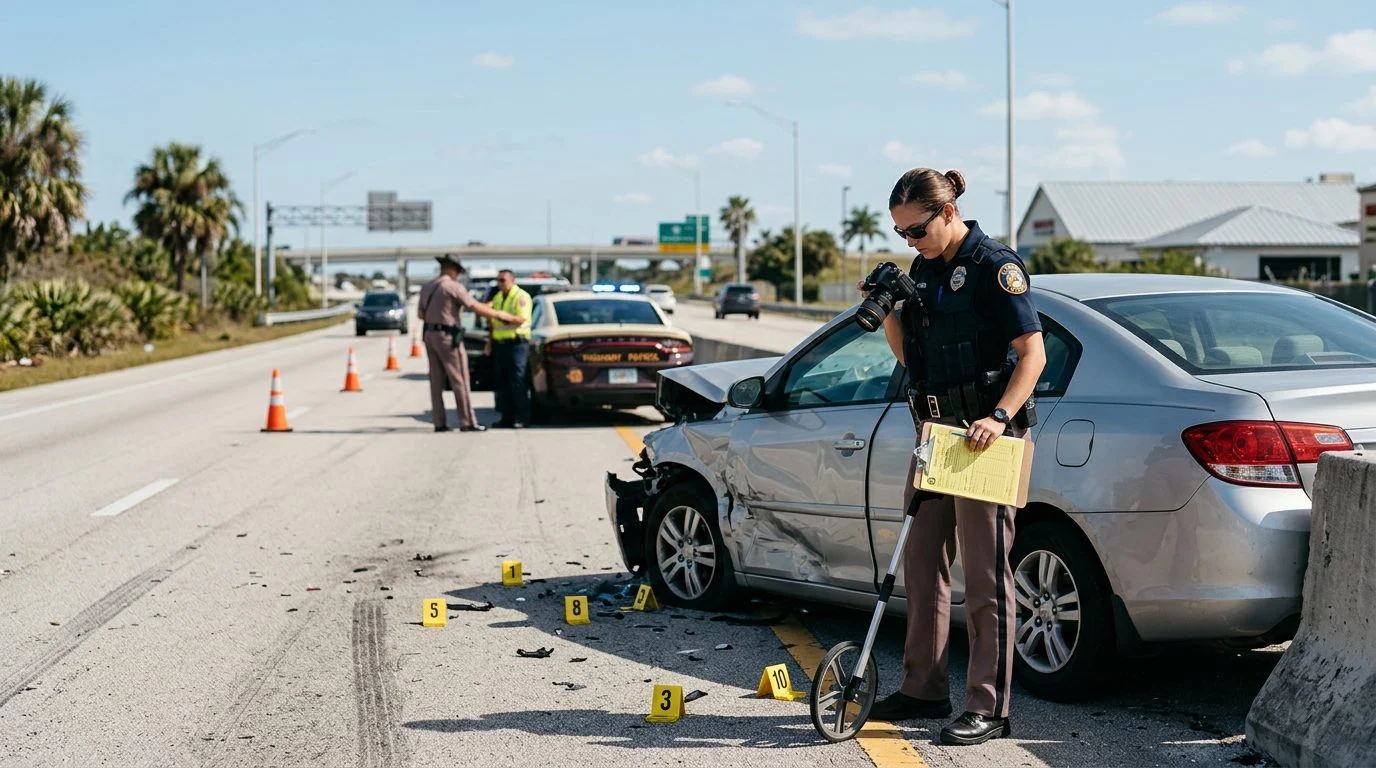
Vehicular Homicide Defense | Miami, Florida
Facing a Vehicular Homicide Charge? Get Clear Answers About What's at Stake
Patrick Wilson Law focuses on criminal defense across Miami-Dade, Broward and the Florida Keys, and we help people understand serious charges from the first conversation.
By Patrick David Wilson · Published November 17, 2026
If someone you care about has been charged, you need a clear answer first.
The answer depends on the specific charge and the facts of the case, and it turns on the penalty ranges, how a judge reaches a sentence, and which other charges can add to the exposure.
Short Answer: The Florida Penalty for Vehicular Homicide
Vehicular homicide is a second-degree felony in its basic form. The statute covers killing a person through the operation of a motor vehicle “in a reckless manner likely to cause the death of, or great bodily harm to, another” (Fla. Stat. § 782.071).
The sentence range follows from the felony degree under § 775.082. Fines for a second-degree felony can reach $10,000 under § 775.083.
The offense becomes a first-degree felony in two situations. The first is when the driver knew or should have known the crash occurred and failed to give information and render aid. The driver does not need to know anyone was hurt. The second is when the driver has a prior conviction under the statute or certain related laws.
The statutory maximum is a ceiling, not the sentence every defendant gets. The judge works within a range, which the next sections explain.
If someone you love now faces a vehicular homicide charge, you don't have to sort out the penalties on your own, and our team is ready to talk with you. Talk it through with our team — the first consultation is free, confidential, and carries no obligation.
Where a Vehicular Homicide Sentence May Be Served
Felony prison terms and county jail terms are different things. Florida sorts crimes into felonies and misdemeanors (§ 775.081). Under the Criminal Punishment Code, any sentence to state prison must exceed one year (§ 921.0024).
Misdemeanors top out much lower.
County jail can still be part of a felony case. A person may be held in county jail before trial while bond is decided. That is pretrial custody, not a sentence.
When a family member asks about jail, the plain answer is this. Jail is a separate step that can come before a case ends.
How the Statutory Maximum Differs From the Sentence a Court Imposes
The judge does not start with the maximum. The judge starts with a scoresheet. Florida’s Criminal Punishment Code worksheet adds up sentence points, and the total sets the lowest permissible sentence (§ 921.0024; Fla. R. Crim. P. 3.704).
If total points are 44 or fewer, the lowest permissible sentence can be a nonstate prison sanction. Fla. Stat. § 921.0024 reads: “The lowest permissible sentence is any nonstate prison sanction in which the total sentence points equals or is less than 44 points, unless the court determines within its discretion that a prison sentence, which may be up to the statutory maximums for the offenses committed, is appropriate.” Fla. R. Crim. P. 3.704 reads: “or is less than 44 points, unless the court determines within its.” The court can still choose prison if it decides that is appropriate. Above 44 points, the formula subtracts 28 points from the total. It then reduces the rest by 25 percent to get the lowest prison term in months.
The judge then picks a sentence from that lowest permissible sentence up to the statutory maximum. The court may run multiple sentences together or one after another.
Legal status also counts. Points apply when a person is under a form of supervision, such as pretrial intervention, at the time of the offense. Prior record and the facts of the crash also shape the result. Whether the scoresheet points to prison depends on the facts and the record in each case.
How DUI and Leaving the Scene Can Change the Exposure
Impairment and leaving the scene are separate charges. Each one can raise the exposure.
When alcohol or drugs are involved, Florida’s DUI law is a separate statute with its own penalties (§ 316.193). Many people search for “DUI manslaughter.” That phrase describes a DUI-related death charge.
Leaving the scene is its own offense. Under § 316.027, a willful violation after a crash that results in death is a first-degree felony. It carries a mandatory minimum term of 4 years. The defendant may ask the court to depart from that minimum, but not when the violation happened while the driver was under the influence, and the court may grant the motion only if it finds that a factor, consideration, or circumstance clearly demonstrates that imposing a mandatory minimum term of imprisonment would constitute or result in an injustice.
One crash can lead to more than one count. Each count carries its own range, so the total exposure is not one number. Check the charging document for every statute cited.
Vehicular Homicide, Vehicular Manslaughter, and DUI Manslaughter: What the Terms Mean
Florida’s statute is titled vehicular homicide. “Vehicular manslaughter” is a common name in many other states, and search results use it loosely. Check which statute the paperwork cites.
Involuntary manslaughter is a general homicide idea. It is not the title of the Florida car-crash statute. Read the citation, not just the name of the charge.
Reckless driving is a different offense. It means driving in willful or wanton disregard for the safety of persons or property (§ 316.192). If reckless driving causes serious bodily injury, it is a third-degree felony under that same section.
Other states use their own statutes and sentence ranges. The penalties described here apply to Florida law.
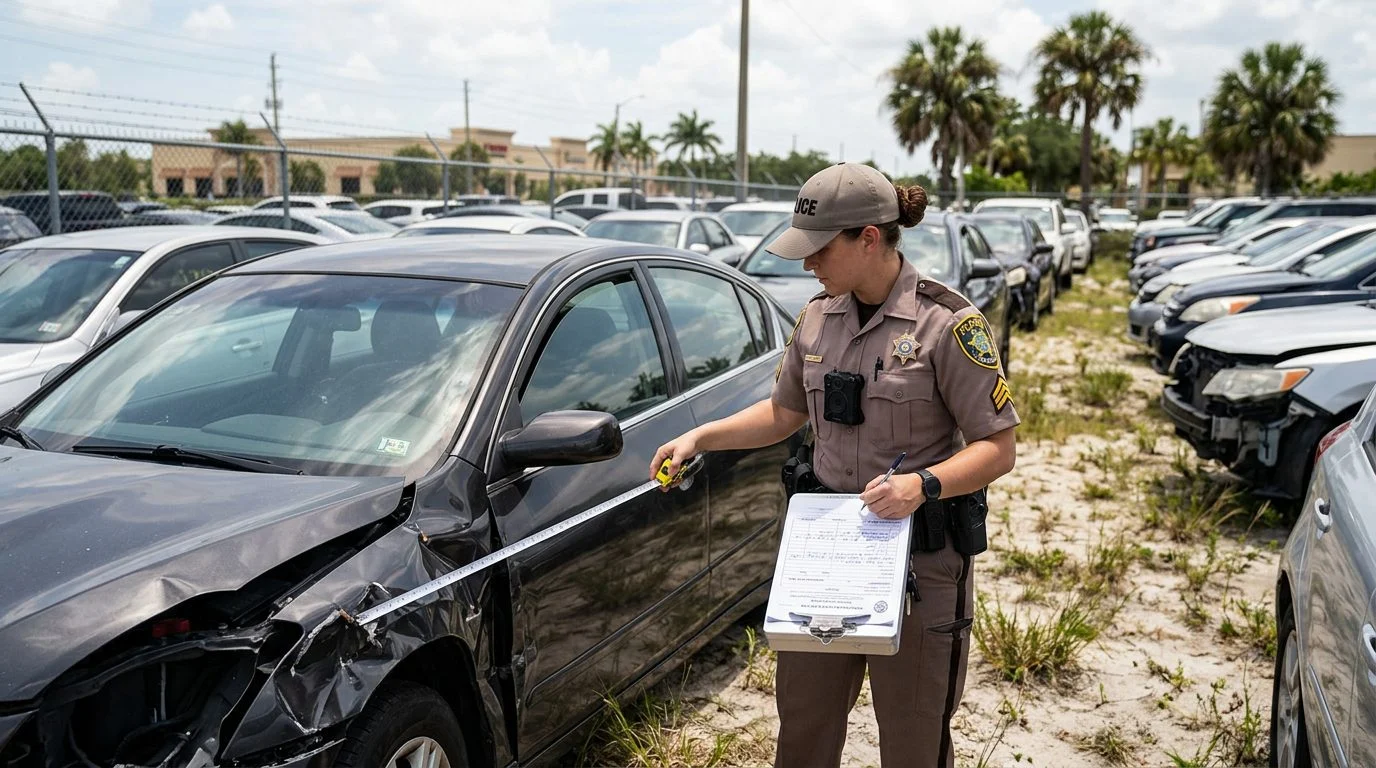
Consequences Beyond the Sentence: Record, License, and Future Options
A felony conviction creates a lasting criminal record. That record can affect jobs and professional licenses. Federal guidance explains how employers should weigh criminal-history information when they make hiring decisions (EEOC guidance on criminal records).
Florida law also allows a civil damages claim for these deaths under s. 768.19 (§ 782.071). The court may also order 120 hours of community service in a trauma center or hospital (§ 782.071).
Can a vehicular homicide record be sealed or expunged?
Sealing and expunction are court processes, and eligibility depends on how the case ended: a person who has ever been adjudicated guilty in Florida of a criminal offense, or adjudicated delinquent in Florida for any felony or certain listed misdemeanors (unless that delinquency record has been expunged), is not eligible, and the court may deny any request at its discretion. A certificate of eligibility is valid for 12 months after it is issued (§ 943.0585; § 943.059).
Does a felony affect a professional license?
It can. Licensed professionals may face licensing review after a felony charge or conviction. The rules vary by profession.
Not sure what your next step is?
Talk it through with our team — the first consultation is free, confidential, and carries no obligation.
Why Early Steps Matter in a Vehicular Homicide Case
The first days after a charge often decide what evidence survives. Vehicle data, crash reconstruction, toxicology results and witness accounts all need to be preserved.
Statements matter too. Whether a statement made during questioning can be used as evidence depends in part on whether police first gave the Miranda warnings.
Family members should also be careful online. Posting personal accounts of the crash on social media while the case is open can create problems.
How Patrick Wilson Law Handles Vehicular Homicide and Related Charges
Patrick Wilson Law is a Miami criminal defense firm. It focuses on vehicular homicide defense, DUI, domestic violence, sexual battery and traffic homicide charges across South Florida. Its service area includes Miami-Dade County, Broward County, Fort Lauderdale, Hialeah, Miami Beach, Homestead, Kendall and the Florida Keys.
The firm concentrates on first-time offenders and licensed professionals whose careers are on the line.
Patrick David Wilson is the lawyer responsible for this page. The firm’s lawyers include Patrick David Wilson and Sahara Fonseca. Assistants and office staff support the work of our team.
Talk Through Your Situation With Patrick Wilson Law
If a son, daughter, spouse or friend was just charged after a crash, you may be trying to understand a possible prison term while everything feels unsettled. You don’t have to work through that alone.
Call 786-761-1719 or send a message through our contact page to talk about your charge. The first consultation is free, confidential, and carries no obligation to continue.
How We Approach Your Case
Focused Defense
Our team concentrates on protecting your interests at every stage, from the initial investigation through resolution.
Early Action Matters
Speaking with a defense lawyer early helps you understand your options before important decisions are made.
Confidential Conversations
What you share with our lawyers is kept confidential, so you can speak openly about the facts of your case.
Plain-Language Explanations
We explain the charges, the process and the possible penalties in terms you can follow, so you know what to expect.
Important: Do Not Discuss Your Case Without Counsel
Statements made to investigators, insurance representatives or others after a crash can affect a vehicular homicide case. Speak with a defense lawyer before you give a statement or sign any document.
Common Questions About Vehicular Homicide Cases
What Shapes the Outcome?
The facts of the crash, the driver's conduct, any prior record and how the charges are filed all bear on what a court considers.
First-Time Offenders
Many people facing a vehicular homicide charge have no prior record. We explain how that history is weighed and what it means for your case.
Licensed Professionals
A serious charge can affect a professional license and career. We help clients address those consequences alongside the criminal case.
Non-Citizens
A conviction can carry immigration consequences. We help non-citizen clients understand those risks before making decisions about their case.

