
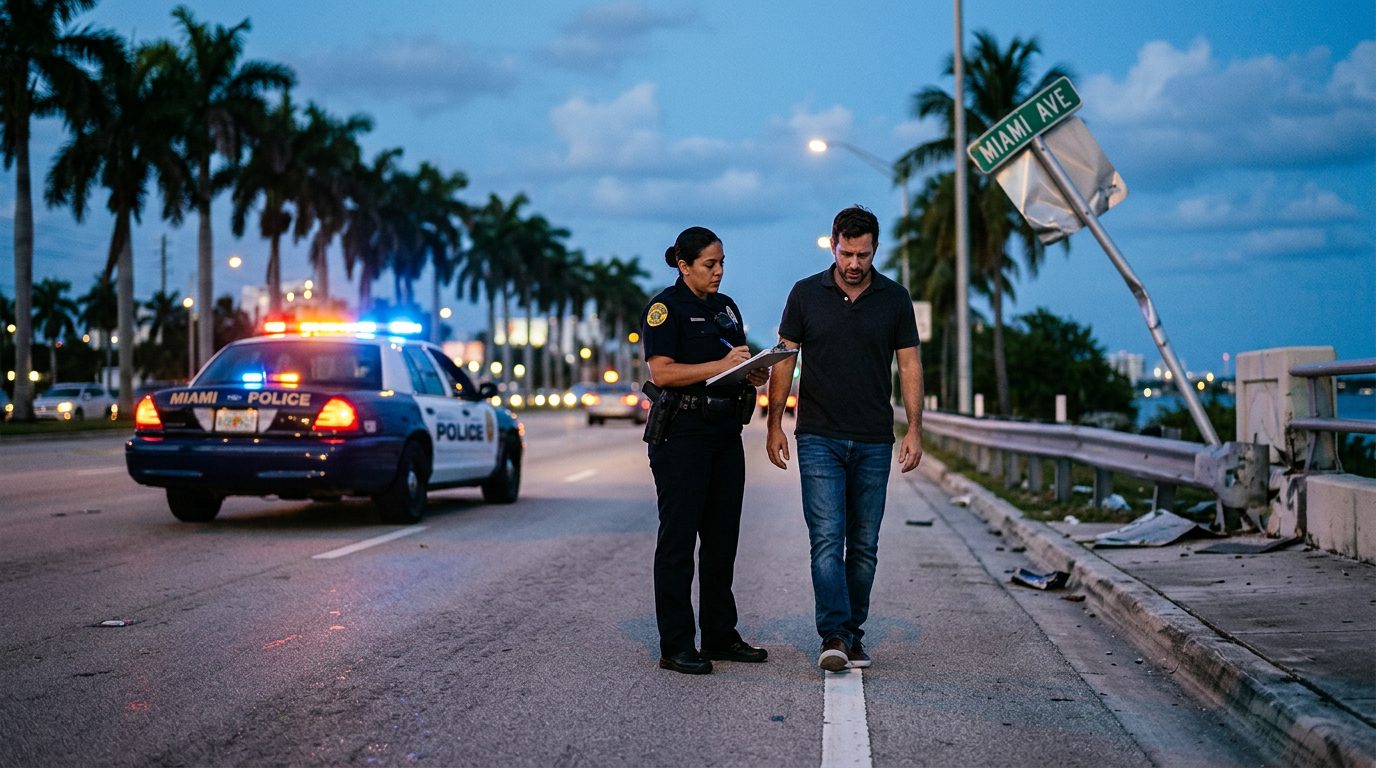
DUI Defense | Miami-Dade County
Facing a DUI With Property Damage? Get Clear Answers Before You Respond
Patrick Wilson Law, PLLC focuses on DUI defense for drivers across Miami-Dade, Broward and the Florida Keys. Here is how property damage charges work and what to do next.
By Patrick David Wilson · Published October 18, 2026
Most DUI property damage charges start with a DUI arrest. The crash then adds facts that can change the charge. It can, however, raise the level of the case. This page explains how the DUI statute and the crash statutes fit together for drivers in Miami, Miami-Dade, Broward, and the Keys. It covers what the state must prove, where a case can escalate, and the defense issues that often come up. Patrick Wilson Law, PLLC has its office in Miami and concentrates in criminal defense, including DUI and related crash charges. This is general information, not legal advice. Results depend on the facts and applicable law.
What Counts as DUI With Property Damage Under State Law
A DUI with property damage is a DUI case where the driving also damaged someone else’s property. The DUI statute covers driving or being in actual physical control of a vehicle while impaired. Fla. Stat. § 316.193 covers impairment from alcohol, chemical substances, or controlled substances. The question is whether those substances affect the driver so that normal faculties are impaired. Normal faculties include the ability to see, judge distances, and make judgments. Fla. Stat. § 316.1934 explains these terms.
A breath or blood alcohol level of 0.08 or higher is prima facie evidence of impairment. That means it is enough to support the point unless it is rebutted. A level of 0.05 or less creates a presumption that the driver was not impaired. The same statute sets out both rules.
The crash report, the officer’s notes, and the test results decide how the charge is written. Similar driving can lead to different charges if the damage or the records differ.
Not sure what your next step is?
Talk it through with our team — the first consultation is free, confidential, and carries no obligation.
What the State Generally Must Prove
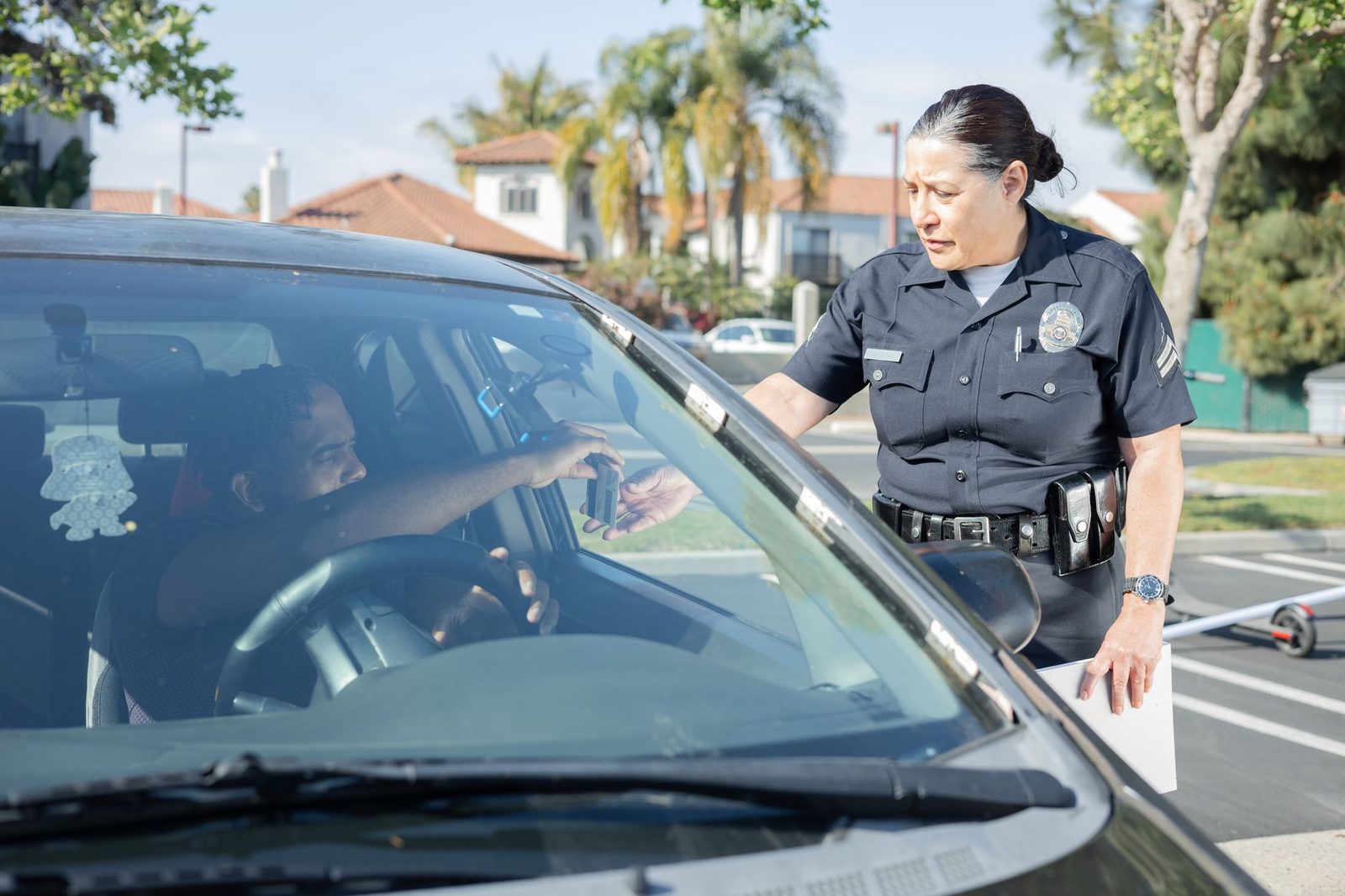
The state generally must prove that the person drove or had actual physical control of the vehicle. It must also prove impairment, or an unlawful alcohol level, at that time. For a crash-based charge, the state must link the driving to the damage.
Breath and blood results carry weight, but they are not the whole case. Testing must be done substantially according to methods approved by the state Department of Law Enforcement. Whether the standard was met is a question for each case.
Other facts can raise questions. How much time passed between driving and testing? Was the testing device maintained? Was a blood sample handled and labeled properly? The answers depend on the records.
Most of the evidence comes from the officer’s report, dash or body camera footage, witness statements, and toxicology results. Whether the state meets its burden depends on that evidence and the law that applies.
Property Damage Versus Bodily Injury: Where the Charge Can Escalate
A crash that seriously injures someone can move a DUI case into felony territory. That depends on the facts and the subsection charged. Property damage alone usually sits at a lower level. The crash statute defines serious bodily injury as a condition that creates a substantial risk of death, serious disfigurement, or lasting loss of function. See Fla. Stat. § 316.027.
Injury facts often change over time. An arrest report may list one charge. The final charge may differ once medical records and crash reconstruction are reviewed.
Medical records can matter in another way. That notice can lead to a request for a blood sample. Whether it applies depends on the test and the facts.
The firm’s page on DUI causing serious injury covers that charge in more detail.
Leaving the Scene When Property Was Damaged
Leaving the scene of a crash that damaged only property can be a separate criminal charge. The driver must stop at the scene or as close as possible. Fla. Stat. § 316.061 requires the driver to stay until the duties in the next section are met. The court may also order restitution for damage the driver’s vehicle caused.
Those duties appear in Fla. Stat. § 316.062. The driver must give a name, address, and registration number. The driver must also show a license on request and help anyone who is hurt. A violation of that section is a noncriminal traffic infraction.
Damage to an unattended vehicle, fence, or building follows a different rule. Fla. Stat. § 316.063 requires the driver to notify the owner or leave a written note. The driver must also notify police without unnecessary delay.
The reporting rule has a dollar threshold. Fla. Stat. § 316.065 requires the driver to give notice to police by the quickest means when a crash causes injury, death, or property damage at or above the dollar threshold set in the current statute. A violation is a noncriminal traffic infraction.
A common mistake is driving away before these duties are met. Another is assuming a DUI arrest answers every crash question. A leaving-the-scene allegation may be filed alongside a DUI charge. The result depends on the facts.
Penalties, Enhancements, and Collateral Consequences
Penalties depend on the charge, any prior record, and the facts. No single number fits every case. Fine limits come from Fla. Stat. § 775.083. The cap is $1,000 for a first-degree misdemeanor and $500 for a second-degree misdemeanor or noncriminal violation.
For people convicted of DUI, the court must place them on monthly reporting probation and require a substance abuse course. The offender also bears reasonable costs for required education and treatment. See Fla. Stat. § 316.193.
Prior DUIs can increase exposure. A state record of a prior DUI conviction can establish that prior by itself, but the evidence can be rebutted. Whether a prior counts for enhancement depends on its dates and the statute. There is no single answer for a third offense.
Driver’s license actions run on their own track. A refusal of a lawful breath or urine test carries its own penalties under Fla. Stat. § 316.1939. Whether any of these applies depends on the facts and applicable law.
Jail exposure depends on the charge and sentencing law. Minimum terms for the most serious DUI-related charges are set by statute. Collateral effects can matter for licensed professionals, non-citizens, and people whose jobs require driving. Whether they apply depends on the facts and the law.
Defense Considerations and Mitigating Factors
Defense issues in property damage DUI cases often involve the stop, the arrest, the testing, and the crash facts. Each one is a question, not a promise. Was there a lawful basis for the stop? Did the officer have probable cause for the arrest? Were field sobriety tests given under fair conditions? Was the breath test done the required way and in the right time frame? Did impairment, rather than something else, cause the damage?
Video and crash data can help answer those questions. Dash or body camera footage, witness accounts, and crash reconstruction may all be examined. A third-party witness with technical training may be consulted in some cases to explain physical evidence or testing.
The hearing officer decides by a preponderance of the evidence, meaning more likely than not, whether the suspension stands.
Mitigating facts may matter at sentencing. Examples include a clean prior record, cooperation, and the extent of the damage. How a court weighs them depends on the case. Whether any defense helps depends on the evidence and applicable law. No outcome can be promised.
Not sure what your next step is?
Talk it through with our team — the first consultation is free, confidential, and carries no obligation.
Frequently Asked Questions
What does DUI mean?
Under state law, DUI means driving or being in actual physical control of a vehicle while impaired by alcohol or drugs. The definition appears in Fla. Stat. § 316.193.
What are the penalties for a DUI with property damage?
Penalties depend on the charge, the prior record, and the facts. Jail and other outcomes depend on the facts of each case.
What is the penalty for a third DUI outside of 10 years?
The answer depends on the dates and convictions of the prior offenses and the statute that applies. Check Fla. Stat. § 316.193 for the enhancement text.
Can a property-damage DUI be charged as a felony?
A felony charge turns on the facts and the subsection charged, including any serious injury.
Does a DUI arrest always mean a license suspension?
No single result applies. License actions depend on test results, any refusal, and the procedures used under Fla. Stat. § 322.2615.
Does hitting an unattended fence after a DUI create extra charges?
It can. Whether it does depends on whether the driver notified the owner or police, as Fla. Stat. § 316.063 requires.
Office Location and Who Handles Your Matter
Patrick Wilson Law, PLLC is responsible for this page. The firm has its office in Miami. Patrick Wilson is the responsible lawyer, and the firm concentrates in criminal defense, including DUI and related crash charges.
The firm serves Miami-Dade County, Broward County, Fort Lauderdale, the Keys, Miami Beach, Hialeah, Kendall, and Homestead. Readers in Miami Beach or Homestead can find local DUI pages on the firm’s site. The firm does not claim familiarity with local judges, prosecutors, or courts. If a matter may need to be referred to another lawyer or firm, that will be stated.
If You Are Facing a Property Damage DUI Charge
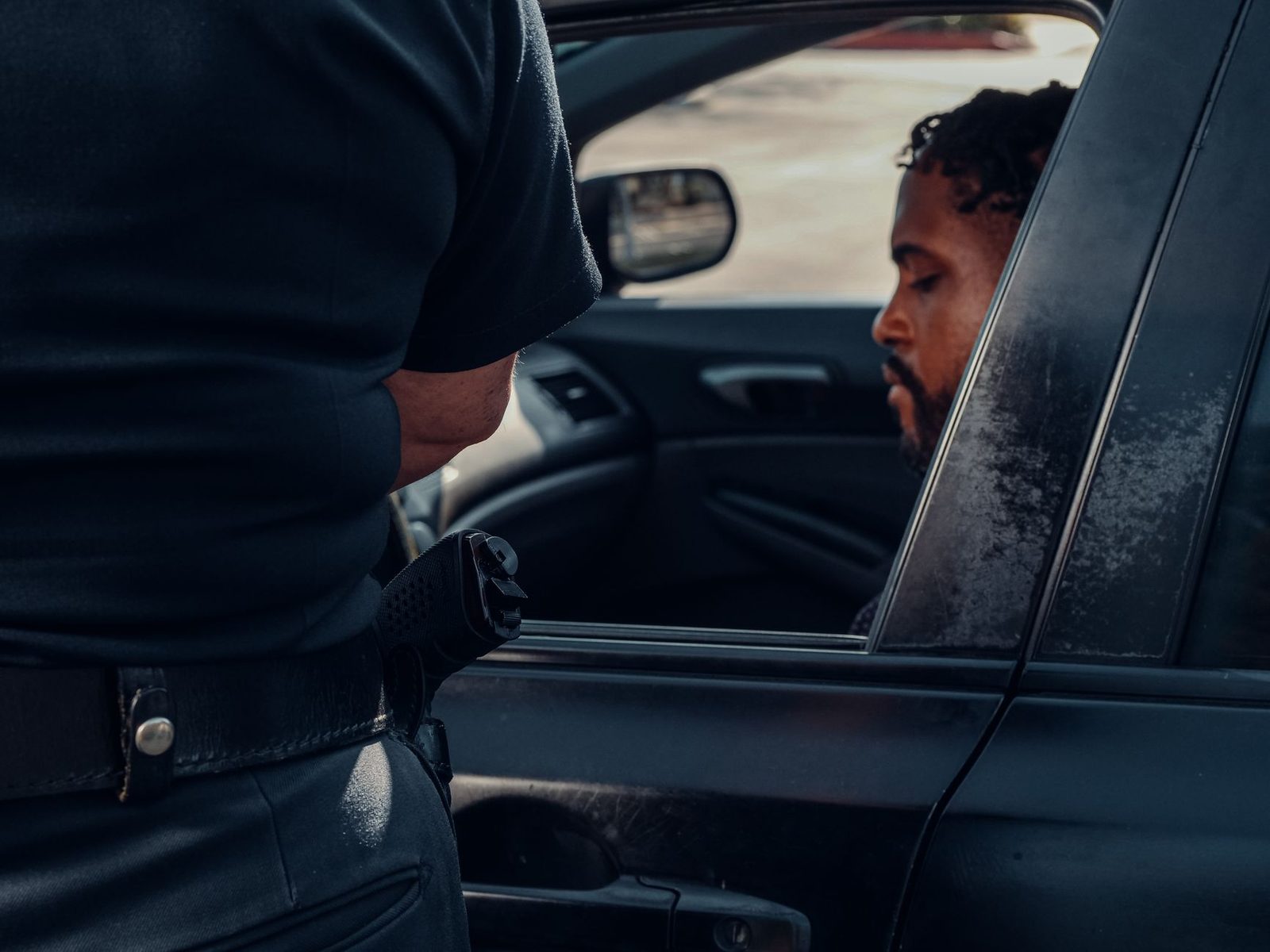
If you or a family member is facing this charge, the next few weeks can feel rushed and confusing. Start by gathering the paperwork you have. That includes the citation, any crash report, bond papers, and court dates. Write down what you remember about the crash while it’s fresh. Note who saw it and what was damaged. Be careful about discussing the crash with insurers or others before you understand your options.
Patrick Wilson can review the facts of your crash, the charge, and the testing with you. To start that conversation, request a free consultation at https://patrickwilsonlaw.com/contact/, call 786-761-1719, or leave a message.
This page is general information, not legal advice. Results depend on the facts and applicable law, and no outcome can be promised.
Why Clients Call Patrick Wilson Law
Focused Criminal Defense Practice
Patrick Wilson Law concentrates on DUI and related criminal defense matters, so every case is handled with close attention to the charge and the facts.
Confidential First Conversation
Your initial consultation is free, confidential and without obligation to continue.
Serving South Florida
We represent clients in Miami, Miami-Dade County, Broward County, Fort Lauderdale, Kendall, Hialeah, Miami Beach, Homestead and the Florida Keys.
Prompt Attention to Your Case
Court dates and charging documents move quickly. Our team responds promptly so you understand your options early.
Important: Do Not Wait to Get Advice
A property damage charge can change the seriousness of a DUI case. Do not assume the damage was minor, and do not sign statements or respond to court notices before speaking with a lawyer.
Key Questions About DUI Property Damage Cases
What the Charge Involves
A DUI with property damage generally means an impaired driver caused damage to someone else's property during the incident. The details of the crash and the records matter.
Why the Facts Matter
Penalties depend on the specific charge, any prior record and the circumstances of the incident. Each case is evaluated on its own facts.
When Leaving the Scene Is Involved
Leaving the scene of an accident can add a separate charge. Understanding how the events unfolded is an important first step in any defense.
Your Next Step
Share what happened in a confidential consultation. Patrick Wilson Law will explain the charge, the options and the next steps in your case.

