
DUI Defense in Miami-Dade and Broward Counties
How Accurate Are Breathalyzer and Field Sobriety Tests in a Florida DUI Case?
Patrick Wilson Law focuses on DUI defense across South Florida, from Broward County to the Keys. Learn what can affect test results and why they can be examined.
By Patrick David Wilson · Published October 20, 2026
Neither test gives a certain answer on its own. A breath test gives an instrument’s estimate of alcohol in your breath. Field sobriety tests give an officer’s scored observations. Both can be done correctly, and both can be wrong when the procedure or conditions fail. Here is what each test measures, what can move the result, and which records matter.
Patrick Wilson Law, PLLC defends DUI charges from its Miami office. The firm represents people across Miami-Dade and Broward counties and the Florida Keys.
What a breath test measures and what it cannot see
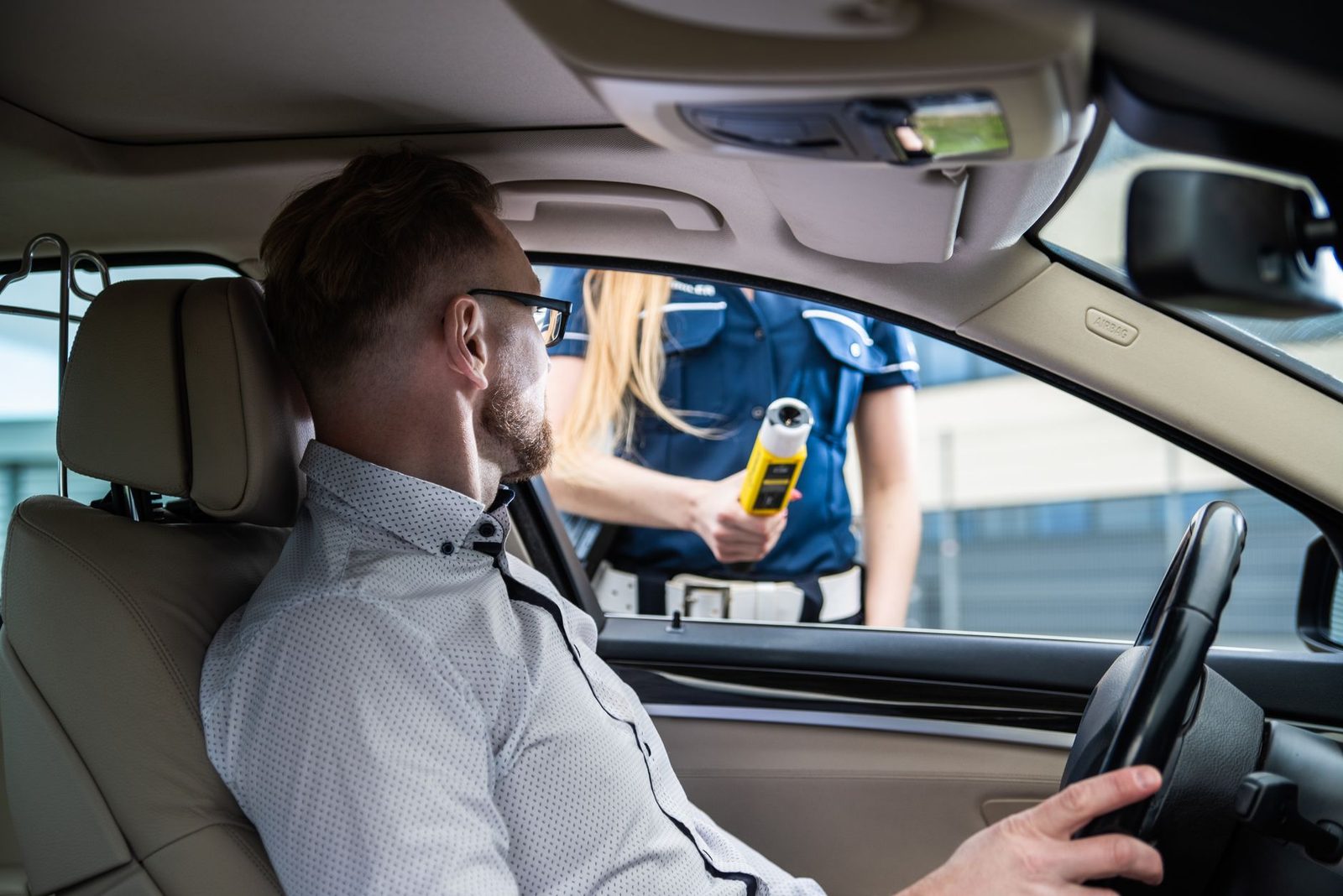
A breath test estimates your blood alcohol concentration (BAC) from alcohol in your breath. It does not read your blood directly. The number on the printout is the instrument’s conversion of breath alcohol into an estimated BAC.
Florida law uses two different tests for the number. The first is impairment. Under Fla. Stat. 316.193, a person commits DUI when driving or in actual physical control of a vehicle within this state with normal faculties impaired by alcohol, drugs, or chemical substances. A number is not required for that charge.
The second is the per se level. Under Fla. Stat. 322.2615, a reading of 0.08 or higher triggers an administrative license suspension for a driver. For drivers under 21, Fla. Stat. 322.2616 makes it unlawful to drive or be in actual physical control of a motor vehicle with a blood-alcohol or breath-alcohol level of 0.02 or higher.
So a breath number is only one piece. It estimates alcohol at the time of the test. Whether it matches your condition at the time you were driving is a separate question. That gap is where many challenges begin.
If a breath test or roadside test is part of a DUI arrest you're trying to understand, we can talk through what the records show. Your first consultation is free and confidential. Talk it through with our team — the first consultation is free, confidential, and carries no obligation.
How breath results are produced, recorded and checked
Breath results must come from a method approved by the state. The person performing the test must also hold a valid permit. Under Fla. Stat. 316.1934, a test is valid only if it follows approved methods and is run by a permitted operator. Small differences do not automatically void a test, though.
The state also provides for a written affidavit of the test results. It is admissible in evidence and is presumptive proof of the results of an authorized test to determine alcohol content of the blood or breath if the affidavit discloses the items listed below. The breath-test affidavit must show the type of test and the procedures followed. It must show when the sample was collected and the numerical results. It must show the operator’s permit status. For a breath instrument, it must show the date of the most recent required maintenance.
That includes the procedures and the numerical results. The person tested can also subpoena the operator to testify, under the same statute’s rules on adverse witnesses.
Many breath-test disputes start with paperwork. Did the steps before the sample follow the approved method? Was the instrument maintained on schedule? Was the operator permitted? Those answers come from records, not from the printout alone.
Factors that can move a breath reading
Several conditions can change what a breath reading represents. Scientific reviews of breath testing describe limits on how much weight certain factors can carry. The American Academy of Forensic Sciences paper on Florida’s Daubert standard discusses limits on testimony about factors that might affect breath-test results.
Mouth alcohol is one common issue. Alcohol can remain in the mouth from recent drinking, mouthwash, or certain breath products. If the testing steps do not address that before the sample, the reading may reflect something other than alcohol from the blood. That is why the pre-test steps matter.
Timing is another issue. Florida’s statute measures alcohol “at the time alleged,” as stated in Fla. Stat. 316.1934. If drinking happened shortly before driving, or the test came much later, the reading may not match the alcohol level at the time of driving.
Instrument condition also matters. The maintenance date on the affidavit is a direct check on whether the device was serviced as required. A device without current maintenance raises questions about its reading.
How field sobriety tests are built
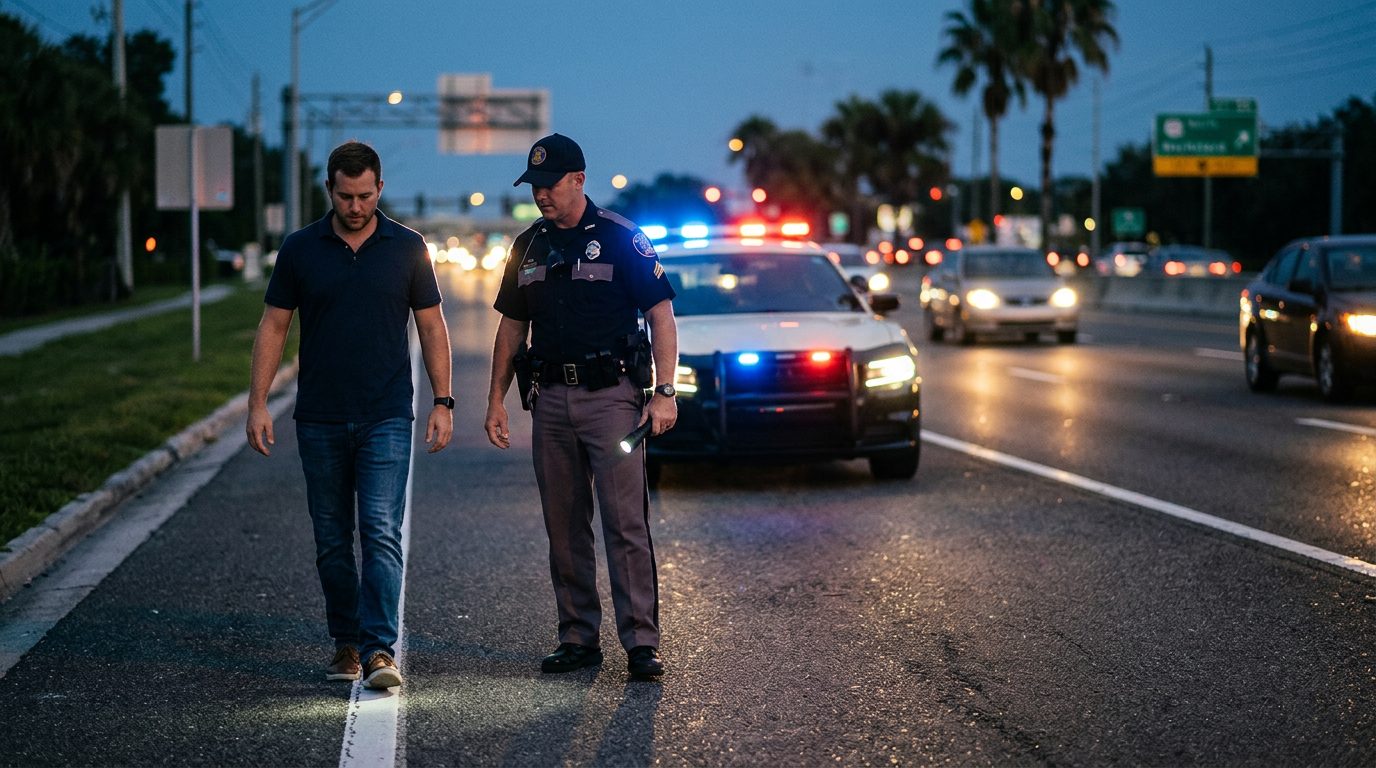
Field sobriety tests are roadside exercises. An officer watches how you perform and scores what he or she sees. They are not instrument readings.
The North Miami DUI arrest and court process guide describes standardized field sobriety testing. It also describes how officers use these results in the arrest decision. Common tests include an eye-movement check (horizontal gaze nystagmus, or HGN), the walk-and-turn, and the one-leg stand.
These tests depend on the officer’s observation. The officer checks for specific signs and counts them against a set of clues. The result is only as reliable as the observation and the way the test was given.
Impairment assessment is hard in general. The AAA Foundation review of the Drug Evaluation and Classification Program reports that assessing drug-impaired drivers is more difficult than assessing alcohol impairment. It also notes limitations and challenges in the program. Those limits show that officer observation is not a perfect measure.
Where field sobriety tests are open to challenge
Field sobriety tests can be challenged on several points. The first is the instructions. Were they given clearly and in the standard way? Was the demonstration correct? A test given differently from the standard method may not carry the same weight, but under Fla. Stat. § 316.1932, insubstantial differences between approved techniques and actual testing procedures do not render a breath test or its results invalid.
The second is the scene. Uneven ground, poor lighting, wind, traffic noise, and weather can all affect how a person performs. A person can struggle on a test without any alcohol involved.
The third is the person. Footwear, body weight, age, injuries, balance problems, and nervousness can affect performance. Medication and medical conditions can also affect eye movement and balance. These factors are why an officer’s notes must be checked against what the person could do.
Video often answers these questions. Under Fla. Stat. 322.2615, an officer may send a video recording of the field sobriety test, or the attempt to give it, to the Department of Highway Safety and Motor Vehicles. Dashcam and body camera footage can show the instructions, the ground, and the performance.
Field sobriety tests versus breath tests: the key differences
A breath test produces a number from an instrument. Field sobriety tests produce observations scored by a person. The two kinds of evidence are different, and they should be weighed differently.
A field sobriety test does not measure BAC. It cannot give a number on its own. A breath test can give a number, but that number depends on the device, the method, and the conditions at the time of the test.
Florida also runs two separate tracks. The criminal DUI case falls under Chapter 316. The administrative license suspension falls under Chapter 322.
Those tracks ask different questions. In the criminal case, a court decides the charge. Keeping them separate helps you understand what each proceeding can and cannot decide.
Not sure what your next step is?
Talk it through with our team — the first consultation is free, confidential, and carries no obligation.
Is two beers enough for a DUI in Florida?
Two beers do not set a BAC by themselves. The result depends on the facts, including body weight, how fast the drinks were consumed, food eaten, and the time between drinking and driving.
Florida’s blood-alcohol level for a criminal DUI charge is 0.08 or more grams of alcohol per 100 milliliters of blood under Fla. Stat. § 316.193(1)(b). The impairment standard also applies. Under Fla. Stat. 316.1934, the statutory alcohol-level presumptions do not limit the introduction of any other competent evidence bearing on whether a person was under the influence to the extent that his or her normal faculties were impaired.
The statute also sets a presumption at the low end. Under Fla. Stat. 316.1934, a blood or breath alcohol level of 0.05 or less creates a presumption that the person was not under the influence to the extent that normal faculties were impaired.
Under Fla. Stat. 322.2616, it is unlawful for a person under the age of 21 who has a blood-alcohol or breath-alcohol level of 0.02 or higher to drive or be in actual physical control of a motor vehicle. For a person under the age of 21, a blood-alcohol or breath-alcohol level of 0.02 or higher is unlawful while driving or in actual physical control of a motor vehicle.
Can you refuse a breath test if you pass the roadside tests?
Those are separate steps with separate rules.
Under Fla. Stat. 316.1932, Florida law treats a person who drives as having consented to an approved chemical or physical breath test, including an infrared light test, if lawfully arrested for an offense allegedly committed while driving or in actual physical control of a motor vehicle under the influence of alcoholic beverages. The person must be told that failure to submit to a lawful breath test will result in a one-year suspension for a first refusal. That period is 18 months if the driving privilege was previously suspended or previously fined for a refusal.
Under Fla. Stat. 316.1939, a first refusal is a second-degree misdemeanor. A second or later refusal is a first-degree misdemeanor. The statute applies when the required elements and warnings are met.
Under Fla. Stat. 322.2615, an officer suspends the driving privilege for a refusal. The roadside exercises and the post-arrest chemical test are different steps. Each one has its own legal framework.
How a defense attorney reviews breath and sobriety evidence
A defense review starts with the paperwork. That includes the breath-test affidavit, the operator’s permit status, the maintenance date, the printed results, the officer’s report, and any video. The criminal case also starts with discovery. Under Florida Rule of Criminal Procedure 3.220, once a defendant elects to participate in discovery, discovery covers police and investigative reports in the case. The court may limit disclosure of a report if, after an in camera review, it finds the report contains irrelevant or sensitive information, or information tied to other crimes, and that releasing it could seriously impair law enforcement or jeopardize the investigation of those other crimes; any person may also move for an order denying or regulating disclosure of sensitive matters.
The review then checks the video against the report. Does the officer’s description match what the camera shows? Were the instructions and conditions as recorded? Those details can change how much weight the evidence deserves.
For an overview of how a DUI case moves forward, see our DUI defense attorney page. For how this evidence feeds into the choice between trial and a plea, read what are the risks of going to trial versus pleading guilty in a DUI case.
Results in any case vary, and no particular outcome can be promised.
Can a breath test result be challenged in Florida?
Yes. The records, the method, the operator’s permit, and the maintenance date can all be reviewed.
Can you get the breath test records?
Yes. Under Fla. Stat. § 316.1934(5), the person tested keeps the right to subpoena the operator who administered the breath test.
Does a dashcam show field sobriety tests?
It can. Video of the tests may be sent to the state and may be used in discovery.
Talk with Patrick Wilson Law about your DUI arrest
If you’re reading this after a DUI arrest, you may be trying to make sense of numbers and tests that happened quickly. The arrest may involve your own license, your job, or a family member’s case. You don’t have to work through those questions alone.
Patrick David Wilson is the responsible lawyer for this page. Patrick Wilson Law, PLLC is located in Miami, Florida, and serves Miami-Dade, Broward, Fort Lauderdale, Kendall, Hialeah, Miami Beach, Homestead, and the Florida Keys.
Call 786-761-1719 or send us a message through our contact page to schedule a free, confidential initial consultation. You can leave a message if you can’t reach someone right away. The consultation carries no obligation to continue. Spanish: consulta inicial gratuita, confidencial y sin compromiso.
What Can Be Reviewed in a Breath Test Case
Test Records
The breath test record and the data behind the reading can be reviewed as part of the case.
Equipment Maintenance
The instrument's maintenance and calibration history can be examined to see how it was kept.
Operator Qualifications
The permit and training of the person who administered the test can be reviewed.
Testing Procedure
The steps followed during testing, including the required waiting period and observation, can be compared against the required method.
Factors That Can Affect Field Sobriety Results
Roadside Conditions
Uneven pavement, weather, lighting, traffic noise and the officer's position can all influence how a test is performed and recorded.
Physical Health
Injuries, balance problems, weight, age and medical conditions may affect performance on balance and coordination tasks.
Instructions and Scoring
How instructions were given and how each clue was scored are important details that can be reviewed.
Written Reports
Officer reports, body camera footage and dash camera video can be compared with what the test notes describe.
Do Not Assume a Number Ends the Case
A breath or field sobriety result is not automatically final. Preserve any records you have, write down what you remember while it is fresh, and speak with a DUI defense attorney before you discuss the details of the stop with anyone else.

