
Criminal Defense | Miami, Florida
What a Florida Defense Attorney Actually Does for You
A criminal charge brings questions about your record, your job and your future. Here is how a defense lawyer works to answer them, from the first call through the final court date.
By Patrick David Wilson · Published November 16, 2026
You’re probably reading this because someone was arrested, or because you were charged yourself. Your first question is simple: what does a defense attorney actually do?
A defense attorney represents the person accused of a crime and protects that person’s legal rights at every stage. A criminal defense lawyer’s work goes well beyond talking in court. It starts with reading the charge, checking the evidence, and tracking every deadline. Below, we walk through that role step by step, with Florida rules and examples from South Florida cases.
What a defense attorney does, in plain terms
A defense attorney works for the accused person, not for the government. A criminal defense attorney reviews the charges with the accused and examines the evidence in the case.
The role is the same whether the charge is a traffic citation or a felony. The details change from case to case. In Florida, the process starts fast. Under Fla. R. Crim. P. 3.130, unless previously released in a lawful manner, every arrested person must go before a judge within 24 hours of arrest. That can happen in person or by audio-video technology.
At that first appearance, the judge must tell the person the charge and give them a copy of the complaint. The judge must also advise them of the right to counsel. Early choices like these often shape what comes next. That is why a defense attorney’s role starts so early. Our DUI defense page covers how this plays out in drunk driving cases.
If you're facing a charge or helping someone who is, you don't have to sort out the next steps alone. Talk with us about your facts in a free, confidential first consultation. Talk it through with our team — the first consultation is free, confidential, and carries no obligation.
Reviewing the charge, the facts, and the deadlines
The first task is to learn exactly what the person is accused of and what comes next.
The lawyer reads the arrest report, the charging document, and any citation. The lawyer checks which statute is cited and what the State must prove. For a DUI, Fla. Stat. 316.193 says a person commits the offense when driving or in actual physical control of a vehicle while under the influence to the extent that normal faculties are impaired.
A conviction brings more than a fine. It also requires completion of a substance abuse course.
The lawyer asks the client detailed questions in a private setting. The client’s account shapes what the defense looks for. Missing a court date can create serious problems, so the lawyer tracks each hearing from day one.
Investigating the evidence and the witnesses
A defense attorney asks for the State’s evidence and then tests it.
Florida’s discovery rule requires the prosecutor to share material information that tends to negate the defendant’s guilt. That duty applies as soon as practicable after the charge is filed, under Fla. R. Crim. P. 3.220.
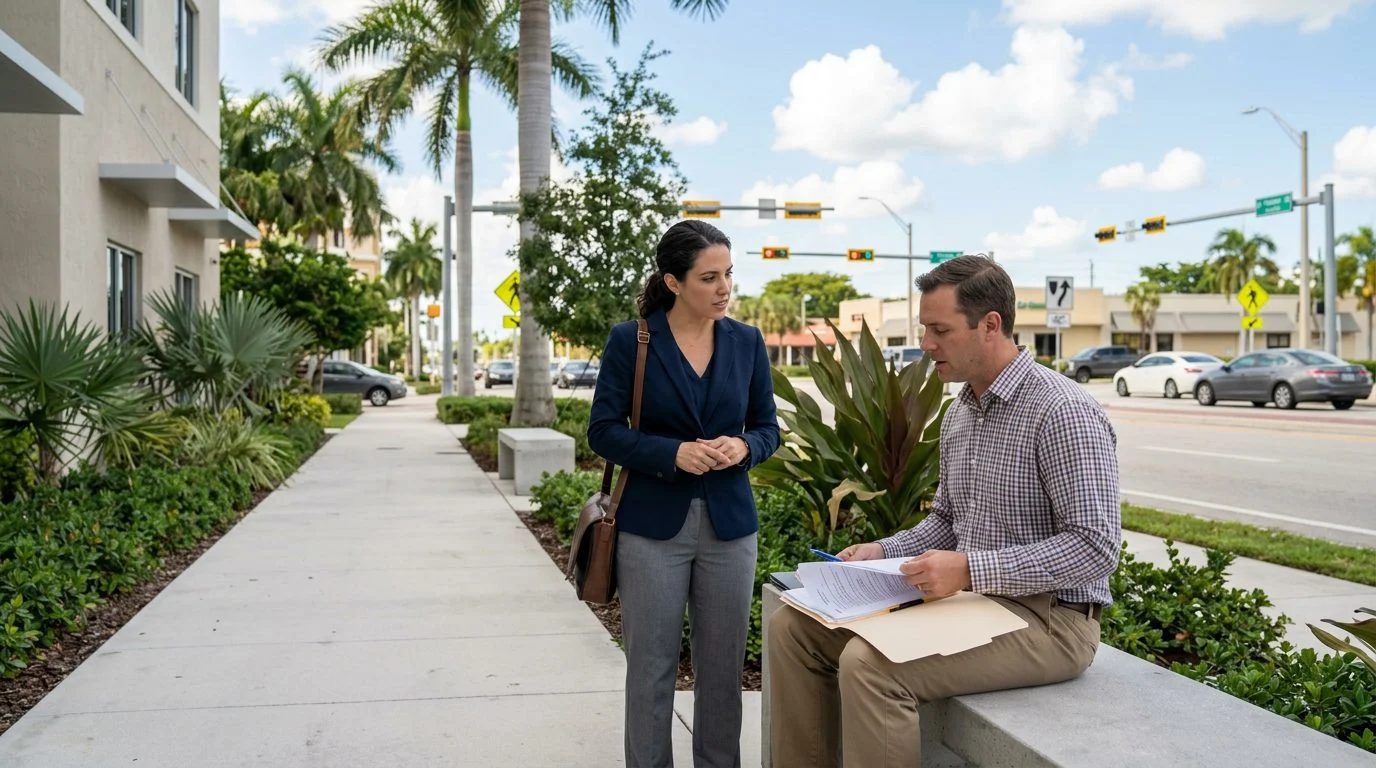
In a DUI case, that can mean breath or blood test records and video from the traffic stop. The lawyer also looks for witnesses, visits the scene, and asks about nearby surveillance footage.
Some cases turn on technology. Under Riley v. California, 573 U.S. 373 (2014), police generally need a warrant before searching a cell phone’s digital information, even after an arrest. In Riley v. California, 573 U.S. 373, 401 (2014), the Court explained: “Our holding, of course, is not that the information on a cell phone is immune from search; it is instead that a warrant is generally required before such a search, even when a cell phone is seized incident to arrest.” The broader protection comes from the Fourth Amendment, which guards against unreasonable searches.
The lawyer checks how evidence was collected, handled, and written down. If something was done wrong, the lawyer decides whether to challenge it.
Advising the client and making the key decisions
The lawyer explains the options, and the client makes the key decisions.
Under Florida’s plea rule, defense counsel may not conclude a plea agreement without the client’s full and complete consent. The lawyer must also advise the client of every plea offer and the likely results of each choice. See Fla. R. Crim. P. 3.171.
Whether to testify belongs to the accused. Under Fla. R. Crim. P. 3.250, the accused may choose to take the stand. In a criminal case, no accused person can be compelled to testify against themselves. A defendant may also waive a jury trial in writing, with the State’s consent, under Fla. R. Crim. P. 3.260.
The lawyer lays out the choices: fight the charge, negotiate a resolution, or go to trial. Each path has its own risks and benefits. The lawyer keeps the client updated at every step. The right path depends on the facts, and no two cases are alike.
Negotiating with prosecutors and filing motions
A defense attorney may negotiate with the prosecutor and ask the court to throw out unlawful evidence.
Plea talks can cover dropping other charges, a recommended sentence, or a specific sentence. The lawyer may present information about the client’s background and the facts that help the defense. Florida’s plea rule lets prosecutors make these kinds of agreements, as described in Fla. R. Crim. P. 3.171.
Motions are another tool. Under Fla. R. Crim. P. 3.190, a defendant who claims that the state obtained evidence as a result of an unlawful search or seizure by a government agent may move to suppress such evidence. A defendant who claims the State obtained statements unlawfully may do the same. A strong motion can change the direction of a case.
Negotiations and motions come with no promised result. The prosecutor and the judge make their own decisions. Before the client decides on any proposed agreement, the lawyer reviews it with them in full.
Representing the client in court, at trial, and at sentencing
In court, the defense attorney speaks for the client and argues the legal points to the judge.
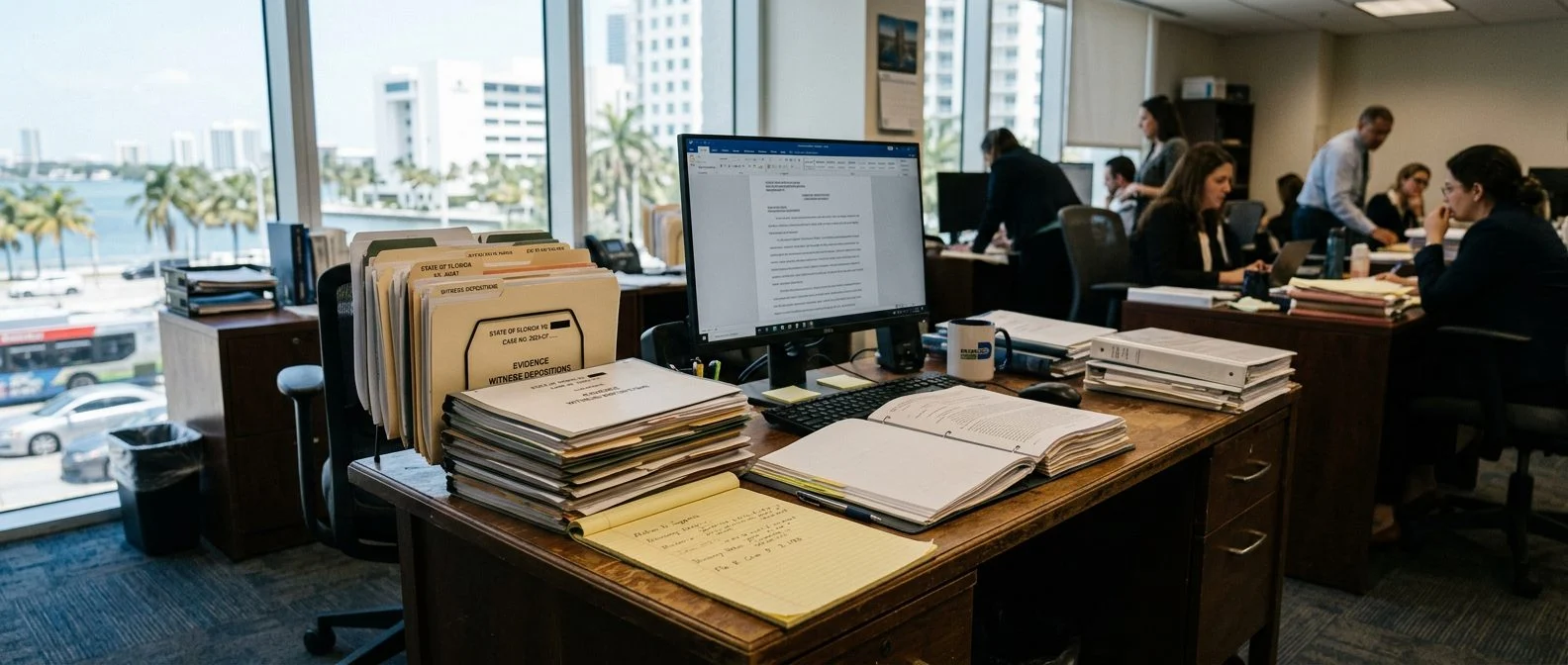
Hearings and pretrial conferences move fast. The lawyer speaks at each one, responds to the State’s filings, and keeps the record clear. At trial, the lawyer helps choose the jury, presents the defense case, and cross-examines the State’s witnesses. The lawyer also objects when evidence or questions break the rules.
If the case ends in a conviction, sentencing comes next. Under Fla. R. Crim. P. 3.720, the court must entertain submissions and evidence from the parties that are relevant to the sentence. The lawyer may present the client’s background and circumstances.
An appeal is a separate process with its own deadlines and rules. The trial lawyer can explain whether an appeal is possible in a given case.
Not sure what your next step is?
Talk it through with our team — the first consultation is free, confidential, and carries no obligation.
Protecting rights beyond the courtroom
A criminal case can reach past the courtroom into jobs, licenses, immigration status, and a person’s record.
Licensed professionals may face questions from their licensing board after a charge. The lawyer considers that impact when building the defense. For non-citizens, the stakes can be higher. Under 8 U.S.C. 1227, a non-citizen who, after admission, is convicted of a crime of domestic violence, stalking, or child abuse, child neglect, or child abandonment is deportable.
Records matter too. Under Fla. Stat. 943.0585, a person may petition a court to expunge a criminal history record in certain cases. One example is a charge dismissed or ended in acquittal. Fla. Stat. § 943.0585 reads: “The requirement for the record to have previously been sealed for a minimum of 10 years does not apply if a plea was not entered or all charges related to the arrest or alleged criminal activity to which the petition to expunge pertains were dismissed before trial or a judgment of acquittal was rendered by a judge or a verdict of not guilty was rendered by a judge or jury.” Eligibility also depends on other conditions in the statute.
Domestic violence cases can involve protective orders. Under Fla. Stat. 741.30, a person does not need an attorney to seek an injunction. The statute also creates a statewide verification system within the Department of Law Enforcement so criminal justice agencies can check the existence and status of injunctions. The Miami-Dade State Attorney’s Office notes that a domestic violence crime does not require proof of physical injury.
Frequently asked questions about what a defense attorney does
A defense attorney represents the accused, and the lawyer’s job is to protect that person’s rights.
Does hiring a defense attorney mean the person is guilty?
Defense counsel represents the accused person throughout the case, though counsel may be appointed for the limited purpose of representing the defendant only at first appearance or at subsequent proceedings before the judge.
Can a defense attorney talk to the prosecutor for me?
Yes. The attorney can discuss the case, the evidence, and possible resolutions with the prosecutor on the client’s behalf.
Can a family member reach out on someone else’s behalf?
Yes. A family member can contact the firm with questions about the process, while the attorney represents the accused person.
Does a defense attorney always go to trial?
No. Many cases end through negotiation or motions, and the client decides after getting advice.
Talking through your own situation with Patrick Wilson Law
If you’re reading this after an arrest, a court date, or a traffic stop that led to a DUI or leaving-the-scene charge, you’re in the middle of something hard. Maybe your question is about a domestic violence injunction, a licensing board, or your immigration status.
Call 786-761-1719 or leave a message through our contact page, and we’ll talk through your facts. The first consultation is free, confidential, and carries no obligation to continue. La consulta inicial es gratuita, confidencial y sin compromiso de continuar.
Patrick David Wilson is the responsible lawyer for this page. Patrick Wilson Law, PLLC has its office in Miami, Florida, and serves clients across South Florida.
How Patrick Wilson Law Approaches Your Defense
We Listen First
Every case starts with a confidential conversation about what happened, what you have been charged with and what matters most to you.
We Review the Evidence
Our attorneys examine police reports, video, test results and court filings to understand the state's case and find the gaps in it.
We Protect Your Rights
Patrick David Wilson and Sahara Fonseca focus on protecting your rights at every stage, from questioning and bond through trial.
We Represent Licensed Professionals
For doctors, nurses, attorneys and other licensed professionals, we work to address how a charge may affect a professional license.
We Serve South Florida
Our Miami office represents clients across Miami-Dade, Broward, Fort Lauderdale, Kendall, Hialeah, Miami Beach, Homestead and the Florida Keys.
We Keep You Informed
You will hear from us about the charges, the court calendar and the options available as your case moves forward.
Talk to a Lawyer Before You Answer Questions
Statements to police, prosecutors or others can be used in your case. Speak with a criminal defense attorney before you answer questions about the charge.
Core Responsibilities of a Florida Defense Attorney
Investigating the Facts
Defense work includes gathering witness information, reviewing discovery and identifying what the state can and cannot prove.
Negotiating With Prosecutors
Your attorney communicates with the prosecutor about the evidence and the possible ways a case can be resolved.
Appearing in Court
Defense counsel handles hearings, files motions when appropriate and speaks for you before the judge.
Preparing for Trial
When a case goes to trial, your lawyer builds the defense, prepares witnesses and presents your side to the jury.
Protecting Your Record
After a case ends, your attorney can discuss options for sealing or expunging eligible criminal records.

