
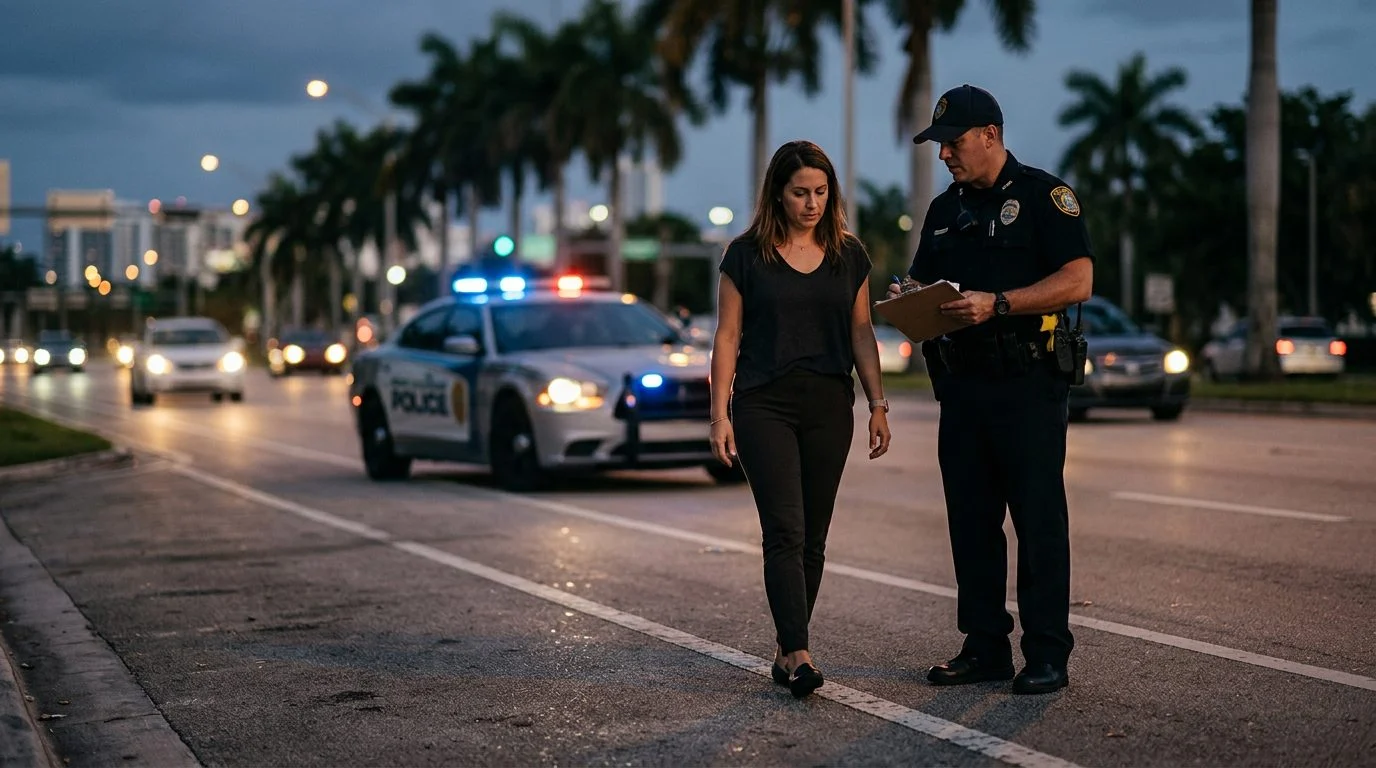
DUI Defense in Miami and South Florida
Working Toward the Strongest Result Your Facts Allow
Patrick Wilson Law focuses on DUI defense for clients across Miami-Dade, Broward County, Fort Lauderdale, Kendall, Hialeah, Miami Beach, Homestead and the Florida Keys. Every case is different, and we review yours on its own facts.
By Patrick David Wilson · Published November 8, 2026
Best Outcome of a DUI Case in Florida
The best outcome of a DUI case is the result that ends the charge or limits it the most. In Florida, that can mean dismissal, a not-guilty verdict, or a reduced charge with the lowest penalties the facts allow. The right target depends on the facts, including the test results, the prior record, and the status of the driver’s license.
This page walks through each realistic path in plain terms. For the full picture, read our guide to DUI defense.
If a DUI arrest or license suspension is weighing on you or someone you love, we're glad to talk through the facts with you. Talk it through with our team — the first consultation is free, confidential, and carries no obligation.
What “Best Outcome” Means in a Florida DUI Case
The best outcome is the one that ends or shrinks your case based on your own facts. A DUI arrest starts two separate tracks. The first is the criminal case under Florida’s DUI statute. That law applies to a person who is driving or in actual physical control of a vehicle within this state while affected to the extent that normal faculties are impaired by alcoholic beverages, certain chemical substances, or controlled substances.
The second track is the driver’s license. It runs on its own clock. A refusal suspension, for example, does not end just because the criminal case does. The license suspension rules say the disposition of related criminal proceedings does not affect a suspension for refusal to submit to a blood, breath, or urine test.
Outcomes generally fall into three groups. Some end the case with no conviction. Some reduce the charge or penalties. The rest end in a conviction with the lowest penalties the facts allow.
Outcomes That End the Case
A DUI case ends without a conviction when the charge is dropped, dismissed, or decided in your favor at trial. The prosecutor can drop a charge through a nolle prosequi, which is a formal notice that the state will not go forward. Florida’s expunction statute uses that same term, so the label matters beyond the courtroom.
A judge can also end a case when the evidence has a serious flaw. Florida’s implied consent and testing rule requires a breath analysis to be performed substantially according to methods approved by the Department of Law Enforcement to be considered valid. Small differences from approved technique do not automatically void a test. Challenges focus on departures that actually matter to the result.
Many people assume an officer’s report settles the question. It does not. The report is evidence, and it can be tested like any other evidence.
What’s Worse, a Conviction or a Pending Charge?
A conviction usually brings the heavier and longer-lasting cost. A pending charge is not free, either. The comparison has to be made case by case.
Under Fla. Stat. § 316.193, a person is guilty of driving under the influence if the person is driving or in actual physical control of a vehicle within this state and is under the influence of alcoholic beverages, any chemical substance set forth in s. 877.111, or any substance controlled under chapter 893, when affected to the extent that the person’s normal faculties are impaired.
A conviction also brings required steps.
Florida law also bars courts from withholding adjudication for a DUI. That limits the options, as § 316.656 makes clear.
A pending charge brings its own costs. You face court dates, bond conditions, and an open question about your license and record. Employers, insurers, and licensing boards may ask about either path. Licensed professionals can read more at criminal defense for licensed professionals.
Outcomes That Reduce the Penalties and the Damage
A reduction can lower the penalties when the prosecutor agrees to a plea to a lesser or related offense. Under Florida’s plea rule, a prosecutor may agree to drop other charges or to recommend a sentence. That recommendation does not bind the judge.
Defense counsel must advise you of every plea offer and its likely results. No plea deal can be made without your full consent, and the choice to plead belongs to you.
Test results shape these talks. Under § 316.656, no trial judge may accept a plea to a lesser offense from a person charged under the provisions of this act (chapter 316) whose breath or blood test showed 0.15 percent or more. That single number can narrow the options.
Pretrial intervention is another path. Under Fla. Stat. § 948.08, a first offender charged with a misdemeanor may be released to the program. That requires approval from the program administrator and consent from the victim, the state attorney, and the judge. You must also agree to the program after consulting an attorney, and knowingly and intelligently waive your right to a speedy trial for the period of your diversion. If you do not, the case goes back to normal prosecution.
A separate pretrial substance abuse education and treatment program exists for people with a substance abuse problem. See § 948.16. Each option has its own eligibility rules. For first-time offenders, see first-time offender defense.
Can a DUI Be Removed From Your Record?
A DUI record can be removed only through a court process. The case must also end in a way the law allows. Under § 943.0585, a case where no charging document was filed can qualify for expunction, but only if the person meets all of the section’s eligibility criteria and the record is not ineligible under § 943.0584. The same is true when the charge was dismissed, dropped by nolle prosequi, dismissed by a court, or ended in acquittal or a not-guilty verdict.
Withholding adjudication does not erase a conviction for these purposes. Under § 943.0584, a conviction means a determination of guilt. That includes a plea of guilty or nolo contendere, even when adjudication is withheld.
The petition itself follows strict steps. Under Fla. R. Crim. P. 3.692, you must file a written petition with the clerk. It must include a valid certificate of eligibility and a sworn statement. The court may deny the request at its sole discretion. A certificate of eligibility is valid for 12 months under § 943.0585. Sealing follows a similar path under § 943.059. For the full process, see sealing and expunging criminal records.
Not sure what your next step is?
Talk it through with our team — the first consultation is free, confidential, and carries no obligation.
Can a Good Lawyer Beat a DUI Charge?
No lawyer can promise a particular result. A good defense starts with the evidence in your case. A lawyer can review the traffic stop, the field sobriety testing, and how the breath or blood test was given.
Refusal changes the picture. Under § 316.1939, a person who refuses a lawful breath or urine test after a lawful arrest for a violation of § 316.193, with probable cause to believe they were driving under the influence, and after being told of the consequences commits a second-degree misdemeanor for a first refusal. A later refusal is a first-degree misdemeanor.
License deadlines move quickly. The officer takes your license, issues a 10-day temporary permit, and sends the materials to the state within 5 days. Under § 322.2615, a first refusal suspends the license for 1 year from the notice date. The Florida DUI administrative suspension laws page covers the wider rules.
A defense is built from the evidence in one case, not from a formula. Patrick David Wilson is the responsible lawyer for this page. The firm’s lawyers include Patrick David Wilson and Sahara Fonseca. Patrick Wilson Law, PLLC is based in Miami.
Why a Single Odds Number Misleads Families
No single odds number can describe a DUI case, because each arrest turns on its own facts. Two arrests that look alike can end differently. The details decide the path: the stop, the officer’s notes, any video, the timing of the test, the prior record, and the license status.
Family members often see the arrest report and feel sure of the answer. The better questions are these. Was the stop based on what the officer actually saw? How was the test given, and when? Was there a refusal? Is there a prior record? When did the license notice issue?
Frequently Asked Questions
What are the odds of getting out of a DUI in Florida?
No single number fits every case, because each one turns on its own evidence and record.
Can a good lawyer beat a DUI?
A lawyer can test the evidence and pursue the outcome the facts support, but no lawyer can promise a result.
What’s worse, a DUI conviction or a pending charge?
A conviction usually brings the heavier penalties, while a pending charge keeps court dates and license questions open.
Can a DUI be removed from your record?
Sometimes, through a court petition, and only when the case ended in a way the expunction law allows.
Talk Through Your DUI Situation With Patrick Wilson Law
Many people read about DUI cases for someone else. They may be worried about a spouse, a child, or a coworker. Others are looking at a license notice with a date they did not expect.
You don’t have to sort out the criminal case and the license track alone. Patrick Wilson Law, PLLC is based in Miami and serves Miami-Dade County, Broward County, and the Florida Keys. Your first consultation is free, confidential, and carries no obligation to continue.
Call 786-761-1719 or leave a message through our contact page. You can also review DUI defense in Miami, DUI defense in Miami-Dade County, or DUI defense in Broward County.
How We Approach a DUI Case
Review of the Evidence
We examine the police report, the traffic stop, field sobriety testing and any breath or blood test results to see how each piece holds up.
Protecting Your Record
We look at how a DUI charge could affect your driving privileges, your record and your future, and we plan with those consequences in mind.
Attention for Licensed Professionals
For nurses, teachers, pilots, contractors and other licensed professionals, we consider how a charge could affect your license and your career.
Clear Communication
We explain the options in plain language so you can make informed decisions about your case.
Talk to a Lawyer Before You Discuss Your Case
Statements you make about the stop, the arrest or your drinking, including on social media or to friends, can end up in the case file. Speak with a lawyer before you discuss the facts with anyone else.
Factors That Shape a DUI Case
The Traffic Stop
Why the officer stopped your vehicle and how the encounter unfolded can matter a great deal to the case.
Testing Procedures
Breath and blood tests depend on proper collection, handling and equipment. We review how each test was done.
Your Prior Record
Whether this is a first-time matter or you have a prior history changes how we evaluate the charge and the options.
Your Work and License
Employment, professional licensing and driving needs all shape the goals we set for your defense.

