
DUI Defense in Miami
Driving on a Hardship License? Know Exactly What Your Permit Covers
Patrick Wilson Law helps South Florida drivers understand the limits of a restricted license before they get behind the wheel.
By Patrick David Wilson · Published November 14, 2026
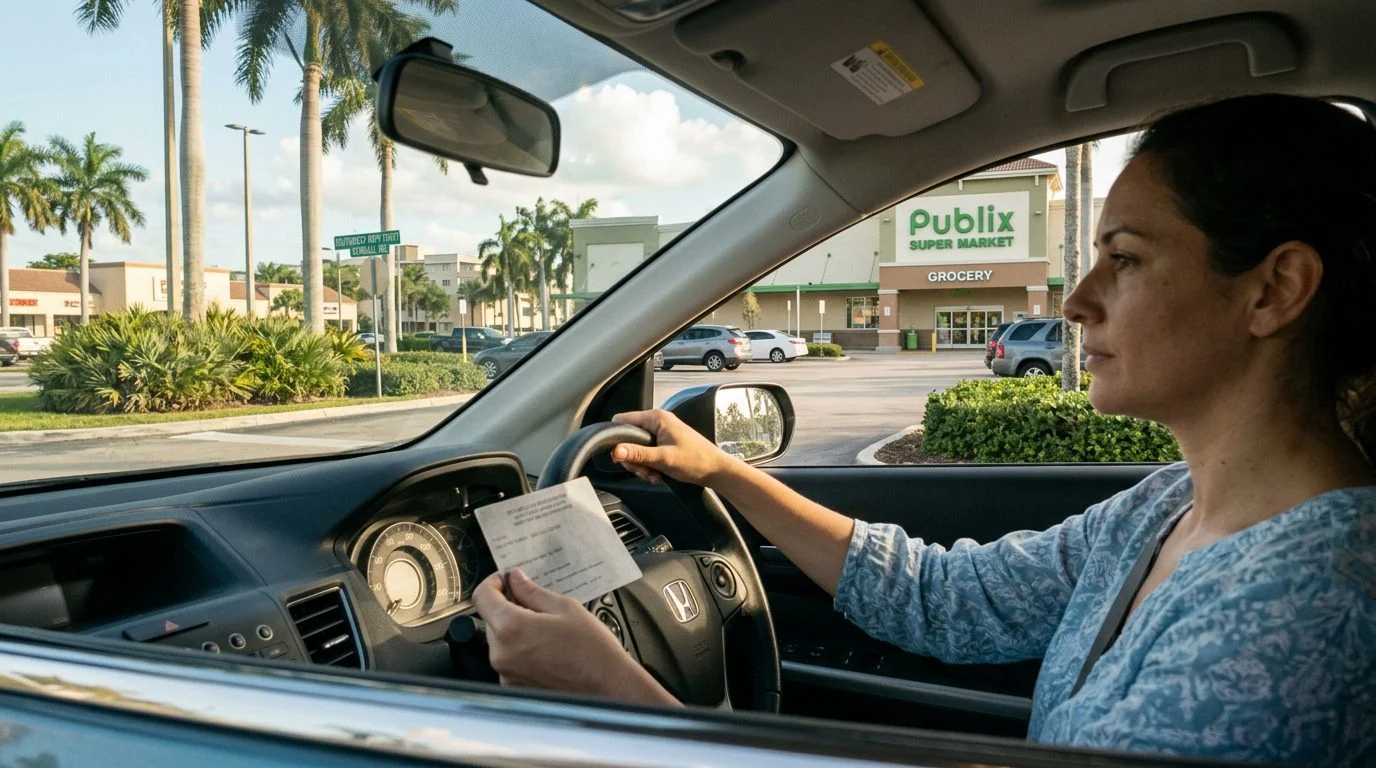
If a DUI has your license suspended, even a trip to the grocery store can feel out of reach. A hardship license doesn’t automatically cover groceries.
The exact answer depends on the facts: the type of license, the printed terms, and the order behind it. This guide explains how those pieces fit together and where drivers often get into trouble.
Short Answer: Can You Drive to the Grocery Store on a Hardship License?
Not automatically. Florida lets the state limit a license by time and purpose. The statute says the department may impose restrictions “with respect to time and purpose of use” (§ 322.16). Purpose is the key idea. A license that covers driving to work doesn’t, by itself, cover a stop at the supermarket on the way home.
Many people assume a short errand is harmless. That assumption causes trouble. A trip the license doesn’t list can still be treated as a violation, even when it seems routine. A restriction is a condition, and breaking a condition can bring consequences even if no crash happens. Before you drive, read the restrictions printed on the card and any order you received.
If a DUI case has you trying to keep working and buying groceries, we can review your license terms with you in Miami. Talk it through with our team — the first consultation is free, confidential, and carries no obligation.
What Is a Hardship License in Florida?
A hardship license is a restricted driving privilege. Florida law describes this as a limited or restricted basis for business or employment use (§ 322.271). Many people call it a BPO, or business purpose only, license.
At a hearing, a person may show that a suspension causes serious hardship. The statute says that hardship must keep the person from carrying on a normal business, trade, or employment. The license must also be needed for the proper support of the person or family. That is the core of the request.
Letters of recommendation from respected business people, law enforcement officers, or judges may also be required. The Florida Department of Highway Safety and Motor Vehicles (DHSMV) handles this process. Its DUI FAQs cover applying for a hardship license before a revocation ends.
Who Is Not Eligible for a Hardship License?
Eligibility depends on why the license was suspended, your driving record, and whether required steps are complete. The statute sets firm limits for DUI cases. A person whose license was revoked for 5 years or less may petition for reinstatement on a restricted basis for business or employment purposes only, 12 months after the revocation was imposed, once they have not driven and have been drug free for at least 12 months before reinstatement and are supervised by a DUI program licensed by the department (§ 322.271).
DUI cases also bring an ignition interlock device requirement. Before a permanent or restricted license is issued, the state must require an approved device for people convicted of DUI, with some medical exceptions (§ 322.2715). Fla. Stat. § 322.2715 reads: “(1) Before issuing a permanent or restricted driver license under this chapter, the department shall require the placement of a department-approved ignition interlock device for any person convicted of committing an offense of driving under the influence as specified in subsection (3), except that consideration may be given to those individuals having a documented medical condition that would prohibit the device from functioning normally.” For a first offense with an unlawful blood- or breath-alcohol level, the device may be installed for at least six continuous months. Many drivers miss this step when they plan daily trips.
Timing matters too. Each step has to be checked against your own record.
What You Can Legally Drive With a Restricted or Suspended License
A restricted license lets you drive only for the purposes it lists. The restricted privilege in the statute is built around business or employment use (§ 322.271).
A full suspension is a different situation. The law also bars driving under a license from another jurisdiction during a suspension (§ 322.30). Driving while suspended is its own offense (§ 322.34).
Read every restriction printed on the card. Check whether the order lists specific purposes. Plan each trip against that list before you leave, and keep the card with you while you drive. If anything is unclear, get it clarified before you drive.
What Happens If You Drive Outside the Restriction?
Driving outside a restriction can lead to a traffic charge, a fine, or a misdemeanor. A violation of a time or purpose restriction imposed under paragraph (1)(b), subsection (2), or subsection (3) is a moving violation, charged and fined under chapter 318 (§ 322.16). If a court, the Florida Commission on Offender Review, or the Department of Corrections recommended the restriction for an individual under that entity’s jurisdiction, supervision, or control, violating it is a second-degree misdemeanor (§ 322.16).
The department may also suspend or revoke the license on satisfactory evidence of a violation of a restriction, except a violation of paragraph (1)(d), subsection (2), or subsection (3) (§ 322.16). The licensee is still entitled to a hearing (§ 322.16).
Driving while suspended is a separate matter. If a person whose license or privilege is canceled, suspended, revoked, or disqualified drives a commercial motor vehicle on the highways of this state, the offense is a first-degree misdemeanor for a first conviction and a third-degree felony for a second or subsequent conviction (§ 322.34).
Many drivers mix these two up. A restriction violation and a suspended-license violation are different charges under different parts of the statute. A new charge can complicate the original case, so the difference matters.
What Is a Cinderella License and Other Common Terms?
A Cinderella license is an informal nickname for a restricted license that allows driving only at certain hours or for certain trips.
You’ll also see hardship license, BPO license, and restricted license. These names describe a restricted driving privilege. They don’t tell you the exact trips allowed. The printed terms and the order do that.
Don’t rely on a nickname to decide where you can drive. Use the words on your card. A nickname can’t widen what the card allows, and a short label can hide a narrow list of purposes.
Not sure what your next step is?
Talk it through with our team — the first consultation is free, confidential, and carries no obligation.

Talk With a Miami Defense Lawyer About Your Driving Situation
Patrick Wilson Law, PLLC is a Miami criminal defense firm. Patrick David Wilson is the lawyer responsible for this page. The firm focuses on DUI defense for people in Miami-Dade and Broward County, and it handles first-time offender cases as well. The firm’s office is in Miami.
Can you drive to the grocery store with a hardship license?
Not automatically. Only a trip that your license terms or order allow is covered.
What is a hardship driving license?
It is a restricted driving privilege, limited to employment or business purposes, that lets a person drive during a suspension, cancellation, or revocation.
What can I legally drive with a suspended license?
Generally nothing, unless a restricted license allows it. Driving while suspended is a separate offense.
What is a Cinderella license?
It is an informal nickname for a restricted license. The printed card and the order decide what’s allowed.
If a DUI case has you trying to keep working and buying groceries while it moves forward, your license terms need a close look now. Call 786-761-1719 or leave a message through our contact page. The initial consultation is free, confidential, and carries no obligation to continue.
Before you drive, check your order
Driving outside the purpose and hours your hardship license allows can create new legal problems, even for a short errand. If you are unsure whether a trip is covered, call before you drive.
Questions to answer before you drive
Read your license terms
Review the written order for the permitted purpose, approved routes, and any time restrictions.
Match the trip to the purpose
Compare the errand against the purpose listed on your license. A grocery stop may fall outside it.
Keep your paperwork
Carry the documents that show your license status and permitted driving conditions.
Ask a lawyer first
A brief conversation with a criminal defense attorney can clarify whether a specific trip is covered.
How we can help
Review of your order
We look at the terms of your hardship license and explain what they do and do not cover.
Defense focused on DUI cases
Patrick Wilson Law focuses on DUI defense for first-time offenders and licensed professionals across South Florida.
Practical guidance
We explain your options in plain language so you can make informed decisions about driving and your case.
Confidential first consultation
The first consultation is free, confidential and carries no obligation to continue.
Unsure whether your trip is covered?
Talk with Patrick Wilson Law before you drive. Call 786-761-1719 or leave us a message.

