
DUI Defense | Miami-Dade and Broward County
Facing a DUI Suspension? Learn How a Hardship License Works
Find out what a restricted license allows, what it leaves unchanged, and what to resolve before you drive again.
By Patrick David Wilson · Published November 14, 2026
If your license was suspended after a DUI arrest, you probably want to know whether you can still get to work. A DUI hardship license is a restricted driving permit that lets you drive for limited purposes while your regular license is suspended or revoked.
It does not give you back full driving privileges. Below, we explain what the license allows, what it restricts, who may qualify, and how the application generally works in Florida.
What is a hardship license?
A hardship license is a limited Florida driving privilege for people whose regular license has been suspended, canceled, or revoked, except habitual traffic offenders under s. 322.27(5) and people ineligible for a limited or restricted privilege under subsection (2). The word that matters is “limited.” The privilege covers only certain purposes, usually tied to work or a business.
Florida’s rules for this come from Fla. Stat. § 322.271. Under that section, you may ask for a hearing after your license is suspended, unless your license was revoked as a habitual traffic offender under s. 322.27(5) or you are ineligible for a limited or restricted driving privilege under subsection (2). The hearing must be held as early as practicable, and no more than 30 days after the department gets your request.
At that hearing, you can show that the suspension causes serious hardship. You must also show it keeps you from your normal business, trade, or employment. And you must show that driving is needed to support yourself or your family.
You may see other names online, such as occupational license, restricted license, or business purposes only license. These usually describe the same family of limited licenses. The exact label follows the type of suspension you received.
If a DUI suspension is putting your job or your family's rides at risk, our team is ready to talk it through with you. Talk it through with our team — the first consultation is free, confidential, and carries no obligation.
What is a hardship driving license?
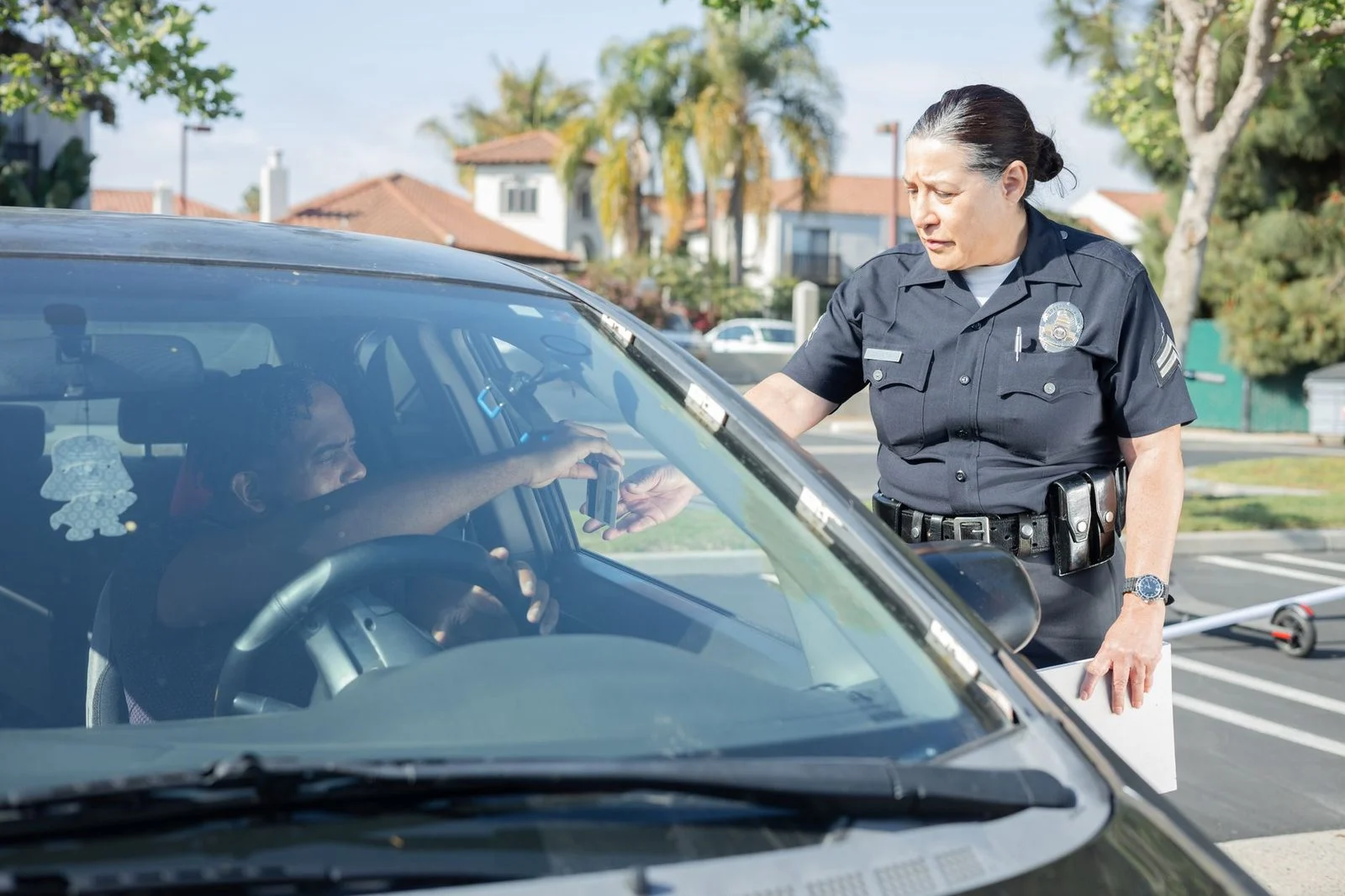
A hardship driving license is the restricted permit the state issues so you can keep driving solely for business or employment purposes, if you are otherwise eligible for the driving privilege under Fla. Stat. § 322.271. It is not a full reinstatement. Most often, that need is work or employment. It is not a full reinstatement. Your suspension is still running, and the license carries conditions you must follow every time you drive.
Readers often ask whether school or medical trips count. The statute defines business use as any driving necessary to maintain livelihood, including driving to and from work, necessary on-the-job driving, driving for educational purposes, and driving for church and for medical purposes. So the terms written on your specific license decide what you may do.
It can bring a restriction violation and, in some cases, a new charge. A hardship license also does not undo the underlying DUI charge or any conviction. It only changes how you may drive while the suspension runs.
How does a DUI change your life?
A DUI arrest can cut off the rides you use to get to work, take kids to school, and keep medical appointments. Often, the license problem hits before the court case does.
Under Fla. Stat. § 322.2615, an officer can suspend your driving privilege. That applies when a breath or blood alcohol level is 0.08 or higher, or after a refusal to test. You receive a 10-day temporary permit if you’re otherwise eligible. That window goes quickly, so plan your transportation right away.
Florida also requires a warning at arraignment. Under Fla. Stat. § 316.193, a conviction means the court shall suspend or revoke the driver license. The clerk must tell you this at arraignment, or in conjunction with any notice of arraignment, and failure to give the notice does not affect the court’s suspension or revocation of your license.
Licensed professionals face added pressure. A driving permit does not change other work rules, so those questions need their own review.
What does a DUI hardship license allow and restrict?
The license allows only the driving its terms name. It restricts everything else. Florida lets the state limit a license by time and purpose. Under Fla. Stat. § 322.16, the department may restrict use by time and purpose, and may set other suitable conditions.
Expect the terms to be specific. A license might allow driving during certain hours or for defined work trips. Keep the terms in mind before you drive anywhere else.
Mistakes here are costly. The state may also suspend or revoke the license for a violation of a restriction on it, except a violation of paragraph (1)(d), subsection (2), or subsection (3).
Knowingly driving while suspended is a separate offense. A third or subsequent conviction carries a minimum of 10 days in jail. It becomes a third-degree felony on a third or subsequent conviction tied to certain prior violations, such as DUI.
Who may qualify, and how waiting periods work
You may ask for a restricted business or employment license if you meet the statute’s requirements and the waiting periods have passed.
Under Fla. Stat. § 322.271, the conditions for certain restricted-license hearings include that you have not driven a motor vehicle without a license for at least 5 years prior to the hearing, have been drug-free for at least 5 years prior to the hearing, and have completed a DUI program licensed by the department. It may also ask for letters of recommendation from respected business persons, law enforcement officers, or judicial officers. See Fla. Stat. § 322.271.
Repeat cases can be barred. The statute bars this privilege for some drivers with two or more DUI convictions, or two or more refusal suspensions, in the situations it lists.
Waiting periods depend on the test result. Under Fla. Stat. § 322.271(7), if your license is suspended under § 322.2615 and you have never previously had a license suspended under § 322.2615, never been disqualified under § 322.64, and never been convicted of a violation of § 316.193, you are eligible for a restricted driving privilege through a hearing under subsection (2), notwithstanding the waiting periods in § 322.2615(10)(a) and (b). See Fla. Stat. § 322.2615.
Filing an appeal does not pause the suspension. Under Fla. Stat. § 322.28, a court may not stay an administrative suspension under § 322.2615 or § 322.2616 during judicial review. Gather your citation, arrest paperwork, and any court or DHSMV notices before you start.
Ignition interlock and other conditions
Under Fla. Stat. § 322.2715, Florida requires an approved ignition interlock device before it issues a permanent or restricted license for a covered DUI conviction. A documented medical condition that would keep the device from working normally may be considered, but if a medical waiver is approved for someone seeking permanent reinstatement, that person must be restricted to an employment-purposes-only license and supervised by a licensed DUI program until the interlock period ends.
The required period depends on the offense count. A first offense with the listed alcohol level allows an ignition interlock device to be installed for at least 6 continuous months. Fla. Stat. § 322.2715 reads: “(3) If the person is convicted of: (a) A first offense of driving under the influence under s. 316.193 and has an unlawful blood-alcohol level or breath-alcohol level as specified in s. 316.193(1), the ignition interlock device may be installed for at least 6 continuous months.” A second offense brings at least 1 continuous year of ignition interlock, when the convicted person qualifies for a permanent or restricted license. A fourth or later offense brings at least 5 years.
The device works this way. Under Fla. Stat. § 316.1937, the vehicle will not start if the driver’s blood alcohol level is above 0.025 percent, or as the court specifies.
Company vehicles have a limited exception. An employer-owned or leased vehicle may be driven without an interlock by a person required to operate it in the course and scope of employment, if the employer has been notified, and proof of that notification stays in the vehicle. That exception does not apply if the restricted person owns or controls the business.
Not sure what your next step is?
Talk it through with our team — the first consultation is free, confidential, and carries no obligation.
How to apply for a Florida hardship license
To apply, confirm your suspension type first. Then gather your paperwork and submit your request to the Florida Department of Highway Safety and Motor Vehicles (DHSMV).
Start with your documents. That means your citation, arrest paperwork, and any notices from the court or DHSMV. The state looks for proof of your course and evaluation.
Next, watch the course deadline. Under Fla. Stat. § 322.291, if your driving privilege was revoked upon conviction for certain offenses, such as DUI, manslaughter resulting from operating a motor vehicle, or failing to stop and render aid after a crash causing death or injury, you must show proof of enrollment in a department-approved advanced driver improvement course or a DUI program substance abuse education course before reinstatement. If you do not complete the course or evaluation within 90 days after reinstatement, or later fail to complete treatment if referred, the department will cancel your driving privilege.
The FLHSMV’s DUI FAQs explain the revocation period after a first DUI conviction. They also explain when you can apply for a hardship license.
Missing deadlines or incomplete forms can delay or block your request.
Frequently asked questions about Florida hardship licenses
How long does a suspension last?
The period varies by suspension type. A hardship license covers only part of that time, not the whole suspension.
Does a hardship license remove a DUI from my record?
No. A restricted license changes how you can drive during the suspension. It does not undo the charge or a conviction.
Is a hardship license the same as full reinstatement?
No. You drive under restrictions until the suspension ends or your license is fully restored.
What happens if I drive outside my license terms?
If this is your first DUI, our first-time offender defense page covers the broader case picture.
Talk through your DUI hardship license questions with our team
A DUI suspension can threaten your job, your commute, and your family’s daily schedule all at once. Many people reading this are looking out for a spouse, parent, or adult child whose license was just suspended. Others are trying to keep a paycheck coming in while the case moves forward.
Call 786-761-1719 or send us a message. Our team can talk through your suspension and whether a hardship license fits your situation. The first consultation is free, confidential, and carries no obligation to continue.
For context on how criminal defense fees are discussed, see our retainer fee guide.
Why Clients Contact Patrick Wilson Law
Focused Criminal Defense
Patrick Wilson Law focuses on criminal defense, including DUI charges, across South Florida.
Serving South Florida
We represent clients from Miami-Dade and Broward Counties to Fort Lauderdale, Miami Beach, Homestead and the Florida Keys.
Free, Confidential First Consultation
Your first consultation is free, confidential, and carries no obligation to continue.
Built for First-Time Offenders
We work with first-time offenders and licensed professionals whose careers are on the line.
Key Point: A Restricted License Is Not a Case Resolution
A hardship or restricted license changes how you may drive during a suspension. Do not drive until you have confirmed in writing that your license status permits it.
Before You Drive, Confirm These Steps
Check Your License Status
Confirm exactly what type of suspension applies to you and whether it is active, pending or restricted.
Read Every Restriction
Review the permitted hours, routes and purposes carefully. Driving outside them can create new legal problems.
Keep Your Paperwork
Carry your restricted license documents and proof of the reason for each trip whenever you drive.
Ask Before You Act
Speak with a criminal defense attorney about how your charge and your license interact before you make any plans to drive.

