
Criminal Defense | Miami-Dade
Facing a New Criminal Charge in Miami-Dade? Start With Clear Next Steps
Patrick Wilson Law, PLLC, a Miami criminal defense practice, explains what a new charge can mean and what to do first. Your first consultation is free, confidential and comes with no obligation to continue.
By Patrick David Wilson · Published October 17, 2026
Next Steps After a New DUI Charge in Miami-Dade
A new criminal charge usually starts with an arrest or a formal charge. An arrest is not the same as a court finding that you broke your probation. A new charge can lead to a warrant, a violation affidavit, or a hearing, even while the new case is still pending. This page explains each step in plain language for people in Miami-Dade and across South Florida. It does not predict how any case will end.
If a new charge has you or someone you love facing a warrant or a hearing date, we're here to talk through your options with you. Talk it through with our team — the first consultation is free, confidential, and carries no obligation.
What a New Criminal Charge Can Mean in Miami-Dade
A new criminal charge can lead to a violation case on your probation. You may learn this at a hard moment, after a phone call from a family member or a knock at the door. Many readers are looking up answers for someone else. Others are trying to make sense of their own court papers.
Florida law sets up this process. Under Fla. Stat. § 948.06, a probation officer or a law enforcement officer may arrest a probationer when there are reasonable grounds to believe a material violation occurred. The person is then returned to the court that granted probation.
This page walks through what happens next, one step at a time. It cannot tell you how your own case will end.
An Arrest Is Not the Same as a Finding of Violation
An arrest is a police action. A violation finding is a court decision. These are two separate events, and people often mix them up.
Under Fla. Stat. § 948.06, a judge may issue an arrest warrant based on a sworn affidavit from someone who knows the facts. In some cases, the judge may issue a notice to appear instead. That notice is possible only if the person has never been convicted of, and is not currently alleged to have committed, a qualifying offense.
A warrant means a judge has been asked to act. It does not mean a judge has already decided that you broke a condition. The allegation still has to be resolved in court.
Technical Violations Versus New-Law Violations
A technical violation is a break in supervision rules that is not a new crime. A new charge falls into a different category, and that difference shapes what happens next.
A technical violation is an alleged violation of supervision that is not a new felony offense, misdemeanor offense, or criminal traffic offense. Missed check-ins or curfew problems can fall in that group.
For technical violations, the probation officer decides whether the person qualifies for the alternative sanctioning program. If so, the officer can use that program instead of filing an affidavit of violation with the court. A new misdemeanor, felony, or criminal traffic offense does not fit that definition. A new DUI charge, for example, is not a technical violation.
How Probation Officers Learn About New Charges
Probation officers usually learn about a new charge through the arrest and court paperwork that follows it. The exact path can vary from case to case.
The statute covers an officer who is aware of a person’s probation or community control status. Under Fla. Stat. § 948.06, that officer may make an arrest without a warrant. For arrests in general, Fla. Stat. § 901.15 says an officer may arrest without a warrant when a felony or misdemeanor happens in the officer’s presence. A misdemeanor arrest must be made immediately or in fresh pursuit.
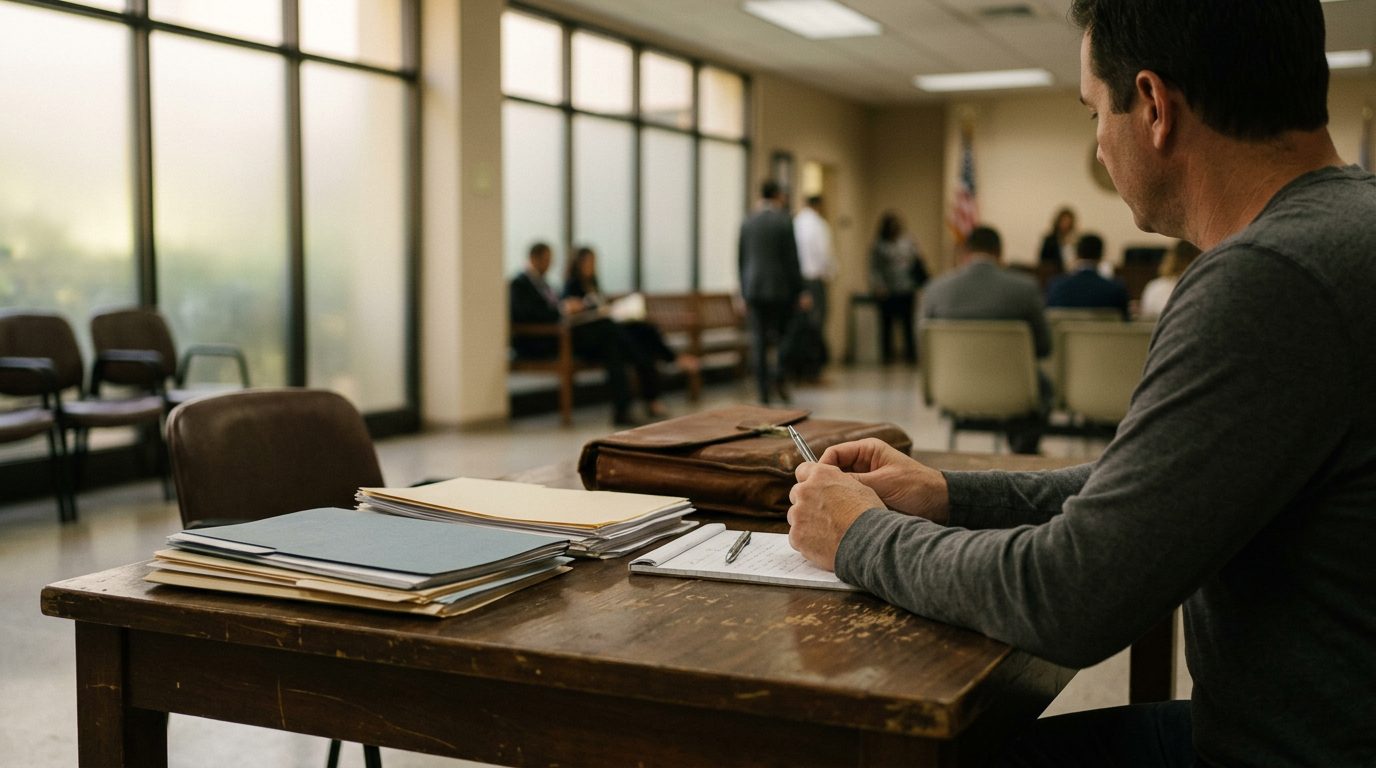
Keep copies of everything you have. That includes your probation order and conditions, the arrest or booking papers, any bond paperwork, and every court date. Write down the case numbers and the names of the officers involved. Bring these papers to your first call with a lawyer. They help a lawyer understand the timeline quickly.
What Happens After a New Criminal Charge
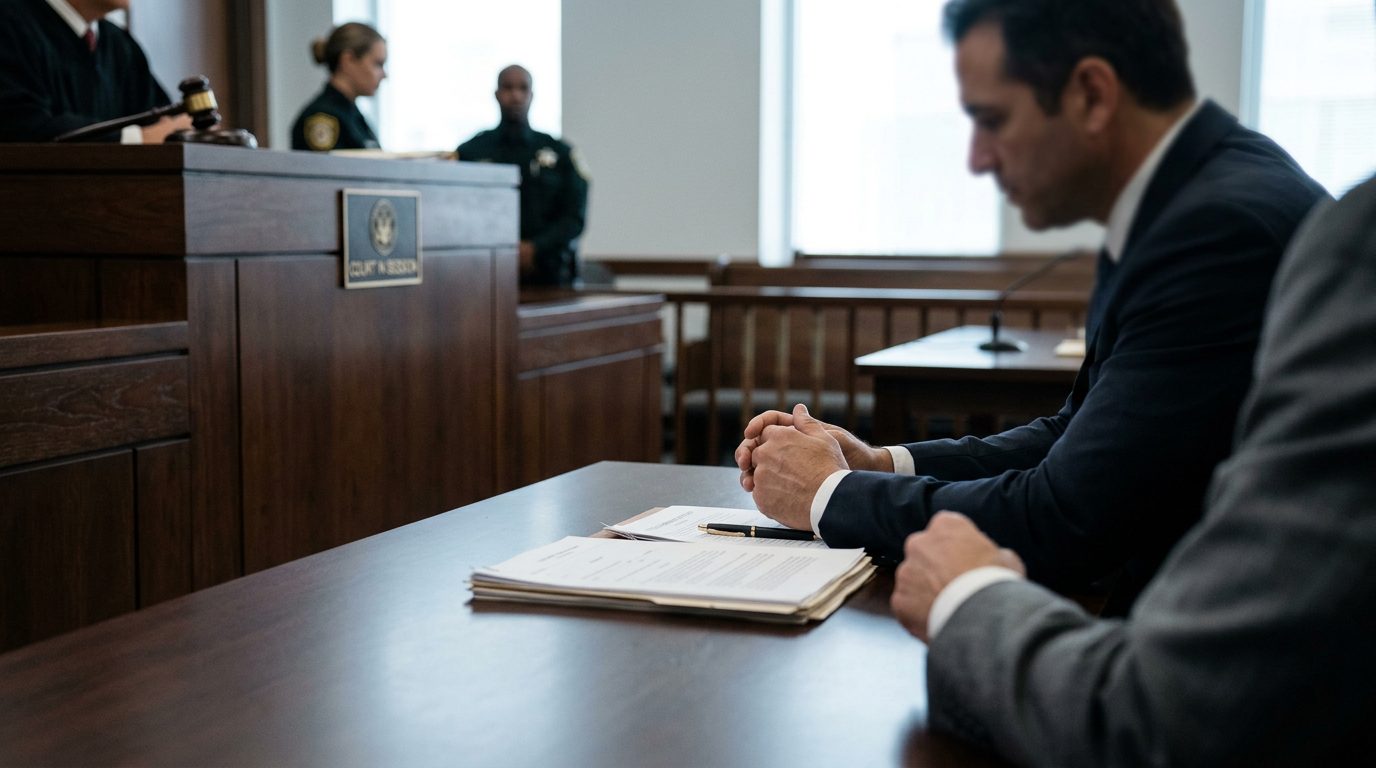
At a violation hearing, the judge decides whether the alleged violation is established and what the court will do next. The process starts at first appearance.
Under Fla. R. Crim. P. 3.130, every arrested person must go before a judge within 24 hours of arrest. The judge must tell the person of the charge, including an alleged violation of probation. The judge must also give a copy of the complaint. The judge advises the person that he or she is not required to say anything and has a right to counsel.
If the person does not admit the violation at first appearance, the judge may release the person with or without bail. The judge may also commit the person to the court that granted probation. In deciding bail, the judge may consider whether a prison sanction is more likely than not.
Under Fla. R. Crim. P. 3.790, the court may revoke, modify, or continue probation. The court may also dismiss the charge of violation. If the case goes to a contested hearing, the state presents its evidence and the judge weighs it.
Not sure what your next step is?
Talk it through with our team — the first consultation is free, confidential, and carries no obligation.
Misdemeanor and Felony New Charges on Probation, and Jail Exposure
Jail exposure depends on the original offense, the new charge, and the sentencing scoresheet. Florida’s sentencing system uses points, and those points change from case to case.
The court may still find a prison sentence appropriate within its discretion. Community sanction violation points are also assessed under Fla. R. Crim. P. 3.704 when a violation is found.
Some third-degree felonies follow a different rule. The same statute sets a second-degree misdemeanor at a term not exceeding 60 days.
Exposure is fact-specific, and the outcome depends on the facts of your case. Ask a lawyer to review your scoresheet and prior record.
Can a New Criminal Charge Be Dismissed or Resolved?
A probation violation can be dismissed, but no outcome can be promised in advance. Each route depends on the evidence, the charging decision, and the court’s discretion.
Under Fla. R. Crim. P. 3.790, the court may dismiss the charge of violation. Another path is a negotiated plea. Under Fla. R. Crim. P. 3.171, the prosecutor and defense attorney are encouraged to discuss and agree on pleas. The judge still decides the sentence. Defense counsel must advise the client of all plea offers and the likely results.
Timing matters. Early steps include responding to the affidavit, attending first appearance, and keeping every court date.
Talk Through Your Situation with Patrick Wilson Law
If you’re facing a new arrest, a warrant, or a hearing date, you don’t have to sort it out alone. Patrick Wilson Law concentrates in criminal defense across South Florida. That includes first-time offenders, licensed professionals, DUI, and domestic violence matters. Attorney Patrick David Wilson leads the practice from Miami, and our team supports every client.
How long can I go to jail for violating probation in Florida?
Jail time varies with the original offense, the new charge, and the sentencing scoresheet points. The rules above explain how those pieces fit together.
Can a probation violation be dropped?
A violation charge can be dismissed under the court rule. No result can be promised in advance.
Does a new charge always lead to a hearing?
Not always. A new charge can lead to a warrant, a notice to appear, or a hearing, depending on the court’s decision.
If a new criminal charge has you or someone you love facing a court date, call 786-761-1719 or leave a message. Your initial consultation is free, confidential, and carries no obligation to continue. You can also reach our office online.
Why People Contact Patrick Wilson Law
Focused Criminal Defense
Our practice focuses on criminal defense for people across South Florida, from Broward County to the Florida Keys.
First-Time Offenders
We understand how stressful a first charge can be, especially for people with no prior record and a great deal to lose.
Licensed Professionals
We help professionals whose licenses and careers may be affected by a criminal charge.
Free, Confidential Consultation
Your first consultation is free, confidential and comes with no obligation to continue. Call 786-761-1719 to get started.
Important: Do Not Wait
An arrest is not a court finding of guilt, but it still requires action. Do not ignore a court date, a notice or a warrant. Speak with a criminal defense lawyer before you discuss your case with prosecutors, probation officers or police.
Common Steps After a New Charge
Understand the Charge
Find out exactly what you have been charged with, which court is handling the case and what the next scheduled step is.
Check for Related Cases
A new charge can connect to an existing case, including a probation violation affidavit or a hearing on your supervision.
Protect Your Record
Avoid statements or social media posts about the case. Keep copies of every notice, court document and letter you receive.
Plan the Defense Early
Early review of the evidence and the paperwork gives your defense lawyer more options as the case moves forward.
Talk With a Miami Criminal Defense Lawyer Before You Decide Your Next Step
Related practice areas
- Miami Probation Violation Attorney | Patrick Wilson Law
- Florida Vehicular Homicide Penalty: Prison Time and Fines

