
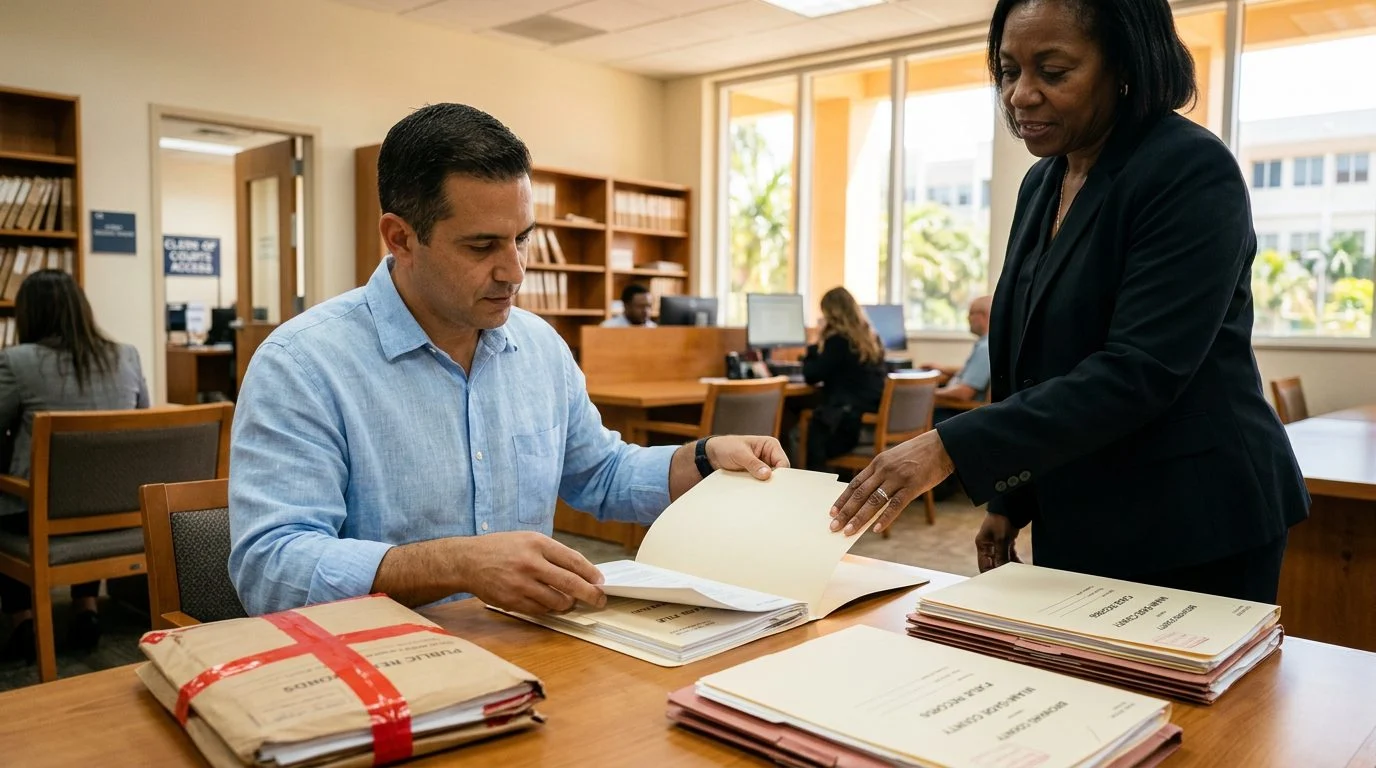
Seal and Expunge Records | Miami-Dade and Broward
When Can a Sealed Florida Record Come Back Before a Judge?
A seal offers strong protection, but a court can revisit it. Here is how the process works and what to bring to a lawyer early.
By Patrick David Wilson · Published November 18, 2026
A sealed record is supposed to be out of sight. Then a background check, a licensing question or a court notice brings it back, and you start wondering if a judge can reopen it.
Yes, a court can act again on a sealed Florida record. The record is not erased, and it stays subject to further order of the court. Whether a court acts depends on the facts of the case.
This page explains how sealing works, how it differs from expunction, who can still see a sealed record, and what to do if a record is challenged. It is general information, not legal advice.
Can a Sealed Florida Record Be Unsealed?
A court keeps authority over a sealed record, so the answer turns on that court’s file and order. Sealing doesn’t destroy anything. It changes who can see the record.
When a court seals a record, the clerk seals the entries and the court file. Those go into a nonpublic index, “subject to further order of the court,” under Florida Rule of Criminal Procedure 3.692. That phrase is the key. The court that ordered sealing still holds the file and can act on it.
The Florida Department of Law Enforcement (FDLE) handles the certificate step, not the final decision. Under § 943.059, a person petitions a court to seal a criminal history record.
Automatic sealing works a little differently. Under Fla. Stat. § 943.0595, the department keeps maintaining an automatically sealed record. That sealing has the same effect as a petition-based sealing, with some exceptions.
If a court notice or background check has you worried about a sealed record, you don't have to sort it out alone, so reach out to Patrick Wilson Law. Talk it through with our team — the first consultation is free, confidential, and carries no obligation.
Sealed vs. Expunged: What Each Option Does
Sealing and expunction are different remedies. Neither one is simply better than the other.
Sealing keeps the record in existence but makes it confidential. Under Fla. Stat. § 943.059, information about a sealed record is confidential and exempt from public records disclosure.
Expunction goes further. Questions about how sealing or expunging a record might apply to a particular case are best discussed in a free, confidential first consultation with our team.
Both routes start the same way. A petition must come with a valid certificate of eligibility from FDLE, as Rule 3.692 requires.
The right fit turns on the record’s history.
Who Can Still See a Sealed Record in Florida
The public generally cannot see a sealed record. Certain government and licensing entities still can.
Under § 943.059, FDLE may disclose a sealed record to listed entities for licensing, access authorization and employment purposes. Fla. Stat. § 943.059 reads: “An employee of an entity set forth in subparagraph (b)1., subparagraph (b)4., subparagraph (b)5., subparagraph (b)6., subparagraph (b)8., subparagraph (b)9., subparagraph (b)10., or subparagraph (b)11. may not disclose information relating to the existence of a sealed criminal history record of a person seeking employment, access authorization, or licensure with such entity or contractor, except to the person to whom the criminal history record relates or to persons having direct responsibility for employment, access authorization, or licensure decisions.” An employee of those entities generally may not reveal that a sealed record exists about someone seeking a job or license. Doing so is a first-degree misdemeanor.
A court can still order access to it, as the rule’s “further order of the court” language makes clear.
Sealing doesn’t erase the record from every system. Sealing limits who can see it. It doesn’t make the case vanish.
When a Court May Reopen or Revisit a Sealed Record
A court may act again on a sealed record, and it has broad discretion when it does. Under Rule 3.692, a request to seal or expunge “may be denied at the sole discretion of the court.”
The prosecuting attorney and the arresting agency may respond to a petition. The court may also receive evidence on any issue of fact needed to rule. Both sides are served with the paperwork.
Paperwork matters. The rule requires a valid FDLE certificate of eligibility with the petition. It also says a court may not order a criminal justice agency to seal or expunge a record until the petitioner has applied for and received that certificate.
So the court looks at the filings, the certificate and any objection. It doesn’t only look at the order that was signed.
Charges and Prior Orders That Block Sealing or Expunction
Some convictions are off-limits for sealing and expunction under Florida law. Knowing the list early saves time and stress.
Under § 943.0584, a record is ineligible if it is a conviction for listed offenses. The list includes manslaughter or homicide under §§ 782.07, 782.071 and 782.072. Under § 943.0584, the ineligibility list also includes felony battery and any offense defined in chapter 794. Section 782.07 defines manslaughter as the killing of a human being by the act, procurement, or culpable negligence of another, without lawful justification under chapter 776, in cases that are not excusable homicide or murder. Under § 943.0584, assault or battery against a family or household member is on the ineligibility list.
“Conviction” is broader than many people think. Under § 943.0584, a conviction includes a plea of guilty or nolo contendere, even when adjudication is withheld. A withhold doesn’t take a case out of this analysis.
Felony sentencing can matter too. Under § 775.08435, a court may not withhold adjudication for any capital, life or first-degree felony.
Prior orders matter as well. Section 775.08435 limits when a court may withhold adjudication of guilt; it does not say a court may seal one arrest or one incident. Check the full history before anyone files.
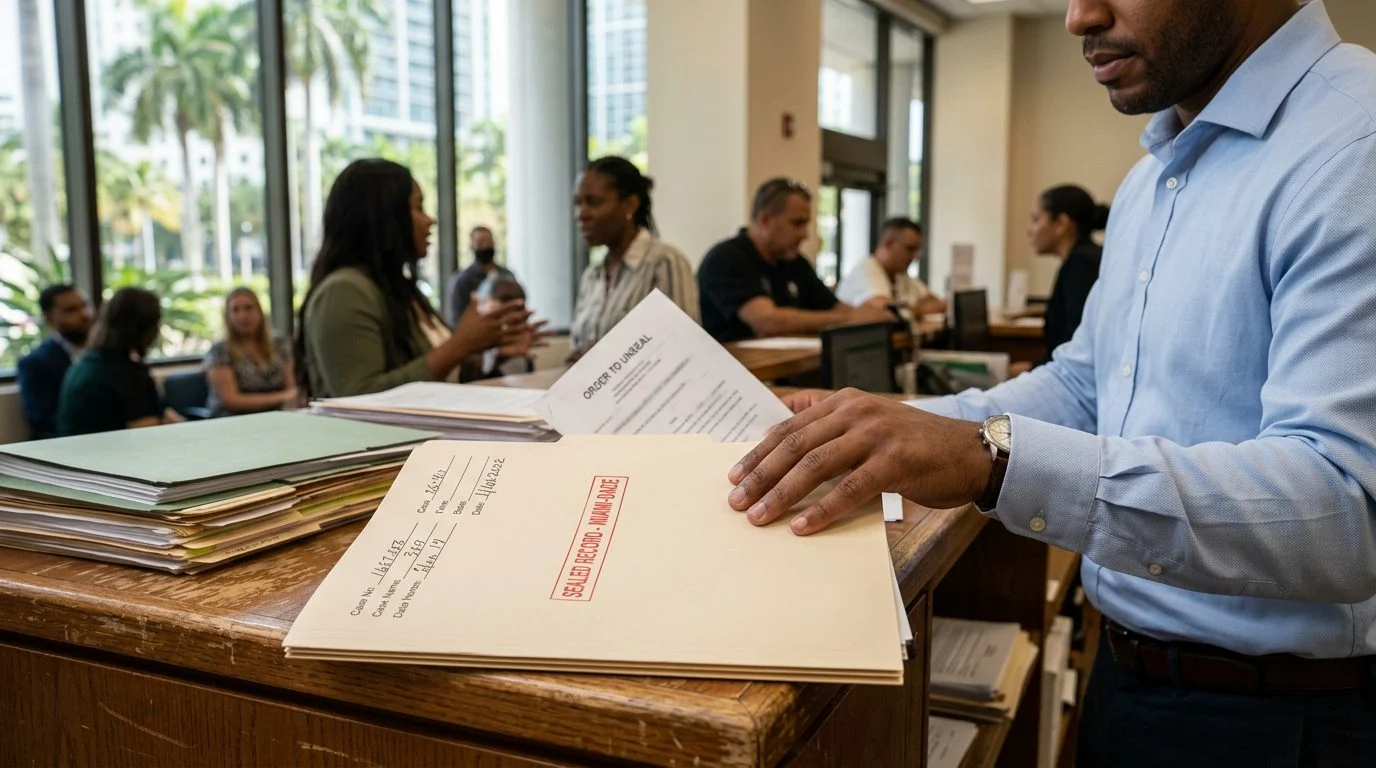
Background Checks: What a Sealed Record Still Shows
A sealed record is confidential, but sealing doesn’t wipe it from every database. Those two ideas are both true.
Under the cited statutes, sealing comes from a court petition or from the automatic process.
Section 775.08435 limits when a court may withhold adjudication of guilt; it does not say who can see sealed records for licensing or employment.
Keep a copy of the sealing order. It shows what the court actually ordered. Compare it with what a report shows before you rely on either one.
Not sure what your next step is?
Talk it through with our team — the first consultation is free, confidential, and carries no obligation.
Misdemeanor Records: Where the Process Starts
For a misdemeanor, the first step is checking eligibility. A petition comes later.
The steps follow a clear order. First, confirm eligibility. Next, apply to FDLE for a certificate of eligibility. Then file a written petition with the clerk, with a sworn statement. Finally, serve the prosecuting attorney and the arresting authority, as Rule 3.692 describes.
Gather these papers early:
- Case numbers and court names
- Arrest and disposition paperwork
- Court dockets for each case
- Proof of how the case ended
The petitioner pays for certified copies unless the petitioner is indigent, under the same rule. For the full process, read our guide on sealing and expunging Florida criminal records.
If a Sealed Record Is Challenged or Reopened: What to Do
If a sealed record is challenged, act on any notice quickly and keep every paper in the case. Early action keeps your options open.
Here’s a short checklist:
- Read every notice, motion and hearing date. Don’t set them aside.
- Keep copies of the sealing order, the certificate of eligibility and the docket sheet.
- Write down case numbers, court names and dates.
- Avoid talking about the case with the court, the prosecutor or a background company until you know what the record shows.
Remember that the State can respond to a petition under Rule 3.692.
A lawyer reviews the order, the eligibility record and the filings together. Patrick Wilson Law, PLLC, based in Miami, handles sealing and expunction matters for clients across South Florida, from Broward County to the Keys.
Questions to Bring to a Lawyer About Your Sealed Record
The most useful questions focus on the order, the certificate and who can see the record. Bring them to any early conversation.
- Was the sealing order entered correctly?
- Does the order cover one arrest, or more, and does it say so?
- Is a court reviewing the record now?
- Which agencies or employers can see it?
- Does any charge appear on the § 943.0584 list?
- Did the case end in a withhold, a dismissal or an acquittal?
If you’re researching for a relative or an employee, gather the same documents. Also write down the specific concern, such as a licensing question or a job application.
Can a sealed record be reopened in Florida?
Yes, a court keeps authority over its own procedures for a sealed record, to the extent that such procedures are not inconsistent with the conditions, responsibilities, and duties established by s. 943.059. Under § 943.059, a court-sealed record is confidential and exempt from public records disclosure and is available only to the subject of the record and the other persons listed in the section.
What’s better, sealed or expunged?
Neither is better across the board. Sealing keeps the record confidential, as § 943.059(6)(a) provides.
How do I start sealing a Florida record?
Start with an FDLE certificate of eligibility. A petition isn’t complete without one.
Talk Through Your Situation With Patrick Wilson Law
Patrick Wilson Law can talk through a sealed Florida record with you. You may be dealing with a court notice, a licensing question or a background report you didn’t expect.
If this is happening to you or to someone close to you, call 786-761-1719 or leave us a message. Patrick David Wilson, the responsible lawyer for this page, can review the order and the filings with you.
The initial consultation is free, confidential and carries no obligation to continue.
How Patrick Wilson Law Approaches Sealed Records
Review the Record First
We start by reviewing the sealing order, the charge history and the court file so we understand what the court has already decided.
Protect Your Confidentiality
Your matter is handled privately. Your information is used only to evaluate and respond to your situation.
Act Early
Questions about a sealed record often involve applications, notices and deadlines. Raising them early gives your lawyer more room to respond.
Attorneys Who Know Miami Courts
Our lawyers focus on criminal defense across Miami-Dade, Broward County, the Florida Keys and surrounding communities.
Do Not Assume a Sealed Record Is Beyond Reach
Sealing does not automatically end every question about a case. The court keeps authority over its own procedures, and the outcome depends on the specific record and the court involved. Do not rely on general information or assumptions about your file.
Questions to Bring to Your Consultation
What Does the Sealing Order Say?
The terms of the order and the statute it relies on, including Florida Statute 943.059, shape who can see the record and under what conditions.
Who Is Asking to Reopen It?
The request, the party making it and the reason given all affect how a court will approach the matter.
What Notice Is Required?
Procedural notice and hearing requirements can differ from case to case, so it is important to confirm what applies to your file.
What Are Your Options?
Depending on the facts, a lawyer can review possible responses, protective steps and how to present your position to the court.

