
Seal and Expunge Criminal Records | Miami, Florida
Sealed Records for CDL Drivers in Florida
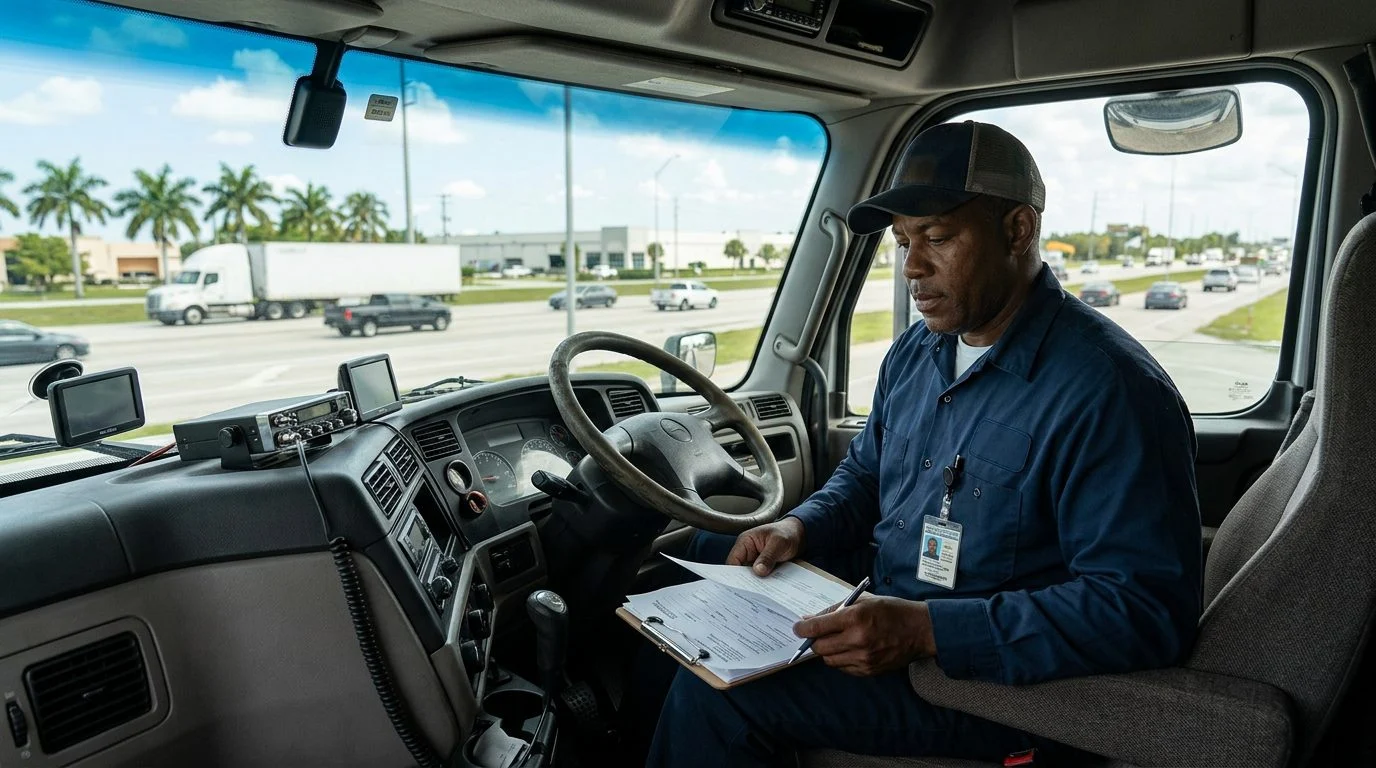
Patrick Wilson Law represents commercial drivers across Miami-Dade, Broward and the Keys when a past charge threatens their livelihood on the road.
By Patrick David Wilson · Published November 11, 2026
Your commercial driver license (CDL) can hinge on what a background check shows. If an old DUI, traffic, or other arrest still appears, you may be asking whether it can be sealed.
Some offenses cannot be sealed or expunged at all.
What Record Sealing Means for CDL and Commercial License Holders in Florida
Sealing and expunging both limit who can see a record, but they work differently. Sealing keeps the record in place and restricts access to it. Expunging means the agencies that hold the record must destroy or obliterate it, except that the Florida Department of Law Enforcement (FDLE) keeps a copy. Under Fla. Stat. § 943.0585, a person seeking to expunge a criminal history record must apply to the department for a certificate of eligibility for expunction before petitioning a court. Fla. Stat. § 943.059 likewise requires a certificate of eligibility for sealing before a person petitions the court to seal one.
For a CDL holder, that difference matters. Sealed records stay available to certain licensing and employment entities that the statute lists. Fla. Stat. § 943.059 reads: “An employee of an entity set forth in subparagraph (b)1., subparagraph (b)4., subparagraph (b)5., subparagraph (b)6., subparagraph (b)8., subparagraph (b)9., subparagraph (b)10., or subparagraph (b)11. may not disclose information relating to the existence of a sealed criminal history record of a person seeking employment, access authorization, or licensure with such entity or contractor, except to the person to whom the criminal history record relates or to persons having direct responsibility for employment, access authorization, or licensure decisions.” Sealing does not hide a record from every check. Our guide to sealing and expunging explains both paths in more detail.
If an old DUI or traffic arrest could cost you your CDL or your job, our team can review that file with you, and you do not have to face it alone. Talk it through with our team — the first consultation is free, confidential, and carries no obligation.
Who This Service Is For
Sealing fits people who have an arrest or charge on their record and need it kept out of routine view. This service is built for four groups across South Florida:
- CDL drivers and commercial license holders whose jobs require a clean background check or licensing review.
- Licensed professionals whose careers rest on how their record reads.
- First-time offenders whose case ended without a conviction, or with a disposition that qualifies.
- Non-citizens with a Florida arrest or charge who need the record reviewed before any filing.
Many of these clients face a charge that the firm also defends. Patrick Wilson Law concentrates in DUI, traffic, and licensed-professional cases, so the record question and the criminal case behind it are reviewed together.
What Sealing Covers and What It Does Not Change
Sealing limits who can see a record.
- Lawful denial. Under Fla. Stat. § 943.059, a person may lawfully deny or fail to acknowledge sealed arrests. Fla. Stat. § 943.059 reads: “(6) EFFECT OF ORDER.— … (b) The subject of the criminal history record sealed under this section or under other provisions of law, including former ss. 893.14, 901.33, and 943.058, may lawfully deny or fail to acknowledge the arrests covered by the sealed record, except when the subject of the record: 1.” Listed exceptions apply, such as applying to work with a criminal justice agency.
- Automatic sealing is narrow. FDLE seals the record automatically only when the case meets the conditions set by Florida law, such as no indictment, information, or other charging document having been filed, dismissal of all counts, a not guilty verdict on all counts, or a judgment of acquittal on all counts, and the record does not result from a charge for a forcible felony. Other agencies keep their copies.
- CDL downgrades run separately. Under Fla. Stat. § 322.591, a downgrade by final order is recorded right away. A pending proceeding does not pause it.
- Traffic disqualifications. Under Fla. Stat. § 322.61, two serious traffic violations within three years, in a commercial vehicle, bring a 60-day disqualification. Three bring 120 days. Under Fla. Stat. § 322.61, a holder of a commercial driver license or commercial learner’s permit who is convicted of driving under the influence while operating a noncommercial motor vehicle is disqualified from operating a commercial motor vehicle for a period of 1 year, in addition to any other applicable penalties.
- Under Fla. Stat. § 322.61, a disqualified person may, if otherwise qualified, be issued a Class E driver license.
Each of these tracks has its own rules. Sealing a record does not settle them.
Eligibility Factors to Review Before Filing
Eligibility starts with the charge, then looks at how the case ended. Each file gets its own review.
- The charge. A criminal history record is ineligible for a certificate of eligibility for expunction or for sealing if the record is a conviction for murder, as defined in s. 782.04, s. 782.065, or s. 782.09, or for manslaughter or homicide, as defined in s. 782.07, s. 782.071, or s. 782.072 (Fla. Stat. § 943.0584). The same is true for felony battery, domestic battery against a family or household member, and any offense in chapter 794, which covers sexual offenses. Fla. Stat. § 943.0584
- The plea. For those listed offenses, a guilty or no contest plea counts as a conviction, even if the judge withheld adjudication. Fla. Stat. § 943.0584
- Fla. Stat. § 943.0595
- Prior sealing. In some cases, an earlier sealing must have lasted at least 10 years before expunction is available. Fla. Stat. § 943.0585
- One arrest at a time. A court can expunge one arrest or one incident. Additional arrests count only if they directly relate and the order says so.
- Required paperwork. A petition needs a valid FDLE certificate of eligibility and a sworn statement. It must be served on the prosecutor and the arresting agency. Fla. R. Crim. P. 3.692
Whether your record qualifies turns on the facts of your case. An initial review sorts out which of these apply to you.
How the Sealing Process Works: Steps and Timeline
The process moves in order: file review, certificate, petition, court ruling, and agency follow-up.
- Review the file. Gather the charging papers, arrest report, final disposition, and your current CDL status.
- Obtain the FDLE certificate. A valid certificate of eligibility from FDLE is required. The court, not FDLE, decides whether to grant the petition. FDLE sealing and expunging FAQ
- File the petition. File a written petition with the clerk, with the certificate and a sworn statement. Serve the prosecutor and arresting authority. Fla. R. Crim. P. 3.692
- Cover certified copies. The petitioner pays for certified copies unless the petitioner is indigent. Fla. R. Crim. P. 3.692
- Wait for the ruling. The court may deny a request at its sole discretion. It cannot order an agency to expunge a record until the petitioner has applied for and received the certificate of eligibility.
- Confirm agency follow-up. The clerk certifies the order to the prosecutor and arresting agency. The arresting agency forwards it to other agencies that received the record. FDLE forwards sealing orders to the FBI.
A certificate of eligibility is valid for 12 months after it is issued. Timing matters, so plan around that window. Court calendars and agency steps set the pace, so expect months rather than days.
Why Patrick Wilson Law for CDL and Licensed-Professional Record Relief
Patrick Wilson Law, PLLC is a criminal defense firm based in Miami. It concentrates in DUI, vehicular homicide, leaving the scene of an accident, domestic violence, and sexual battery cases. These are charges that can affect a driver’s license or career.
- Responsible lawyer. Patrick David Wilson is the lawyer responsible for this page. The firm’s lawyers include Patrick David Wilson and Sahara Fonseca.
- Record relief is one of the firm’s practice areas. The firm also works with licensed professionals and first-time offenders.
- Defense and record work together. The charge and the way the case ended decide eligibility, so the firm reviews the criminal case behind the record.
- Service area. The firm serves Miami-Dade County, Broward County, Fort Lauderdale, Kendall, Hialeah, Miami Beach, Homestead, and the Florida Keys.
Not sure what your next step is?
Talk it through with our team — the first consultation is free, confidential, and carries no obligation.
Common Questions About Sealing a CDL Driver’s Record
Here are short answers to common questions.
Will an employer see a sealed record?
Do I have to disclose a sealed record?
You may lawfully deny or fail to acknowledge sealed arrests, except in the situations the statute lists.
Does sealing restore my CDL?
No. A CDL disqualification or downgrade follows its own state and federal rules, so it needs its own review.
What does the petition cost?
Under Rule 3.692, the petitioner pays for certified copies unless the petitioner is indigent.
How long does sealing take?
The court and agencies set the timeline. A certificate of eligibility is valid for 12 months, so timing matters.
Take the Next Step on Your Commercial License Record
If an old arrest still shows up and your CDL or job is on the line, the next step is a review of that file. Our team can look at the charge, the case outcome, and your license status together.
If an old DUI or traffic arrest could cost you your CDL or your job, our team can review that file with you, and you do not have to face it alone.
Call 786-761-1719 or send a message through our contact page to schedule your free, confidential consultation. It carries no obligation to continue.
How We Work With CDL Drivers
Record Review
Patrick David Wilson reviews the full criminal history, including arrests and charges, before any sealing petition is prepared.
Careful Petition Handling
Our team prepares the petition and supporting paperwork with attention to the details that matter in Florida court.
Clear Answers About Your License
We explain what sealing can do for your record and where your commercial driver license is governed by separate rules.
South Florida Clients
We focus on criminal defense for drivers in Miami, Miami Beach, Hialeah, Kendall, Homestead, Fort Lauderdale and the Florida Keys.
Sealing and Your CDL Follow Different Rules
A sealed record and your commercial driver license are governed by separate rules. Do not assume one resolves the other. Ask before you apply for a new job, renew your license, or answer a question on a form.
Common Questions From Drivers
Do I have to disclose a sealed record?
The answer depends on the type of record and the question asked. We review your situation with you before you respond to any employer or agency.
Does sealing change my CDL status?
Not automatically. Your CDL status is handled under its own state and federal rules, so it needs its own review alongside the sealing request.
What is the first step?
Contact us to discuss your charge and driving record. We will explain the options and the paperwork involved.
Is the first meeting free?
Yes. Your first consultation is free, confidential and carries no obligation to continue.

