
Record Sealing | Miami-Dade, Broward & the Florida Keys
Unpaid Court Costs on Your Florida Record? Get Clear Answers First
Clerk balances, case paperwork and the sealing petition can feel like a maze. Here is how to approach each step with a Miami criminal defense firm in your corner.
By Patrick David Wilson · Published November 11, 2026
If you still owe court costs from a closed Florida case, you may wonder whether you can seal your record. Short answer: unpaid costs don’t change the sealing test itself, but an open balance can keep your probation from ending, and that controls when you can file.
This guide explains how unpaid costs, probation timing, and court paperwork fit together. It’s general information about Florida law, written for adults with closed cases, first-time offenders, and licensed professionals who need a clean record.
Can Unpaid Court Costs Stop You From Sealing a Florida Record?
Not by themselves, but they can delay your filing date. The sealing test looks at your criminal history and how the case ended. Unpaid costs matter because they sit inside your sentence.
Court costs are real money. Unless the court designates otherwise, a person ordered to pay must immediately contact the clerk to pay fines, fees, service charges, and court costs in full or apply for a payment plan under the same statute.
Restitution is a bigger issue. Under Fla. Stat. § 948.03, the court must make restitution a condition of probation unless it finds clear and compelling reasons against it. Whether your balance affects your case depends on the facts of your sentence and the court’s file. Start by checking those.
If you still owe court costs or aren't sure your probation has ended, we can review your file and talk through your timing with you. Talk it through with our team — the first consultation is free, confidential, and carries no obligation.
Sealing vs. Expunging: What the Difference Means for Your Balance
Sealing hides a record from most view, while expunction destroys the record at the agencies that hold it.
Under Fla. Stat. § 943.0585, an expunged record must be physically destroyed or obliterated by the agencies that have it. Under Fla. Stat. § 943.0585(6)(a), a criminal history record of a minor or an adult that a court of competent jurisdiction orders expunged must be physically destroyed or obliterated by any criminal justice agency having custody of it, except that any such record in the custody of the Department of Law Enforcement must be retained in all cases, and that retained record is confidential and exempt and not available to any person or entity except upon order of a court of competent jurisdiction.
Sealing follows Fla. Stat. § 943.059. The record stays on file, but it is sealed under court order. Expunction generally fits cases that were dropped, dismissed, or ended in acquittal. Sealing generally fits cases where you were not adjudicated guilty.
For the full overview of both processes, read our sealing and expunging guide.
Who Is Eligible to Seal or Expunge a Florida Record
You are generally eligible to seal a record if you have never, before applying for a certificate of eligibility, been adjudicated guilty in Florida of a criminal offense, or adjudicated delinquent in Florida for a felony or certain listed misdemeanors, subject to the statute’s other requirements and listed exceptions. Under Fla. Stat. § 943.059, that eligibility test is the starting point.
A withhold of adjudication still counts as a conviction for some purposes. The definition in Fla. Stat. § 943.0584 says a conviction includes a plea or verdict of guilt “regardless of whether adjudication is withheld.” Check how your disposition is written on the docket.
Some felony cases carry extra limits. Under Fla. Stat. § 775.08435, the court may not withhold adjudication for any capital, life, or first-degree felony. A second-degree felony can be withheld only in limited cases.
Some records can never be sealed or expunged after a conviction. Under § 943.0584, a criminal history record is ineligible for sealing or expunction when it is a conviction for any offense defined in chapter 794, which covers sexual battery. Vehicular homicide readers should review that list closely.
Juvenile records follow separate procedures. A juvenile case needs its own review, so start with the sealing and expunging guide for the broader framework.
How Probation Timing Affects When You Can File
You generally file after your probation has ended and your sentence is complete. Under Fla. Stat. § 948.04, felony probation may not exceed 2 years unless the court specifies otherwise, and this limit does not apply to a defendant placed on probation pursuant to s. 948.012(1). When probation ends, the person is released and is not liable to be sentenced for that offense.
Early exit is possible, but it has conditions. The same statute says the Department of Corrections may recommend early termination if the probationer has performed satisfactorily, has not been found in violation of any terms or conditions of supervision, and has met all financial sanctions, including fines, court costs, and restitution. A balance you ignore can keep that door shut.
A common mistake is filing too early. A petition filed before the sentence is complete can be denied, and a denial costs you time. Under Fla. R. Crim. P. 3.692, the court may deny a request at its sole discretion.
Probation can also pause. Under Fla. Stat. § 948.06, when an affidavit alleging a violation is filed and a warrant or notice to appear issues, the probationary period is tolled until the court rules. Fla. Stat. § 948.06 reads: “Notwithstanding the tolling of probation, the court shall retain jurisdiction over the offender for any violation of the conditions of probation or community control that is alleged to have occurred during the tolling period.” Check the court’s order and your probation paperwork for the exact end date before you count any waiting period.
Steps to Take Before Filing With Unpaid Costs
Start by confirming your balance and probation end date, then apply for the state certificate, then file. The Sixth Judicial Circuit’s State Attorney’s Office describes this same order in its expungement resources.
First, pull the court docket and sentencing order for every case tied to the arrest. Read each one for costs, fines, restitution, and the probation length. Write down the total owed in each case.
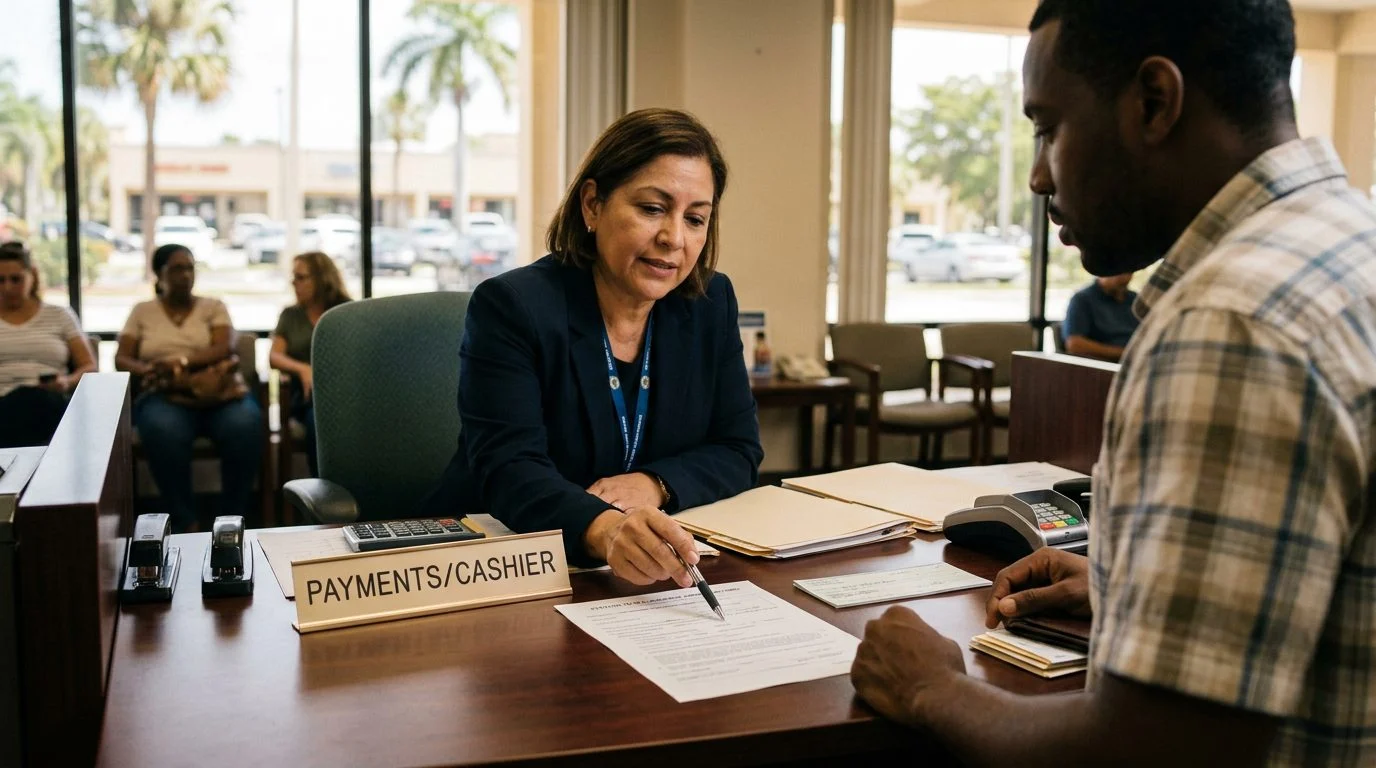
Second, call the clerk of court in the county where the case was filed. Ask whether any balance remains open, and ask about a payment plan. A balance may show under a different account or case number than you expect, so ask for each one by name.
Third, gather receipts for every payment you’ve made. Keep proof of each payment in one folder.
Fourth, apply to the Florida Department of Law Enforcement for a certificate of eligibility. Under Fla. Stat. § 943.059, a person seeking to seal a criminal history record must apply to the department for a certificate of eligibility for sealing before petitioning the court, and must submit to the department a certified copy of the disposition of the charge to which the petition pertains. FDLE’s sealing and expunging FAQ explains the certificate process.
Expect some costs. Under Rule 3.692, the petitioner pays for certified copies unless the petitioner is indigent.
What Documents Judges Typically Ask For
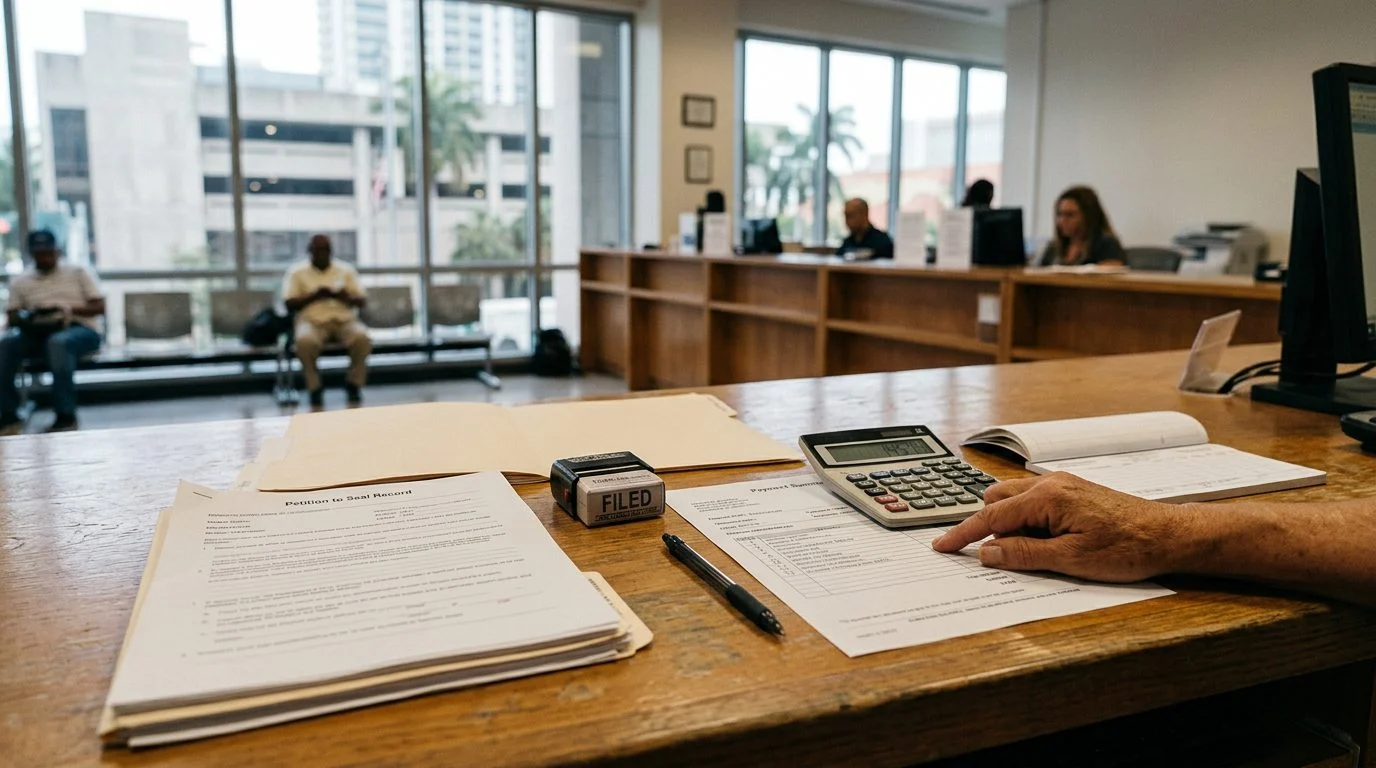
The core documents are the FDLE certificate of eligibility, a written petition with a sworn statement, and a certified copy of the disposition. Under Rule 3.692, the petition must include the certificate and the sworn statement, and both must be served on the prosecutor and the arresting agency.
The sworn statement says you meet the eligibility requirements. It also says you have no other petition to seal or expunge pending before any court. Read it carefully, because it is signed under oath.
Bring proof that your sentence is finished. Receipts or a clerk’s statement showing financial sanctions are paid can support that point, since early termination turns on those sanctions.
Know the one-arrest rule. Under Fla. Stat. § 943.059, a court may seal a record for one arrest or one incident. Records for additional arrests can be included only if they directly relate to the original arrest, and the order must say so.
Keep copies of everything. You may be asked for these papers again at a hearing, and missing or inconsistent information is a common reason for delay.
Not sure what your next step is?
Talk it through with our team — the first consultation is free, confidential, and carries no obligation.
Why Work With a Lawyer on a Sealing Petition
A lawyer can review your eligibility, your costs, your probation status, and your paperwork before you file. Patrick Wilson Law focuses on sealing and expunging criminal records for clients across South Florida, from Miami-Dade and Broward counties to the Keys. Patrick David Wilson is the responsible lawyer for this page.
Our lawyers can check the points that cause the most confusion. That includes whether a withhold of adjudication affects your test, whether a probation violation filing has paused your clock, and whether the one-arrest rule covers all your records. They can also line up the FDLE certificate and the petition in the right order.
A matter may be referred to another lawyer or firm when appropriate. We will tell you if that happens.
Frequently Asked Questions
Can I file if I have a payment plan with the clerk?
Maybe. Confirm the account status before you file.
Does a DUI or domestic violence charge change the process?
The sealing rules still apply, and some convictions are ineligible under the statute. For the DUI and commercial license angle, read our DUI record and CDL guide.
Does immigration status matter?
Immigration consequences can differ from state record rules, so review them before you file. Our non-citizen sealing guide covers that angle.
How long does the process take?
Timing depends on each stage: the FDLE certificate, the filing, and the court’s ruling. A lawyer can estimate timing once your file is reviewed.

Talk With Patrick Wilson Law About Your Unpaid Balance and Probation
If you still owe costs, or you’re not sure whether your probation has ended, a short talk about your file is a sensible next step. Call 786-761-1719 or leave a message to schedule a free first consultation. The first consultation is confidential and carries no obligation to continue. You can also reach us through our contact page.
How Patrick Wilson Law Approaches Your Record
Free, Confidential First Consultation
Your first consultation is free, confidential and carries no obligation to continue. Bring your questions and your paperwork.
Review of Your Case File
We look at the charges, the disposition and the status of any court costs on the account before discussing a path forward.
Focus on Criminal Records
Patrick Wilson Law focuses on criminal defense, including sealing and expunging criminal records, for people across South Florida.
Serving South Florida
From Miami and Hialeah to Fort Lauderdale, Homestead and the Florida Keys, we work with clients throughout Miami-Dade and Broward Counties.
Check the Account Before You File
Do not assume a petition can move forward until you have confirmed the status of your court costs with the clerk. Pulling the account details first can prevent delays and wasted filing fees.
Questions to Settle Before You Move Forward
Your Payment Status
Find out whether the balance is paid, unpaid or under a payment plan, and whether the clerk's records reflect that.
Your Full Case History
Gather the charges, dates and outcomes from every case on your record, including any DUI or domestic violence matter.
Other Records That Affect Your Plan
Some records involve complications, such as licensing issues or immigration concerns. Share the full picture so the plan fits your situation.
Next Steps With Your Attorney
Patrick Wilson Law can explain what the process involves and help you prepare the paperwork for your consultation.

