
Seal and Expunge Criminal Records | Miami
Expunging a Record in Florida: What It Does and What It Doesn't
Patrick Wilson Law, PLLC helps clients across Miami-Dade and Broward Counties understand what an expunction order changes, and what it leaves in place.
By Patrick David Wilson · Published October 30, 2026
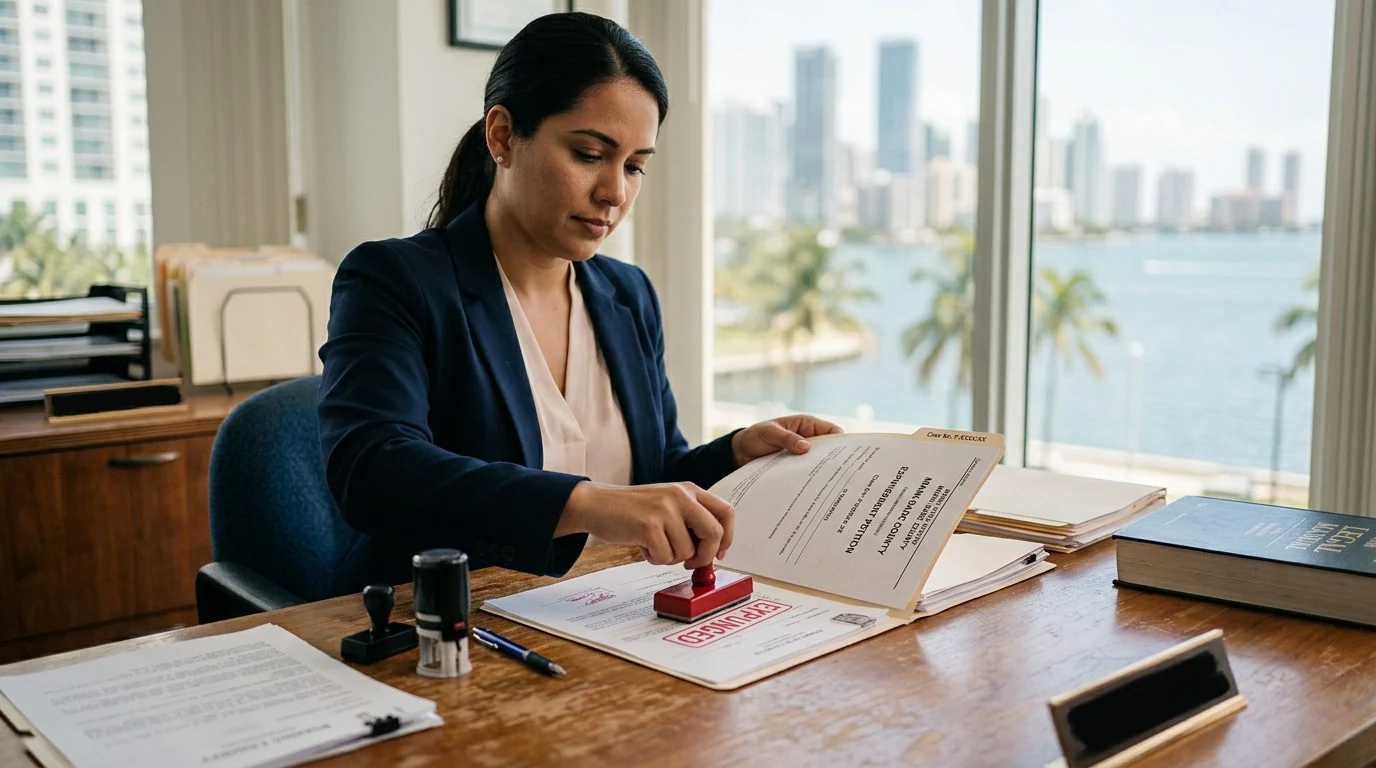
What does expunging a record do? In Florida, expunction is a court order that requires the agencies holding a criminal history record to destroy or obliterate it. The state keeps one confidential copy, so the record isn’t gone in every sense. Florida’s expunction statute sets the rules.
This guide explains what changes, what stays, and who can still see it. It is written under the responsibility of Patrick David Wilson, a lawyer at Patrick Wilson Law, PLLC, a criminal defense firm in Miami that serves Miami-Dade, Broward and the Florida Keys.
What Does Expunging a Record Mean?
Expunging a record means a court orders it removed from the places agencies keep it. Florida calls this process expunction. You can petition a court if no indictment, information, or other charging document was filed or issued in the case that created the record, or if one was filed and was dismissed or nolle prosequi by the state attorney or statewide prosecutor, dismissed by a court, or ended in a judgment of acquittal or a verdict of not guilty.
Eligibility isn’t only about how the case ended. The number of arrests matters too. A court may order expunction for one arrest or one incident only. It can cover more than one arrest only when the extra arrests directly relate to the original one, and the order must say so.
People often say a record gets erased. That word can mislead. The state’s copy stays on file, and a few people can still see it for limited reasons. For the broader picture of record relief, read our sealing and expunging overview.
Not sure what your next step is?
Talk it through with our team — the first consultation is free, confidential, and carries no obligation.

What Changes on Your Record After an Expunction Order?
After an expunction order, any criminal justice agency holding the record must physically destroy or obliterate it. The exception is the state’s copy, which the Florida Department of Law Enforcement must keep in all cases. Agencies may keep a notation that they complied with the order.
The clerk sends certified copies of the order to the prosecutor and the arresting agency. Under the expunction statute, any expunged criminal history record in the custody of the department must be retained in all cases.
This matters most for licensed professionals. Certain licensing and employment entities can learn that an expunged record exists, but only for their licensing, access and employment decisions. Fla. Stat. § 943.0585 reads: “I of the State Constitution, except that the department shall disclose the existence of a criminal history record ordered expunged to the entities set forth in subparagraphs (b)1. and 4.-9. for their respective licensing, access authorization, and employment purposes and to criminal justice agencies for their respective criminal justice purposes.” Their employees may not share that existence with anyone else, except the person involved or people with direct responsibility for those decisions. Whether you must mention an expunged arrest on a form depends on the exact wording of the question, so read each question closely.
Who Can Still See an Expunged Record?
The state’s retained copy is confidential. Outside the listed disclosures, only a court order can open it. Police and prosecutors can still learn that the record exists. The department shall disclose that existence to criminal justice agencies for their criminal justice purposes.
So a police officer checking a name in an official system may learn of an expunged record for those purposes. The statute’s disclosure list names licensing, access-authorization and employment entities.
The law also protects against careless disclosure. An employee of a listed entity who discloses the existence of an expunged record of a person seeking employment, access authorization, or licensure to anyone other than that person or those with direct responsibility for the employment, access authorization, or licensure decision commits a first-degree misdemeanor. The rule applies under Florida’s expunction statute.
Expunging vs. Sealing: What Each Does Differently
Expunging destroys or obliterates the record. Sealing is a separate, court-ordered process with its own rules. Under Fla. Stat. § 943.059, a record can be sealed only if it is not ineligible under s. 943.0584 and the person has never been adjudicated guilty in Florida of a criminal offense, or adjudicated delinquent in Florida for any felony or certain listed misdemeanors (unless that juvenile record was expunged under s. 943.0515); was not adjudicated guilty or delinquent for the acts in the case being sealed; is no longer under court supervision for that case; and has never had a prior sealing or expunction. Florida law sets out when a person is eligible to petition a court to seal a criminal history record.
If a sealing is granted, a person generally can’t be held to commit perjury for failing to recite the sealed record. That protection is subject to the statute’s exceptions.
Florida also has automatic sealing. Under Fla. Stat. § 943.0595, the department must seal certain records on its own. These include records where no charging document was filed, charges were dismissed or nolle prosequi, a not guilty verdict covered all counts, or a judgment of acquittal covered all counts. Automatic sealing has conditions. It excludes records from charges for a forcible felony or for certain sexual offenses listed in s. 943.0435, dismissals under s. 916.145 or s. 985.19, and not guilty by reason of insanity verdicts.
Automatic sealing doesn’t require other agencies to seal the record or surrender it to the court. Those agencies keep maintaining it. Because the rules differ, don’t assume one path covers your case just because the other does.
Can a Conviction Be Removed From My Record?
Often not through expunction, because the statute treats some convictions as ineligible.
Withheld adjudication has limits too. Under Fla. Stat. § 775.08435, a court may not withhold adjudication of guilt for a capital, life, or first degree felony offense.
Whether a given case qualifies depends on the facts, including the charge and how the case ended. Read the statute’s list before assuming anything about your own record.

What Are the General Steps to Expunge a Record in Florida?
Florida expunction generally starts with a Certificate of Eligibility from the Florida Department of Law Enforcement. The petition comes after that. Fla. R. Crim. P. 3.692 requires a written petition filed with the clerk, with the certificate and a sworn statement attached.
The completed petition, sworn statement, and certificate must be served on the prosecuting attorney and the arresting authority. The court may deny any request at its sole discretion. It may not order an agency to expunge a record until you have applied for and received the certificate.
The FDLE certificate instructions are a useful reference for anyone starting the seal and expunge process. The court, not FDLE, decides whether to grant the petition, according to FDLE’s frequently asked questions.
Costs matter as well. You pay for certified copies unless you are indigent, under the same rule. The order isn’t automatic. Eligibility comes first, then the petition, service, and a written court order if the judge grants it.
Frequently Asked Questions
What does expunging a record do?
A court order requires the agencies holding the record to destroy or obliterate it. The state keeps one confidential copy.
Can a cop see my expunged record?
Police and prosecutors can learn it exists for criminal justice purposes. Outside the listed disclosures, the state’s copy is confidential, and the clerk of the court certifies copies of the expunction order to the appropriate state attorney or statewide prosecutor and the arresting agency.
Is it possible to erase a criminal record?
Not completely. The state keeps a confidential copy, and the statute controls who can learn it exists.
Can I get a conviction removed from my record?
Often not through expunction. Some convictions are ineligible, and a withheld adjudication can still count as a conviction.
If an old arrest or charge is on your mind, our team can review your situation with you during a free, confidential initial consultation, with no obligation to continue. Patrick Wilson Law offers a free, confidential initial consultation, with no obligation to continue. Call 786-761-1719 or request a consultation.
How We Work With Clients
A Confidential First Conversation
Your first consultation is free, confidential and comes with no obligation to continue.
Review of Your Record
We look at the charges, the court file and the agencies that may hold copies before explaining what an order would do in your case.
Clear Answers About Limits
We explain which records and disclosures remain visible, so you know what to expect before you take any step.
Serving South Florida
Our Miami office serves clients from Miami-Dade and Broward Counties to Fort Lauderdale, Hialeah, Miami Beach, Homestead, Kendall and the Florida Keys.
Don't Assume a Record Is Gone
An expunction order does not erase every trace of an arrest. Some agencies can still see that the record existed. Speak with a lawyer before you answer questions about an arrest or sign any form that asks about your history.
Questions to Bring to Your Consultation
What Would Be Sealed or Destroyed?
Ask which agency records and court files would be affected, and how each one is handled.
Who Can Still Access It?
Ask which government agencies, prosecutors and licensing boards may still see the record and for what purposes.
How Does It Affect Jobs and Licenses?
Ask how an order may change what employers, schools and professional licensing bodies can learn about you.
What Are the Next Steps?
Ask what paperwork, fees and court filings the process involves so you can plan ahead.

