
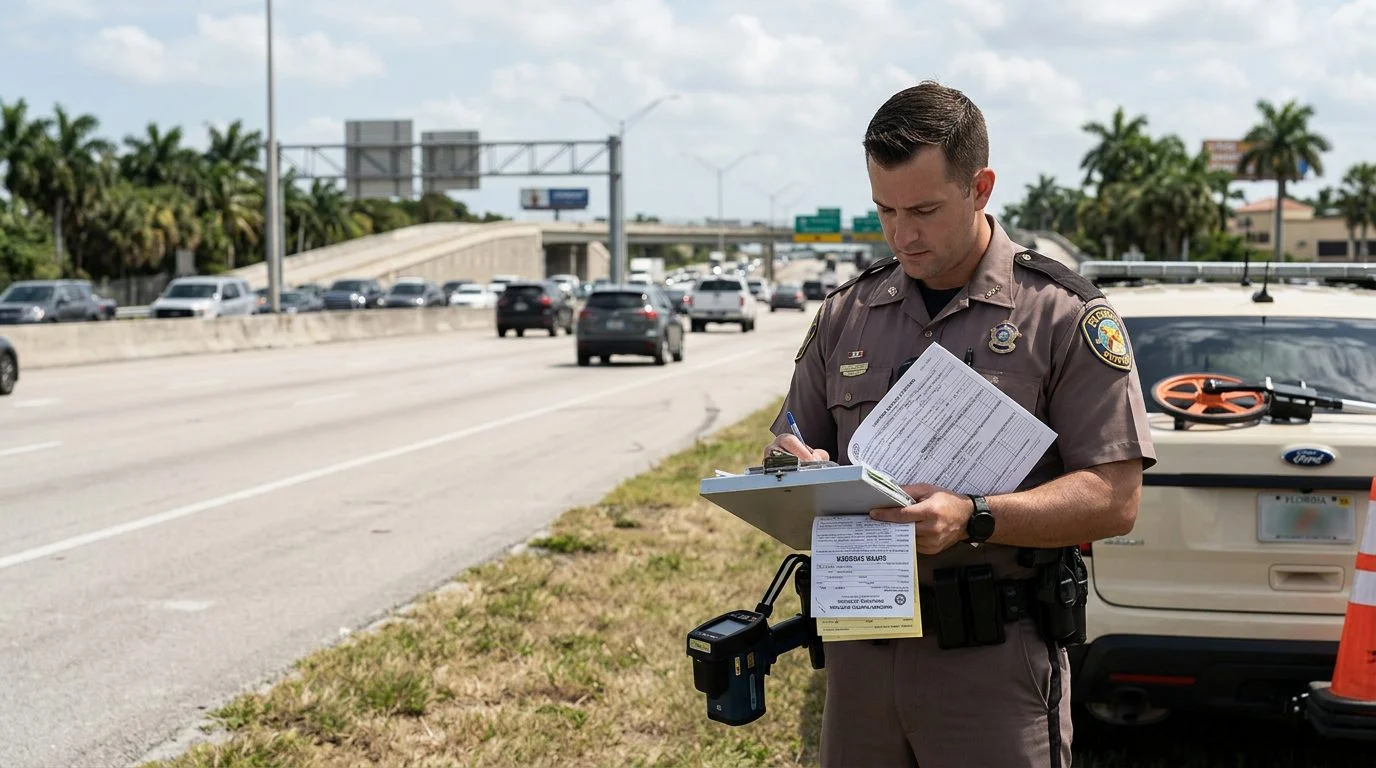
Super Speeder Defense | Miami, Florida
Charged With Super Speeding? Talk to a Miami Defense Lawyer
Patrick Wilson Law focuses on criminal defense across South Florida, from Broward County to the Keys, and can explain what this charge could mean for your license, your record and your future.
By Patrick David Wilson · Published November 11, 2026
Maybe you just got a ticket for driving very fast. Or maybe someone you love did, and you’re trying to make sense of it.
In Florida, dangerous excessive speeding is defined in Fla. Stat. § 316.1922 as operating a motor vehicle 50 mph or more over the speed limit, or at 100 mph or more in a manner that threatens the safety of other persons or property or interferes with the operation of any vehicle. If you were stopped for driving far above the speed limit, Florida’s dangerous excessive speeding law turns on two thresholds: going 50 mph or more over the posted limit, or driving 100 mph or more in a way that threatens other people or property.
Below, we explain each trigger, what officers do at the roadside, the penalties, and the options a driver may have.
What the Florida super speeder law covers
Florida’s super speeder law covers the most extreme speeding on the state’s roads. The rule sits in § 316.1922, which a 2025 amendment (ch. 2025-77) updated. That current text is the law that applies now.
This is not an ordinary speeding ticket. Ordinary speeding falls under § 316.183, which bars driving faster than is reasonable and prudent for the conditions. The super speeder charge covers driving far beyond the limit, or at very high speed in a dangerous way.
Section 316.183 sets maximum speed limits of 30 miles per hour in business or residence districts and 55 miles per hour at all other locations, and a violation of that section is a noncriminal traffic infraction punishable as a moving violation (§ 316.183). The citation itself can look routine. A violation of Section 316.183 is a noncriminal traffic infraction, punishable as a moving violation as provided in chapter 318. The number on the speedometer matters, and so does what the driving looked like to the officer.
If a super speeder citation has you or someone you love worried about jail, court dates, or a license, you don't have to sort it out alone. We're glad to talk it through. Talk it through with our team — the first consultation is free, confidential, and carries no obligation.
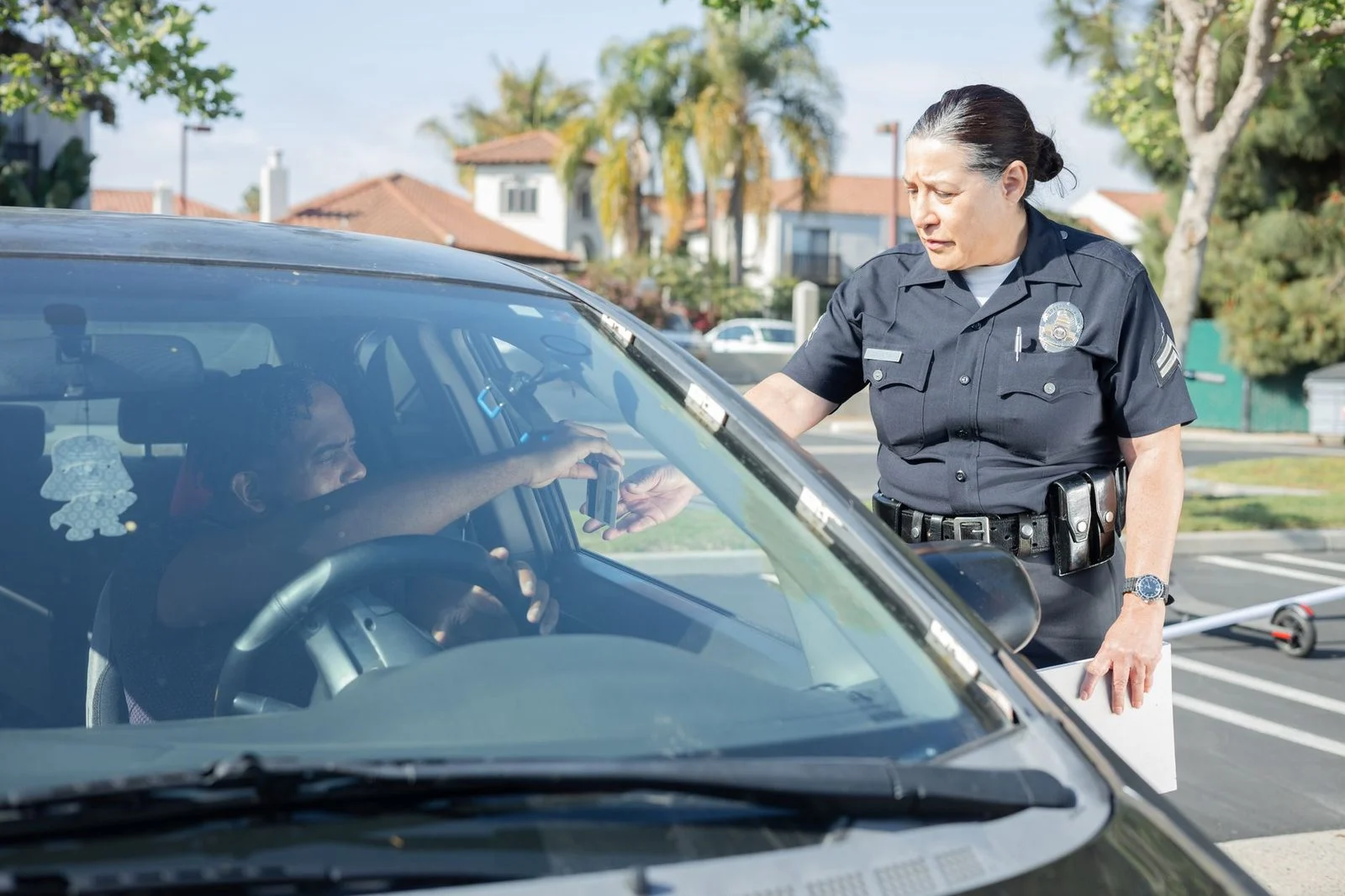
Speed thresholds: 50 mph over the limit or 100 mph
Driving 50 mph or more over the posted limit is one trigger. Driving 100 mph or more is the other, but only when it threatens safety or interferes with other vehicles. Both appear in § 316.1922(1).
A driver can meet one without the other. The first trigger is measured from the posted limit, so the same speed can meet it on one road and not another.
Is driving 50 mph over always a criminal offense? The statute lists 50 mph over as an offense in its own right, with no danger test added. On a 30 mph street, driving 80 mph meets that test.
Does driving 100 mph automatically mean I will be charged? No. Reaching 100 mph is not enough alone. The second trigger also needs a manner that threatens safety or interferes with traffic.
How officers handle a super speeder stop
Officers choose the response at the roadside, and a written citation is one possible result. An officer may arrest without a warrant for a misdemeanor committed in the officer’s presence. That arrest must be made immediately or in fresh pursuit (§ 901.15).
Three terms help. A citation is the ticket that names the charge. A notice to appear is a written order you sign, and it says you agree to appear at the time and place listed. An arrest means you are taken into custody.
Can I go directly to jail for speeding this fast? What happens at the roadside depends on the stop itself.
Penalties, license effects, and whether you must appear in court
Under § 316.1922(2), a first conviction carries up to 30 days in jail, a $500 fine, or both. A second or later conviction carries up to 90 days, a $1,000 fine, or both.
A second violation within 5 years of a prior conviction brings a driving privilege revocation of at least 180 days and no more than 1 year.
Do I have to appear in court? A notice to appear is a signed promise to go to court. If you sign it and do not respond, a warrant of arrest is issued under the rules (Rule 3.125(h)).
Can I drive after a super speeder ticket? A repeat conviction within 5 years can revoke your driving privilege. A person who drives while a license is canceled, suspended, or revoked commits a moving violation under § 322.34, except for a habitual traffic offender or as provided in subsection (2). A person who drives knowing of the cancellation, suspension, or revocation commits a second-degree misdemeanor on a first conviction, and repeat convictions can carry heavier penalties, such as a first-degree misdemeanor on a second or subsequent conviction when the suspension stems from certain underlying violations listed in the statute. A person who drives a commercial motor vehicle while the license is canceled, suspended, revoked, or disqualified is guilty of a first-degree misdemeanor on a first conviction. Find out where your license stands as soon as possible.
Standard speeding tickets and the highest legal speed limit in Florida
Ordinary speeding is a noncriminal traffic infraction (§ 316.183(7)). Under § 775.083, a fine for a noncriminal violation generally cannot exceed $500, unless a higher amount is specifically authorized by statute or equals double the pecuniary gain or loss.
Speed below the super speeder tests is handled as standard speeding. On a 30 mph street, driving 20 mph over means 50 mph, well below the 80 mph test. On a 55 mph road, 20 over is 75 mph, below the 105 mph test.
The statute sets default maximum limits of 30 mph in business and residence districts and 55 mph at all other locations. It allows some local exceptions (§ 316.183(2)). Posted limits vary by road.
Some speeding tickets are contested in court or negotiated with the prosecutor. The right approach turns on the specific citation.
What options a driver charged with a super speeder violation may have
A charged driver may have several paths. These include appearing in court, negotiating with the prosecutor, entering a plea, or going to trial. These are general paths in a criminal traffic case, not a promise of any result. The fit depends on the citation’s facts and the driver’s record.
A first-time offender’s record shapes those options. Sealing requires that the person has never been adjudicated guilty in Florida of a criminal offense, subject to the statute’s exceptions (§ 943.059(1)(b)). Under § 943.0585(1)(a), a person may be eligible to petition to expunge a criminal history record if a charging document, such as an indictment or information, was never filed or issued in the case. Under paragraph (1)(b), a person may also be eligible if a charging document was filed or issued but was dismissed or nolle prosequi by the prosecutor, was dismissed by a court, or ended in a judgment of acquittal or a verdict of not guilty. Other eligibility requirements also apply, a petitioner must obtain a certificate of eligibility from the department, and the court may deny the petition.
Both processes go through the court. A copy of the completed petition must be served on the state attorney and the arresting agency (§ 943.059(5)(a)). Eligibility depends on how the case ends and on the prior record.
Not sure what your next step is?
Talk it through with our team — the first consultation is free, confidential, and carries no obligation.
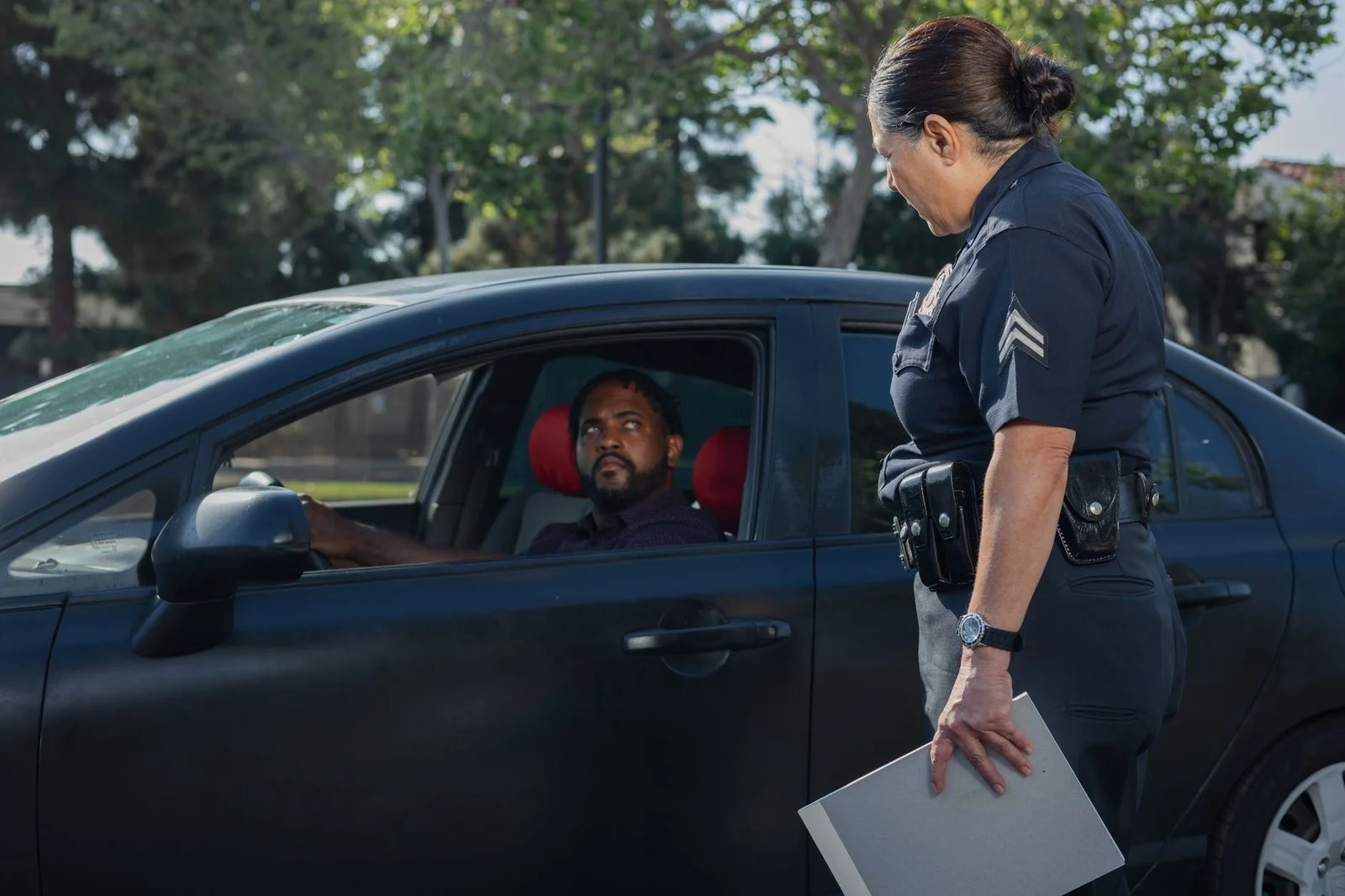
How an attorney can help with a super speeder charge
A criminal defense attorney reviews the citation and the officer’s report. The attorney tracks court dates, talks with the prosecutor, and explains what a conviction would mean for your license and your record.
Patrick Wilson Law, PLLC is a Miami criminal defense firm. It focuses on DUI, traffic homicide, domestic violence, and first-time offender cases across South Florida, from Broward County to the Florida Keys. Patrick David Wilson is the responsible lawyer for this page.
If a super speeder citation has you worried about jail, court dates, or your license, you don’t have to face it alone. Call 786-761-1719 or request a free first consultation. The first consultation is free, confidential, and carries no obligation to continue.
How Patrick Wilson Law Approaches Your Case
A Confidential First Conversation
Your free first consultation is confidential and comes with no obligation to continue. You can share the details of your stop openly.
A Careful Review of the Facts
We look at how you were stopped, the speed recorded, the road conditions and the paperwork you received so you understand where your case stands.
Defense Built Around Your Record
We take into account your driving history, your job and any professional license you hold, and we work to protect them as the case moves forward.
Support Throughout the Process
Our team keeps you informed about each step, from your first court date through resolution, so you are never left guessing about what comes next.
Do Not Wait to Get Advice
A super speeder charge can carry serious penalties and can lead to a criminal case. Speaking with a defense lawyer early gives you more time to understand your options before you appear in court.
Common Concerns About a Super Speeder Charge
Your Driver License
Questions about suspension, reinstatement and how a conviction could affect your ability to drive are some of the first things we review with clients.
Your Criminal Record
A charge can follow you into job applications, professional licensing and housing. We discuss how the case could affect your record and what options may be available.
Your Job and Professional Standing
For licensed professionals and employees who drive for work, we consider how a charge could affect employment and licensing, and plan the defense accordingly.
Your Next Steps
Knowing which deadlines, hearings and documents matter most helps you make informed decisions. We explain each step in plain language.

