
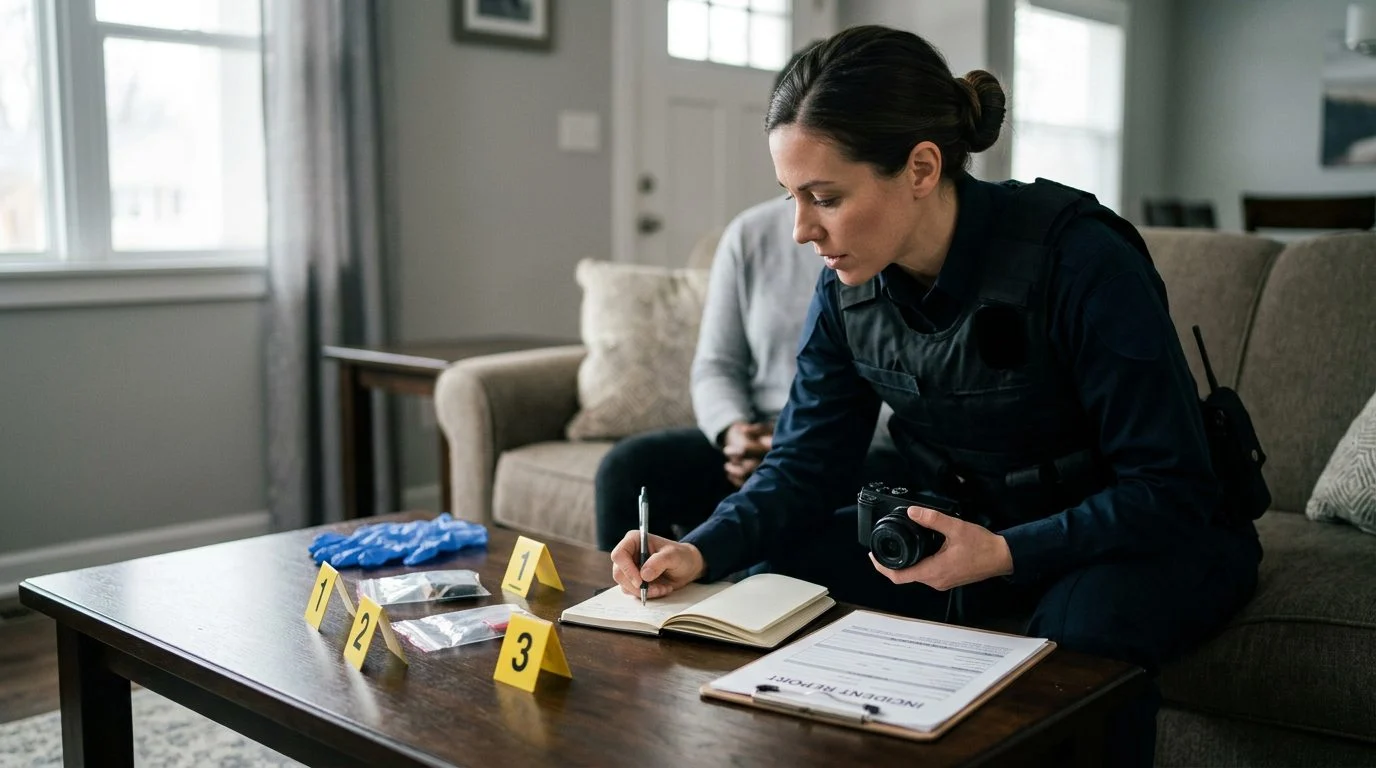
Sexual Battery Defense | Miami, Florida
Facing a Sexual Battery Charge Involving an Incapacitated Person?
Patrick Wilson Law focuses on criminal defense across South Florida, from Miami-Dade and Broward to the Florida Keys. Patrick David Wilson, responsible attorney for this page, can review the facts of your case with you in a confidential setting.
By Patrick David Wilson · Published November 4, 2026
A sexual battery incapacitated victim charge in Florida means the State says the alleged victim could not agree to sexual contact. Florida’s sexual battery law is in Chapter 794, and it defines consent narrowly. This page explains the key terms, what prosecutors must show, the defense questions that often matter, and what usually happens next.
What an Incapacitation Allegation Means in a Florida Sexual Battery Case
An incapacitation allegation says the alleged victim was unable to agree to the contact. Florida’s sexual battery statute, Fla. Stat. § 794.011, sets out the key definitions.
The statute says consent means “intelligent, knowing, and voluntary consent.” It does not include coerced submission. It also says a person’s failure to physically resist is not consent.
Two definitions matter most:
- Physically helpless means “unconscious, asleep, or for any other reason physically unable to communicate unwillingness to an act.”
- Incapacitation by drugs covers a case where the offender, without the victim’s prior knowledge or consent, administers or has knowledge of someone else administering to the victim a narcotic, anesthetic, or other intoxicating substance that “mentally or physically incapacitates” the victim.
An incapacity theory is one way the State can frame a charge. Other cases rest on force, threats, or other circumstances. The facts alleged decide which theory applies.
Capital sexual battery is a separate category. Under the statute, a person 18 or older who commits sexual battery upon, or in an attempt to commit sexual battery injures the sexual organs of, a person younger than 12 commits a capital felony (s. 794.011(2)(a)), and that charge follows its own sentencing process. Most incapacity allegations look different from that. They involve the alleged victim’s condition at the time of the contact.
If an accusation based on claimed incapacity has turned your life or a loved one's upside down, our team is ready to talk through what comes next. Talk it through with our team — the first consultation is free, confidential, and carries no obligation.
What the State Must Prove When Incapacity Is Alleged
Sexual battery cases often center on disputed facts, including whether contact occurred and whether consent was given. In an incapacity case, the question is whether the alleged victim was physically helpless, meaning unable to communicate unwillingness to an act, or mentally incapacitated, meaning temporarily incapable of appraising or controlling a person’s own conduct due to an administered intoxicant or other act committed without consent.
Drinking alone is not the same as legal incapacity. A person who drank can still be able to talk, decide, and act. The statutory question is whether that person was unconscious, asleep, or otherwise unable to communicate unwillingness.
Prosecutors often rely on several types of evidence:
- Toxicology results and when the samples were taken
- Accounts from people who were present
- Text, social media, and messaging records
- Surveillance video and location data
- Medical records and sexual-assault kit results
Florida has procedures for tracking, storing, testing, and reporting the status of sexual-assault kits, according to the Florida Department of Law Enforcement. Kit results can become part of the case file. The timing of collection matters.
The accused’s knowledge is a separate question from the victim’s actual condition. Both can matter. What the accused saw, heard, or was told before the contact often becomes central.
Defense Options in Incapacitation Cases
The main defense questions are whether the alleged victim was incapacitated, what the accused knew, and whether the evidence was gathered lawfully. Every case turns on its own facts, and no outcome can be promised.
Common lines of review include:
- The timeline. Each drink, message, arrival, and departure is checked against the others.
- Witness statements. Changes or contradictions across statements can matter a great deal.
- Toxicology timing. A test taken hours later may not show the alleged victim’s condition during the contact.
- Digital messages and location data. Messages before and after the contact can show how the alleged victim communicated and moved.
- Lawful gathering. A defendant who claims evidence came from an unlawful search, or that statements were obtained unlawfully, may move to suppress that evidence under Fla. R. Crim. P. 3.190.
- Procedure. Charging and trial deadlines apply, as covered in the next section.
Statute of Limitations and Timing Questions
Florida’s time limits depend on the charge, the alleged victim’s age, and when the matter was reported. Under Fla. Stat. § 775.15, a prosecution for a capital felony or life felony may be commenced at any time.
The window for offenses not otherwise barred from prosecution between July 1, 2004, and June 30, 2006 is in s. 775.15, not in s. 794.011. That covers offenses not otherwise barred from prosecution between July 1, 2004, and June 30, 2006.
The date of the event and the date of the report are different dates. Both can affect timing questions. Reviewing the exact dates in the police report or charging document early helps show which rules may apply.
Timing also matters for the record. If a case was dismissed, or ended in acquittal or a not-guilty verdict, a person may be eligible to petition for expunction under Fla. Stat. § 943.0585. A certificate of eligibility is valid for 12 months after it is issued.
What to Expect After an Incapacitation Allegation Is Made
A typical case moves from arrest to first appearance, formal charges, discovery, motions, and then negotiation or trial. Each stage has its own rules.
- Report and investigation. A report may come days, weeks, or longer after the event. Investigators gather statements, records, and physical evidence.
- First appearance. Unless previously released in a lawful manner, an arrested person must see a judge within 24 hours, in person or by audio-video technology at the court’s discretion. The judge must say the defendant is not required to say anything, and that anything said may be used. See Fla. R. Crim. P. 3.130.
- Don’t ask a friend to pass along a message.
- A defendant in custody must be released on their own recognizance on the 33rd day after arrest unless formally charged by then. If good cause is shown by the state, the release date is the 40th day, and a defendant cannot remain in custody beyond 40 days without formal charges. For a defendant on pretrial release, the deadline is 60 days. See Fla. R. Crim. P. 3.134.
- See Fla. R. Crim. P. 3.220.
- Motions and trial. Defense motions can challenge evidence and shape the case. See Fla. R. Crim. P. 3.191.
Actual timing varies from case to case. Negotiation or trial depends on what the evidence shows.
Why Patrick Wilson Law for Florida Sexual Battery Defense
Patrick Wilson Law is a Miami criminal defense firm. The firm focuses on DUI, domestic violence, sexual battery, and traffic homicide charges across South Florida, from Broward County to the Florida Keys. It concentrates on first-time offenders and licensed professionals whose careers can be affected by a charge.
Patrick David Wilson is the responsible lawyer for this page. Sahara Fonseca is also one of the firm’s lawyers. Our team reviews digital evidence, timelines, and toxicology in incapacity cases. We compare those records against the statutory questions described above.
The firm also handles sealing and expunction of criminal records. We represent people in Miami-Dade, Broward County, Fort Lauderdale, Kendall, Hialeah, Miami Beach, Homestead, and the Florida Keys. A matter may be referred to another lawyer or firm when that is appropriate. We will tell you if that happens.
Not sure what your next step is?
Talk it through with our team — the first consultation is free, confidential, and carries no obligation.

Frequently Asked Questions About Incapacitation Allegations in Florida
What is sexual battery in Florida?
Sexual battery is covered in Chapter 794 of Florida law. Chapter 794 of the Florida Statutes defines key terms such as consent and physically helpless.
How long does the State have to bring a sexual battery charge?
The answer depends on the charge, the victim’s age, and when the case was reported. Under § 775.15, capital and life felonies, and a felony that resulted in a death, can be charged at any time.
Can someone be accused if the alleged victim had been drinking?
Yes, an accusation can be made in that situation. The legal questions include whether the person was unconscious, asleep, or otherwise unable to communicate unwillingness, and whether the person gave intelligent, knowing, and voluntary consent; failure to physically resist is not consent.
Does the accused’s knowledge of the alleged victim’s condition matter?
Yes. It is a separate question from the victim’s actual condition. What the accused knew or could observe often becomes central to the case.
Can a first-time accused still face serious consequences?
Yes. A felony charge can affect jobs, professional licenses, and immigration status, even without a prior record.
What should I do right now?
Write down what you remember, including dates and places.
Facing an accusation like this can be stressful, and a confidential conversation with a lawyer can help you understand what comes next. Our first consultation is free, confidential, and carries no obligation to continue. Call 786-761-1719 or leave us a message.
Why Clients Call Patrick Wilson Law
Serving South Florida
We represent clients in Miami, Miami-Dade County, Broward County, Fort Lauderdale, Kendall, Hialeah, Miami Beach, Homestead and the Florida Keys.
Careful Case Review
We examine the timeline, the evidence and the circumstances surrounding the allegation, including what the accused knew at the time.
Confidential Conversations
Our team understands how serious these allegations are, for your personal life, your family and your career.
Important: Speak With a Lawyer Before You Respond
If you learn that you are under investigation, avoid contacting the alleged victim, witnesses or police about the allegation until you have discussed your situation with an attorney.
How We Approach Your Case
Initial Consultation
Your first consultation is free, confidential and comes with no obligation to continue. We listen to your account and answer your questions.
Review of the Allegation
We look at the reported facts, the statements made, the physical and digital evidence, and any questions about the complainant's condition at the time.
Defense Strategy
Based on the review, we discuss the options available to you and what each one could mean for your case, your record and your future.
Ongoing Communication
We keep you informed at each stage of the case so you understand what is happening and what comes next.

