
Vehicular Homicide Defense | Miami, Florida
Facing a Vehicular Homicide Charge? Start With a Clear Defense Plan
Speak with Patrick David Wilson about the charge against you.
By Patrick David Wilson · Published October 23, 2026
Florida’s statute uses the words “reckless manner” instead. This page explains what that standard means, how each side argues it, and where crash evidence fits. It’s written for drivers and families in Miami-Dade, Broward, and the Florida Keys.
Short Answer: Culpable Negligence in Plain Terms
In a vehicular homicide case, the question isn’t only whether someone died. The question is how the driver acted behind the wheel. A death caused by an honest error and a death caused by a reckless choice can look the same on a police report.
Culpable negligence is a criminal-law idea. Keep the two apart when you read about a crash.
If a crash in Miami-Dade or Broward has left you or your family facing hard questions about how the driving will be judged, we're glad to talk it through with you. Talk it through with our team — the first consultation is free, confidential, and carries no obligation.
Where the Standard Comes From: Florida Statute 782.071
The standard comes from Fla. Stat. § 782.071, Florida’s vehicular homicide statute. It defines the offense as killing a human being by operating a motor vehicle “in a reckless manner likely to cause the death of, or great bodily harm to, another.” The State must tie the death to driving that fits that description. That tie is where the mental-state question sits.
The statute does not require proof that the driver knew the crash caused injury or death.
Judges may use the Florida Standard Jury Instructions in Criminal Cases. Fla. R. Crim. P. 3.390 says the judge instructs the jury only on the law of the case. That rule allows the judge to use the Florida Standard Jury Instructions in Criminal Cases, which may be the source of the instruction language jurors hear.
Culpable Negligence Compared With Ordinary Negligence
Florida’s driving statutes show the ladder. Fla. Stat. § 316.1925 covers careless driving, which means failing to drive in a careful and prudent manner. Fla. Stat. § 316.192 covers reckless driving, which means driving in willful or wanton disregard for safety.
Consider two drivers. The first glances at a phone for two seconds, drifts across a lane, and hits a cyclist. The second keeps weaving through heavy traffic after being warned about a dangerous condition. The first looks like a lapse. The second looks like a choice to keep driving dangerously. Those facts invite very different arguments about mental state.
The same crash can also support a civil claim.
How Prosecutors Argue the Element
Prosecutors usually argue that several driving facts, taken together, show the driver ignored a known danger. No single fact carries the case by itself. They build a pattern from the evidence.
Common facts include:
- Speed. Fla. Stat. § 316.183 bars driving faster than is reasonable and prudent for the conditions.
- Following distance. Fla. Stat. § 316.0895 bars following another vehicle more closely than is reasonable and prudent.
- Impairment. Fla. Stat. § 316.193 covers driving when normal faculties are impaired by alcohol or drugs.
How strong this argument is depends on the facts of each crash.
How Defense Lawyers Challenge the Element
Defense lawyers often argue the conduct was ordinary carelessness. The challenge targets the mental-state question, not only the death.
Road conditions, weather, a mechanical failure, or another driver’s actions can change how the State’s facts read. Reconstruction data, vehicle event data, witness accounts, and timing records can test the State’s version of events. A timeline that doesn’t match the physical evidence can shift the picture.
Jury instructions are another tool. Under Fla. R. Crim. P. 3.390, any party may file written requests that the court instruct the jury on the law. Those requests can be filed at the close of the evidence or at an earlier time the court directs.
Narrowing the mental-state element can reshape a case even when nobody disputes the death.
How the Investigation Evidence Connects to the Standard
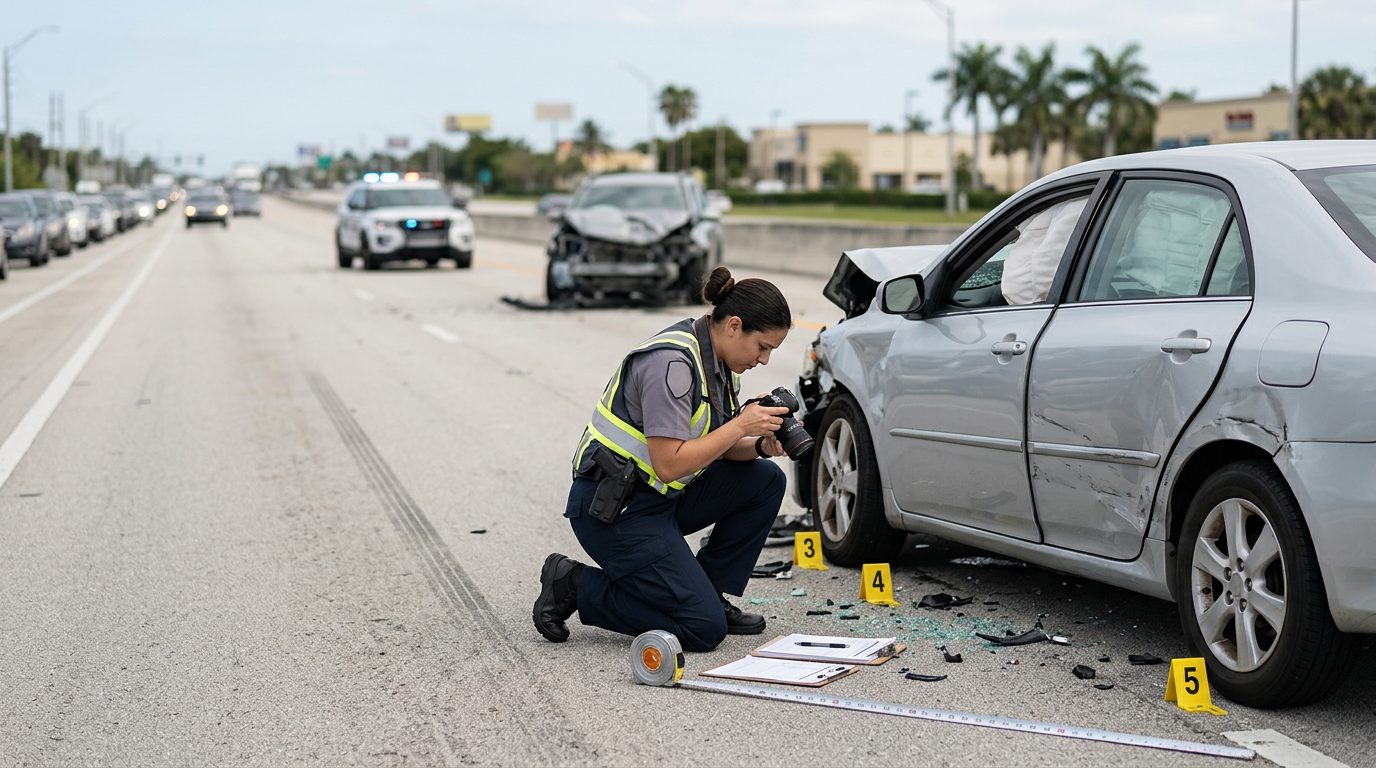
Crash investigation records feed directly into the question of how the driver acted. Blood test results are one example.
If an officer has probable cause that an impaired driver’s vehicle caused a death or serious bodily injury, the officer must require a blood test. The officer may use reasonable force if needed.
“Serious bodily injury” has a set meaning. It is an injury creating a substantial risk of death, serious personal disfigurement, or protracted loss or impairment of a bodily member or organ.
Florida’s crash-related duties are set out in state statutes, and § 316.062 is one of them. A person convicted of DUI manslaughter faces the penalties set out in § 316.193.
For the full framework of charges and penalties, see our pillar page on Florida vehicular homicide defense. Our resources on speed evidence and blood test results go deeper on those topics.
Not sure what your next step is?
Talk it through with our team — the first consultation is free, confidential, and carries no obligation.
Talk Through Your Case With Patrick Wilson Law
Picture a family that lost someone in a crash. The driver was arrested, or was told a vehicular homicide charge may be filed. The central question is whether the State can prove how that driver acted.
Patrick Wilson Law, PLLC is a Miami criminal defense firm. It focuses on criminal defense across South Florida, including traffic homicide cases. Patrick David Wilson is the responsible lawyer for this page. The firm serves Miami-Dade, Broward County, Fort Lauderdale, and the Florida Keys from its Miami office.
Is culpable negligence the same as ordinary negligence?
Does vehicular homicide require impairment?
The statute’s text centers on driving in a reckless manner.
Can the family sue after a fatal crash?
Florida’s statute says a right to sue for civil damages exists under s. 768.19 for these deaths, under all circumstances.
If you’re the driver facing questions, or a family member trying to understand what the State must prove, the team at Patrick Wilson Law can review the crash facts with you. Call 786-761-1719 or leave us a message. The first consultation is free, confidential, and carries no obligation to continue.
How Our Firm Approaches These Cases
Protecting your future
A vehicular homicide charge can affect your freedom, your record and your work.
Careful review of the evidence
Crash reports, vehicle data, scene measurements and witness accounts are reviewed to test the State's version of events.
Clear communication
Our team keeps you informed at each stage and explains your options in plain language.
Serving South Florida
We represent clients in Miami, Miami-Dade County, Broward County, Fort Lauderdale, Hialeah, Kendall, Homestead, Miami Beach and the Florida Keys.
Act Early
Statements made to police, insurance adjusters or others after a crash can become part of the case. Talk with a lawyer before answering questions about the collision.
Key Terms in Florida Vehicular Homicide Cases
Vehicular homicide
782.071, the offense involves a killing caused by the operation of a motor vehicle in a reckless manner likely to cause death or great bodily harm.
Reckless manner
The statute centers on how the vehicle was operated. Whether impairment is involved is a separate question that depends on the facts of each case.
Related charges
Leaving the scene of a crash, DUI and traffic-related offenses may be charged alongside a vehicular homicide allegation and require a coordinated defense.

