
Vehicular Homicide Defense | Miami, FL
Arrested After a Fatal Crash in Florida? Speak With a Miami Defense Lawyer Now
Patrick Wilson Law, PLLC focuses on defending drivers charged after fatal crashes across Miami-Dade, Broward and the Florida Keys. Your first consultation is free, confidential and comes with no obligation to continue.
By Patrick David Wilson · Published October 24, 2026
If you were driving in a crash that killed someone in Florida, you can be arrested at the scene or later, after police and prosecutors review the case. An arrest and a formal charge are different steps with different rules. This page explains how they work in general terms. The outcome in any case depends on its specific facts.
Why the Question Matters Right After a Fatal Crash
Many people ask, will I be arrested after a fatal crash Florida? The honest answer is that an arrest can happen before any case is filed, and the timing is hard to predict. A crash that causes a death is frightening. The uncertainty about what comes next is often the hardest part.
Most drivers in this spot have never dealt with police or courts before. They may not know whether an officer’s questions were routine or the first step toward an arrest.
This page is written by Patrick David Wilson, the responsible lawyer for this page, for Patrick Wilson Law, PLLC. The firm is a criminal defense practice based in Miami. It serves clients across South Florida, from Broward County to the Florida Keys.
We cover three things: the difference between an arrest and formal charges, how leaving the scene changes the picture, and what a driver can do in the first hours and days.
If you were driving in a crash that killed someone, you don't have to work out the arrest question alone, and our team at Patrick Wilson Law is ready to hear your facts. Talk it through with our team — the first consultation is free, confidential, and carries no obligation.

Arrest Is Not the Same as Being Charged
An arrest is when police physically take a person into custody. Formal charges are the court papers that start a criminal case. In Florida, felony charges come by information or indictment. An information charging a felony must carry a signed oath from the prosecutor (Florida Rule of Criminal Procedure 3.140).
An officer may arrest a driver without a warrant when a traffic violation happens in the officer’s presence. The arrest can happen right away or in fresh pursuit (Fla. Stat. § 901.15).
Timing runs in both directions. A person can be arrested and released while no case moves forward. Or charges can come later, with no arrest at the scene. Fatal crash investigations can take days or weeks, so the charging decision often comes long after the crash.
Once someone is in custody, a filing clock starts. The state must file formal charges within 30 days of arrest. If it doesn’t, the court must order release on the 33rd day, or on the 40th day if the state shows good cause. No one may stay in custody beyond 40 days without formal charges (Fla. R. Crim. P. 3.134). For someone on pretrial release, the deadline is 60 days. The court may allow up to 30 more days for good cause under the same rule.
Can a Driver Be Arrested at the Scene of a Fatal Crash?
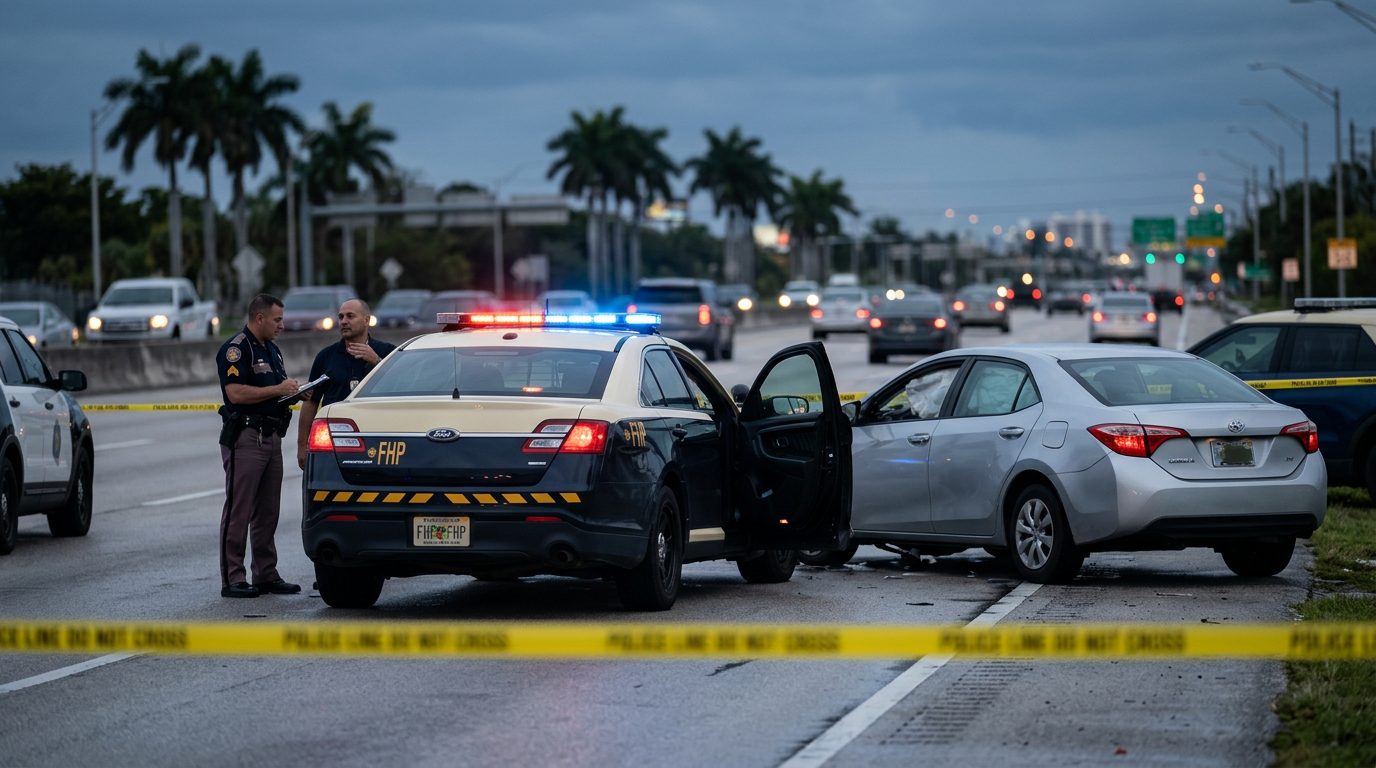
Yes. An officer at the scene may arrest a driver when the officer has reasonable and probable grounds, based on personal investigation, to believe the driver committed a traffic offense in connection with the crash (Fla. Stat. § 316.645).
In the first hours, officers usually take statements, look at vehicle damage, speak with witnesses, and check for signs of impairment. When alcohol or drugs may be involved, officers may use standardized field sobriety tests. A North Miami police DUI document describes these tests and how officers decide on arrests and breath or blood requests.
Blood testing has its own rule. If an officer has probable cause to believe an impaired driver caused a death or serious bodily injury, the officer must require a blood test. When an officer has probable cause to believe that a driver under the influence of alcohol, chemical substances, or controlled substances caused a death or serious bodily injury, the officer may use reasonable force if necessary to require a blood test.
Reporting duties apply from the start. A driver in a crash that causes injury or death must immediately give notice to the local police. Outside a city, notice goes to the county sheriff or the nearest Florida Highway Patrol office. Violating that duty is a noncriminal traffic infraction (Fla. Stat. § 316.065).
A common mistake is to assume a driver who did not cause the crash has nothing to report. The duty applies to any driver of a vehicle involved in a crash resulting in injury to or death of any persons or damage to any vehicle or other property in an apparent amount of at least $2,000.
How Leaving the Scene Changes the Picture
Leaving the scene of a crash that caused a death is treated far more seriously than staying. A driver in that kind of crash must bring the vehicle to a halt at the scene, or as close as possible. The driver must remain there until the duties in § 316.062 are met (Fla. Stat. § 316.027).
Only when a driver willfully violates the duty to stop and remain at the scene in a crash that caused a death does a mandatory minimum of 4 years apply (s. 316.027(2)(c)).
Vehicular homicide can also be charged here. It is a second-degree felony. Section 316.062 requires the driver to give name, address, and registration number and render reasonable assistance; it does not itself set a felony. Under Fla. Stat. § 782.071, vehicular homicide becomes a first-degree felony if the driver knew or should have known the accident occurred and failed to give information and render aid under § 316.062, or if the person has a prior conviction under this section, s. 316.193(3)(c)3., s. 327.35(3)(a)3.c., or s. 782.072.
The Florida Department of Highway Safety and Motor Vehicles explains the duty to remain at crash scenes and the penalties for hit-and-run crashes (Florida hit-and-run awareness page).
A driver who did not cause the crash can still face questions about why they left. Why a driver left is a fact question for the case.
Vehicular Homicide and Related Charges Before Filing
Vehicular homicide is the killing of a human being, or the killing of an unborn child by any injury to the mother, caused by another person’s operation of a motor vehicle in a reckless manner likely to cause death or great bodily harm (Fla. Stat. § 782.071). It is a charge separate from the crash itself.
Prosecutors review the investigation before deciding what to file. A case can sit in the investigation stage for some time. The custody and release deadlines in Rule 3.134 apply once a person is in custody or on pretrial release.
Rule 3.134 sets deadlines for the state to file formal charges against defendants in custody or on pretrial release; it does not address civil damages for these deaths. That matters for a victim’s family.
Patrick Wilson Law focuses on DUI and vehicular homicide defense for drivers across South Florida. The firm’s vehicular homicide defense page covers these charges in more depth.
What a Driver Can Do in the Hours and Days After the Crash
The most useful early steps are to meet the reporting duties and to think before answering questions. A driver must give name, address and vehicle registration number. The driver must also give reasonable help to anyone hurt, including arranging transport to treatment when it is apparently needed or when the injured person requests it (Fla. Stat. § 316.062).
That same statute says the duty to make a report or give information to a law enforcement officer making a written report about the crash does not reach information that would violate the driver’s privilege against self-incrimination. A driver can meet the duty without volunteering a statement about fault.
It also helps to ask whether you are free to leave. Keep your answers short and factual. Statements made at a crash scene can matter later.
If the driver is a teen or young adult, the process can differ from an adult’s case. The firm’s young-driver fatal crash page covers those differences in plain terms.
Not sure what your next step is?
Talk it through with our team — the first consultation is free, confidential, and carries no obligation.
Next Steps If You or Someone You Love Is Facing This Question
If a crash has left someone dead, waiting to hear whether police will return is hard. Many people in this spot are a parent, spouse or friend trying to help someone they love.
Will I be arrested after a fatal crash Florida?
An officer can arrest a driver at the scene when reasonable and probable grounds tied to the crash exist. Arrests can also follow later, as the investigation moves forward.
Is hit-and-run with a death a felony in Florida?
Yes. A willful violation of the duty to remain at the scene of a crash that results in death is a first-degree felony with a 4-year mandatory minimum, though the defendant may ask the court to depart from that minimum unless the violation happened while driving under the influence.
How long can police hold someone before charges are filed?
If someone is in custody, the state must file formal charges within 30 days of arrest. No one may stay in custody beyond 40 days without formal charges.
Is vehicular homicide a felony in Florida?
Yes. Vehicular homicide is a second-degree felony, and it becomes a first-degree felony under the conditions in the statute.
Do I have to talk to police after a fatal crash?
You must give your name, address and registration number, and you must render reasonable aid. The statutory duty to make a report or give information to a law enforcement officer making a written report about a crash does not extend to information that would violate your privilege against self-incrimination.
If you’re trying to work out whether an arrest is coming, you don’t have to face that question alone. Call Patrick Wilson Law at 786-761-1719, leave a message, or use our contact page. The first consultation is free, confidential and carries no obligation to continue.
How Patrick Wilson Law Approaches Fatal Crash Cases
Early Case Review
We look at the crash, the police report and the timeline of events to understand what the investigation may bring next.
Focused Criminal Defense
The firm concentrates on criminal defense, including vehicular homicide, leaving the scene and related driving charges.
Clear Communication
Our team explains each step of the process in plain language so you know what to expect from arrest through court.
Confidential Conversations
Everything you share during your free first consultation is kept confidential, and you are under no obligation to continue.
Before You Speak With Police
Ask for a lawyer before answering questions about the crash.
Related Charges We Handle
Vehicular Homicide
Defense for drivers accused of causing a death while operating a vehicle.
Leaving the Scene of an Accident
Defense for drivers charged with failing to stop or remain at the scene of a crash involving injury or death.
DUI Defense
Defense for impaired driving charges that arise from crashes or traffic stops.
Super Speeder Defense
Defense for drivers cited for extreme speed under Florida's super speeder statute.

