
Criminal Defense in Miami and South Florida
Facing Charges After a Fatal Crash While Speeding?
Patrick Wilson Law, PLLC defends people charged in Florida after a fatal crash, including vehicular homicide, leaving the scene and dangerous excessive speeding charges. Understand what the charges mean and where your options stand.
By Patrick David Wilson · Published October 25, 2026
Short Answer: Speeding Can Be Part of a Vehicular Homicide Case, but It Is Not the Only Possible Charge
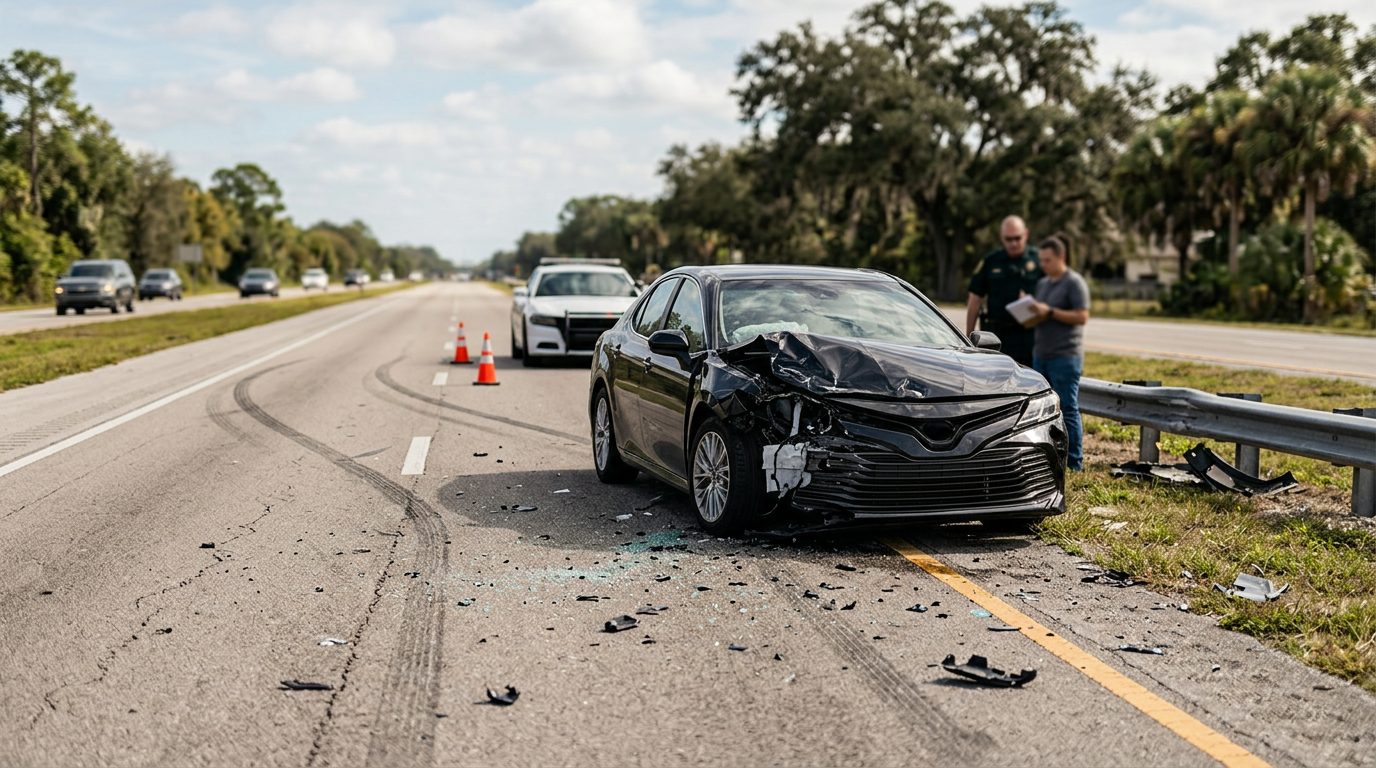
A fatal crash involving speed in Florida can lead to a vehicular homicide charge, a reckless driving charge, a dangerous excessive speeding charge, or a mix of them. Speed alone doesn’t decide which charge applies. Prosecutors look at how the driver operated the vehicle, what the crash caused, and what the driver did afterward.
If you’re searching for fatal crash while speeding Florida charges, you may be the driver or someone close to one. Either way, the charges can feel confusing, and the timeline can feel urgent. This page explains each charge in plain terms, using Florida’s statutes.
Vehicular homicide is the most serious of the three. Florida defines it as a killing caused by operating a motor vehicle “in a reckless manner likely to cause the death of, or great bodily harm to, another” (Florida Statute 782.071). For the wider picture, read our vehicular homicide defense guide for South Florida.
If a fatal crash has left you or someone you love facing these charges, we're glad to talk through what may apply to your situation. Talk it through with our team — the first consultation is free, confidential, and carries no obligation.
The Three Charges a Speed-Related Fatal Crash Can Produce
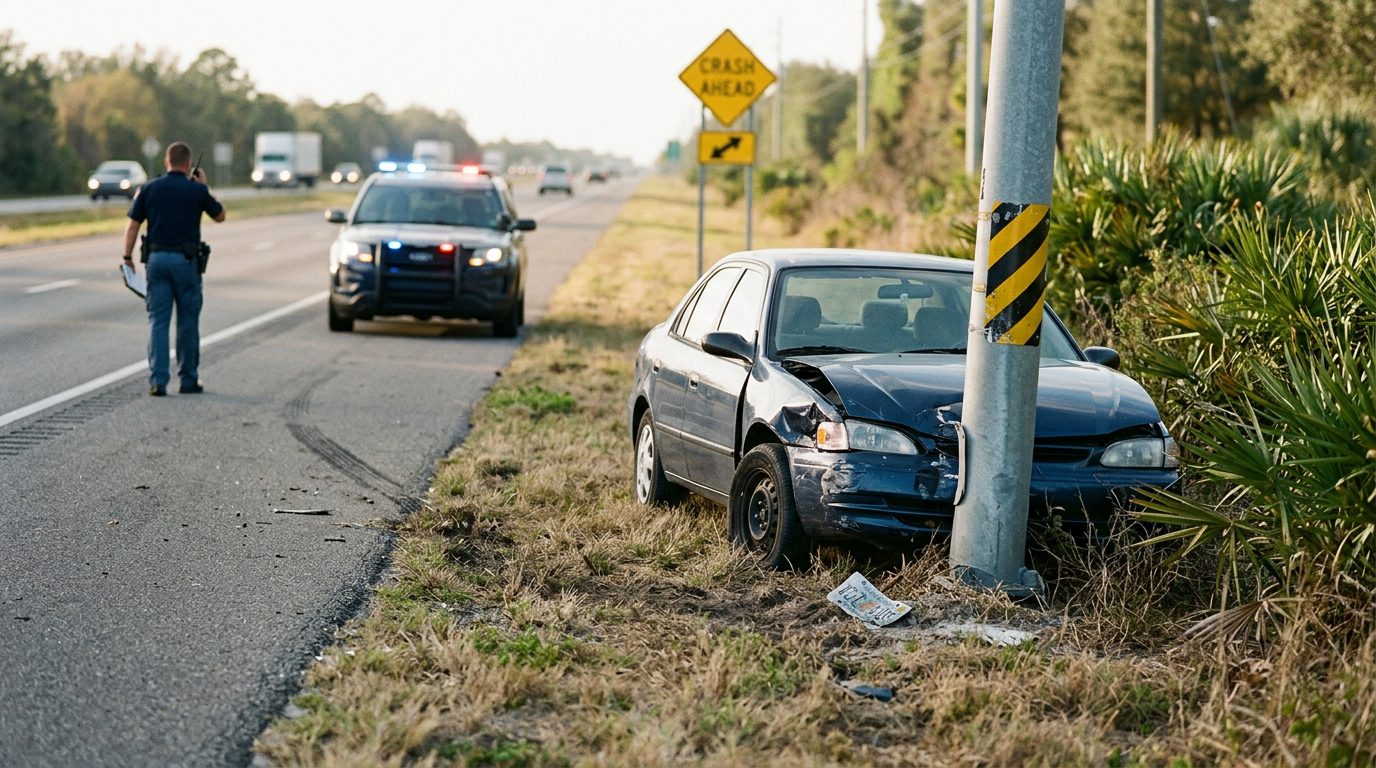
Three charges come up most often after a fatal crash involving speed: vehicular homicide, reckless driving, and dangerous excessive speeding. Each one is a separate offense with its own elements.
Vehicular homicide is a felony tied to a death. It asks whether the driver operated the vehicle in a reckless manner that was likely to cause death or great bodily harm.
Reckless driving is a driving offense. It asks whether the driver acted in “willful or wanton disregard for the safety of persons or property” (Florida Statute 316.192).
One crash can produce more than one of these charges. Each is still judged on its own terms. Leaving the scene and impaired-driving allegations can add to the list, and we cover them below.
Vehicular Homicide in Florida: What the State Must Show and How Serious It Is
Vehicular homicide is a second-degree felony in its basic form. It becomes a first-degree felony in certain cases. The state must show a death caused by the operation of a motor vehicle by another in a reckless manner likely to cause the death of, or great bodily harm to, another. Causation and the driver’s conduct are the two points that usually get the most attention.
The statute sets the base level. Under Florida Statute 782.071, vehicular homicide is a second-degree felony. Fines for a first- or second-degree felony generally cannot exceed $10,000 under Florida Statute 775.083, unless a higher amount equal to double the pecuniary gain derived from the offense or double the pecuniary loss suffered by the victim applies, or a statute specifically authorizes a higher amount.
Speed is one factor the state may cite. Other conduct, road conditions, and the actions of other drivers can also be part of the picture. Cases in Miami-Dade and Broward County are charged under the same Florida statutes as cases anywhere else in the state.
A passenger death in a single-car crash raises its own questions.
Reckless Driving: When the Charge Is a Driving Offense
Reckless driving is a driving offense that requires willful or wanton disregard for the safety of persons or property. The state does not need a death to file it, which is why it can appear beside a fatal crash charge.
Under Florida Statute 316.192, anyone who drives that way is guilty of reckless driving. Fleeing a law enforcement officer in a motor vehicle counts as reckless driving per se, so the flight itself is enough under the statute.
A first conviction carries up to 90 days in jail, a fine of $25 to $500, or both. A second or later conviction carries up to six months in jail, a fine of $50 to $1,000, or both.
The statute also covers injury. If reckless driving causes serious bodily injury to another person, it is a third-degree felony. The statute defines serious bodily injury as a condition that creates a substantial risk of death, serious disfigurement, or lasting loss of function.
A crash that causes a death falls under the vehicular homicide statute and the crash-involving-death law. The difference between reckless driving and vehicular homicide turns on what the state can show about the driver’s conduct and the cause of the death.
Super Speeder Citation Versus a Vehicular Homicide Charge
A super speeder citation does not by itself mean a vehicular homicide charge will follow. The two charges rest on different proof. A homicide charge also does not require a separate speeding ticket.
Florida Statute 316.1922 defines dangerous excessive speeding as operating a motor vehicle in excess of the speed limit by 50 mph or more, or at 100 mph or more in a manner that threatens the safety of other persons or property or interferes with the operation of any vehicle. The first is driving 50 miles per hour or more over the speed limit. The second is driving at 100 mph or more in a manner that threatens others or interferes with other vehicles.
Penalties depend on prior convictions. A first conviction can bring up to 30 days in jail, a $500 fine, or both. A second or subsequent conviction for dangerous excessive speeding within 5 years after a prior conviction for the same offense requires the driver’s privilege to be revoked for at least 180 days, but no more than one year.
For a baseline, Florida Statute 316.183 sets 30 mph as the maximum on business and residence streets and 55 mph elsewhere. A violation of that section is a noncriminal traffic infraction.
A citation written at the scene and a homicide investigation can run on separate tracks. Keep the two questions apart when you read the paperwork.
Can a 30 mph Crash Be Fatal?
Yes, a crash at a lower speed can cause a death. Speed is one factor in a crash, but it isn’t the only one. Where the impact lands, whether someone is struck as a pedestrian, whether occupants are restrained, and what the person hits all affect the outcome.
Thirty mph is also a real legal number. Under Florida Statute 316.183, 30 mph is the maximum limit on business and residence streets, though a county or municipality may set a maximum speed limit of 20 or 25 miles per hour on local streets and highways after an investigation determines that such a limit is reasonable. The same statute also bars driving faster than is reasonable and prudent for the conditions.
A death at a lower speed does not, by itself, prove that speed caused it. The state must connect the driver’s conduct to the death. On a busy Miami street, the question is what the driver did and how that caused the death, not only the number on the speedometer.
Not sure what your next step is?
Talk it through with our team — the first consultation is free, confidential, and carries no obligation.
At What Speed Do You Go to Jail in Florida?
No single speed automatically means jail under Florida’s speeding laws. Jail is possible under the excessive speeding law at 50 mph over the limit, or at 100 mph in a threatening manner. A first conviction can carry up to 30 days under Florida Statute 316.1922.
Felony charges carry a different level of exposure. Vehicular homicide is a felony, and felony sentences are governed by Florida Statute 775.082.
Leaving the scene of a death crash adds a serious risk. A willful violation of this paragraph, in a crash that results in a death, is a first-degree felony that carries a mandatory minimum term of imprisonment of 4 years; a motion to depart from that minimum is available only if the violation was not committed while the driver was under the influence (Florida Statute 316.027). The state may object, and the court may grant the motion only if it finds that a factor, consideration, or circumstance clearly demonstrates that imposing a mandatory minimum term of imprisonment would constitute or result in an injustice.
Evidence That Usually Decides How Speed Is Read
Speed evidence often comes from radar or another speed device, and Florida sets rules for those devices. A speed detection system must self-test at least once every 30 days and be independently calibrated at least once every 12 months (Florida Statute 316.1906).
A person accused under the speed-device statute can ask the court to have the officer who operated the device appear and testify (Florida Statute 316.1905).
Other evidence often matters too. Witness statements, scene measurements, skid marks, video, and reconstruction analysis can all point to speed. Estimates from different sources can differ, so how each one was collected matters.
The driver’s own statements at the scene also become part of the record. The timing of those statements can matter as much as the words. Some newer vehicles also store pre-crash data. Our speeding crash death guide covers how speed is read in more detail.
Civil Fault Rules Versus Criminal Charges
Civil and criminal questions run on separate tracks. The vehicular homicide statute also provides a civil right of action under section 768.19 for the deaths it describes. A family asking about a civil claim should treat that question separately from the criminal charge.
Leaving the Scene and DUI: Other Charges That Can Appear
Leaving the scene of a fatal crash is a separate charge from the crash itself. Under Florida Statute 316.027, a driver in a death crash must stop and remain at the scene until the reporting duties are met.
Florida drivers involved in a crash on public or private property that results in injury, serious bodily injury, death, or damage to a vehicle or other property have a duty to remain at the scene until they have fulfilled the requirements of s. 316.062, according to the Florida Department of Highway Safety and Motor Vehicles. Knowing that duty helps explain why a driver who leaves can face a charge beyond the crash.
Impairment is a separate question. Under Florida Statute 316.193, a person commits DUI when driving or in actual physical control of a vehicle within this state with normal faculties impaired by alcohol, chemicals, or controlled substances, or when the person has a blood-alcohol level of 0.08 or more grams of alcohol per 100 milliliters of blood or a breath-alcohol level of 0.08 or more grams of alcohol per 210 liters of breath. When a death or serious bodily injury occurs, Florida Statute 316.1933 requires a blood test if an officer has probable cause to believe that a vehicle driven by a person under the influence caused the death or serious bodily injury, and allows reasonable force if necessary to obtain it.
For how officers handle DUI investigations and testing, see the North Miami DUI guidance. A single fatal crash can produce several charges at once, which is why fatal crash while speeding Florida charges should be reviewed as a whole.

Talk Through Your Situation With Patrick Wilson Law
Frequently Asked Questions
Is a super speeder ticket the same as vehicular homicide?
No. Dangerous excessive speeding is a traffic-level offense, while vehicular homicide is a felony tied to a death.
What is the maximum sentence for vehicular homicide in Florida?
Vehicular homicide is a second-degree felony in its basic form, and fines for that level can reach $10,000. Sentencing follows the felony sentencing statutes.
Can speeding be used as evidence in a vehicular homicide case?
Speed can be one factor the state examines, along with other driving conduct and the facts of the crash.
Does a fatal crash automatically lead to a criminal charge?
No. A criminal charge depends on what the state can show about the driver’s conduct and the cause of the death.
If you’re the driver in this crash, or you’re trying to understand what a family member is facing, you don’t have to sort through these charges alone. Patrick Wilson Law, a Miami criminal defense firm, offers a free first consultation that is confidential and carries no obligation to continue. Patrick David Wilson is the responsible lawyer for this page. Call 786-761-1719 or leave a message through our contact page.
How Patrick Wilson Law Approaches These Cases
Defense Focused on Serious Charges
Patrick Wilson Law focuses on criminal defense, including vehicular homicide and related traffic charges arising from fatal crashes.
Review of the Charging Decisions
We examine the crash report, the charging documents and the evidence on speed, causation and the events leading up to the collision.
Support for First-Time Offenders
Many people facing these charges have never been arrested before. We explain each step of the process in plain language so you know what to expect.
Attention to Your Career and Future
For licensed professionals and non-citizens, a conviction can carry consequences well beyond the courtroom. We account for those issues from the first conversation.
Important: Speak With a Lawyer Before Giving a Statement
Statements made at the scene or during an investigation can shape how a fatal crash case develops. Talk with a criminal defense attorney before answering detailed questions about speed, driving or the collision.
Charges That Often Arise From Fatal Crashes in Florida
Vehicular Homicide
A charge tied to a death caused by the operation of a motor vehicle. Prosecutors must prove specific elements, and the facts of each crash matter.
Leaving the Scene of an Accident
A separate charge that may apply when a driver leaves a crash involving injury or death. It can be filed alongside other charges and should be reviewed on its own terms.
Super Speeder and Dangerous Excessive Speeding
A traffic-level offense for driving at very high speeds. It is distinct from vehicular homicide, though both may appear in the same case.
Related Criminal Charges
Depending on the facts, other allegations may be filed, such as DUI-related charges. Each one requires its own review.

