
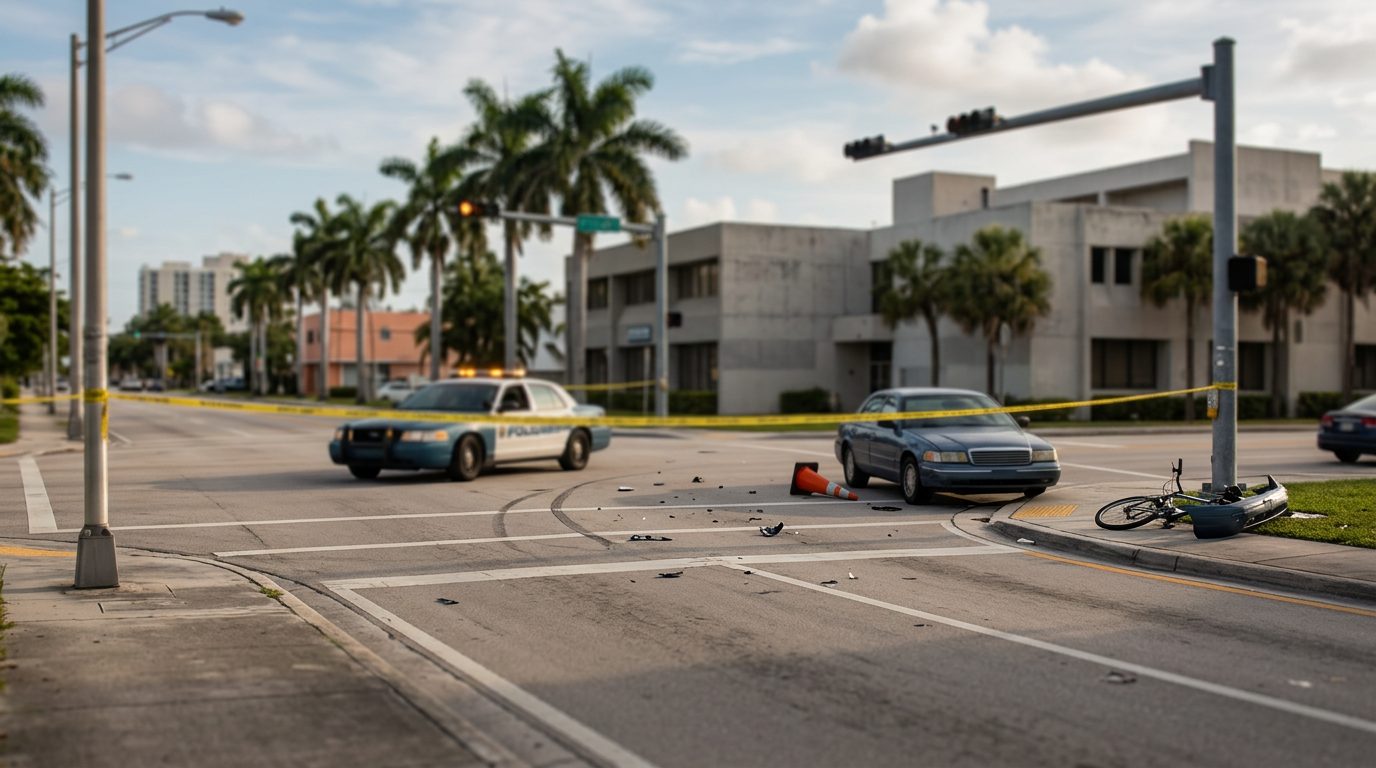
Vehicular Homicide Defense | Miami, FL
Facing a Fatal Crash Charge While Your License Is Suspended?
Patrick Wilson Law defends drivers across Miami-Dade, Broward and the Keys in fatal crash cases involving suspended licenses. Call 786-761-1719 for a free, confidential first consultation with no obligation to continue.
By Patrick David Wilson · Published October 23, 2026
A fatal crash with a suspended license charge can bring more than one criminal case in Florida. The driver may face a homicide charge, a leaving-the-scene charge, and a charge for driving while suspended, all from one crash. Each charge has its own statute, its own proof, and its own penalties.
This page explains those charges in plain words. It also explains how a defense is built and what happens after an arrest. It is written for drivers who are under investigation and for family members trying to understand what comes next.
What a Fatal Crash With a Suspended or Revoked License Means Under Florida Law
A crash that causes a death while a license is suspended or revoked can lead to several charges. The license problem and the crash problem are separate questions. Charges arising from a crash can vary depending on the circumstances of each case.
Every crash has its own facts, and they are reviewed closely when a case is evaluated. A crash involving alcohol, a crash where the driver left the scene, and a crash with no impairment lead to different charge sets. Each crash needs its own review.
If you're facing a charge after a fatal crash, you don't have to sort out the process alone. Call or message Patrick Wilson Law for a free, confidential consultation. Talk it through with our team — the first consultation is free, confidential, and carries no obligation.
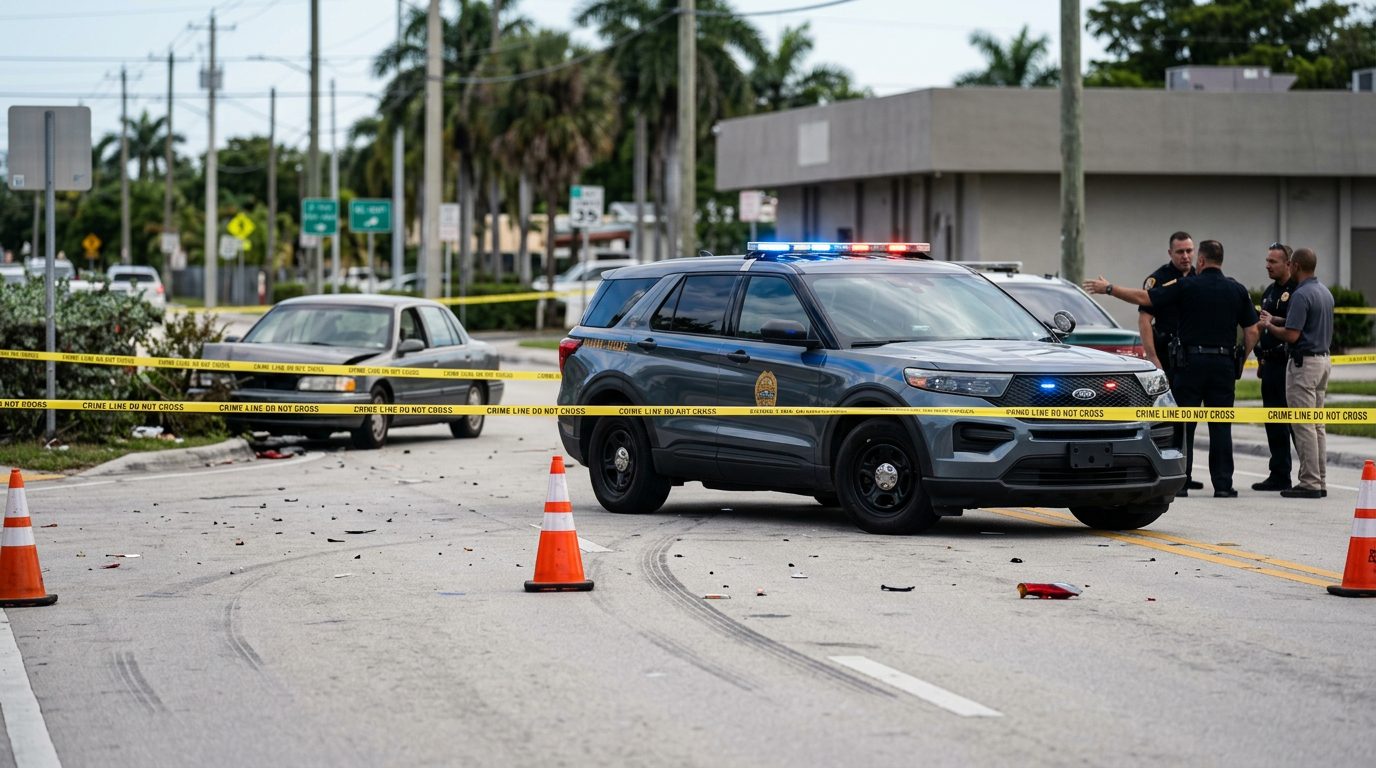
Charges That Can Apply After a Fatal Crash
Several Florida statutes can apply after a death on the road. The right charge depends on how the crash happened and what the driver did afterward.
Vehicular homicide. Under § 782.071, vehicular homicide is a killing caused by another person’s operation of a motor vehicle in a reckless manner likely to cause death or great bodily harm. The base offense is a second-degree felony. It becomes a first-degree felony if the driver knew or should have known the accident occurred and failed to give information and render aid, or if the driver has a prior conviction under this section, s. 316.193(3)(c)3., s. 327.35(3)(a)3.c., or s. 782.072. A civil damages claim can also exist under that statute.
Florida’s DUI statute, § 316.193, applies when a driver who is driving or in actual physical control of a vehicle within this state is under the influence of alcohol, a chemical substance, or a controlled substance to the extent that normal faculties are impaired, or has a blood-alcohol level or breath-alcohol level of 0.08 or more. When impairment and a death are both alleged, DUI manslaughter may apply. A conviction under § 316.193 does not bar a civil suit for damages against the person so convicted.
Leaving the scene of a fatal crash. Under § 316.027, a driver in a crash that causes a death must stop and stay at the scene. A willful violation is a first-degree felony with a mandatory minimum term of 4 years, but the defendant may move to depart from that minimum unless the violation was committed while driving under the influence, and the court may grant the motion only if it finds that imposing the minimum would constitute or result in an injustice.
How felony levels work. Florida classes felonies as capital, life, first, second, or third degree under § 775.081. The offense severity ranking chart in § 921.0022 is used to score felony sentences.
How a Homicide Charge Is Defended When the License Was Suspended or Revoked
A defense checks whether the State can prove every part of each charge. That starts with cause and license status.
- Cause. The key question is whether the driver’s conduct caused the crash. Other drivers, road conditions, and mechanical failures all matter.
- License status. Under § 322.251, a suspension notice is generally complete 20 days after mailing or e-mail, except for notices issued under chapter 324 or ss. 627.732–627.734, which are complete 15 days after mailing or e-mail. Not receiving it does not stop the suspension. So the review focuses on the record: dates, delivery, and whether the suspension was entered correctly.
- Blood tests. When an officer has probable cause that a vehicle driven by a person under the influence of alcohol, chemical substances, or controlled substances has caused a death or serious bodily injury, § 316.1933 requires a blood test. Only listed medical and lab personnel may draw the blood. For this rule, “serious bodily injury” means an injury to any person, including the driver, that creates a substantial risk of death, serious personal disfigurement, or protracted loss or impairment of the function of any bodily member or organ (§ 316.1933).
- Evidence. If the defendant elects to participate in discovery, it starts by filing a Notice of Discovery under Rule 3.220. The review covers police reports, video, 911 records, and lab results.
The First 48 Hours and Talking to Police
The first hours matter because you have the right to remain silent and the right to a lawyer. Say clearly that you want a lawyer before you answer questions.
Under Rule 3.130, the judge must tell you that you are not required to say anything. The judge must also tell you that anything you say may be used against you. You also have a right to counsel and to contact family or friends.
Avoid discussing the crash, drinking, or who was driving with officers, on phone calls, or on social media. Under § 316.1933(1)(a), when a law enforcement officer has probable cause to believe that a driver under the influence has caused death or serious bodily injury, the officer must require a blood test.
What to Expect: The Process From Arrest to Resolution
A case usually moves from arrest to first appearance, charging, discovery, motions, and then resolution.
- Except when previously released in a lawful manner, every arrested person must see a judge within 24 hours, under Rule 3.130. The court then weighs bail under Rule 3.131, including the offense, the penalty, and the weight of the evidence.
- Charging and arraignment. The State files formal charges. The first court date sets the schedule.
- Discovery. If the defense elects to participate in the discovery process, it receives the State’s evidence through discovery, and that election also triggers reciprocal discovery obligations for the defendant.
- Investigation and motions. The defense can challenge evidence, license records, and test results.
- Resolution. Some cases end in negotiation. Others go to trial. Timelines vary with the case and the court calendar.
Why Patrick Wilson Law for Fatal Crash Charges
Patrick Wilson Law, PLLC is a Miami criminal defense firm. It serves Miami-Dade, Broward County, Fort Lauderdale, the Florida Keys, Kendall, Hialeah, Miami Beach, and Homestead.
- Practice focus. The firm focuses on criminal defense, including vehicular homicide, DUI, leaving the scene, domestic violence, sexual battery, white collar matters, and sealing and expungement.
- Responsible lawyer. Patrick David Wilson is the responsible lawyer for this page. The firm’s lawyers include Patrick David Wilson and Sahara Fonseca. Support staff assist the team.
- Client focus. The firm handles first-time offender matters and criminal defense for licensed professionals. Our lawyers keep in mind how a charge can affect work and licensing.
- No promises. Each case turns on its own facts. No lawyer can promise or predict a result.
Not sure what your next step is?
Talk it through with our team — the first consultation is free, confidential, and carries no obligation.

Frequently Asked Questions About Fatal Crash Charges and Suspended Licenses
What are the penalties for vehicular homicide in Florida? Florida calls this offense vehicular homicide under § 782.071, which is a second- or first-degree felony.
Can a suspended license alone turn a crash into a homicide charge?
No. The State must prove each element of the specific charge, such as reckless operation and a death, under § 782.071.
Should I speak with police after a fatal crash?
You are not required to say anything, and your words can be used against you, as the judge explains under Rule 3.130. Ask for a lawyer before you answer questions.
If you’re facing a fatal crash charge, or helping someone who is, reach out to Patrick Wilson Law through our contact page or call 786-761-1719. Your initial consultation is free, confidential, and carries no obligation to continue.
How We Approach a Fatal Crash Case
Review the Charge Element by Element
We examine whether the State can prove each required element of the specific charge, including the operation of the vehicle and the cause of the death. A suspended license is one fact among many, not a conviction.
Protect Your Statements
Our attorney advises clients on what to say, and what not to say, to police and investigators after a crash. Early guidance can keep your words from being used against you.
Local Courts Across South Florida
Patrick David Wilson focuses on criminal defense in Miami-Dade County, Broward County, Fort Lauderdale, Hialeah, Miami Beach, Homestead, Kendall and the Florida Keys.
Attention for Licensed Professionals and First-Time Offenders
Many clients facing these charges have careers, families or licenses at stake. We take the time to understand what is on the line for you.
Do Not Talk Through a Crash Case Alone
A fatal crash investigation can move quickly. Do not give a recorded statement, sign documents or discuss what happened with anyone other than your attorney until you have spoken with a lawyer.
What to Expect from Your Consultation
1. Tell Us What Happened
Share the facts of the crash, your license status and any charges or notices you have received. Your conversation is confidential.
2. Review Your Options
We explain how the charge is defined under Florida law and which issues may matter in your case, based on the information you provide.
3. Decide on Next Steps
The consultation is free and comes with no obligation to continue. If you choose to hire us, we will explain the scope of representation in writing.

