
Vehicular Homicide Defense | Miami-Dade County, FL
Understand Each Stage of a Vehicular Homicide Case in Miami-Dade
Patrick Wilson Law, PLLC focuses on criminal defense across South Florida. Learn how these cases typically move from the crash scene to resolution, and talk with our team about where your case stands.
By Patrick David Wilson · Published October 23, 2026
How Long Does a Vehicular Homicide Case Take in Miami-Dade?
There is no fixed answer. How long a vehicular homicide case takes depends on the crash evidence, the court calendar, and whether the case ends by agreement or goes to trial. Some steps have firm deadlines under Florida’s rules. Many others have no set clock at all.
This page walks through the stages in the order they usually happen. A case can move back and forth between them, and the pace can change from one stage to the next. It describes the typical process in Miami-Dade. It is not a prediction for any particular case.
If you want the full picture of the charge itself, the vehicular homicide defense page on this website covers the offense from start to finish. The stages below focus on timing, so you can see where the clock starts and where it slows down.
If a fatal crash has left you facing a vehicular homicide arrest or charge, you don't have to work out the timeline alone. Reach out for a free, confidential first consultation. Talk it through with our team — the first consultation is free, confidential, and carries no obligation.

What Florida Law Says About Vehicular Homicide and Why the Stakes Shape the Pace
Florida defines vehicular homicide as killing a human being, or killing an unborn child by any injury to the mother, caused by the operation of a motor vehicle by another in a reckless manner likely to cause death or great bodily harm. The vehicular homicide statute sets out the offense and its penalties.
The base charge is a second-degree felony. The statute raises it to a first-degree felony in two situations. The first is when the driver knew or should have known the crash happened and did not give information and render aid. The second is when the driver has a prior qualifying conviction. Florida’s felony classes explain how these degrees rank.
Because the exposure is serious, both sides usually spend more time on evidence before anyone talks about resolution. The defense has to test each one. The court may also order 120 hours of community service in a trauma center, in addition to any other punishment. That possibility alone shows why the stakes are high and why the work takes care.
Arrest, First Appearance, and Formal Charges in Miami-Dade
Florida’s rules set the first clocks in this process. Under Fla. R. Crim. P. 3.130, an arrested person must see a judge within 24 hours of arrest. The exception is a person who was already released in a lawful way. Rule 3.133 provides that, when a defendant is in custody, a nonadversary probable cause determination shall be held before a judge within 48 hours from the time of the defendant’s arrest, unless a judge has already made a probable cause determination and issued an arrest warrant for the specific offense charged. The judge, after a showing that an extraordinary circumstance exists, may continue the proceeding for not more than 24 hours beyond the 48-hour period, and after a showing that an extraordinary circumstance still exists, may continue it for not more than 24 additional hours following the expiration of the initial 24-hour continuance.
Bond and release conditions are addressed at this first stage. Under Rule 3.131, the court must consider several factors, including the nature and circumstances of the offense and the penalty provided by law, the weight of the evidence, the defendant’s family ties, and any record of convictions, prior flight, or failure to appear. Those conditions are not final. A request to change bail on a felony must be heard in person by a court.
Formal charges come next. Under Rule 3.134, the state must file formal charges within 30 days for a person in custody. No one may stay in custody beyond 40 days without being formally charged. For a person out on pretrial release, the state must file formal charges within 60 days, but if the state shows good cause, the court may continue the defendant on pretrial release for up to an additional 30 days unless the state files formal charges. In circuit and county courts, formal charges come by information or indictment, except for certain county court prosecutions, which Rule 3.140 governs.
Why the Investigation Phase Often Takes the Longest
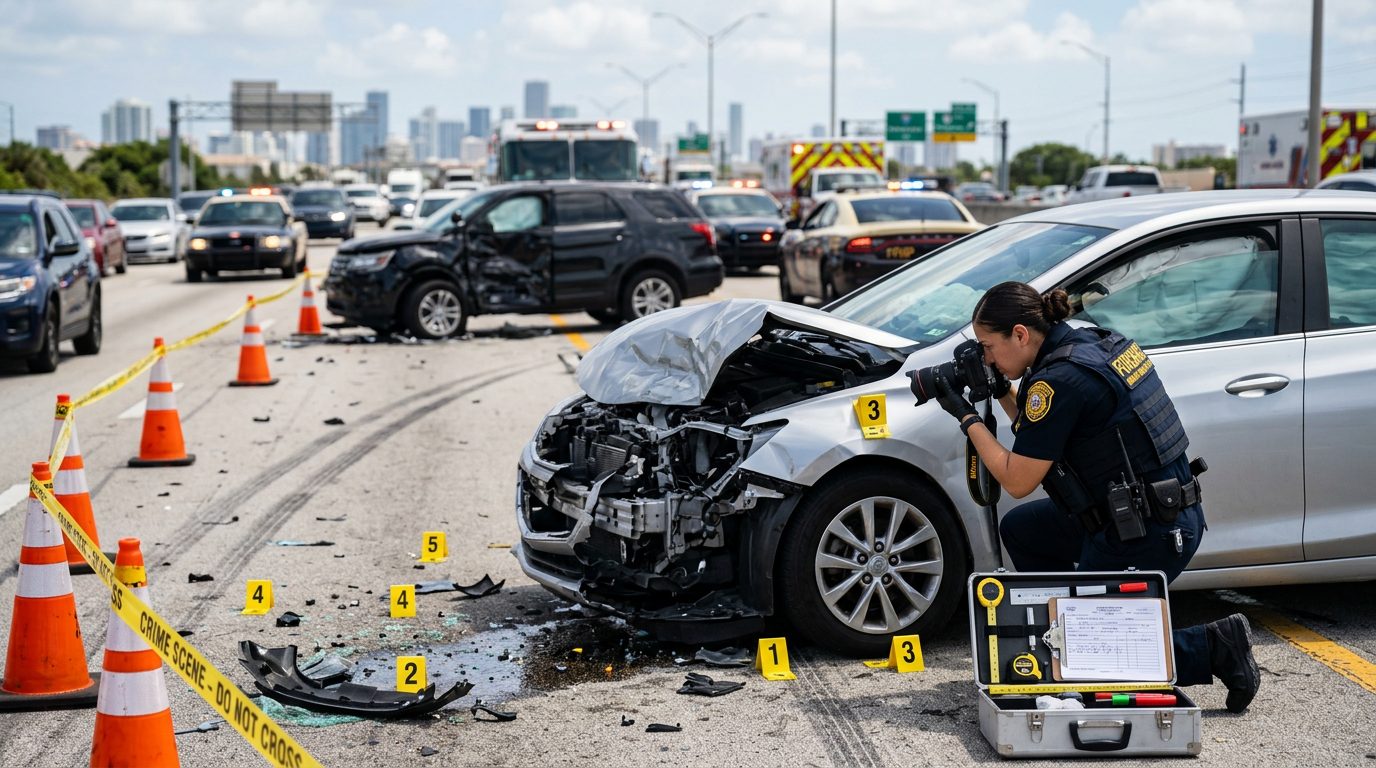
Investigation usually sets the pace for the rest of the case. A fatal crash brings in reconstruction work, vehicle data, scene measurements, witness statements, and medical records. Each piece takes time to gather and review.
Crash paperwork is one example. The Florida Department of Highway Safety and Motor Vehicles states that fatal crashes must be reported to law enforcement. It also says related traffic crash reports may take up to 10 days to become available.
Blood testing adds another step. When an officer has probable cause to believe an impaired driver caused a death or serious bodily injury, Florida law requires a blood test. The officer may use reasonable force if needed. Toxicology results become part of the timeline, and they can take time to come back.
Other evidence can slow things down too. Traffic camera video, 911 recordings, and cell phone records may each need to be requested and reviewed. The timeline of the crash often isn’t clear until that work is done.
Discovery, Depositions, and Reviewing the State’s Evidence
Discovery is the exchange of evidence between the state and the defense. Under Rule 3.220, the prosecutor must disclose material information that tends to negate the defendant’s guilt. For many felony cases, this is one of the longest phases.
In practice, the defense reads police reports and studies photographs, crash data, and lab results. It can also request further testing where the evidence calls for it. Reviewing each item carefully takes more time than a quick scan would.
Depositions can also be scheduled during this phase. A deposition is a set of questions asked of a witness before trial, with a record kept. Each one adds a date to the calendar and a transcript to read.
A fatal crash file tends to be larger than a minor traffic file. The reconstruction, medical, and data records all come in. Each piece has to be read, checked, and matched against the others before the defense knows where the case stands.
Speedy Trial Rules, Negotiation, and Trial Setting in Miami-Dade
Florida has a speedy trial rule for felonies. Rule 3.191 sets a 175-day period for a felony charge. If trial does not start within that period, the rule gives the defendant a remedy. The rule also requires notice and a 30-day recapture period before that remedy applies. The dates in any one case need careful tracking.
Motions can extend the schedule. Motions that challenge evidence, such as motions to suppress, take time to write, argue, and decide. Each ruling can move the next date.
Many cases involve plea discussions between the defense and the prosecutor. Under Rule 3.171, defense counsel must advise the client of all plea offers and the likely results of each option. Counsel cannot conclude a plea agreement without the client’s full and complete consent. Any resolution is reviewed with the client before a decision is made.
Trial dates in circuit court are set through case management. A trial setting is a date on the calendar, not the trial itself. Dates can move as motions are decided and discovery is completed.
Not sure what your next step is?
Talk it through with our team — the first consultation is free, confidential, and carries no obligation.
Why Fatal Crash Cases Usually Take Longer Than DUI Cases
A typical DUI case often turns on a breath or blood test and the officer’s arrest records. The body of evidence is narrower. A fatal crash adds reconstruction, medical, and data evidence on top of that.
A homicide-level charge also brings more pretrial motions and more witnesses. Each added witness means another interview, another possible deposition, and another schedule to coordinate. That lengthens the calendar.
A DUI-based fatal crash combines both sets of evidence. The impairment proof and the crash proof must each be built and tested. That is one reason these cases tend to run longer. The same care that protects the defense also takes time.
Frequently Asked Questions About Vehicular Homicide Case Timelines
How long does a vehicular homicide case take in Florida?
There is no fixed length. The pace depends on the crash evidence, the court calendar, and whether the case resolves by agreement or goes to trial.
How long does the average homicide investigation take?
Investigation length depends on the evidence and the cause of death. Lab results and medical examiner findings often set the pace.
What is the definition of vehicular manslaughter in Florida?
Florida uses the term vehicular homicide. Under the vehicular homicide statute, it means killing a human being, or killing an unborn child by any injury to the mother, caused by operating a motor vehicle by another in a reckless manner likely to cause death or great bodily harm.
Is it hard to prove a hit and run?
Leaving the scene is a separate offense with its own rules. Whether it is hard to prove depends on the facts of the crash.
What is the average time served for vehicular manslaughter?
Time served turns on the charge, the evidence, and the court’s rulings in the case. Outcomes vary widely, so no single figure applies to every case.
Does the case always go to trial?
No. Many cases involve plea talks, and the client makes the decision after counsel explains each offer.
Talk With Patrick David Wilson About Your Vehicular Homicide Timeline
If a fatal crash has led to an arrest or a pending charge, you may be facing bond decisions, evidence questions, and a calendar you didn’t expect. Patrick David Wilson is the responsible lawyer for this page, with Patrick Wilson Law, PLLC in Miami. Call 786-761-1719 or leave a message to set up a time to talk. The first consultation is free, confidential, and carries no obligation to continue.
How We Approach Your Case
Early Review of the Evidence
We look closely at crash reports, vehicle data, witness statements and medical records from the start, because these details shape every later stage of the case.
Clear Updates on Each Step
We explain what is happening in your case, what comes next and what may affect the timing, so you are never left guessing about the process.
Local Experience Across South Florida
Patrick Wilson Law, PLLC represents clients throughout Miami-Dade and Broward Counties, including Miami, Hialeah, Kendall, Homestead, Miami Beach, Fort Lauderdale and the Florida Keys.
Defense Focused on Your Future
Our criminal defense work is built around protecting your record, your freedom and your career, especially for first-time offenders and licensed professionals.
Speak With a Lawyer Before You Speak With Investigators
Statements made at the scene or in early interviews can become part of the case record. Consult a criminal defense lawyer before answering detailed questions about the crash.
Common Stages in a Vehicular Homicide Case
Investigation
Law enforcement documents the scene, collects evidence and may obtain medical examiner findings. This stage can take time as lab results and reports are completed.
Charging Decision
Prosecutors review the evidence and decide what charges, if any, will be filed. Defense counsel can present information during this review.
Pretrial Proceedings
Hearings, discovery exchanges and motions shape the issues in the case. The pace depends on the complexity of the evidence and the court calendar.
Resolution or Trial
Some cases resolve by agreement, while others proceed to trial. Your lawyer will discuss the options with you at each point so you can make informed decisions.

