
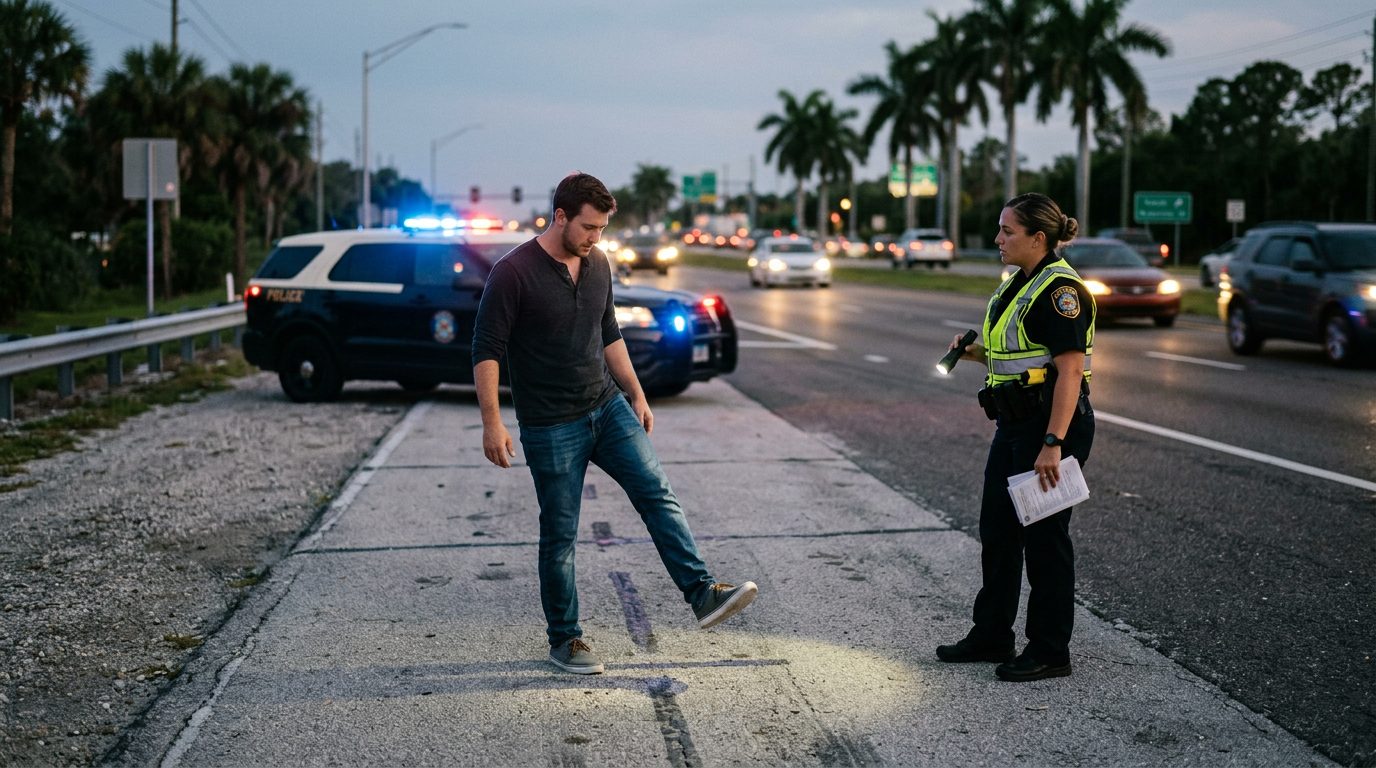
DUI Defense in South Florida
How Much Time Could a DUI Manslaughter Charge Carry in Florida?
Penalties depend on the facts of your case and applicable law. Learn what the statutory range means and which factors may affect where a sentence lands.
By Patrick David Wilson · Published October 16, 2026
How much time do you get for a DUI manslaughter? Penalties for a DUI manslaughter charge depend on the facts of the case and applicable law. This guide explains that number, the mandatory minimum question, and the factors that can affect where a sentence lands. Patrick David Wilson, the responsible lawyer for this page, wrote it for people who never expected to face this charge and need plain answers first.
The short answer: DUI manslaughter is a second-degree felony with a statutory maximum of 15 years
Florida sorts felonies by degree. § 775.081 names capital, life, first-degree, second-degree and third-degree felonies. For a first- or second-degree felony, § 775.083 caps fines at $10,000 unless another statute specifically authorizes more.
The degree matters because it sets the statutory range. A second-degree and a first-degree felony carry different maximums. So the label on the charge is the first thing to read.
A maximum is a ceiling. It does not, by itself, tell you what sentence a court will impose in a particular case. The facts of the case and the applicable law shape that choice.
One mistake is stopping at the number 15. The first-degree version and the mandatory minimum can change the picture, as covered below.
Not sure what your next step is?
Talk it through with our team — the first consultation is free, confidential, and carries no obligation.
Does a mandatory minimum apply, and what triggers it?
Depending on the facts and applicable law, a DUI manslaughter conviction may carry a mandatory minimum term of imprisonment.
Think of a mandatory minimum as a floor the law sets. A floor applies only when its conditions are met, so the exact wording matters.
Under Rule 3.704, if the lowest permissible sentence is less than a mandatory minimum sentence, the mandatory minimum takes precedence. That means the minimum can override a lower result from the sentencing calculation.
The first-degree version carries up to 30 years. The statute places DUI manslaughter in the first-degree category when the driver knew or should have known of the crash and failed to give information and render aid.
How a sentence is set in a felony case
Felony sentences start with a scoresheet. § 921.0024 uses a Criminal Punishment Code worksheet to compute total sentence points for a felony. The scoresheet is a math tool first. It turns the details of the offense into points.
The statute defines the lowest permissible sentence as the minimum the trial court may impose, absent a valid reason for departure. A total of 44 points or fewer makes a nonstate prison sanction the lowest permissible sentence. That changes only if the court decides, within its discretion, that a prison sentence is appropriate.
A downward departure below that minimum is prohibited unless circumstances reasonably justify it. § 921.0026 sets that rule.
These felony rules stay in felony cases. Section 921.0026 applies to felony offenses, so it should not be assumed to govern a misdemeanor DUI matter.
At sentencing, Rule 3.720 lets the court hear submissions and evidence from both sides that are relevant to the sentence.
Factors that may affect where a sentence falls
Scoresheet points, mitigating circumstances, and the facts of the crash may all bear on where a sentence lands.
§ 921.0026 lists mitigating circumstances that can justify a departure from the lowest permissible sentence. This section applies to any felony offense, except any capital felony, committed on or after October 1, 1998. A downward departure from the lowest permissible sentence, as calculated under Fla. Stat. § 921.0026, is prohibited unless there are circumstances or factors that reasonably justify it, and mitigating factors include, but are not limited to, those listed in subsection (2).
Under the same section, substance abuse or addiction, including intoxication at the time of the offense, is not a mitigating factor. It does not justify a downward departure. The statute makes one exception, tied to a drug court program for certain nonviolent felonies.
Mitigation is not a promise of a lighter sentence. It is a set of statutory reasons a court may weigh during the hearing.
No single factor settles the outcome. Each case is weighed on its own facts under the applicable law.
Penalties beyond prison time
Prison and fines are only part of the picture. A DUI manslaughter conviction may also bring probation, license action, and restitution.
Depending on the facts of the case, the sentence imposed and applicable law, § 316.193 may bear on whether a court orders probation, including monthly reporting, or a substance abuse course from a licensed DUI program. The statute says completing treatment is a condition of reporting probation, in addition to any sentence or fine.
§ 322.28 says the court shall permanently revoke the driver license of a person convicted of DUI manslaughter under § 316.193. Whether that applies to a given conviction turns on the record and the applicable law.
The FLHSMV DUI suspension guide from the Florida Highway Safety and Motor Vehicles department describes fines, imprisonment, and vehicle impoundment. The Florida Department of Transportation lists possible add-ons such as ignition interlock, community service, and probation.
Under Rule 3.720, the court decides whether restitution applies.
Your own court papers list the exact terms that apply to you.
Where the statutory penalty and the charge meet
The statutory penalty that matters first is the one tied to the exact charge in the filed papers. Charges are brought by the state based on the facts.
Vehicular homicide is a separate charge, and the penalties that may apply depend on the facts of the case and applicable law. Patrick David Wilson’s practice focuses on DUI, vehicular homicide, and related criminal defense matters in South Florida. For the vehicular side, see vehicular homicide defense in South Florida. For the DUI side, see DUI defense in South Florida.
How much time do you get for a DUI manslaughter?
The first-degree version allows up to 30 years when its statutory conditions are met. Whether any time is actually served depends on the facts of the case and applicable law.
Is DUI manslaughter a felony in Florida?
Yes. The statute classifies it as a second-degree felony, with a first-degree version under its stated conditions.
Is there a mandatory minimum for DUI manslaughter?
The statute sets a 4-year mandatory minimum. Whether any given provision applies depends on the facts of the case and applicable law.
Not sure what your next step is?
Talk it through with our team — the first consultation is free, confidential, and carries no obligation.

Talking through your own situation with Patrick David Wilson
Asking how much time do you get for a DUI manslaughter is a natural first question after a fatal crash. You may be the driver facing the charge. You may also be a family member trying to make sense of it.
Either way, the questions pile up fast: the charge, the possible prison term, the license, and the money. Questions this big can feel overwhelming.
Patrick David Wilson can walk through the charging papers, the crash facts, and the penalties that may apply to your case. Call 786-761-1719 or leave a message through the contact page to ask about a free, confidential initial consultation with no obligation to continue.
How Patrick Wilson Law Approaches DUI Manslaughter Cases
A Focused Criminal Defense Practice
Patrick David Wilson focuses on criminal defense, including DUI, vehicular homicide and related charges. Each case is reviewed on its own facts.
Plain Answers First
The goal is to explain the charge, the possible penalties and the open questions in clear terms, so you can make informed decisions about your case.
A Free, Confidential First Consultation
The initial consultation is free, confidential and carries no obligation to continue.
Serving Communities Across South Florida
Patrick Wilson Law represents people from Broward County to the Florida Keys, including first-time offenders and licensed professionals whose careers may be at stake.
Be Careful With General Penalty Charts
The sentence in any particular case depends on the facts, the charging documents and applicable law. Do not assume a number applies to you without a review of your own case.
Factors That May Affect a DUI Manslaughter Sentence
The Facts of the Crash
Details such as how the collision happened, the evidence collected and the conduct alleged may bear on how a case is charged and resolved.
Prior Record and Background
A person's prior criminal history, or the lack of one, may be relevant to the sentencing analysis under Florida law.
The Specific Charges Filed
Related counts, enhancements and the exact statutory provisions cited in the charging documents can change the range of possible outcomes.
Case Posture and Negotiation
How the case proceeds, including discovery, motions and any plea discussions, can affect what outcomes are available. Results depend on the facts and applicable law.

